
Automated Guided Vehicles (AGVs) and warehouse robotics help businesses automate material movement, reduce repetitive manual handling, and connect warehouse operations with digital management systems. Depending on the application, these technologies can transport pallets, move totes, replenish picking stations, transfer materials between production areas, and support automated storage and retrieval.
However, AGVs are only one part of the warehouse robotics landscape. Autonomous Mobile Robots (AMRs), robotic arms, autonomous forklifts, conveyor systems, shuttle systems, and stacker cranes perform different tasks and require different levels of integration.
The right solution depends on load characteristics, travel routes, storage design, throughput requirements, human interaction, and the warehouse's existing infrastructure. For many facilities, the greatest value comes not from deploying a single robot, but from coordinating multiple technologies through a well-designed warehouse automation system.
This guide explains how AGVs and warehouse robotics work, compares the main robot types, explores practical applications, and outlines how to select and integrate a suitable solution.
1. What Are Automated Guided Vehicles (AGVs)?
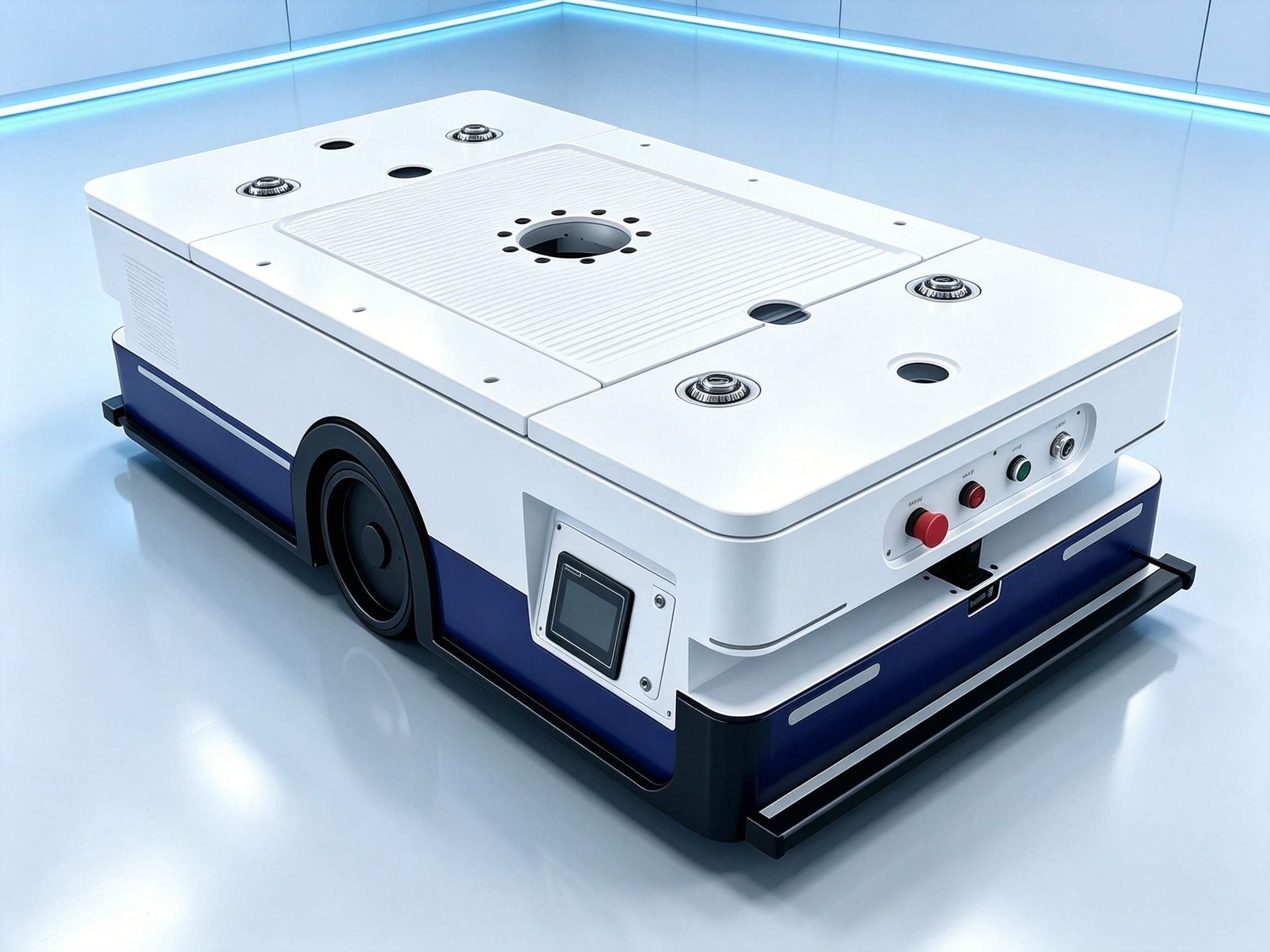
An Automated Guided Vehicle (AGV) is a driverless industrial vehicle designed to transport materials along defined routes within a facility. AGVs are commonly used in warehouses, manufacturing plants, distribution centers, and production environments where material flows can be planned and repeated.
Depending on the vehicle design, an AGV may carry loads directly, tow carts, transport pallets, or interface with conveyors and other material-handling equipment.
Typical AGV applications include:
-
Moving pallets between receiving and storage areas.
-
Transporting materials from warehouses to production lines.
-
Moving finished goods to staging or shipping areas.
-
Transferring containers between workstations.
-
Replenishing designated production or picking locations.
-
Connecting repeatable material-flow routes between operational zones.
AGV systems typically combine a vehicle, navigation and control components, safety devices, charging arrangements, and fleet or traffic-management software.
The navigation method varies by system. Some AGVs follow physical guidance infrastructure, such as magnetic tape or wires, while others use markers or other configured navigation methods. Modern product terminology can overlap with AMR terminology, so specifications and actual navigation behavior should be checked rather than inferred from the product label alone.
2. What Is Warehouse Robotics?
Warehouse robotics refers to the use of robotic systems to perform material handling, transportation, storage, picking, sorting, palletizing, and other warehouse tasks.
Unlike the term AGV, which refers primarily to a category of driverless industrial vehicles, warehouse robotics covers a broader range of equipment.
Common types include:
-
AGVs: Driverless vehicles used for planned material transport.
-
AMRs: Mobile robots that use onboard sensing and navigation capabilities to move through their operating environment.
-
Autonomous forklifts: Driverless vehicles designed for selected pallet-handling and lifting tasks.
-
Robotic arms: Fixed or mounted robots used for picking, handling, depalletizing, and palletizing.
-
Goods-to-person robots: Systems that bring inventory or storage units to designated picking workstations.
-
Automated storage and retrieval systems (AS/RS): Systems that store and retrieve goods using equipment such as stacker cranes or shuttle vehicles.
-
Conveyor and sorting systems: Mechanized solutions that move and route goods through defined material-flow paths.
These technologies are complementary rather than interchangeable. An AGV may move a pallet between two areas, a robotic arm may handle individual cartons, and an AS/RS may manage high-density storage and retrieval.
An integrated warehouse design assigns each technology a defined role based on its operating strengths.
3. AGV vs. AMR: What Is the Difference?
AGVs and AMRs can both automate material transportation, but they may differ in navigation, route planning, infrastructure, and their ability to respond to changing environments.
In common industry usage, traditional AGVs follow predefined routes or guidance references, whereas AMRs generally use onboard sensing, mapping, and localization to navigate more autonomously. The exact distinction varies between manufacturers, and some modern driverless vehicles combine features of both categories.
| Comparison factor | Traditional AGV | AMR |
| Navigation | Often follows predefined routes or guidance references | Commonly uses onboard sensing and map-based navigation |
| Route changes | May require route or guidance-infrastructure adjustments | May allow software-based map and route changes |
| Obstacle response | Depends on vehicle design and traffic-control logic | May plan alternative routes when conditions permit |
| Infrastructure | May require floor markers, wires, tape, or other guidance references | May require mapping, localization infrastructure, or network support, depending on design |
| Best-fit environment | Stable, repetitive material flows | Environments where routes or operating conditions change more frequently |
| Deployment considerations | Route design and guidance infrastructure | Mapping, localization, traffic coordination, and environmental suitability |
Neither technology is universally better.
A traditional AGV may be appropriate when routes are stable, travel patterns are repetitive, and predictable operation is the priority. An AMR may be more suitable when routes change more often or vehicles need greater navigation flexibility.
The decision should be based on the actual vehicle capabilities, site conditions, safety requirements, and operating workflow—not simply the AGV or AMR label.
4. Main Types of Warehouse Robots
4.1 Common Types of Automated Guided Vehicles (AGVs)
Automated Guided Vehicles are available in different configurations to handle specific material transportation and lifting requirements. The appropriate type depends on the load, handling method, travel distance, warehouse layout, and required throughput.
| AGV Type | Main Function | Typical Applications |
| Unit Load AGV | Carries individual loads or containers on an integrated platform | Carton, tote, and container transportation |
| Pallet AGV | Lifts and transports palletized goods | Warehouse receiving, putaway, and shipping |
| Forklift AGV | Automatically picks up, lifts, and transports pallet loads | Pallet handling, storage interfaces, and production supply |
| Towing AGV | Pulls one or multiple carts along configured routes | Production line replenishment and repetitive material delivery |
| Heavy-Load AGV | Transports large or heavy industrial loads | Heavy manufacturing, oversized materials, and industrial logistics |
How to Choose an AGV Type
When selecting an AGV, consider the following factors:
-
Payload capacity: Confirm the maximum load weight, dimensions, and center of gravity.
-
Load handling: Determine whether the vehicle needs to lift pallets, carry containers, tow carts, or transfer loads through conveyors.
-
Operating environment: Evaluate aisle width, floor conditions, turning space, ramps, and pedestrian traffic.
-
Transportation frequency: Estimate the number of trips, travel distances, and required operating hours.
-
Integration requirements: Check compatibility with WMS, WCS, conveyors, lifts, and other warehouse equipment.
The best AGV configuration is the one that matches the actual material flow rather than simply offering the highest rated speed or payload.
4.2 Autonomous Mobile Robots
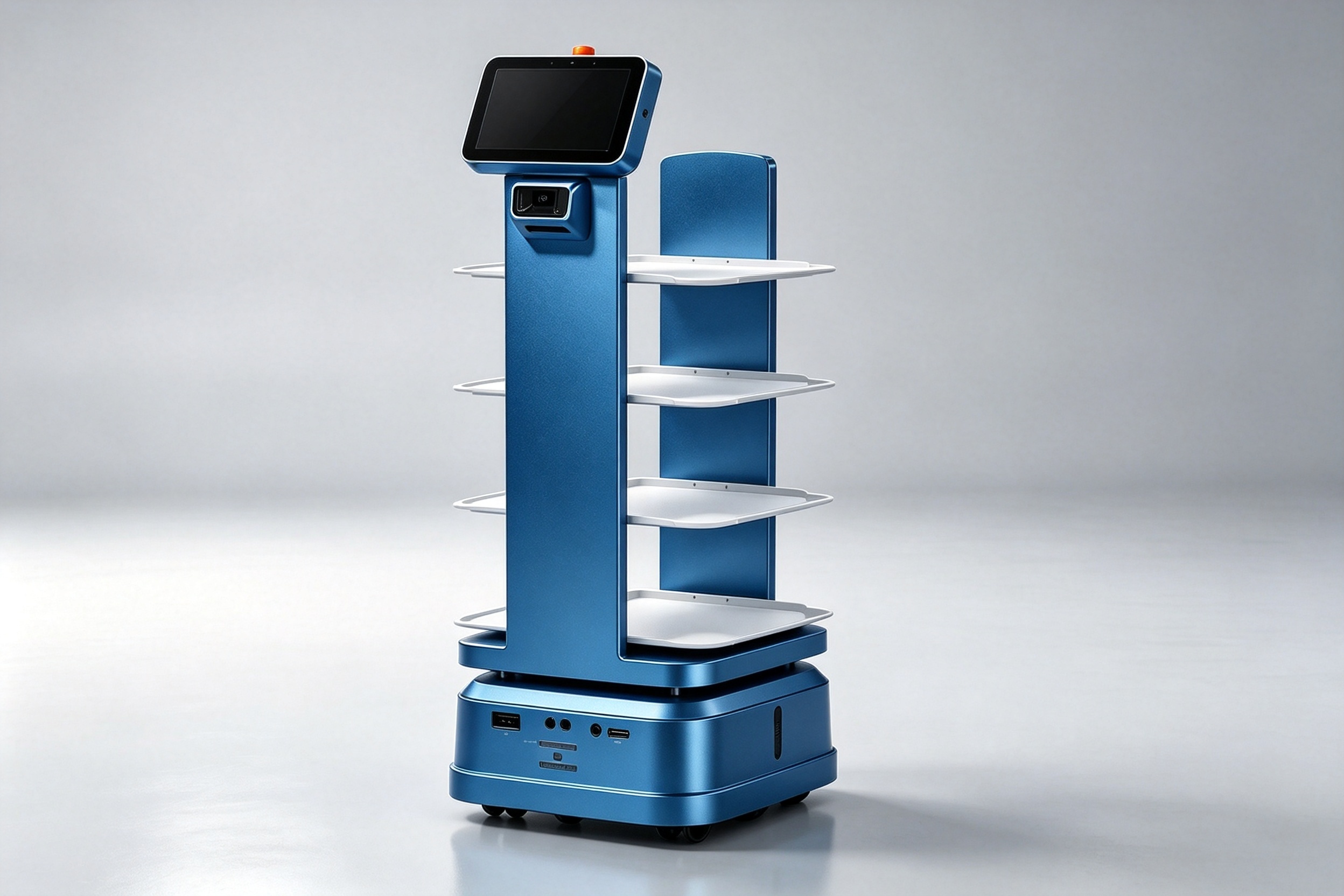
AMRs can transport pallets, totes, bins, or other payloads, depending on their configuration. Some models carry loads on top, while others lift or move compatible carts and racks.
Their navigation flexibility can be valuable in facilities with changing routes, mixed traffic, or multiple pickup and delivery points.
However, AMRs still require carefully designed operating zones, traffic rules, charging strategies, and safety validation. Autonomous navigation does not eliminate the need for operational planning.
4.3 Autonomous Forklifts
Autonomous forklifts automate selected lifting and transportation tasks traditionally performed by forklift operators.
Depending on the model and configuration, they may move pallet loads between floor-level locations, conveyors, staging areas, and compatible storage interfaces.
The warehouse must provide suitable load presentation, aisle clearances, floor conditions, pallet quality, and safe interaction zones. High-bay storage requirements may call for a different system, such as a stacker crane or dedicated AS/RS equipment.
4.4 Robotic Arms and Picking Robots
Robotic arms can automate tasks such as carton handling, depalletizing, palletizing, and selected picking operations.
Their suitability depends on product dimensions, weight, packaging variability, grip requirements, cycle time, and the reliability of item identification.
Picking irregular products may require additional vision systems, specialized grippers, or more complex control logic. A robot arm should therefore be evaluated against the actual product range rather than an idealized demonstration load.
4.5 Storage and Retrieval Robots
Storage and retrieval robotics includes shuttle systems, stacker cranes, and other equipment designed to place and retrieve goods from storage locations.
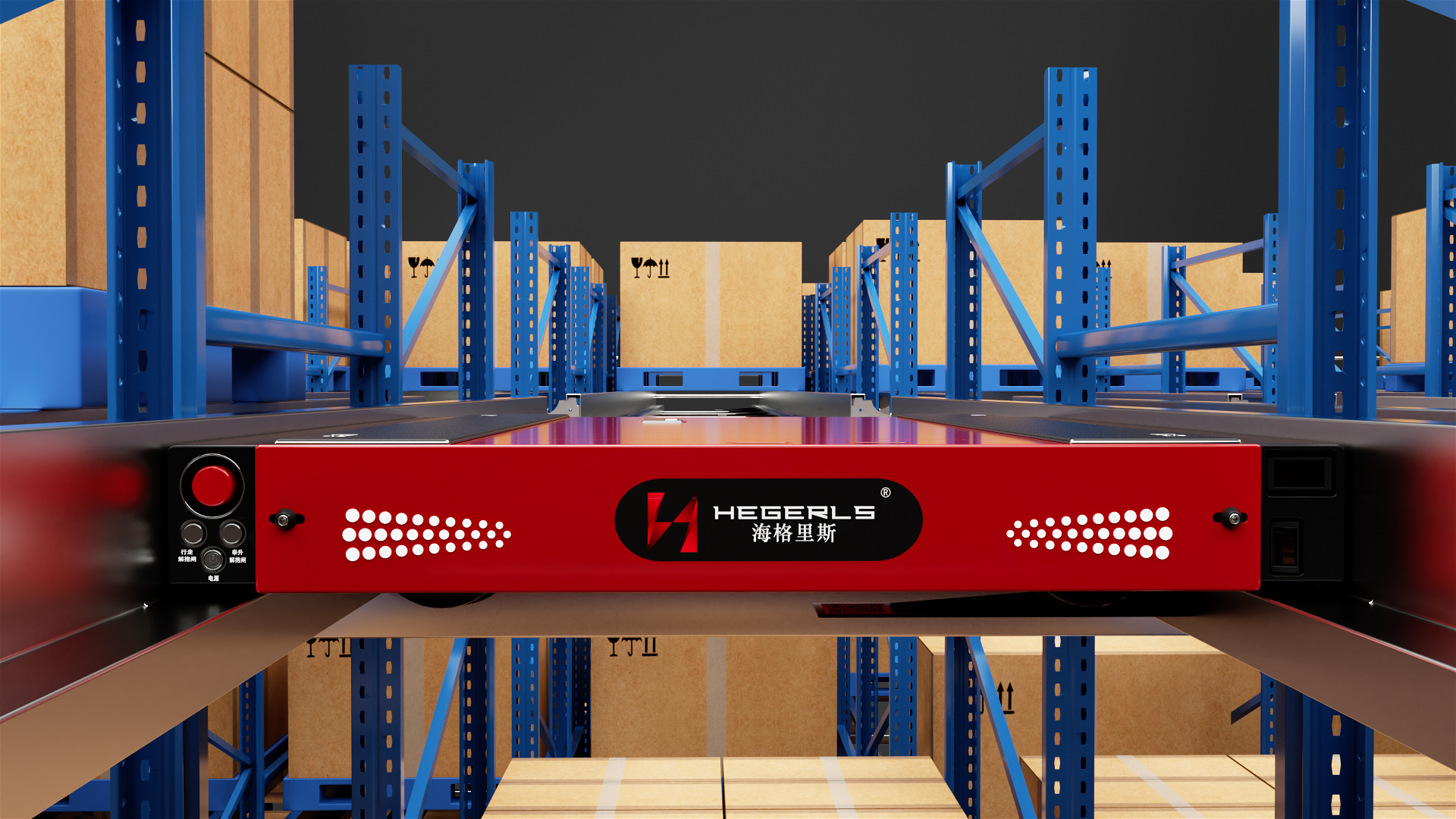
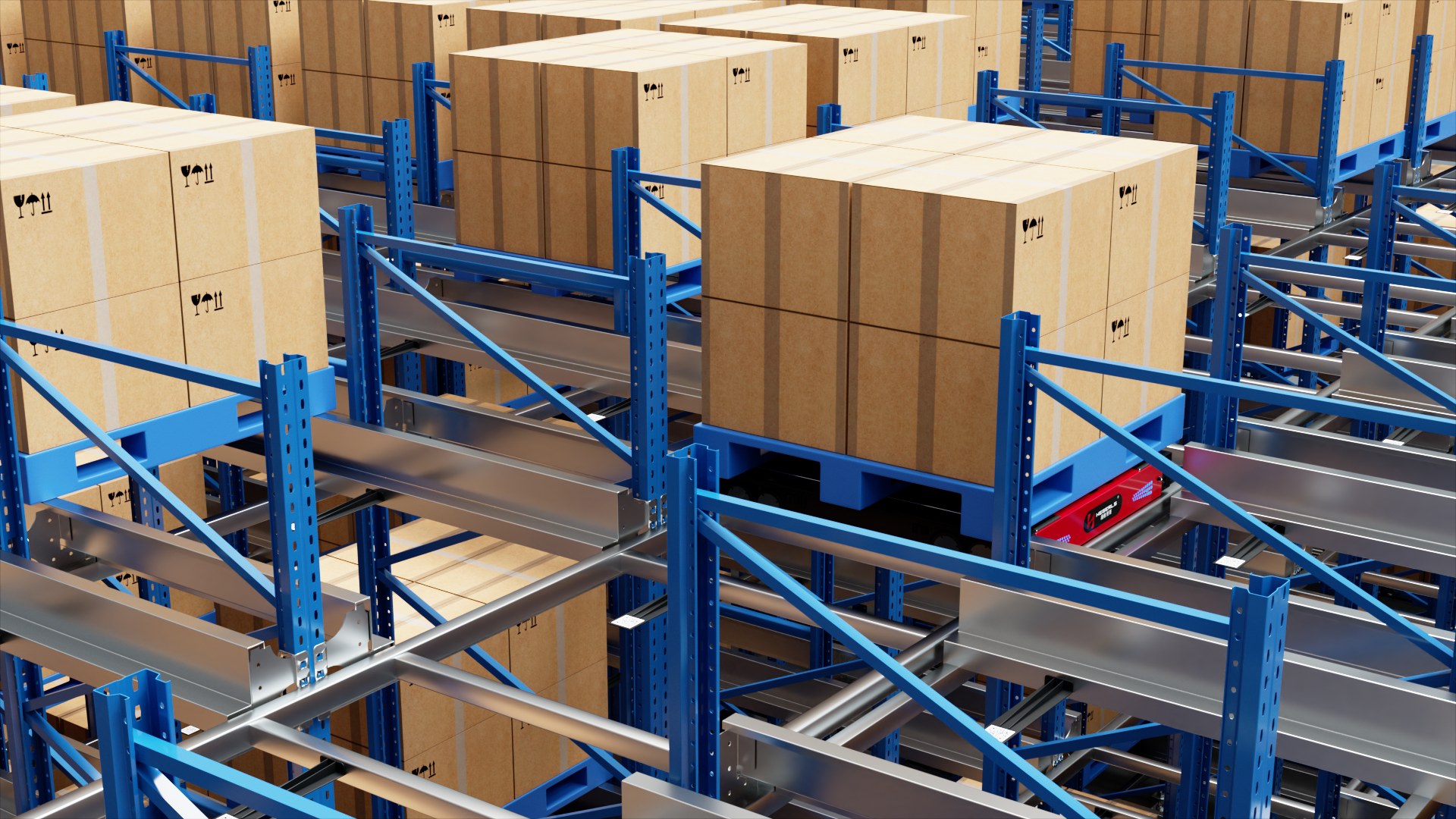
Four-way shuttle systems can move pallets horizontally across compatible rack levels and use lifts to transfer loads between levels. Stacker cranes travel within designated aisles to access storage locations.
These systems primarily address storage density, location access, and automated storage workflows. AGVs and AMRs can complement them by transporting loads between receiving, staging, production, picking, and shipping interfaces.
5. Types of AGV Navigation Systems
An AGV navigation system determines how a vehicle identifies its position, follows a route, and moves safely within a warehouse or industrial facility. Different navigation technologies offer different levels of flexibility, infrastructure requirements, and positioning capabilities.
Magnetic Navigation
Magnetic navigation uses magnetic strips, markers, or other magnetic references installed along designated routes. The AGV detects these references and follows the configured path.
-
Advantages: Relatively straightforward route guidance and predictable operation.
-
Limitations: Physical route infrastructure is required, and layout changes may involve additional installation work.
-
Applications: Manufacturing facilities and warehouses with stable transportation routes.
Wire Guidance
Wire-guided AGVs follow an electromagnetic signal generated by wires installed beneath the floor.
-
Advantages: Consistent guidance along dedicated routes.
-
Limitations: Installation can require floor modifications, making route changes more complicated.
-
Applications: Repetitive material transportation in fixed production environments.
Laser Navigation
Laser-guided AGVs use laser scanners and reference reflectors or other positioning references to determine their location and follow configured paths.
-
Advantages: Accurate positioning and reduced dependence on continuous physical guidance tracks.
-
Limitations: Reflector placement, visibility, environmental conditions, and system calibration must be considered.
-
Applications: Warehouses and industrial facilities requiring configurable transportation routes.
QR Code and Marker-Based Navigation
This method uses QR codes or other floor-mounted markers as positioning references. The vehicle reads the markers to identify its location and execute programmed movements.
-
Advantages: Clear positioning references and relatively straightforward route configuration.
-
Limitations: Floor markers must remain readable and properly maintained.
-
Applications: Structured warehouses and production areas with designated travel paths.
Natural Feature Navigation
Natural navigation uses onboard sensors, such as LiDAR and cameras, to recognize surrounding environmental features and determine the vehicle's position.
-
Advantages: Greater flexibility for changing routes and operating environments.
-
Limitations: Mapping quality, localization reliability, environmental changes, and sensor performance must be evaluated.
-
Applications: Facilities requiring more flexible autonomous material transportation.
How to Select the Right Navigation System
The right navigation technology depends on warehouse layout stability, route complexity, installation conditions, positioning requirements, and future expansion plans.
For facilities with repetitive transportation routes, magnetic or wire guidance may be sufficient. For operations requiring more flexible navigation, laser-based or natural feature navigation may be worth evaluating.
The final choice should be based on the vehicle's actual navigation capabilities and a site-specific assessment.
6. How Do AGVs and Warehouse Robots Work?
A typical robot-assisted material-handling process includes task creation, task assignment, navigation, load handling, status reporting, and completion confirmation.
Step 1: A Material-Handling Task Is Created
A warehouse or production system identifies a requirement, such as moving a pallet from receiving to a storage interface or delivering a container to a workstation.
The task includes the relevant pickup and delivery points, load information, priority, and any applicable process constraints.
Step 2: The Task Is Assigned to a Suitable Robot
The fleet-management or control system selects an available robot based on factors such as task compatibility, location, payload capacity, battery status, and current workload.
The exact allocation method depends on the software architecture and operational rules.
Step 3: The Robot Navigates to the Pickup Point
The vehicle follows its configured route or uses its onboard navigation capabilities to reach the pickup location.
Sensors and safety systems support operation within the defined environment. The robot may slow down, stop, or take an alternative route when conditions require it, depending on its design and configured functions.
Step 4: The Robot Handles the Load
The robot performs the required pickup or load-transfer operation. This may involve lifting a pallet, engaging a cart, collecting a tote, or receiving a load from a conveyor.
The pickup interface must be compatible with the robot and the load. Incorrect pallet positioning, damaged loads, or unavailable transfer equipment can interrupt the task.
Step 5: The Robot Transports the Load
The robot travels toward the destination while following the relevant traffic and safety rules.
For multi-robot operations, the system may coordinate route reservations, intersections, waiting zones, charging, and task priorities to reduce conflicts and maintain predictable material flow.
Step 6: The Destination and Task Completion Are Confirmed
At the destination, the robot transfers the load and reports the task status through the applicable control interface.
The warehouse system should distinguish between a task being assigned, a robot reaching a destination, and the load transfer being successfully completed. These are different events and may require different confirmation mechanisms.
Reliable completion records help keep warehouse inventory, material movement, and equipment status synchronized.
7. Applications of AGVs and Robotics in Warehousing
Receiving and Putaway
Robots can move incoming pallets or containers from receiving areas to inspection points, staging zones, or storage-system interfaces.
The benefit depends on whether the receiving process provides consistent load identification, pickup positions, and destination information.
Production Line Supply
AGVs and AMRs can transport raw materials, work-in-progress, and containers between warehouse areas and production stations.
A planned replenishment process can help coordinate material availability with production demand. However, the robot fleet, storage process, and production schedule must be designed together to avoid bottlenecks.
Pallet Transportation
Driverless vehicles can connect pallet-handling points across a warehouse, reducing the need for repeated manual transportation along suitable routes.
This is especially relevant when pallet movements are frequent, repetitive, and predictable.
Goods-to-Person Order Fulfillment
Robotic systems can bring compatible bins, racks, or storage units to picking stations, reducing the distance workers need to travel.
The overall performance depends on storage presentation, robot traffic, workstation capacity, order profiles, replenishment, and exception handling.
Sorting, Picking, and Packing
Robotic arms, automated sortation systems, and mobile robots can support different stages of order fulfillment.
The correct combination depends on SKU variety, product dimensions, order-line distribution, packaging characteristics, and the required processing rate.
Automated Storage and Retrieval
Robotic storage systems can work with AGVs or AMRs to connect storage, staging, picking, and shipping operations.
For example, an AGV may deliver a pallet to an AS/RS interface, while a stacker crane or shuttle system handles storage and retrieval within the designated rack structure.
This division of responsibility can help create an integrated material flow without requiring one type of robot to perform every task.
8. Benefits of AGVs and Warehouse Robotics
Reduced Repetitive Manual Transportation
Automating suitable transport routes can reduce the amount of routine driving, pushing, and pulling required from warehouse personnel.
Employees may then focus more on exception handling, quality checks, replenishment, supervision, and other tasks that require human judgment.
More Consistent Material Flow
When tasks, routes, and transfer points are properly configured, robots can execute repeatable transportation processes according to defined operating rules.
Consistency depends on reliable task assignment, suitable infrastructure, traffic coordination, and effective handling of interruptions.
Improved Operational Visibility
Connected robots can report task progress, operating states, and selected diagnostic information to the relevant control platform.
When this information is integrated with warehouse software, managers can gain better visibility into transportation tasks and operational exceptions.
Flexible Automation Options
AGVs, AMRs, robotic arms, and storage robots offer different automation capabilities. Businesses can select technologies for specific workflows rather than relying on a single equipment category.
Some mobile robot deployments can be expanded or reconfigured over time, although capacity, layout, safety, and software limitations must be considered.
Potential Improvements in Safety and Ergonomics
Automating suitable material movements can reduce exposure to repetitive manual handling and selected vehicle-related risks.
These benefits are not automatic. The deployment must include appropriate risk assessment, safety functions, operating procedures, training, and maintenance.
Integration with Warehouse Automation
Robots can become part of a broader warehouse system that includes racking, conveyors, AS/RS, WMS, WCS, and other connected equipment.
The objective is to improve the flow of materials and information across the operation, not simply to maximize the number of robots.
9. AGVs and Robotics: Challenges to Consider
Site and Layout Constraints
Narrow aisles, uneven floors, doorways, ramps, congested intersections, and restricted turning areas may affect robot suitability.
Before implementation, the project team should verify the operating envelope of the selected vehicle and assess the actual warehouse layout.
Payload and Load Compatibility
A robot's rated capacity does not alone determine whether it can handle a specific load safely. Load dimensions, center of gravity, lifting height, pallet condition, and transfer-interface design also matter.
The selected system must be validated against the actual goods and handling process.
Traffic and Fleet Coordination
As the number of robots increases, uncoordinated movement can cause congestion, blocking, and uneven utilization.
Traffic rules, route reservations, task prioritization, charging schedules, and recovery procedures should be designed as part of the overall system.
Software and Equipment Integration
Robots may need to exchange information with WMS, WCS, ERP, MES, conveyors, lifts, doors, and other devices.
Different systems can use different interfaces and operating models. Integration requirements should be established early, including task acknowledgments, status messages, error handling, and system responsibilities.
Maintenance and Operational Readiness
Robots require preventive maintenance, battery management where applicable, software support, and a process for handling faults.
Businesses should also plan for manual recovery, spare parts, operator training, and service responsibilities before the system enters production.
Safety and Installation Considerations
AGV deployment requires more than selecting a suitable vehicle. The warehouse environment, pedestrian interaction, equipment interfaces, and emergency procedures must all be considered during system design.
Key considerations include:
1. Pedestrian and Vehicle Separation
Define operating zones, pedestrian crossings, restricted areas, and vehicle routes to reduce potential conflicts between people and automated vehicles.
2. Obstacle Detection and Emergency Stops
Verify that the AGV has appropriate protective devices, obstacle detection functions, emergency-stop mechanisms, and safety controls for its intended operating environment.
3. Floor and Aisle Conditions
Check floor flatness, load-bearing capacity, gradients, turning space, aisle clearance, and the condition of transportation routes before installation.
4. Loading and Unloading Interfaces
Ensure that pallets, conveyors, lifting stations, and transfer points are compatible with the vehicle's handling mechanism.
5. Charging and Maintenance Areas
Plan suitable charging locations, battery maintenance procedures, service access, and manual recovery arrangements.
6. Standards and Compliance
ISO 3691-4 provides safety requirements and verification guidance for driverless industrial trucks and their systems. Applicable local regulations and project-specific safety requirements should also be assessed.
A complete safety assessment should cover the AGVs, connected equipment, operating environment, and interactions between people and machines.
10. How AGVs and Robotics Integrate with WMS and WCS
A robot fleet becomes more useful when its tasks are connected to the warehouse's inventory and material-flow requirements.
A simplified architecture may look like this:
ERP/MES → WMS → WCS or fleet-management layer → AGVs, AMRs, conveyors, lifts, and other equipment
This is a conceptual architecture, not a mandatory design for every project. Some systems use a separate robot control system (RCS), while others integrate fleet-management functions into a WCS or another platform.
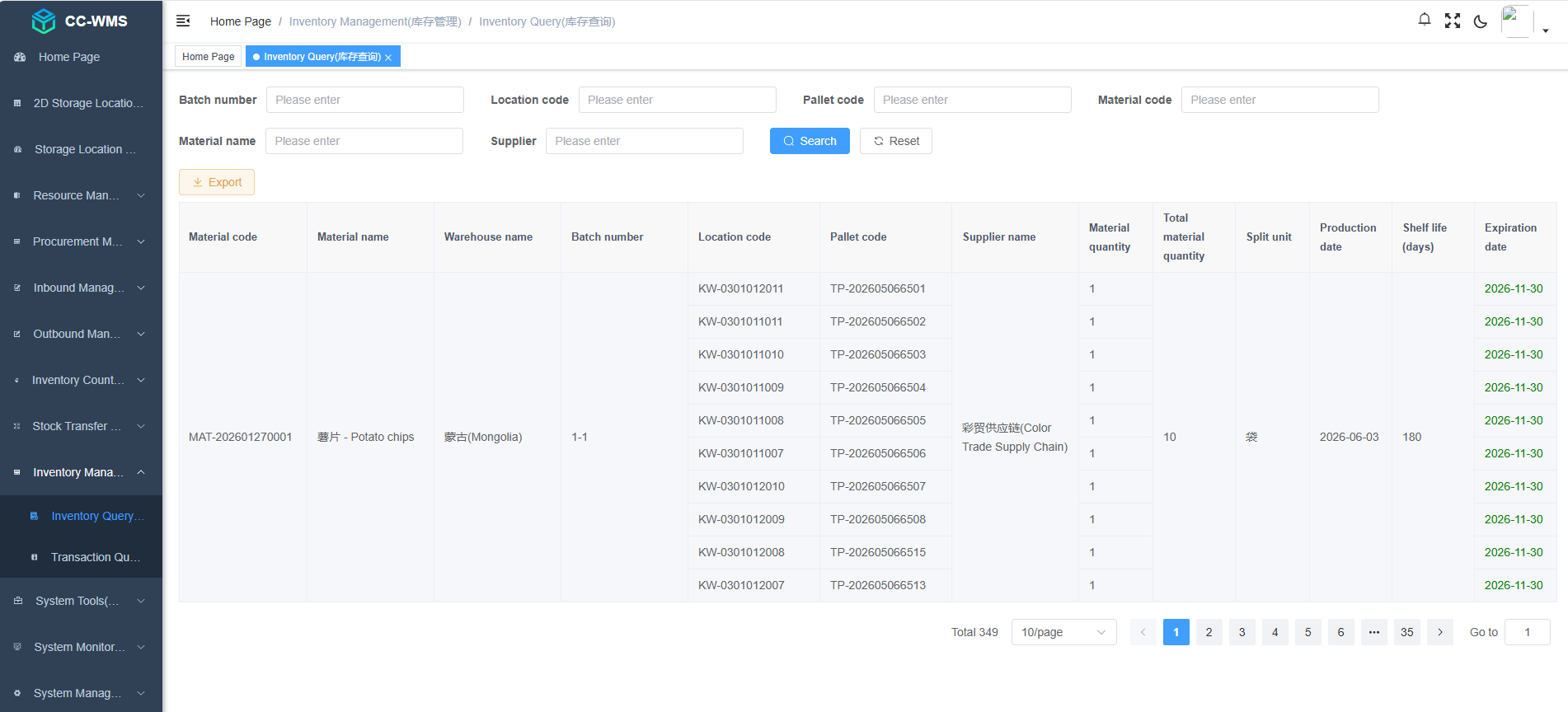
Warehouse Management System (WMS)
The WMS generally manages inventory, warehouse locations, orders, and business transactions. It may create or trigger material movement requirements based on receiving, putaway, replenishment, picking, and dispatch processes.
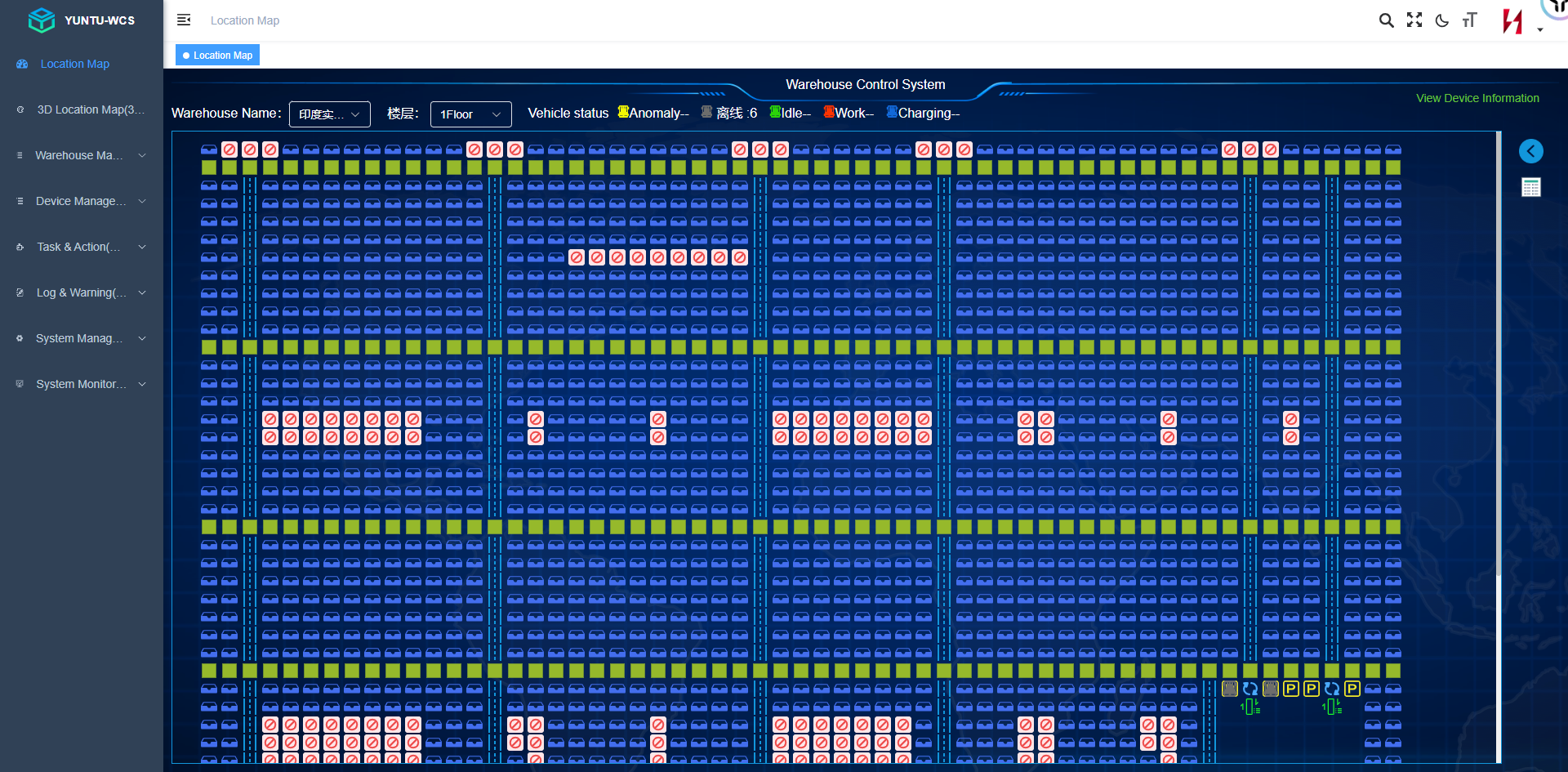
Warehouse Control System (WCS)
A WCS coordinates connected warehouse equipment and material-handling operations. Depending on the implementation, it may sequence equipment tasks, manage transfers between systems, and monitor execution status.
Robot or Fleet Management
A robot fleet-management layer may handle vehicle-specific functions such as task allocation, traffic coordination, battery-aware assignment, and fleet status monitoring.
The exact division of responsibilities depends on the project architecture. The key requirement is to define clear ownership for each task and operating state.
Zhuku's CC-WMS and YUNTU-WCS are part of its warehouse software portfolio. Their suitability for a particular AGV or robotics integration depends on the required workflow, supported interfaces, and the selected equipment.
11. How to Choose the Right AGV or Robotics Solution
A structured selection process can help prevent a mismatch between equipment capabilities and actual warehouse requirements.
Step 1: Map the Material Flow
Document where materials originate, where they need to go, how often they move, and which processes are currently causing delays.
Identify repeatable routes and handover points before selecting a vehicle.
Step 2: Define Load and Performance Requirements
Specify payload, dimensions, pickup and delivery interfaces, travel distance, operating hours, and required task volume.
Use actual operating data where possible instead of relying only on peak estimates or theoretical equipment speeds.
Step 3: Evaluate the Operating Environment
Review aisle widths, floor conditions, gradients, doorways, pedestrian traffic, lighting, and network coverage where relevant.
For AMRs, verify mapping and localization suitability. For guided AGVs, assess the required route infrastructure and its maintenance implications.
Step 4: Select the Appropriate Robot Type
Match the task to the technology:
-
Repetitive transport on stable routes: consider an AGV.
-
Transport in changing environments: evaluate an AMR.
-
Pallet lifting and transfer: consider a suitable pallet-handling vehicle or autonomous forklift.
-
Carton or unit-load manipulation: evaluate a robotic arm or picking robot.
-
High-density storage and retrieval: assess a suitable AS/RS or shuttle system.
These are starting points rather than fixed rules. A site assessment may identify a different combination.
Step 5: Design Software and Equipment Integration
Define how tasks will be created, assigned, acknowledged, completed, and reconciled with inventory records.
Confirm the interfaces among the WMS, WCS, robot fleet, conveyors, lifts, and any external business systems.
Step 6: Assess Safety and Risk
Evaluate pedestrian interaction, crossing points, loading stations, restricted zones, emergency procedures, and recovery operations.
ISO 3691-4 addresses safety requirements and verification for driverless industrial trucks and their systems. The applicable edition and other local requirements should be confirmed for the project.
Compliance assessment must consider the complete system and its operating environment rather than relying solely on a vehicle's product description.
Step 7: Pilot, Measure, and Scale
Test representative loads, routes, task volumes, traffic conditions, and fault scenarios.
Measure completed tasks, waiting time, congestion, availability, charging impact, exception frequency, and recovery time. Use the results to refine the design before expanding the deployment.
12. AGVs and Robotics vs. Traditional Material Handling
| Factor | Manual handling | AGV-based transport | AMR-based transport | Integrated warehouse robotics |
| Material movement | Human-operated | Automated along configured routes | Automated using autonomous navigation capabilities | Coordinated across multiple equipment types |
| Route flexibility | Depends on operators and equipment | Depends on guidance and route design | Often higher, subject to system capabilities | Depends on the combined system architecture |
| Repetitive transport | Requires ongoing operator activity | Suitable for repeatable routes | Suitable for supported transport workflows | Can connect transport with storage and order fulfillment |
| Software coordination | May be limited or separate | Depends on fleet and warehouse integration | Depends on fleet and warehouse integration | Requires defined interfaces and task responsibilities |
| Best-fit use case | Variable or low-volume tasks | Stable, predictable material flow | More variable routes and operating environments | Multi-stage, connected warehouse operations |
No single option is the best choice for every warehouse. The most suitable design is the one that meets the required throughput, safety, reliability, flexibility, and total cost of ownership.
Why Choose Zhuku for Warehouse Automation Integration?
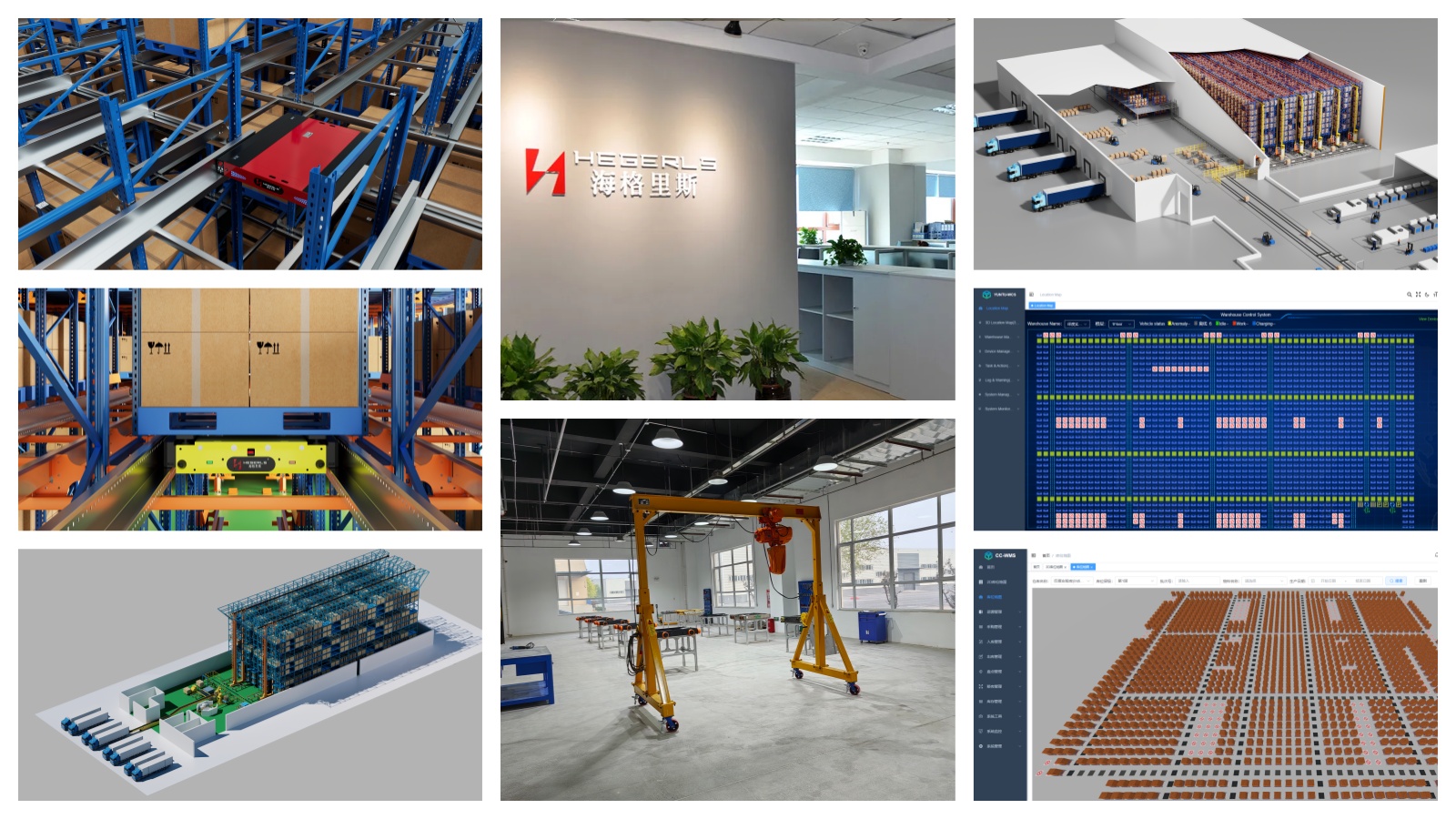
Zhuku (Hebei) Automatic Storage Technology Co., Ltd. provides warehouse automation and integrated storage solutions, including four-way shuttle systems, automated storage and retrieval systems, storage racking, and warehouse software.
For projects involving AGVs, AMRs, or other robotic equipment, integration planning should connect transportation tasks with storage locations, material-flow interfaces, inventory records, and equipment execution.
Zhuku's CC-WMS and YUNTU-WCS software portfolio can be considered within a project-specific architecture, subject to interface compatibility and functional requirements.
A warehouse automation assessment should consider:
-
The material flow from receiving to storage, production, picking, and shipping.
-
The suitability of AGVs, AMRs, and other robotic equipment for each task.
-
Integration with conveyors, lifts, racking, and automated storage systems.
-
WMS/WCS responsibilities and equipment communication interfaces.
-
Traffic coordination, safety, maintenance, and recovery procedures.
-
Required throughput, future scalability, and total cost of ownership.
The objective is to create a coordinated warehouse operation in which each technology performs the tasks for which it is best suited.
Conclusion
AGVs and warehouse robotics offer different ways to automate material movement, load handling, storage, and order fulfillment. Traditional AGVs can be effective for repeatable routes, while AMRs may offer greater navigation flexibility in suitable environments. Robotic arms, autonomous forklifts, shuttles, and stacker cranes address other handling and storage requirements.
The best solution depends on the warehouse layout, load characteristics, throughput, safety requirements, and existing systems. For complex operations, successful automation requires more than selecting individual robots: it requires clear task ownership, reliable software integration, coordinated material flow, and practical recovery procedures.
Planning an AGV, AMR, or warehouse robotics project? Share your warehouse layout in CAD or PDF format, together with load dimensions, payloads, movement routes, expected task volumes, and current operational challenges. Zhuku can help evaluate suitable warehouse automation and integration options for your facility.


