A warehouse control system (WCS) coordinates automated material handling equipment and connects warehouse management software with the machines that move goods. It helps synchronize equipment operations, manage task execution, monitor equipment status, and maintain material flow across an automated warehouse.
As businesses invest in four-way shuttle systems, automated storage and retrieval systems (AS/RS), stacker cranes, conveyors, and mobile robots, selecting the right warehouse control system becomes increasingly important.
But what are the best warehouse control systems? Which warehouse control system vendors should you consider? What are the different types of WCS, and how does WCS compare with WMS?
This guide explains how warehouse control systems work, compares representative vendors, explores common system types, and provides practical criteria for choosing a solution. It also introduces Zhuku's warehouse software and automation integration capabilities.
What Is a Warehouse Control System (WCS)?
A warehouse control system (WCS) is software that coordinates automated material handling equipment and manages the execution of warehouse movements.
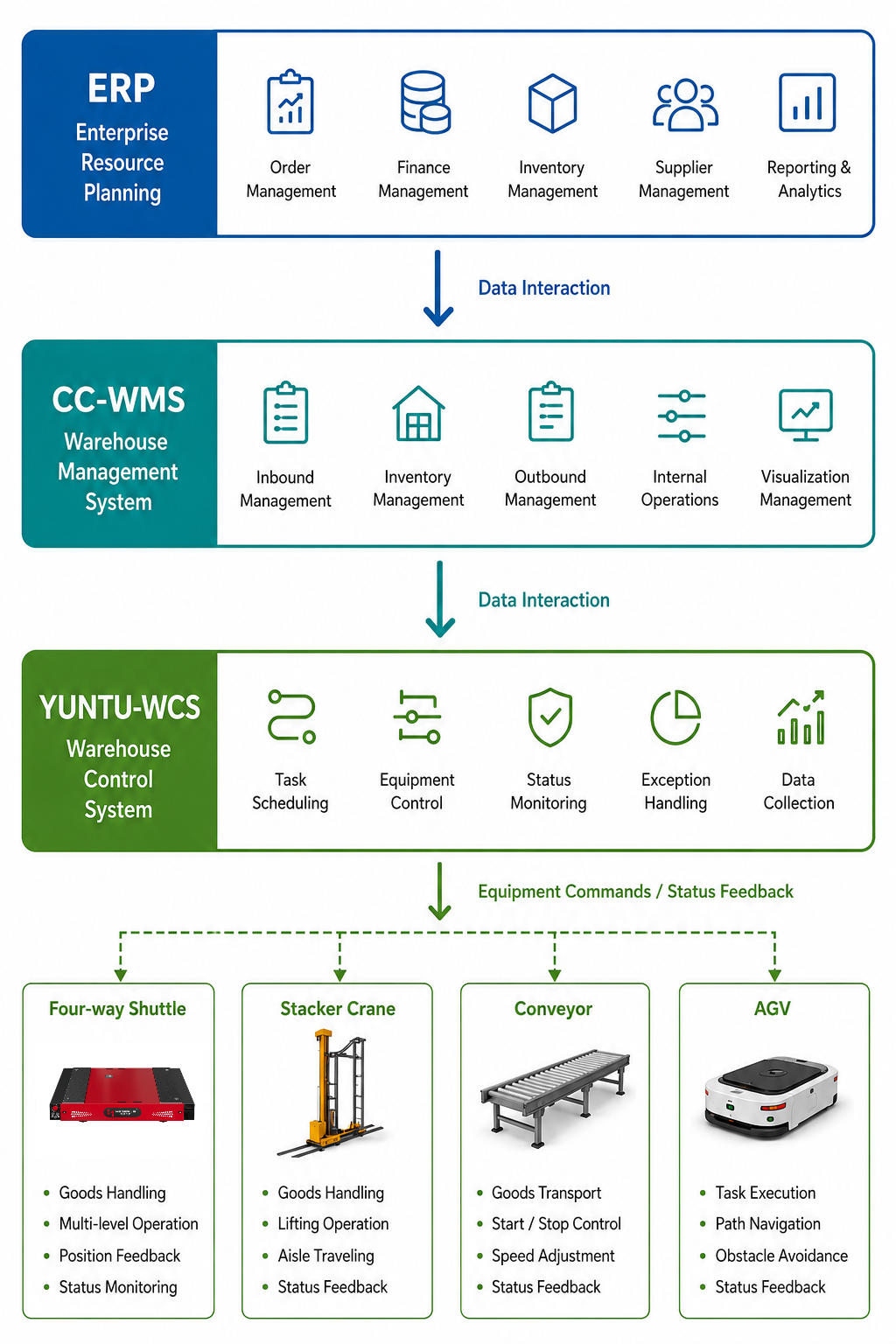
A WCS typically receives tasks from a warehouse management system (WMS) or another higher-level application. It translates those tasks into instructions for connected equipment, monitors execution, and returns status information.
Depending on the warehouse design, a WCS may coordinate:
-
Four-way and two-way shuttle systems
-
Automated storage and retrieval systems (AS/RS)
-
Stacker cranes and automated lifts
-
Conveyors and sorting equipment
-
Automated guided vehicles (AGVs)
-
Autonomous mobile robots (AMRs)
A WCS is not simply an equipment monitoring dashboard. Its role is to coordinate related operations, manage equipment task sequences, and respond to execution exceptions according to the system's configured logic.
For example, when a pallet needs to move from a high-density storage location to an outbound station, the WCS may coordinate the shuttle, lift, and conveyor movements required to complete the task.
The exact functions depend on the equipment interfaces, control architecture, and capabilities implemented in the project.
How Does a Warehouse Control System Work?
A warehouse control system connects warehouse-level tasks with physical equipment operations. A typical workflow includes the following steps.
-
Task creation: The WMS identifies a storage, retrieval, replenishment, or transportation requirement.
-
Task reception: The WCS receives the task or the information needed to execute it.
-
Resource allocation: The WCS selects available equipment and determines the required execution sequence according to its scheduling rules.
-
Equipment control: The WCS communicates with connected controllers to initiate the required movements.
-
Execution monitoring: Equipment feedback and task acknowledgements indicate whether operations are progressing as expected.
-
Exception handling: The system identifies faults or unexpected states and follows the configured recovery procedures.
-
Status reporting: Execution results are returned to the relevant upper-level system so that warehouse records and subsequent tasks can be updated.
Consider an automated pallet warehouse. The WMS identifies the pallet and its storage location. The WCS coordinates the equipment needed to retrieve it and move it to the designated transfer point. Once the equipment confirms completion, the result can be communicated back to the WMS.
This connection between warehouse tasks and equipment execution helps keep automated processes coordinated.
What Are the Main Types of Warehouse Control Systems?
There is no single, universally accepted classification of warehouse control systems. In practice, WCS solutions can be grouped according to their equipment scope, integration approach, and software architecture.
1. Equipment-Specific Control Systems
These systems are designed around particular machines or equipment groups, such as conveyors, sorters, stacker cranes, or shuttle systems.
They can be suitable for relatively standardized installations where equipment comes from one supplier and the control requirements are clearly defined.
Best suited for: Projects with a limited equipment scope and straightforward automation workflows.
2. Integrated Warehouse Control Systems
An integrated WCS coordinates multiple types of automated equipment within one warehouse operation. For example, it may synchronize shuttles, lifts, conveyors, and stacker cranes across different storage zones.
The objective is to coordinate the complete material flow rather than manage each machine independently.
Best suited for: Automated warehouses with multiple interconnected equipment types, complex transfer sequences, or high-density storage systems.
3. Multi-Vendor WCS Platforms
These systems are designed to integrate equipment from different manufacturers, subject to supported interfaces and project-specific engineering.
They can be valuable when a warehouse already uses equipment from multiple suppliers or plans to expand in stages.
Best suited for: Existing warehouses, mixed-equipment environments, and projects requiring flexible integration.
Multi-vendor compatibility should be verified during procurement. Not every WCS supports every equipment brand or communication protocol without customization.
4. WCS Functions Within a Broader Software Platform
Some warehouse software platforms combine equipment control with warehouse execution or management functions. This can simplify the software architecture, but buyers must understand where each responsibility sits.
Best suited for: Projects seeking a consolidated software architecture with clearly defined task ownership and equipment-control boundaries.
When comparing system types, focus on actual capabilities rather than the product name alone.
Best Warehouse Control Systems: How to Choose the Right Solution
The best warehouse control system depends on the warehouse's equipment, throughput targets, integration requirements, operational complexity, and budget. There is no universally best solution for every application.
Instead of choosing based on brand recognition alone, evaluate the following criteria.
| Evaluation factor | What to check | Why it matters |
| Equipment compatibility | Supported equipment, controllers, protocols, and interfaces | Determines whether the WCS can coordinate the required devices |
| Scheduling and dispatching | Task priorities, resource allocation, and movement sequencing | Influences material flow and equipment utilization |
| Integration capabilities | WMS, ERP, MES, and third-party software interfaces | Helps maintain consistent information across systems |
| Fault recovery | Alarm handling, interrupted tasks, and restart procedures | Supports operational continuity |
| Monitoring and traceability | Equipment status, task logs, and event history | Helps operators troubleshoot problems |
| Scalability | Additional vehicles, equipment, zones, and transaction volumes | Supports future expansion |
| Implementation support | Engineering, testing, commissioning, and training | Affects project delivery and long-term operation |
| Total cost of ownership | Software, integration, customization, maintenance, and upgrades | Enables a more realistic cost comparison |
A practical evaluation should include demonstrations based on real warehouse workflows. Ask vendors to show how their systems handle peak demand, equipment faults, communication interruptions, and recovery after an unexpected stop.
Warehouse Control System Vendors: Companies to Consider
Warehouse control system vendors include automation manufacturers, warehouse system integrators, and software providers. Some supply WCS capabilities as part of a complete automation project, while others focus on software or integration across different equipment platforms.
The companies below are representative suppliers worth investigating, not a universal ranking. Their current product scope, regional support, and specific WCS capabilities should be confirmed directly.
Zhuku
Zhuku provides warehouse automation integration, combining warehouse software, automated equipment, and engineering capabilities.
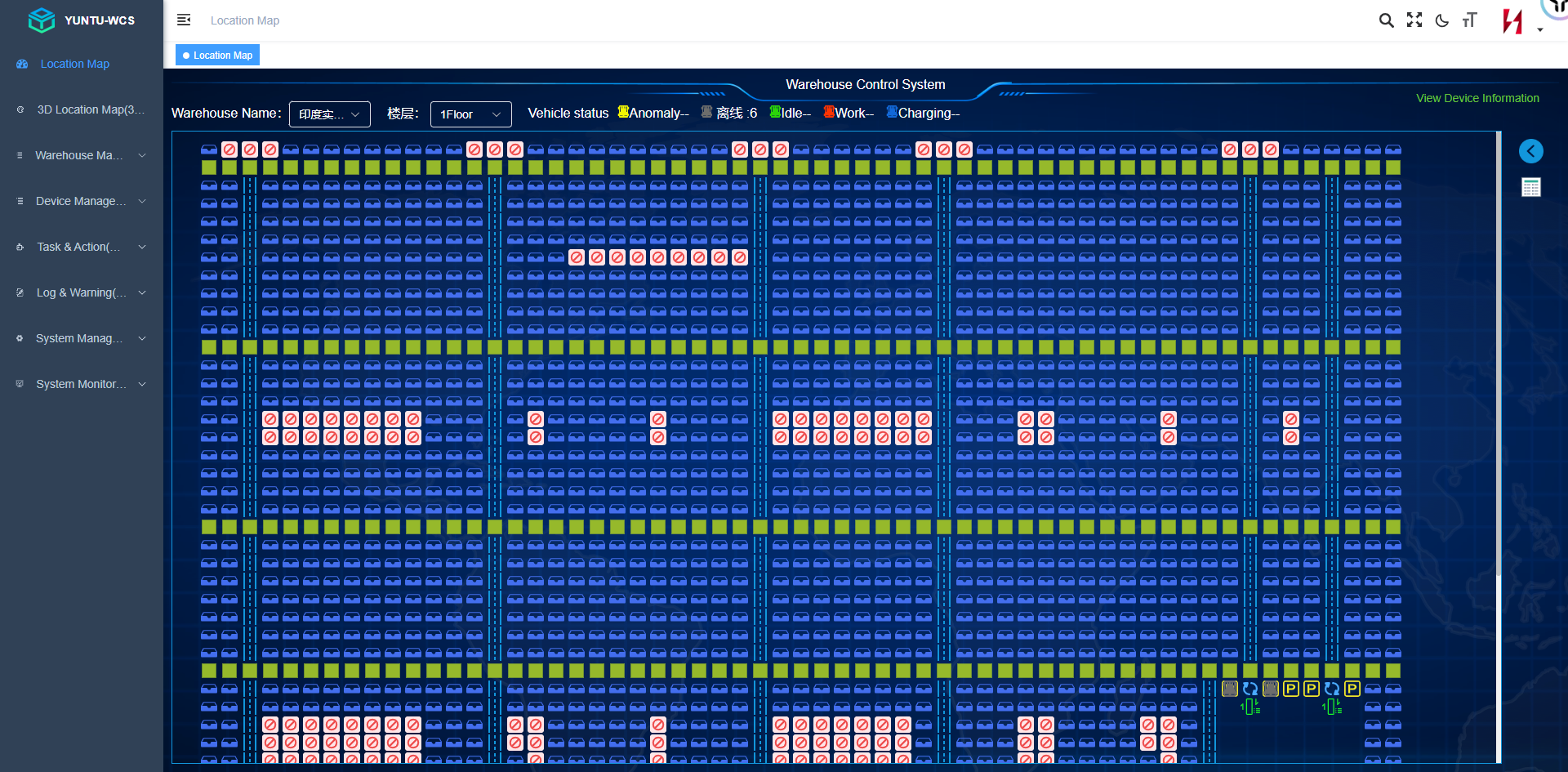
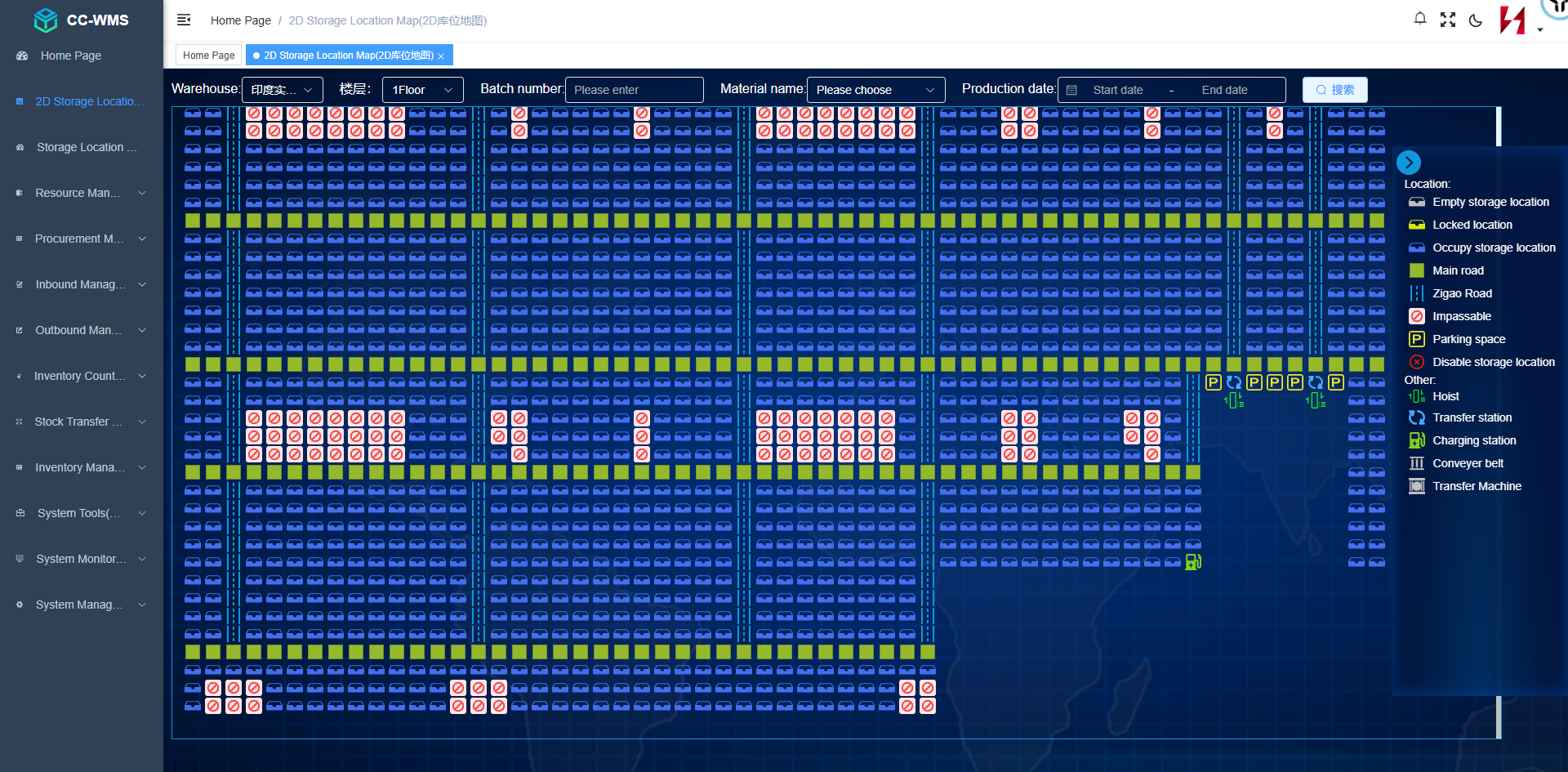
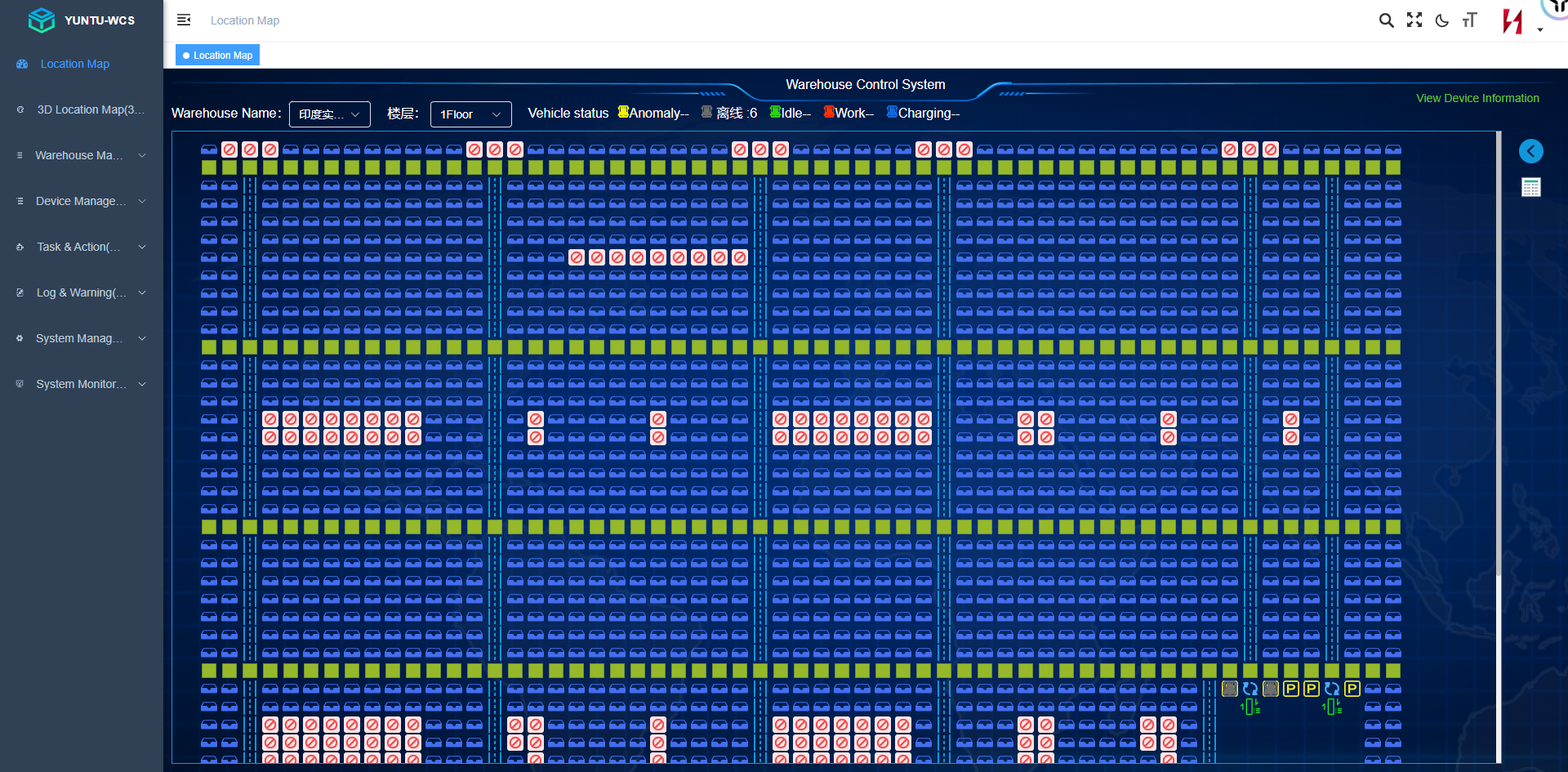
Its software portfolio includes YUNTU-WCS and CC-WMS. YUNTU-WCS is designed to coordinate supported automated equipment and task execution, while CC-WMS supports warehouse management processes.
Zhuku's integrated approach is relevant to projects involving four-way shuttle systems, AS/RS, stacker cranes, conveyors, and lifts, subject to the specific project configuration and equipment interfaces.
Consider Zhuku for: Businesses evaluating warehouse software and equipment coordination together, particularly in automated storage and high-density warehouse projects.
Explore the YUNTU-WCS Warehouse Control System and the CC-WMS Warehouse Management System.
Dematic
Dematic provides warehouse automation solutions combining material handling equipment, software, and system integration.
Consider it for: Large distribution centers and projects requiring integrated warehouse automation.
Honeywell Intelligrated
Honeywell Intelligrated offers warehouse automation and material handling solutions for distribution and fulfillment operations.
Consider it for: Facilities requiring coordinated material handling equipment and broader automation capabilities.
Swisslog
Swisslog supplies automated logistics and warehouse solutions, including automated storage technologies and software capabilities.
Consider it for: Automated storage and retrieval applications, goods-to-person operations, and integrated warehouse projects.
Körber
Körber offers supply chain software and warehouse automation capabilities. Its portfolio may be relevant to operations seeking integration between warehouse processes and automation.
Consider it for: Warehouse software integration and automation projects with broader execution requirements.
SSI SCHÄFER
SSI SCHÄFER provides warehouse storage, automation, and software solutions.
Consider it for: Projects combining storage infrastructure, automated equipment, and warehouse software.
Vanderlande
Vanderlande provides automated material handling and logistics systems for warehouses, distribution centers, and other logistics environments.
Consider it for: Complex material flow and large-scale automation projects.
When comparing warehouse control system companies, assess technical fit, interface compatibility, engineering responsibilities, implementation support, and lifecycle cost. A vendor's ability to deliver a complete and testable system is often more important than its position on a generic supplier list.
WCS vs. WMS: What Is the Difference?
The main difference between a warehouse control system and a warehouse management system is their operational responsibility.
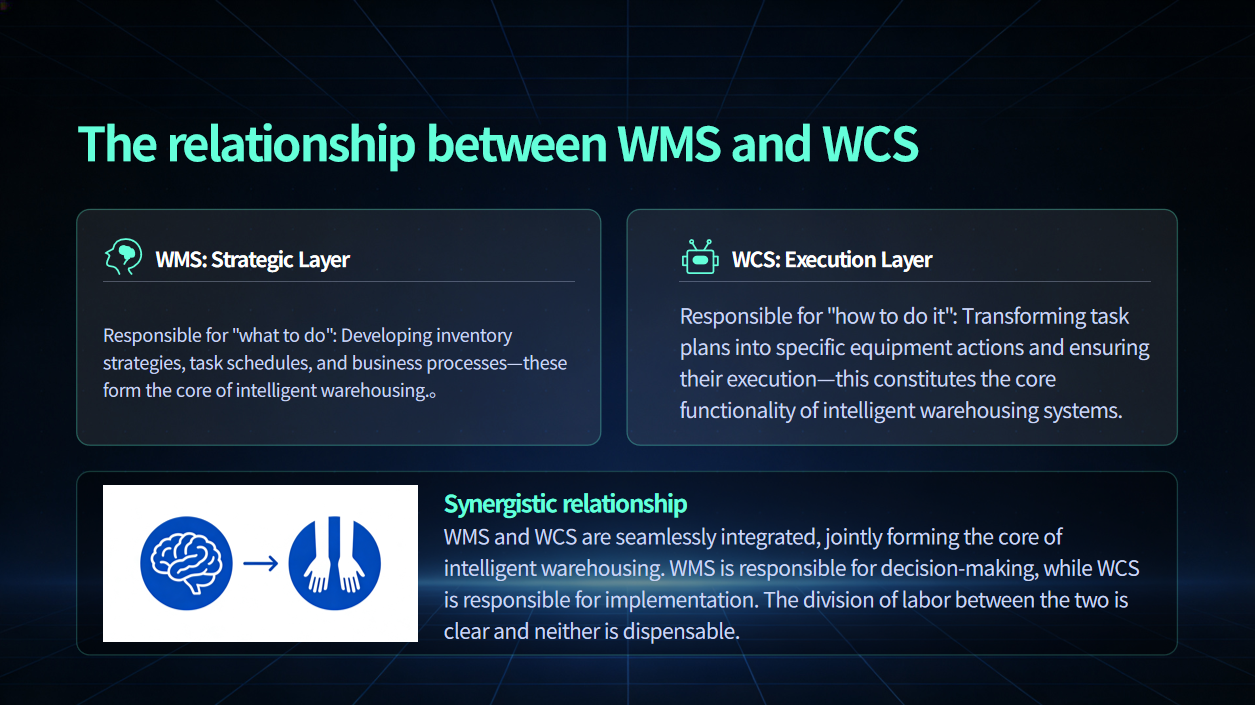
A WMS manages inventory and warehouse processes. A WCS coordinates automated equipment and physical material movement. Their functions complement each other, although some software platforms combine them.
| Feature | WMS (Warehouse Management System) | WCS (Warehouse Control System) |
| Primary purpose | Manage inventory and warehouse operations | Coordinate automated equipment and material movement |
| Typical responsibilities | Receiving, putaway, inventory, picking, and shipping | Equipment dispatching, movement coordination, transfer sequencing, and execution monitoring |
| Main information | Orders, inventory records, locations, and warehouse tasks | Equipment states, movement instructions, task status, and alarms |
| Equipment interaction | Usually indirect or through other software layers | Coordinates connected equipment through defined interfaces and controllers |
| Key performance concerns | Inventory accuracy, order fulfillment, and process efficiency | Execution reliability, equipment coordination, and material flow |
| Common application | Manual, semi-automated, and automated warehouses | Automated warehouses requiring coordinated equipment control |
How Do WMS and WCS Work Together?
Consider a pallet retrieval task in an automated warehouse.
-
The WMS identifies the pallet, its storage location, and the required warehouse task.
-
The WCS receives the task or the information required to execute it.
-
The WCS coordinates the necessary shuttle, lift, stacker crane, or conveyor movements.
-
Equipment controllers execute the machine-level operations.
-
Equipment status and task completion information are returned through the relevant interfaces.
-
The WMS updates the corresponding warehouse records according to the agreed confirmation logic.
This division of responsibilities connects inventory management with physical execution.
A warehouse relying mainly on manual processes may need only a WMS. A facility with several types of automated equipment may benefit from a dedicated WCS or equivalent control functions integrated into a broader platform.
WCS vs. WMS vs. WES
A warehouse execution system (WES) may coordinate and prioritize operational work between warehouse management and equipment control. Its responsibilities can overlap with those of a WMS or WCS, depending on the vendor's architecture.
-
WMS: Manages inventory, orders, locations, and warehouse tasks.
-
WES: Coordinates and prioritizes operational work in real time where those functions are implemented.
-
WCS: Coordinates the execution of automated equipment and material movements.
Not every warehouse needs three separate systems. The appropriate architecture depends on operational complexity, existing software, and the functions included in each solution.
How Does a WCS Coordinate Different Warehouse Automation Systems?
The value of a WCS becomes clearer when several equipment types must operate as one system.
Four-Way Shuttle Systems
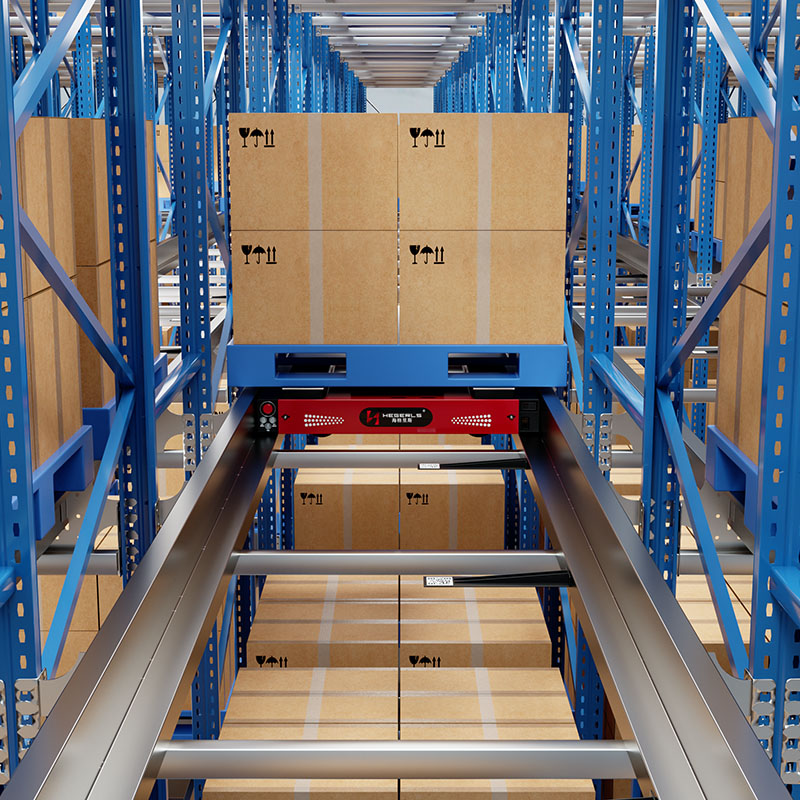
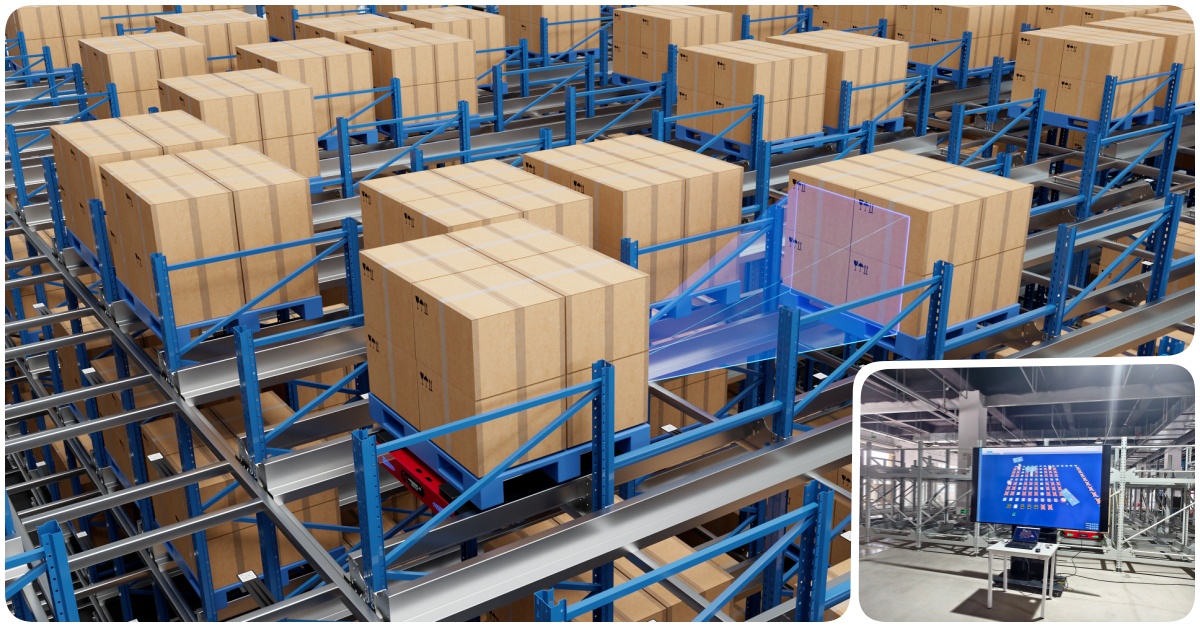
A four-way shuttle warehouse may include high-density racking, multiple vehicles, lifts, and transfer equipment. The WCS coordinates task allocation and vehicle movements according to its scheduling and equipment-control capabilities.
Important evaluation points include multi-vehicle coordination, lift synchronization, task queues, route conflicts, equipment status feedback, and recovery from interrupted tasks.
Learn more about the Zhuku Four-Way Shuttle System.
Automated Storage and Retrieval Systems
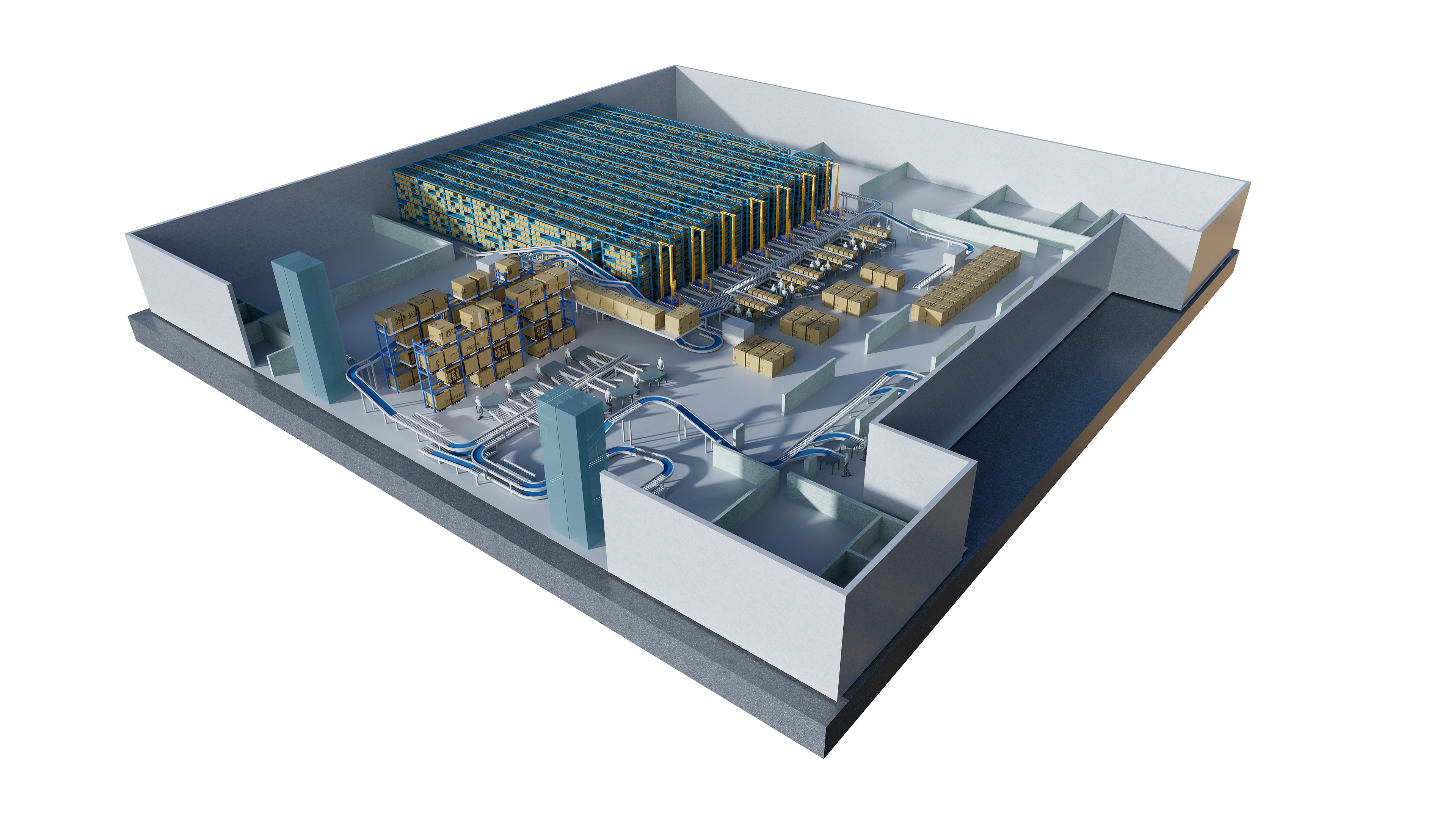
In an AS/RS, stacker cranes or other automated mechanisms retrieve and store loads at designated locations. Conveyors and lifts may connect storage areas with picking, receiving, and dispatch stations.
The WCS coordinates the required equipment sequence and monitors execution. The system design should account for equipment availability, transfer points, load compatibility, and downstream station capacity.
Learn more about the Zhuku ASRS Solution.
Conveyors and Lifts
Conveyors and lifts connect warehouse zones and different levels. The WCS coordinates the sequence of movements and uses equipment feedback to determine whether a transfer has completed before the next operation begins.
AGVs and AMRs
When mobile robots participate in material transportation, the integration architecture should define task assignment, status exchange, traffic coordination, and the responsibilities of the WCS and robot fleet management system.
The precise control boundary depends on the equipment and software architecture.
How to Choose a Warehouse Control System Vendor
Selecting a vendor requires more than comparing feature lists. The supplier must be able to support the warehouse's operational requirements and integrate with the intended equipment.
1. Map Your Warehouse Processes
Document inbound, storage, replenishment, picking, and outbound workflows. Identify each equipment handoff and which system is responsible for creating, dispatching, and confirming tasks.
2. Define Throughput and Scheduling Requirements
Establish peak inbound and outbound volumes, expected pallet movements, task priorities, and future growth. Ask vendors how their scheduling logic addresses competing tasks, congestion, and equipment availability.
3. Confirm Equipment Compatibility
Prepare a list of equipment models, controllers, communication protocols, commands, and feedback signals. Verify which interfaces are supported directly and which require additional engineering.
4. Evaluate Fault Handling
Ask what happens when a shuttle stops, a conveyor becomes blocked, a lift becomes unavailable, or communication is interrupted. Request demonstrations of alarm handling, task reconciliation, and restart procedures.
5. Check Implementation and Support
Clarify responsibility for system design, interface development, testing, commissioning, training, and ongoing technical support. Confirm which services are included in the proposal.
6. Compare Total Cost of Ownership
Include software licensing, integration engineering, customization, maintenance, support, training, and future upgrades. A lower initial price does not necessarily mean a lower lifecycle cost.
7. Define Acceptance Tests Before Commissioning
Agree on measurable criteria for throughput, task completion, interface reliability, data consistency, and fault recovery. Test complete workflows under normal and abnormal conditions rather than evaluating individual machines in isolation.
Why Choose Zhuku for Warehouse Control System Integration?
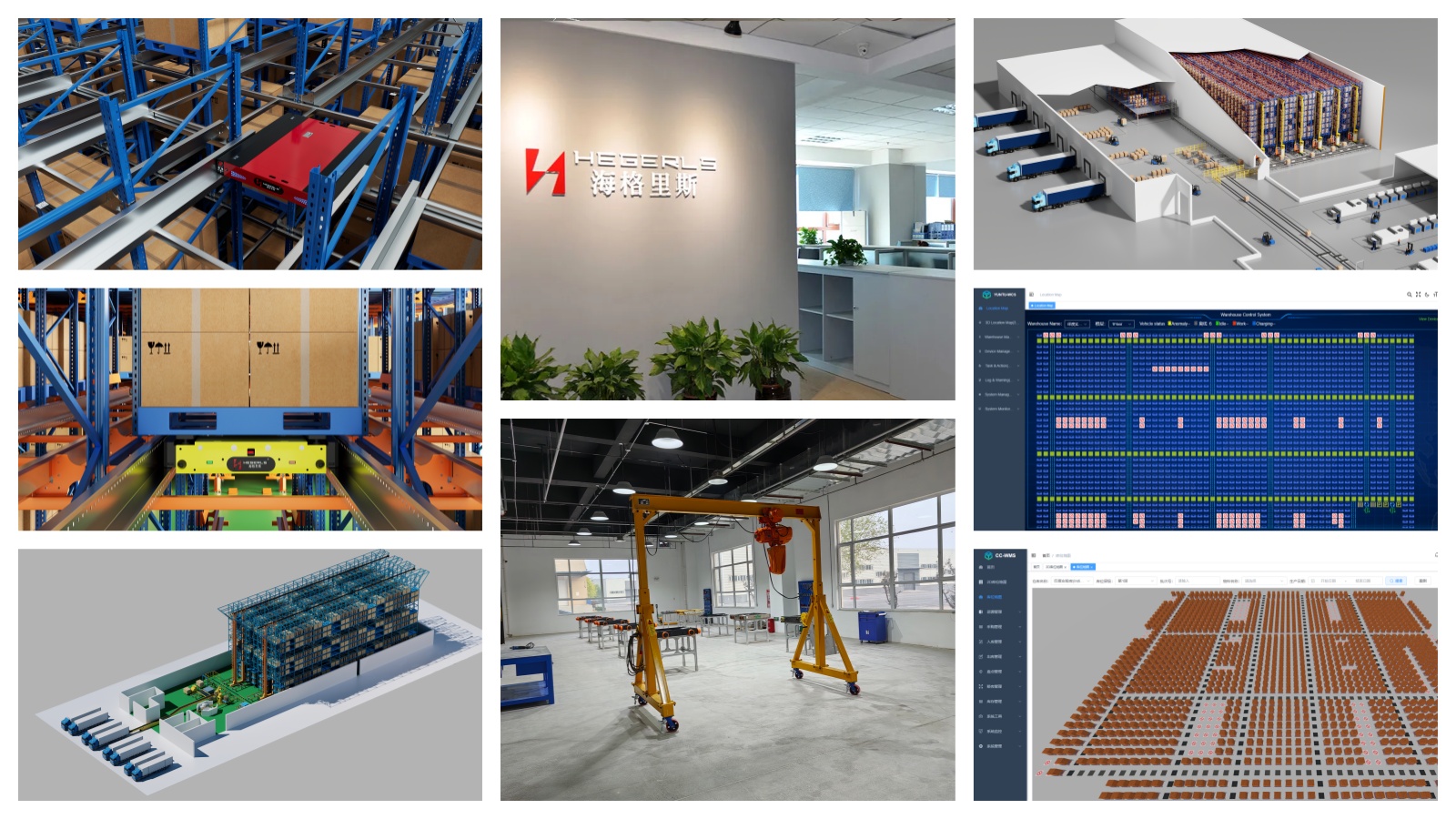
Zhuku combines warehouse software and automation integration to support automated storage and material handling projects.
Its software portfolio includes two complementary systems.
YUNTU-WCS — Warehouse Control System
YUNTU-WCS is designed to coordinate supported warehouse automation equipment and task execution. Depending on the project configuration, it can form part of the control architecture for four-way shuttle systems, lifts, conveyors, and other connected equipment.
CC-WMS — Warehouse Management System
CC-WMS supports warehouse management processes, including inventory and operational task management. It works at the warehouse process level, complementing the equipment coordination role of WCS.
Integrated warehouse automation
By evaluating software and equipment as parts of one system, Zhuku helps project teams define equipment interfaces, operational workflows, and integration requirements. The exact scope depends on the warehouse layout, equipment selection, software interfaces, and project specifications.
For companies planning a new automated warehouse or upgrading an existing facility, this integrated approach can help clarify engineering responsibilities and reduce uncertainty during implementation.
Explore the YUNTU-WCS Warehouse Control System and the CC-WMS Warehouse Management System.
Conclusion
Warehouse control systems coordinate automated equipment and connect warehouse software with physical material movement. Choosing the right solution requires an understanding of system types, vendor capabilities, WCS and WMS responsibilities, equipment compatibility, and long-term support.
When evaluating the best warehouse control systems, focus on the solution's fit with your warehouse rather than relying solely on brand names or feature lists.
Zhuku combines YUNTU-WCS, CC-WMS, and warehouse automation integration capabilities to support projects involving automated storage, four-way shuttle systems, and connected material handling equipment. By defining operational requirements and interface responsibilities early, businesses can make more informed software decisions and build a warehouse automation architecture suited to their needs.
Planning a warehouse automation project? Send Zhuku your warehouse layout, equipment list, existing software interfaces, and target throughput to discuss a suitable WCS architecture and integration solution.