海格里斯智能仓储
Drive-In Racking System

Drive-In Racking System

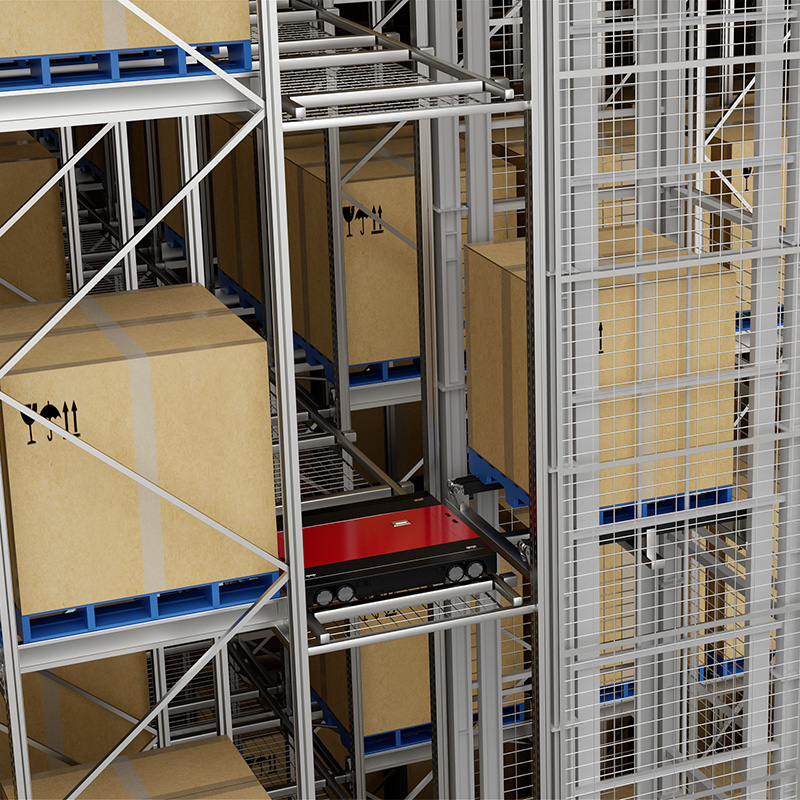
Zhuku Drive-In Racking System provides high-density pallet storage for warehouses with large quantities of similar products and low SKU variety with customized rack solutions. It is widely used in cold storage, food, beverage and industrial warehouses.

Drive-In Racking System: High-Density Storage Solution for Bulk Inventory and Limited Product Variety


The Zhuku Drive-In Racking System is a high-density pallet storage solution designed for warehouses with large quantities of similar products and low SKU variety.

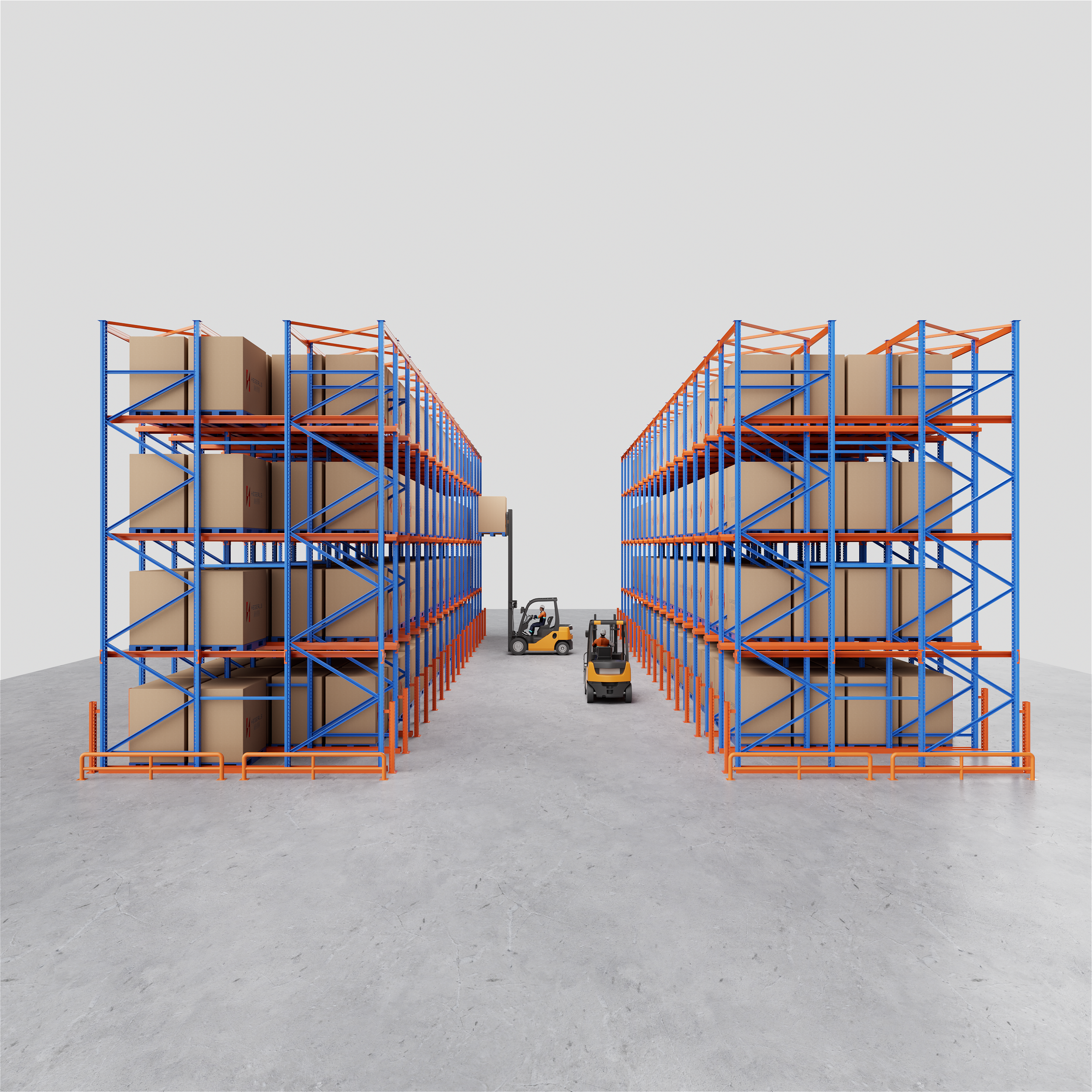
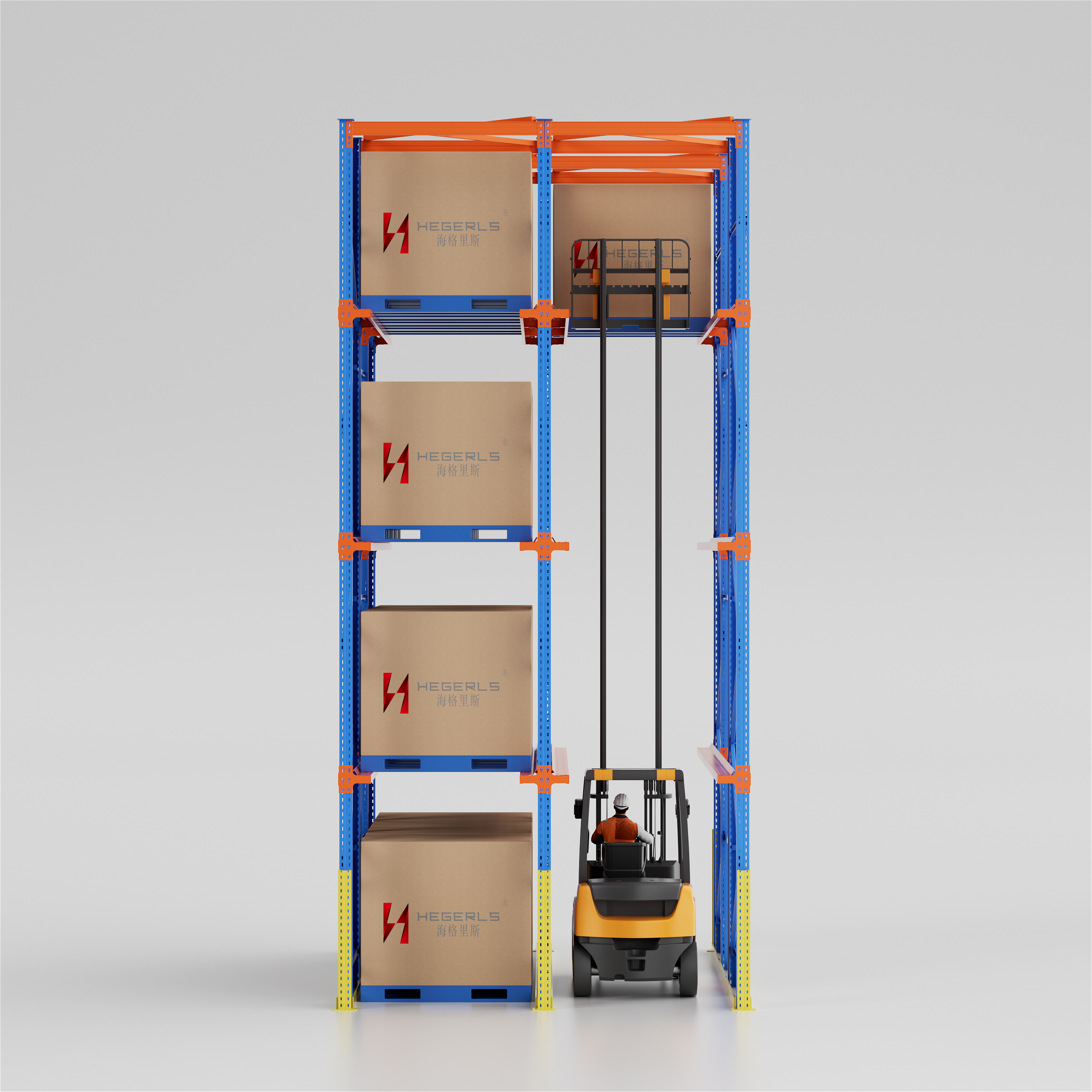
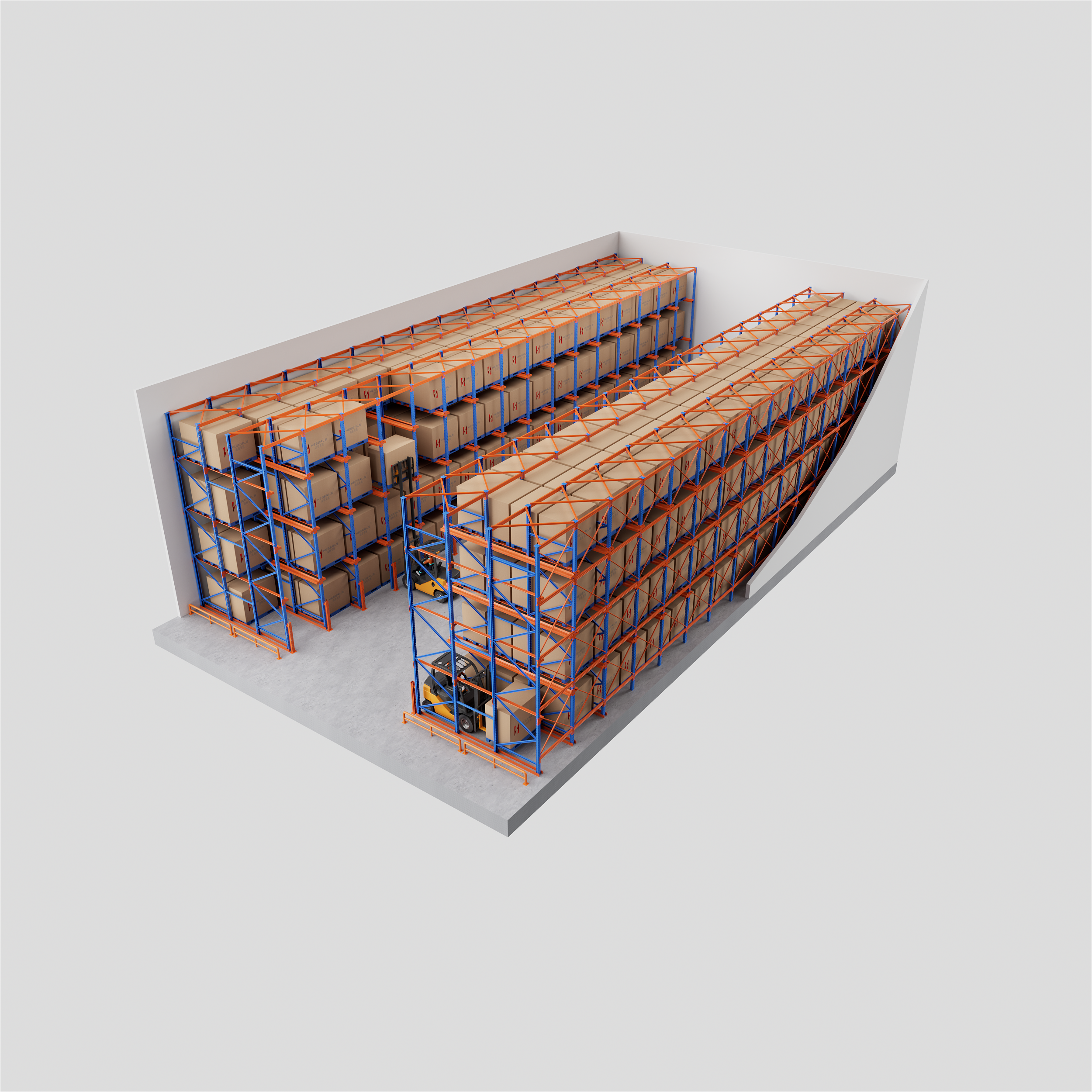
Unlike conventional pallet racking systems that require separate forklift aisles between every rack row, the drive-in rack structure allows forklifts to enter directly into the rack lanes. Pallets are stored continuously along the depth direction, sharing the same operating space with the storage area.

By minimizing unused aisle space, Zhuku Drive-In Racking System significantly improves warehouse capacity and space utilization, making it an ideal solution for industries requiring maximum storage density.

Typical applications include:

  • Cold storage warehouses
  • Food and beverage storage
  • Tobacco industry
  • Chemical products
  • Household appliances
  • Manufacturing raw material storage

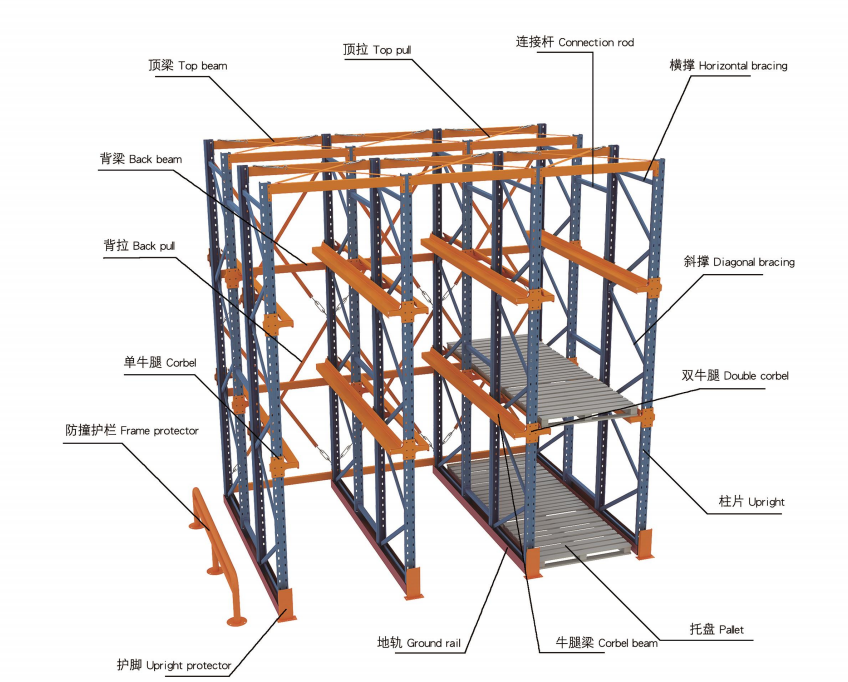
Main Components


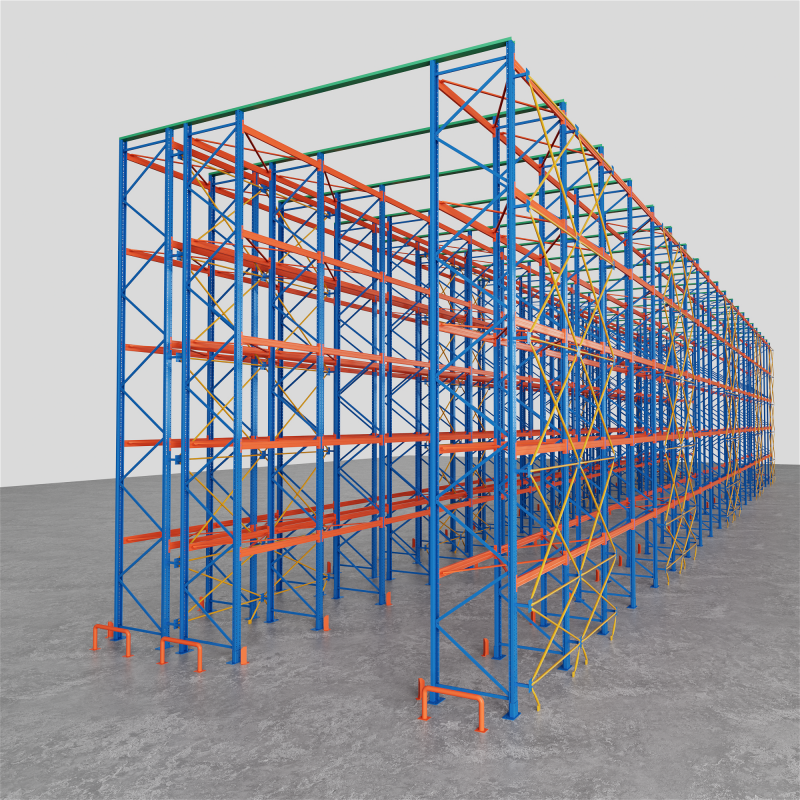
Upright Frame

The upright frame is the main load-bearing structure of the rack.

Functions:

  • Supports vertical loads
  • Maintains rack stability
  • Connects storage levels

Pallet Support Rail & Bracket

The support system carries pallets inside storage lanes.

Features:

  • Stable pallet positioning
  • Designed according to pallet load requirements
  • Suitable for deep storage applications

Top Beam & Bracing System

Provides structural reinforcement for the entire rack system.

Includes:

  • Top beams
  • Top ties
  • Cross bracing

Back Bracing System

Improves longitudinal stability and prevents rack deformation during operation.

Guide Rail & Protection System

Protects both racks and forklifts during loading operations.

Includes:

  • Guide rails
  • Upright protectors
  • Safety guards
 

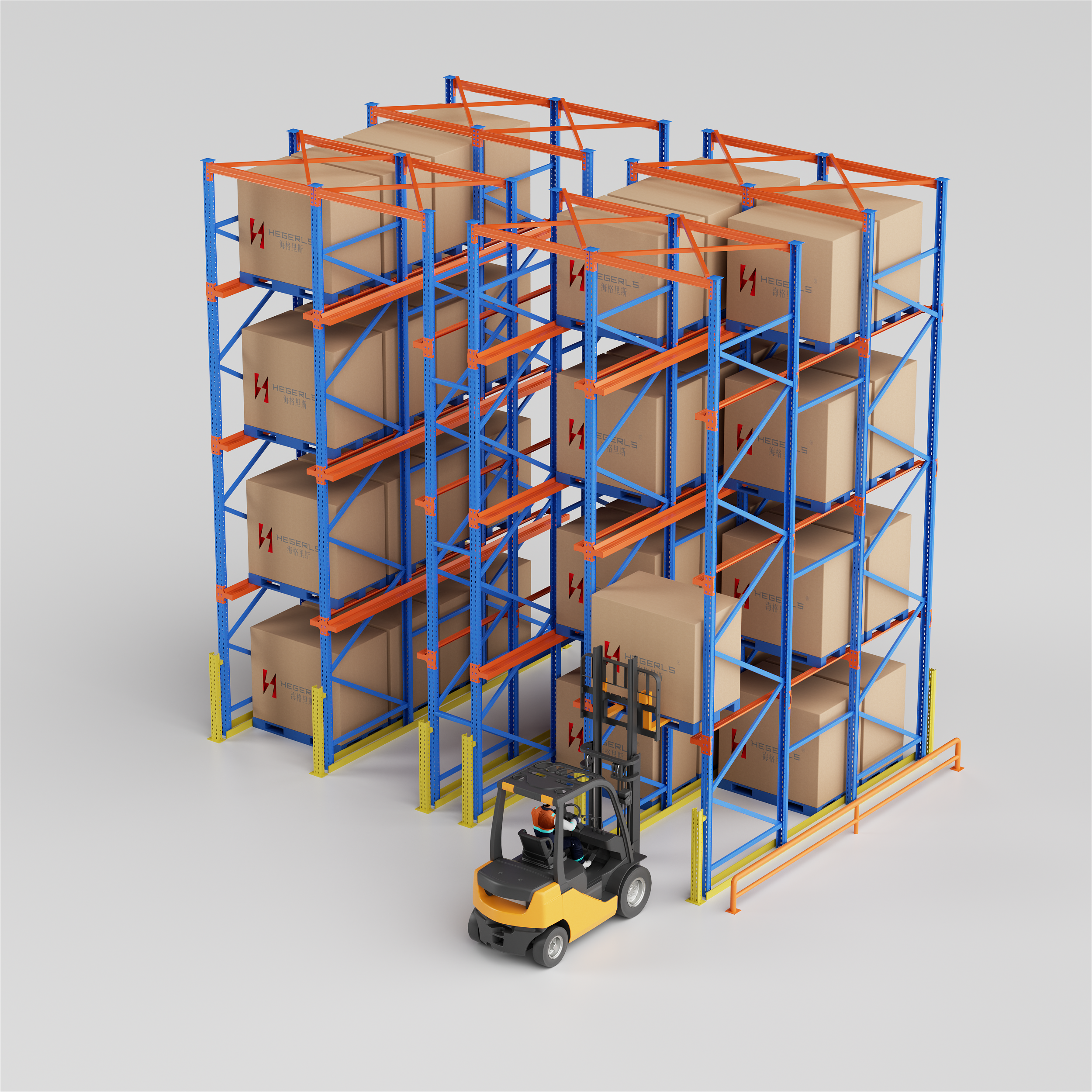
Main Components of Drive-in Racking

How Does Drive-In Racking System Work?


The Drive-In Racking System uses a continuous rack structure where pallets are stored one behind another along the depth direction.

Step 1: Forklift Entry

The forklift enters directly into the storage lane between rack uprights.

Step 2: Pallet Placement

Pallets are placed on support rails or pallet arms from the deepest position outward.

Step 3: Continuous Storage

Multiple pallets can be stored in the same lane, creating a compact storage channel.

Step 4: Pallet Retrieval

The forklift retrieves pallets according to storage requirements.
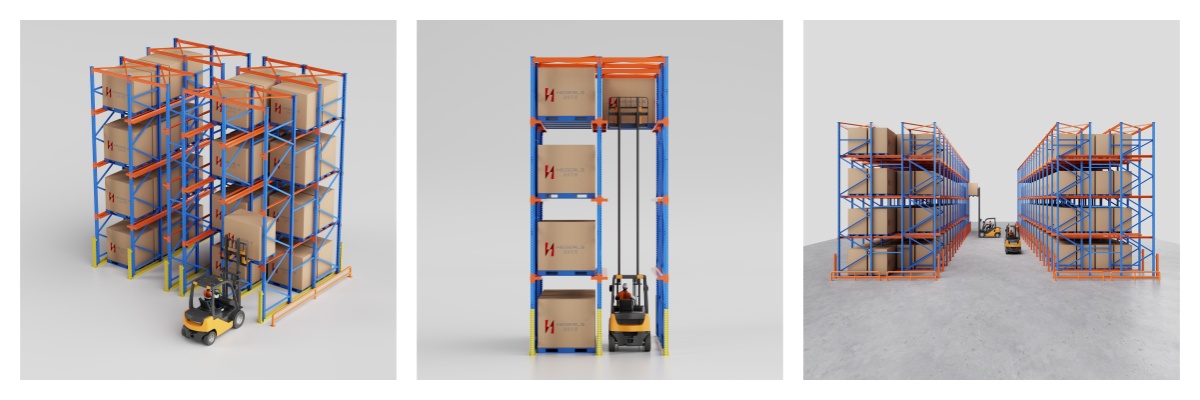
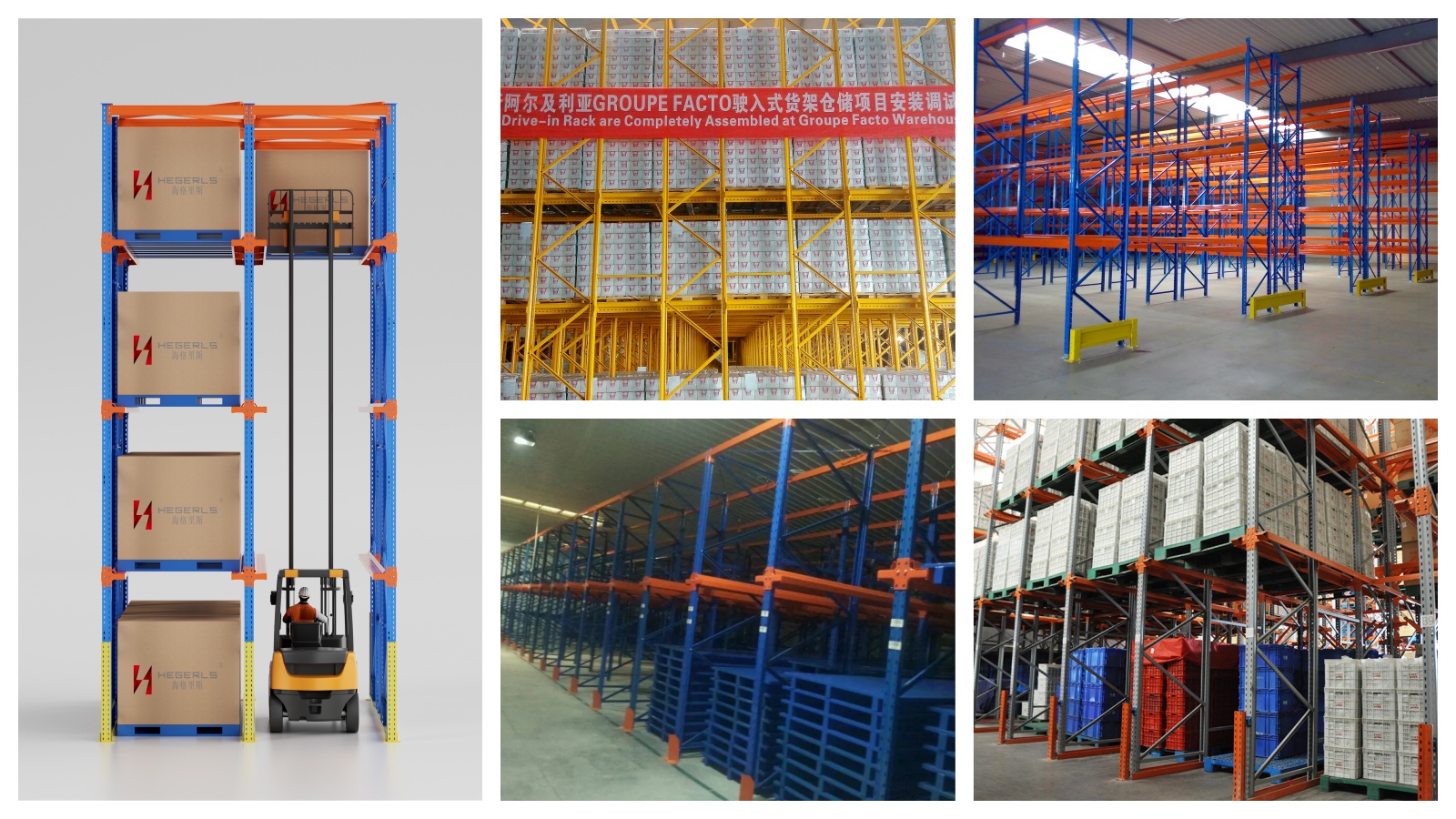
High Density Drive-In Rack System reducing warehouse aisles and increasing storage space

Key Features


Maximum Storage Density

By eliminating most aisles between rack rows, Drive-In Racking significantly increases warehouse capacity.

Advantages:

  • Storage density improvement compared with traditional pallet racks
  • Better utilization of warehouse floor area
  • Suitable for limited warehouse space

Deep-Lane Storage Design

Pallets are stored continuously in depth, creating high-capacity storage lanes.

Features:

  • Single-entry and double-entry configurations
  • Multiple pallet positions in depth
  • Optimized storage density

Strong Structural Stability

Drive-in racks require high structural strength due to direct forklift operation inside the rack lanes.

Zhuku designs the system with reinforced components including:

  • Upright frames
  • Bracing systems
  • Top connections
  • Back supports
  • Guide rails
  • Protective components

Flexible Storage Configuration

The system can be customized according to:

  • Warehouse layout
  • Pallet dimensions
  • Load requirements
  • Forklift type
  • Storage depth

Suitable for FIFO and LIFO Applications

Drive-In Racking is mainly designed for LIFO (Last-In First-Out) storage.

For warehouses requiring FIFO operation, alternative configurations such as Drive-Through Racking can be considered.

Typical Specifications (Reference)

 
ParameterSpecification
Storage TypeHigh-density pallet storage
Storage ModeDrive-In / Drive-Through
Storage DirectionSingle Entry / Double Entry
Load CapacityCustomized according to pallet weight
Recommended Pallet Load≤1500 kg/pallet
Storage DepthCustomized according to project requirements
Rack HeightUsually ≤10 m
Applicable ForkliftReach Truck / Electric Counterbalance Forklift
Application TemperatureNormal Temperature & Cold Storage

Note: Specifications beyond the listed ranges can be customized according to project requirements.

Structural Design Considerations


Upright Selection

Zhuku selects upright specifications according to:

  • Rack height
  • Pallet load
  • Storage depth
  • Forklift operation requirements

General design principles:

  • Higher racks require stronger upright profiles
  • Heavy pallets require reinforced structures
  • Deep lanes require optimized stability design

Load Support Design

Different pallet loads require different support components.

Reference:

  • Medium loads: standard support arms
  • Heavy loads: reinforced brackets and additional upright frames
  • Cold storage applications: low-temperature suitable materials

Stability Reinforcement

The system uses multiple reinforcement methods:

  • Top bracing
  • Back bracing
  • Structural connections
  • Guide protection systems

Ensuring safe operation during frequent forklift activities.

Product Advantages


Up to 90% Space Utilization

The compact rack structure eliminates unnecessary aisles and maximizes available warehouse volume.

Ideal for Bulk Storage

Best suited for:

  • Large quantity products
  • Limited SKU categories
  • Batch storage operations

Lower Warehouse Construction Cost

Higher storage density helps reduce:

  • Required warehouse area
  • Expansion requirements
  • Storage infrastructure investment

Strong Adaptability

Suitable for various industries including:

  • Food
  • Beverage
  • Cold chain
  • Manufacturing
  • Chemical industries

Reliable Long-Term Performance

Robust steel structures and reinforced components ensure stable operation in demanding warehouse environments.

Core Applications: Where Is Drive In Pallet Racking Commonly Used?


Cold Chain & Frozen Storage

Drive-in racking is widely used in temperature-controlled warehouses where storage density is a key priority.

Benefits:

  • Maximizes expensive cold storage space
  • Reduces unnecessary aisle areas
  • Suitable for batch storage operations

Food & Beverage Industry

Ideal for products with:

  • Standard packaging
  • Large quantities
  • Low SKU variation

Applications:

  • Drinks
  • Dairy products
  • Frozen food
  • Packaged food

Manufacturing Raw Material Storage

Suitable for storing large volumes of identical materials.

Applications:

  • Production materials
  • Standard components
  • Finished products

Chemical & Industrial Warehouses

Provides stable storage for palletized industrial products requiring dense storage layouts.

Drive-In Racking vs Pallet Racking

 
FeatureDrive-In RackingPallet Racking
Storage DensityHighMedium
Pallet AccessibilityLimited100% Direct Access
Storage ModeLIFOFIFO Available
Forklift AccessRack Tunnel OperationOpen Aisle Operation
SKU VarietyLow SKU / Large QuantityMultiple SKU
Best ApplicationBulk StorageFlexible Inventory

Drive-In Racking vs Shuttle Racking

 
FeatureDrive-In RackingShuttle Racking
Automation LevelManual ForkliftSemi-Automated
Storage DensityHighVery High
Operation EfficiencyMediumHigh
Investment CostLowerHigher
Best ApplicationLarge Batch StorageHigh Throughput Warehouse

Why Choose Zhuku Drive-In Racking System?


Zhuku provides customized warehouse storage solutions combining engineering design, manufacturing capability, and project experience.

Our Drive-In Racking System delivers:

  • High-density storage design
  • Customized rack structure
  • Strong stability for forklift operation
  • Solutions for cold storage and industrial applications
  • Professional warehouse planning support

With optimized structural design and application-based engineering, Zhuku helps customers maximize warehouse capacity while maintaining safe and efficient storage operations.

Customer Reviews

Real Customer Feedback

First-hand experiences from customers worldwide, demonstrating the value of our warehouse automation solutions and project expertise.

★★★★★

"Zhuku designed a high-density drive-in racking solution for our cold storage warehouse. The optimized rack layout significantly increased storage capacity while maintaining stable forklift operations and reliable daily performance."


— Warehouse Manager
Cold Chain Industry

FAQ & Tech Support

Common Questions / Technical Support

Find answers to frequently asked questions about warehouse automation, system integration, equipment, installation, operation, maintenance, and after-sales support.

What is a Drive-In Racking System?
A Drive-In Racking System is a high-density pallet storage system where forklifts directly enter the rack lanes to store and retrieve pallets. Pallets are stored continuously in depth, maximizing warehouse space utilization.
What is the difference between Drive-In Racking and Pallet Racking?
Traditional pallet racking requires aisles between every rack row, while drive-in racking reduces aisles by allowing forklifts to enter storage lanes directly. Drive-in racking provides higher density but is mainly suitable for LIFO storage.
Is Drive-In Racking suitable for cold storage?
Yes. Drive-In Racking is one of the most commonly used solutions for cold storage warehouses because it maximizes storage capacity in expensive refrigerated spaces.
How does a Drive-In Racking System work?
In a Drive-In Racking System, pallets are stored on continuous rails inside deep storage lanes. Forklifts enter the rack lane from the front side and place pallets from the back to the front according to the storage sequence. The system mainly operates using the LIFO (Last In First Out) storage principle.
What types of products are suitable for Drive-In Pallet Racking?
Drive-In Pallet Racking is suitable for products that are stored in large quantities with relatively low SKU diversity. Typical applications include food and beverage products, frozen goods, raw materials, chemical products, and industrial components. The system is ideal when products have stable inventory cycles and do not require frequent access to individual pallets.
What is the difference between Drive-In Racking and Drive-Through Racking?
Drive-In Racking allows forklift access from one side of the rack and mainly follows the LIFO inventory method. It is commonly used for long-term storage and high-density applications. Drive-Through Racking allows forklifts to enter from both sides, supporting FIFO (First In First Out) inventory management. It is more suitable for products requiring strict stock rotation.
Can Drive-In Racking System be customized for different warehouse layouts?
Yes. Zhuku designs customized Drive-In Racking Systems according to warehouse size, building structure, pallet requirements, storage capacity targets, and workflow needs. The system can be configured for different warehouse environments, including standard warehouses, manufacturing facilities, and cold storage applications.
Can Drive-In Racking System be integrated with warehouse automation solutions?
Yes. Traditional Drive-In Racking is mainly operated by forklifts, but it can also be combined with advanced warehouse technologies. Zhuku provides integrated warehouse solutions including Shuttle Racking Systems, ASRS, WMS, WCS, and other automation technologies to help customers upgrade from traditional storage to intelligent warehouse operations.
Why choose Zhuku Drive-In Racking System?
Zhuku (Hebei) Automatic Storage Technology Co., Ltd. provides customized warehouse storage and automation solutions for global customers. With professional capabilities in rack design, manufacturing, system integration, and intelligent warehouse technology, Zhuku delivers reliable Drive-In Racking Systems that help businesses improve storage density, optimize warehouse space, and achieve more efficient logistics operations.

Need Technical Support? Our engineering team is available to support you with any questions related to warehouse automation systems and project implementation.

1-on-1 technical consultation, with responses within 2 working days.