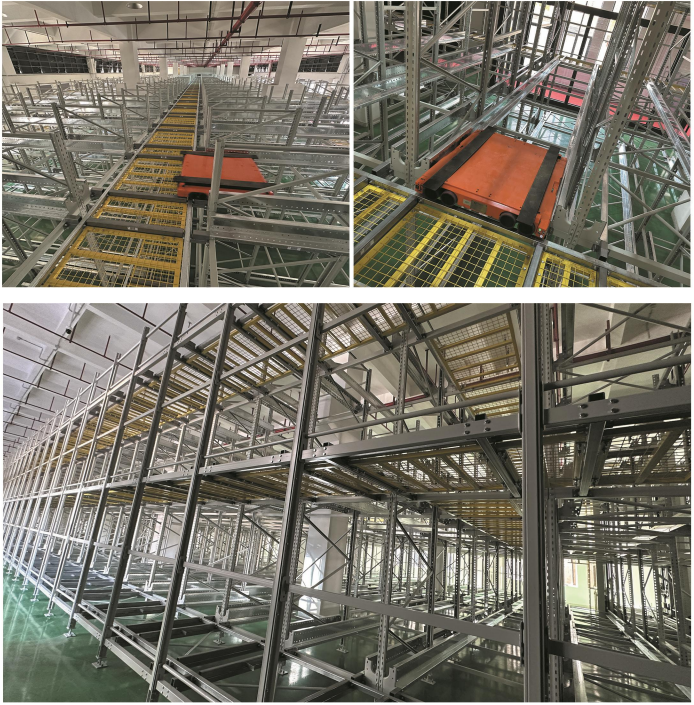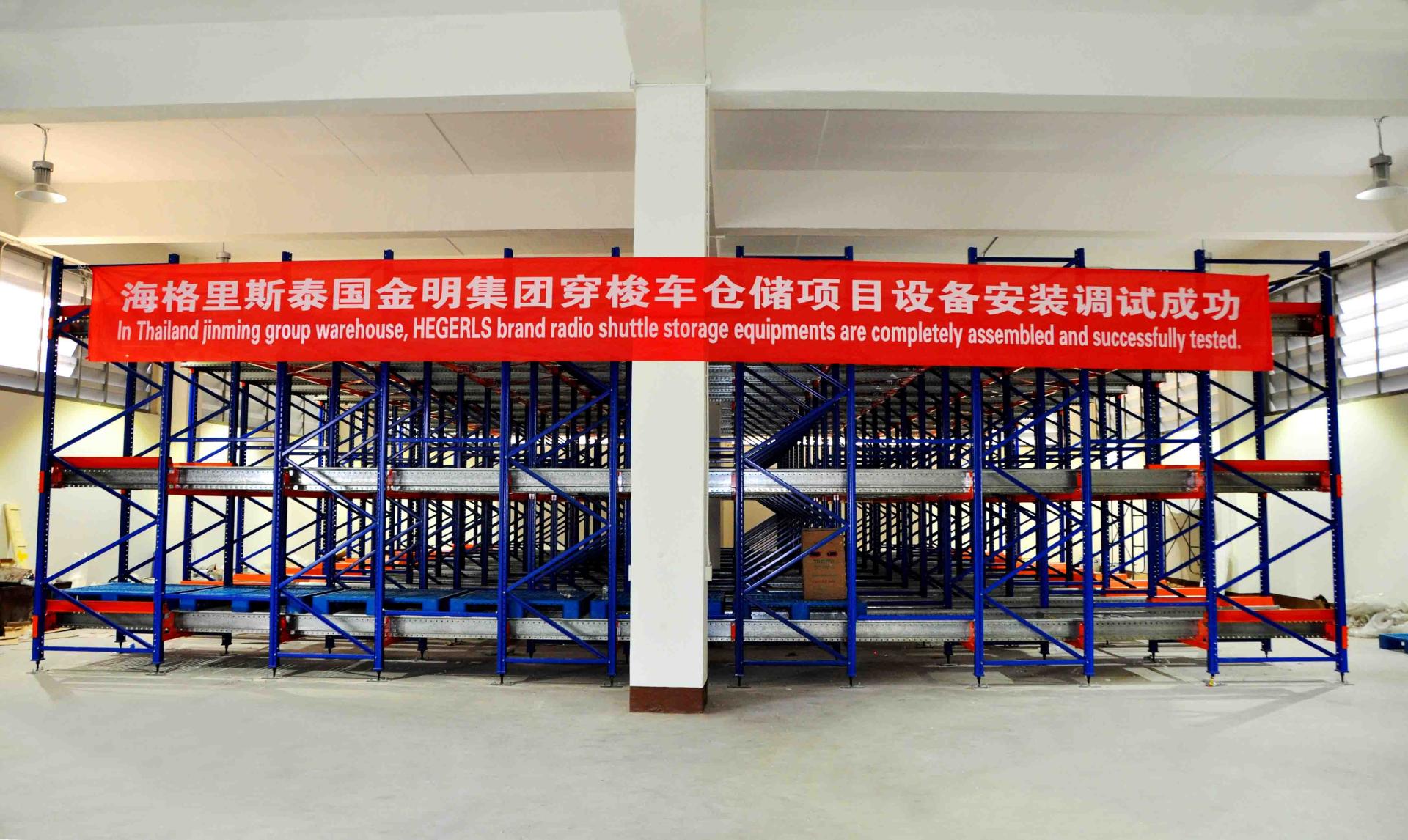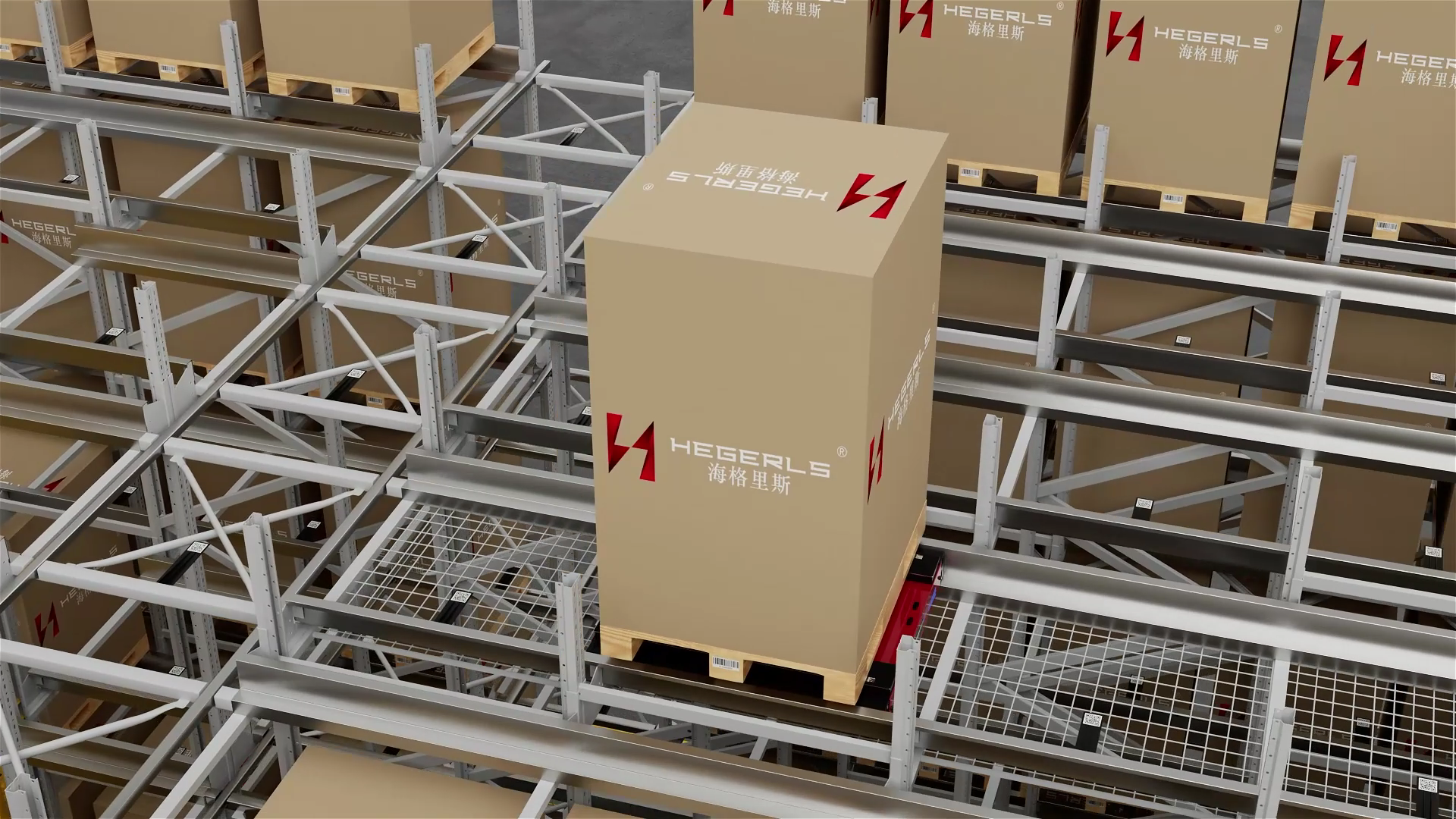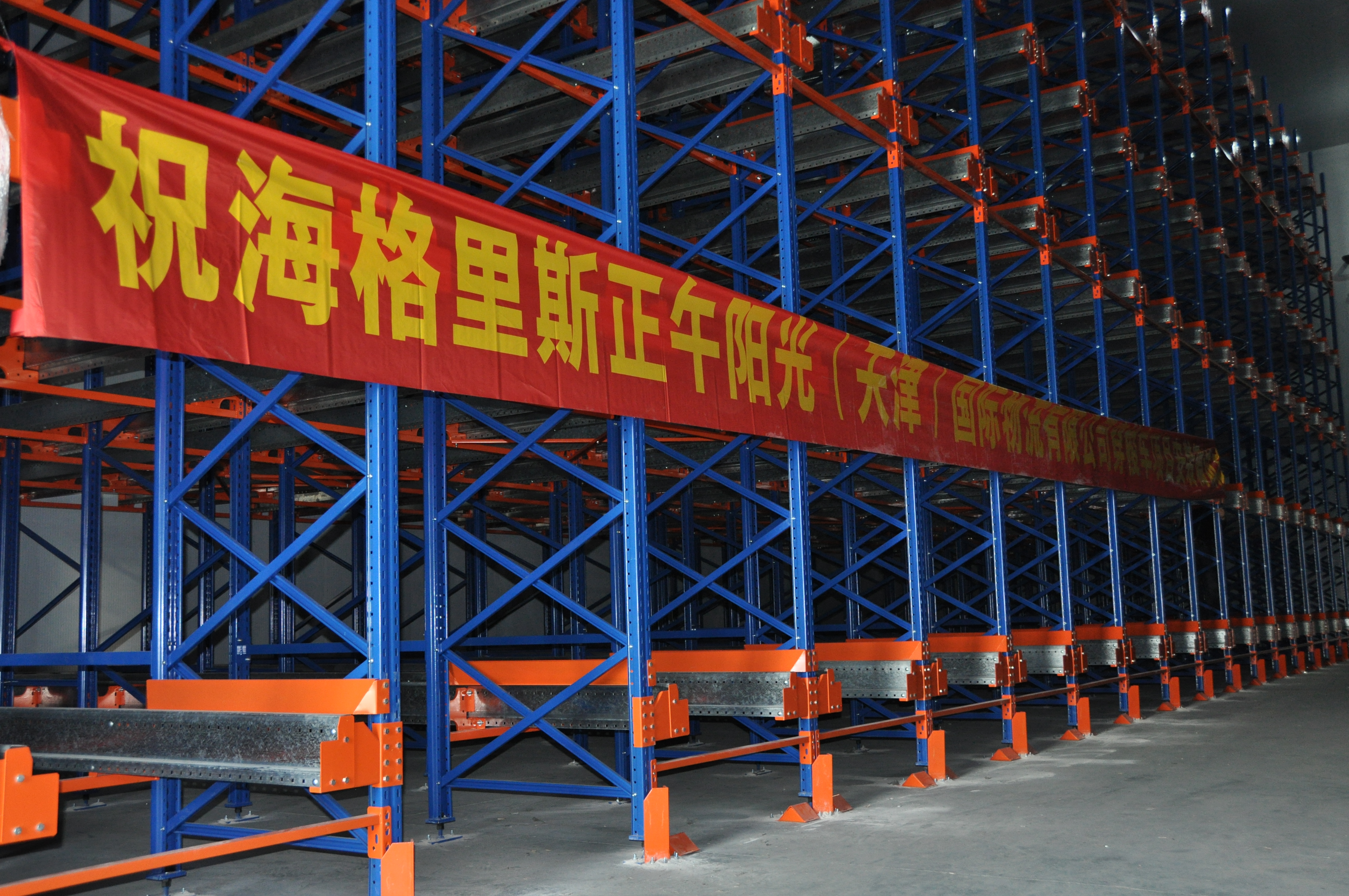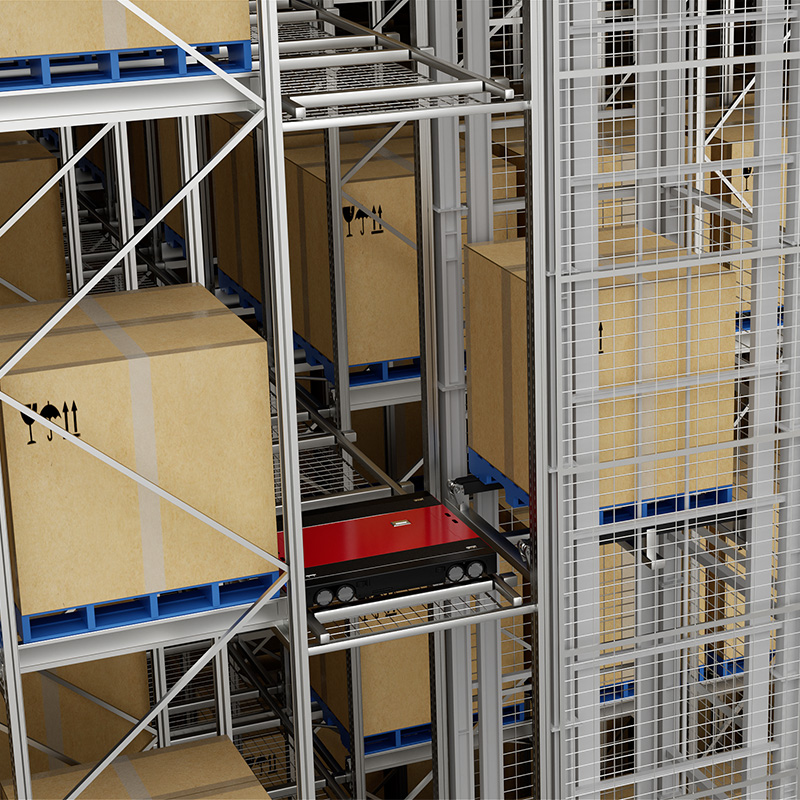
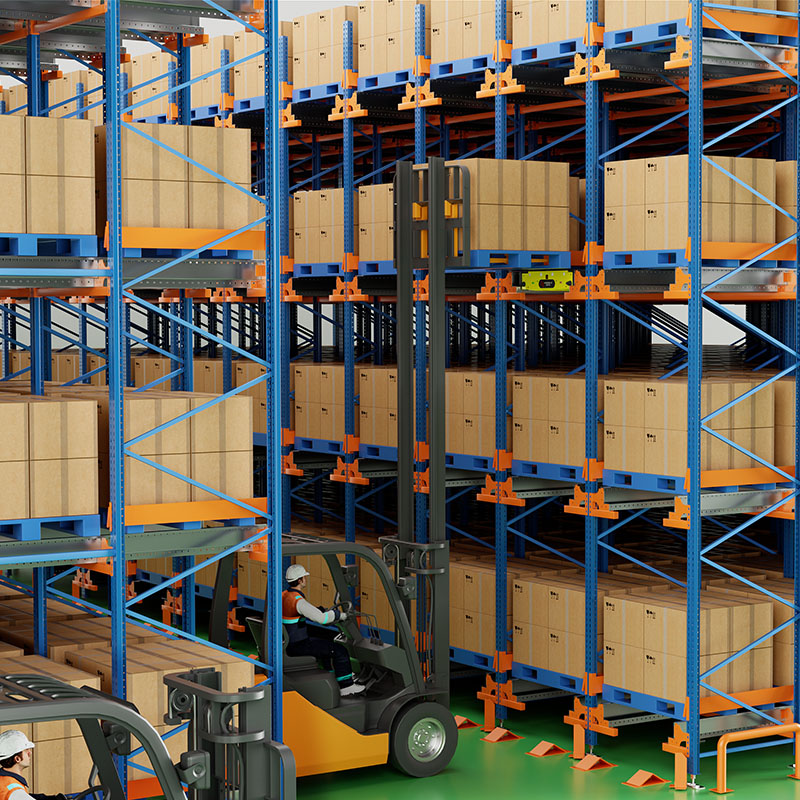
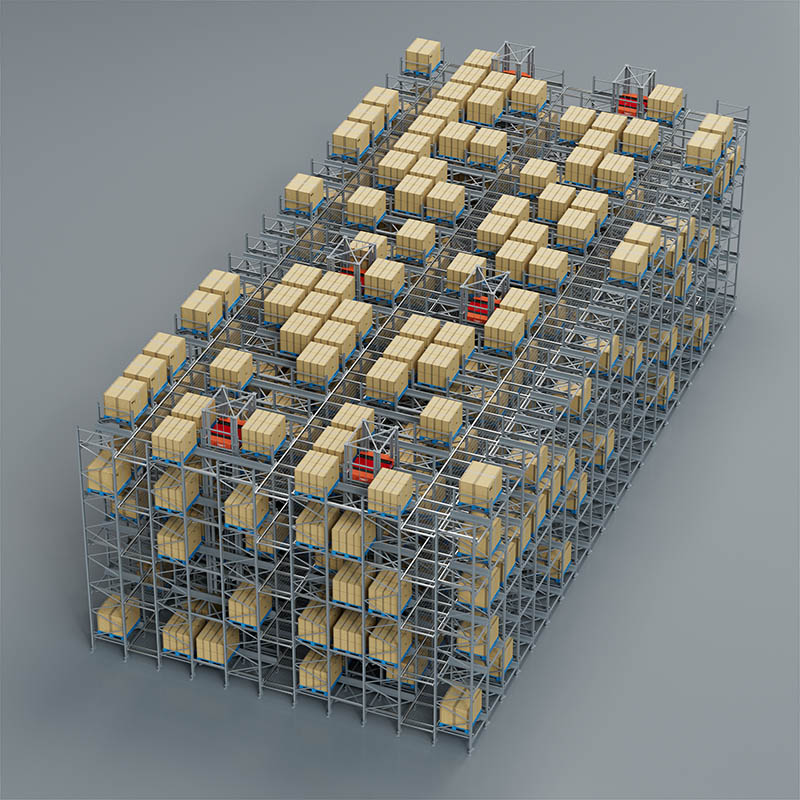
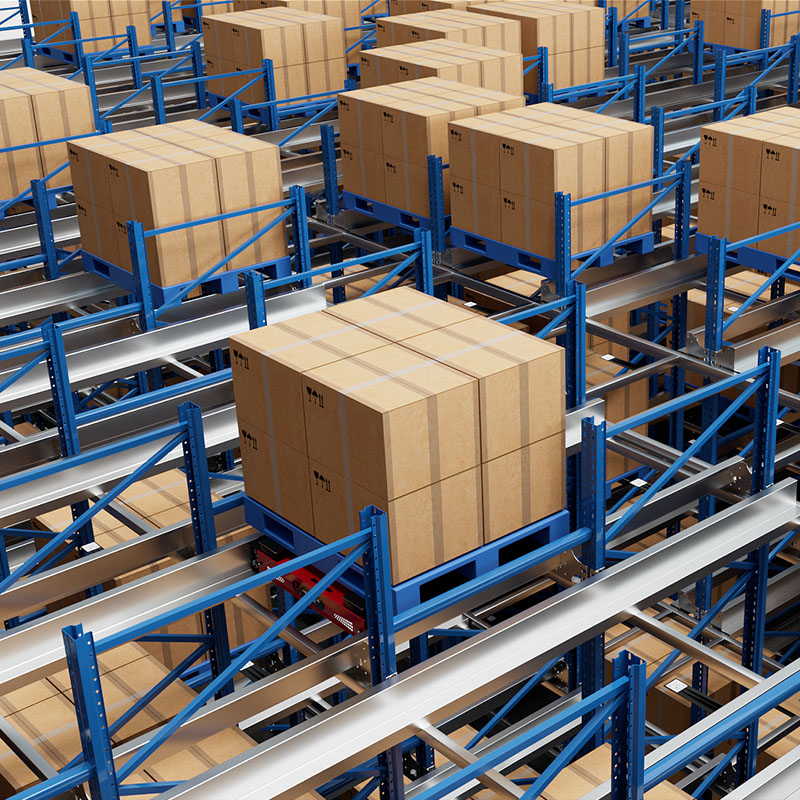
The Zhuku Shuttle Racking System is a high-density pallet storage solution designed for use with pallet shuttle systems. By replacing traditional forklift travel inside storage aisles with shuttle-assisted pallet handling, the system significantly increases storage capacity while improving warehouse safety and operational efficiency.
Engineered for first-in-first-out (FIFO) and first-in-last-out (FILO/LIFO) inventory strategies, shuttle racking is widely used in food & beverage, cold chain logistics, manufacturing, chemical, and third-party logistics warehouses.
Zhuku provides complete shuttle racking solutions, including rack design, structural engineering, shuttle integration, warehouse software, installation, and commissioning.
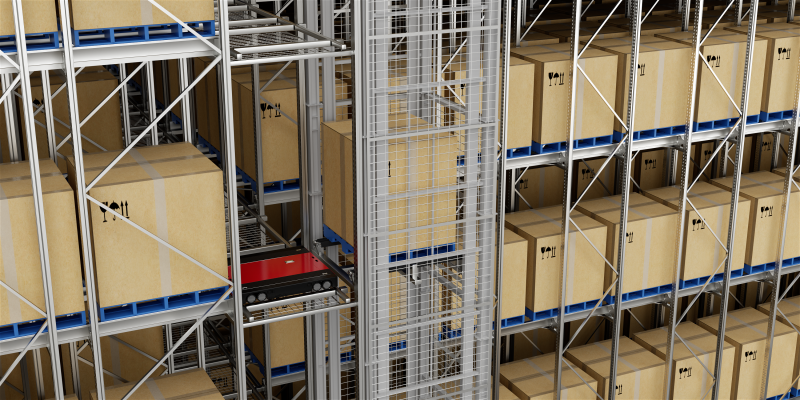
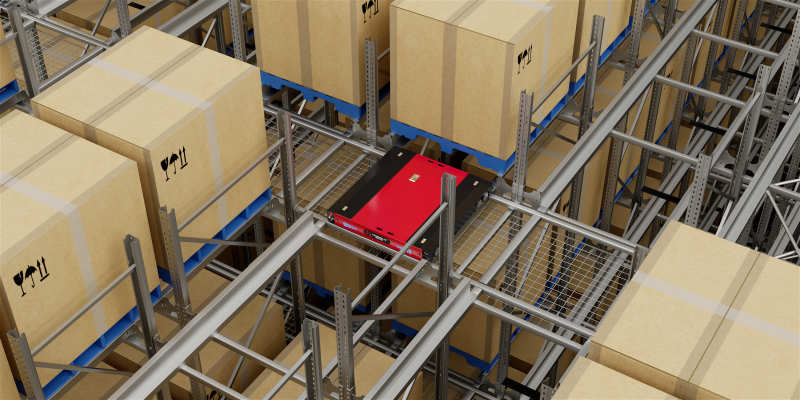
Maximize Storage DensityShuttle racking eliminates multiple operating aisles, allowing pallets to be stored deep within each lane. Benefits
|
Faster Pallet HandlingThe pallet shuttle automatically transports pallets inside storage lanes, minimizing forklift travel and improving warehouse efficiency. Advantages include:
|
Flexible FIFO & FILO OperationThe system supports multiple inventory management methods depending on warehouse layout. Supported modes:
Suitable for different inventory turnover requirements. |
Stable Heavy-Duty StructureZhuku shuttle racks are manufactured using high-strength structural steel and engineered for continuous industrial operation. Features include:
|
Automation ReadyThe shuttle racking system can operate independently or be integrated into automated warehouse solutions. Compatible with: |
High-Density Lane Storage: Deep-lane pallet storage maximizes warehouse utilization.
Heavy-Duty Construction: Designed for continuous pallet handling and industrial applications.
Customized Design: Rack dimensions, lane depth, pallet sizes, and load capacities are customized according to project requirements.
Low Maintenance: Durable steel construction with corrosion-resistant finishes minimizes maintenance costs.
Expandable Configuration: Modular rack design allows future warehouse expansion.
A shuttle racking system uses automated pallet shuttle vehicles to move pallets inside deep storage lanes, reducing forklift operations and maximizing warehouse space utilization.
1. Pallet Loading
Forklifts / Vertical lifts place pallets at the rack entry point, and the shuttle receives the storage command.
2. Automatic Storage
The shuttle moves along the rack rails and transports pallets to the assigned storage position.
3. Intelligent Management
Integrated with WMS/WCS, the system manages inventory, storage locations, and operation tasks in real time.
4. Pallet Retrieval
When an outbound order is received, the shuttle retrieves the required pallet and moves it to the access point.
Process Flow:
Inbound Pallet → Shuttle Transport → High-Density Storage → Pallet Retrieval → Outbound (The process is controlled by WMS/WCS Control Software)
A shuttle racking system consists of several key components that work together to support high-density pallet storage and automated handling.
Racking Structure: Steel uprights, beams, and supports form the storage lanes and carry pallet loads.
Shuttle Cart: A powered vehicle that moves pallets along the storage lanes.
Guide Rails: Installed inside the lanes to guide shuttle movement.
Lifting and Transfer Equipment: Elevators or lifts transfer pallets and shuttle carts between different levels or areas.
Control System: WMS and WCS software coordinate storage locations, shuttle tasks, and inventory movements.
These components work together to provide organized pallet storage, efficient retrieval, and flexible warehouse operations.
| Parameter | Specification |
| Rack Type | Shuttle Racking System |
| Storage Type | High-Density Pallet Storage |
| Rack Height | Customized |
| Lane Depth | Customized |
| Pallet Load | Customized |
| Rack Material | High-Strength Structural Steel |
| Surface Finish | Powder Coating / Galvanized / Special Anti-corrosion Coating |
| Inventory Mode | FIFO / FILO |
| Compatible Equipment | Two-Way Shuttle, Four-Way Shuttle, Six-Way Shuttle |
| Software Integration | WMS / WCS / ERP / MES |
Both shuttle racking and drive-in racking are designed to store pallets in deep lanes, but they use different methods to move pallets.
| Comparison factor | Shuttle Racking | Drive-In Racking |
| Pallet movement | Motorized shuttle transports pallets inside the lane | Forklift enters the storage lane |
| Forklift access | Primarily at designated lane access points | Forklift operates within the rack structure |
| Storage density | High, depending on the system layout | High, depending on the system layout |
| Initial investment | Includes shuttle equipment and related controls | Generally simpler equipment configuration |
| Operating process | Requires shuttle operation, charging or maintenance provisions as applicable | Relies more directly on forklift operation |
| Stock rotation | FIFO or LIFO, depending on rack access and configuration | Typically LIFO for conventional drive-in layouts |
| Best-fit considerations | Higher handling demand, deeper lanes, or reduced forklift entry into racks | Operations prioritizing a simpler rack structure and suitable batch storage |
Neither option is universally better. Drive-in racking may suit operations with straightforward storage requirements and limited automation needs. Shuttle racking may be worth considering when forklift movement inside storage lanes, handling consistency, or storage density are important design factors.
Read our related guide on high-density storage solutions to explore warehouse layout options.
Food & BeverageEfficient storage for beverages, packaged foods, dairy products, and consumer goods. |
Cold Chain LogisticsHigh-density storage designed for refrigerated and frozen warehouses with optimized space utilization. |
ManufacturingIdeal for storing raw materials, semi-finished products, and finished goods while improving warehouse efficiency. |
Automotive IndustrySupports high-density storage of automotive components, spare parts, and production materials with reliable pallet handling. |
Chemical IndustrySuitable for palletized chemicals and industrial materials requiring organized, high-capacity storage. |
Third-Party Logistics (3PL)Optimizes storage capacity and pallet throughput for distribution centers and logistics service providers. |
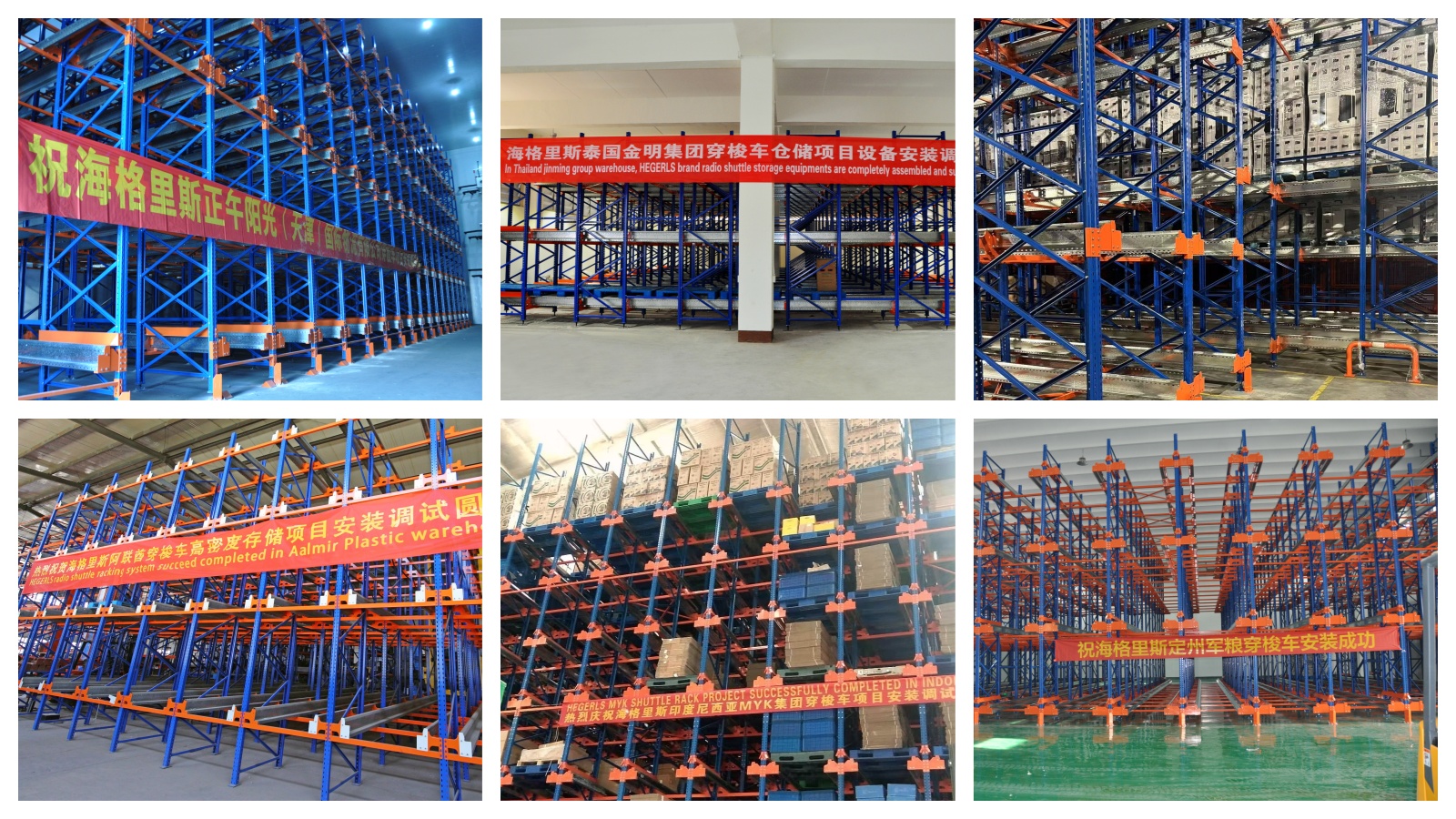
Higher Warehouse Capacity: Store more pallets within the same warehouse footprint.
Improved Operational Efficiency: Reduce forklift travel while increasing pallet handling speed.
Lower Operating Costs: Decrease labor requirements and equipment wear through automated pallet movement.
Enhanced Warehouse Safety: Forklifts remain outside storage lanes, reducing collisions and product damage.
Flexible Warehouse Expansion: Modular design supports future capacity growth with minimal disruption.
Before requesting a proposal, prepare the following information.
Provide the available floor area, clear height, column positions, door locations, floor conditions, and any fixed obstacles. These factors determine the usable rack footprint and potential lane arrangement.
Specify pallet length, width, total loaded height, maximum pallet weight, pallet condition, and load stability. These details are essential for checking rack clearances and shuttle compatibility.
Identify the number of SKUs, average and peak pallet quantities per SKU, replenishment frequency, and required stock rotation method. High-density storage works best when the lane structure matches actual inventory behavior.
Estimate average and peak inbound and outbound pallets per hour or per shift. Include the number of loading points, retrieval priorities, shift patterns, and any downstream handling constraints.
Storage capacity alone is not enough to size a system. The shuttle fleet, transfer equipment, and operating sequence must also support the required throughput.
Determine whether the project requires standalone shuttle operation, WMS/WCS coordination, conveyors, lifts, or integration with ERP and manufacturing systems. Confirm which software functions and interfaces are included in the proposed scope.
Consider the initial investment alongside operating labor, equipment maintenance, battery management where applicable, spare parts, service access, and future capacity requirements. A suitable solution should meet current operating needs without making future changes unnecessarily difficult.
Zhuku provides warehouse storage and automation solutions designed around project-specific requirements. The scope of a shuttle racking project may include rack engineering, shuttle equipment coordination, layout planning, control-system integration, installation support, commissioning, and operator training, subject to the agreed project scope.
A project proposal should define the rack configuration, shuttle type, supported pallet loads, storage capacity, expected handling requirements, software interfaces, safety provisions, and service responsibilities.
For relevant application examples, see the Wine and Oil Shuttle Racking Project.
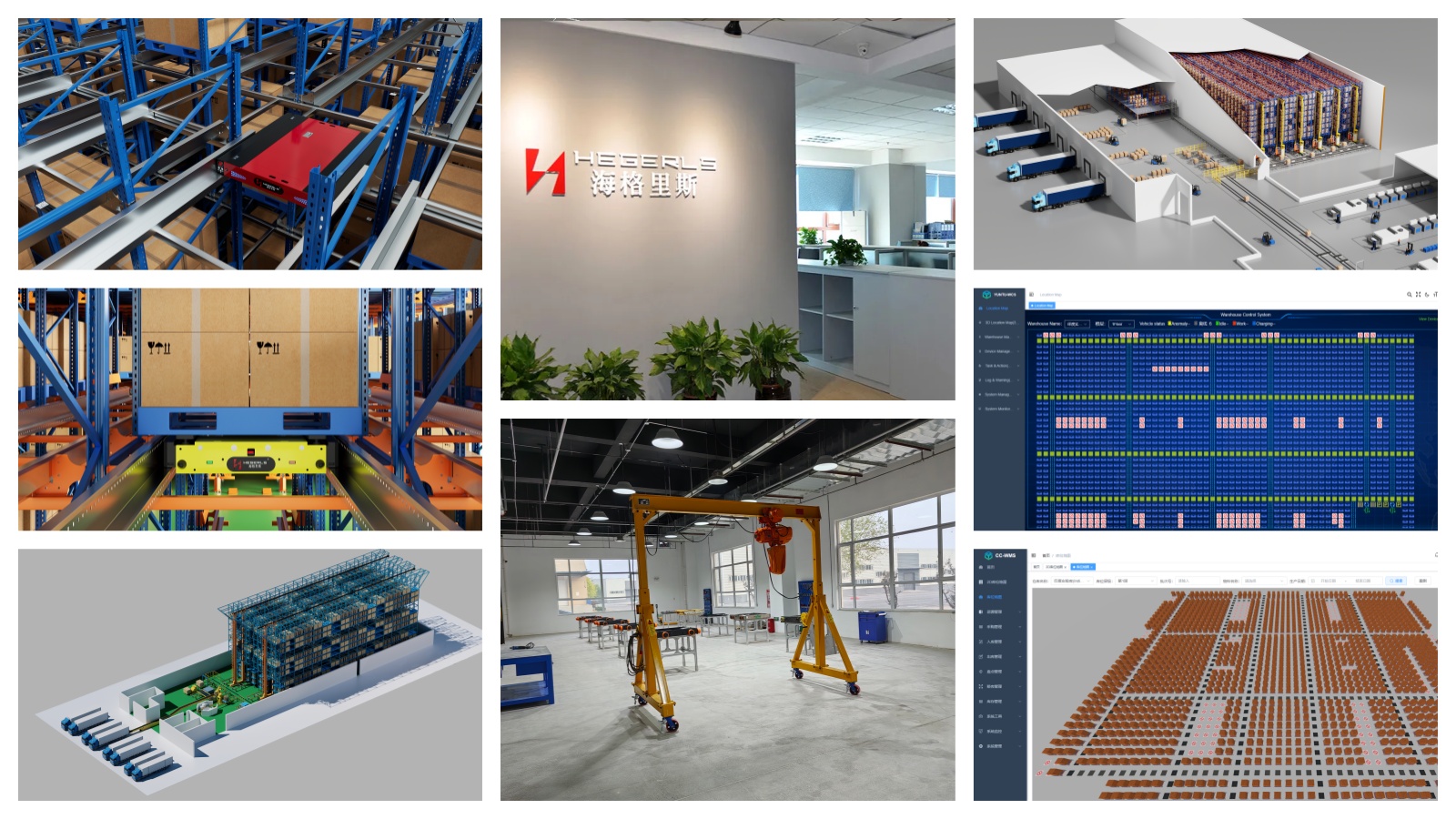
Zhuku is an intelligent warehouse system integrator specializing in high-density storage and warehouse automation solutions.
Our capabilities include:
From standalone shuttle racking to fully automated warehouse systems, Zhuku delivers reliable, scalable, and customized storage solutions for global customers.
Looking to increase pallet storage capacity or improve warehouse handling processes?
Contact Zhuku to discuss a shuttle racking configuration based on your actual warehouse requirements.
To help our engineering team evaluate your project, provide:
Warehouse layout and available clear height
Pallet dimensions and maximum loaded weight
Required pallet storage capacity
Average and peak inbound and outbound throughput
SKU profile and FIFO/LIFO requirements
Desired automation level and software interfaces
Request a project consultation to discuss the layout, equipment configuration, and next steps for your warehouse.
First-hand experiences from customers worldwide, demonstrating the value of our warehouse automation solutions and project expertise.
"Zhuku's shuttle racking system enabled us to significantly increase warehouse capacity while improving pallet handling efficiency. The customized design, robust structure, and seamless integration with the shuttle system have delivered reliable performance and optimized our daily warehouse operations."
— Warehouse Operations Manager
Manufacturing Industry
Find answers to frequently asked questions about warehouse automation, system integration, equipment, installation, operation, maintenance, and after-sales support.

Zhuku is a trusted warehouse automation company providing system integration, intelligent storage solutions, automated warehouse systems, and warehouse racking for customers worldwide.