Choosing between a four-way shuttle and a pallet shuttle depends less on which technology is “better” and more on how the warehouse needs to move, store, and retrieve pallets.
Both systems use shuttle vehicles to support high-density pallet storage, but their operating principles are different. A pallet shuttle typically operates within dedicated storage lanes, while a four-way shuttle can travel longitudinally and laterally and can be integrated with lifts, conveyors, and warehouse control software for more flexible storage and retrieval.
The practical decision therefore depends on factors such as warehouse layout, SKU profile, storage depth, throughput, FIFO/LIFO requirements, automation level, forklift involvement, cold-storage conditions, and future scalability.
This guide explains the differences between four-way shuttle and pallet shuttle systems and provides a practical framework for selecting the appropriate technology.
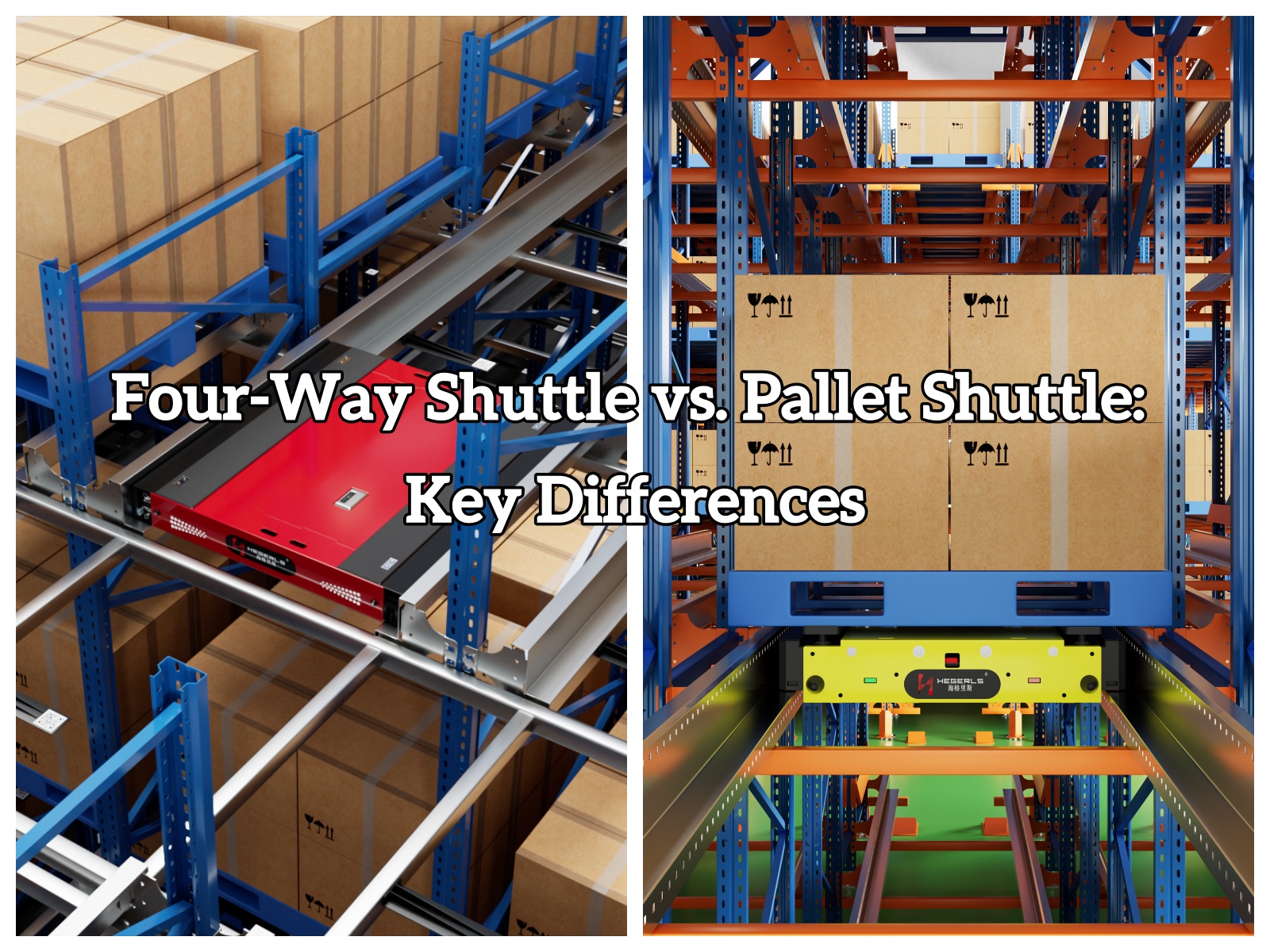
What Is the Difference Between a Four-Way Shuttle and a Pallet Shuttle?
The fundamental difference is how the shuttle vehicle moves and how the storage lanes are organized.
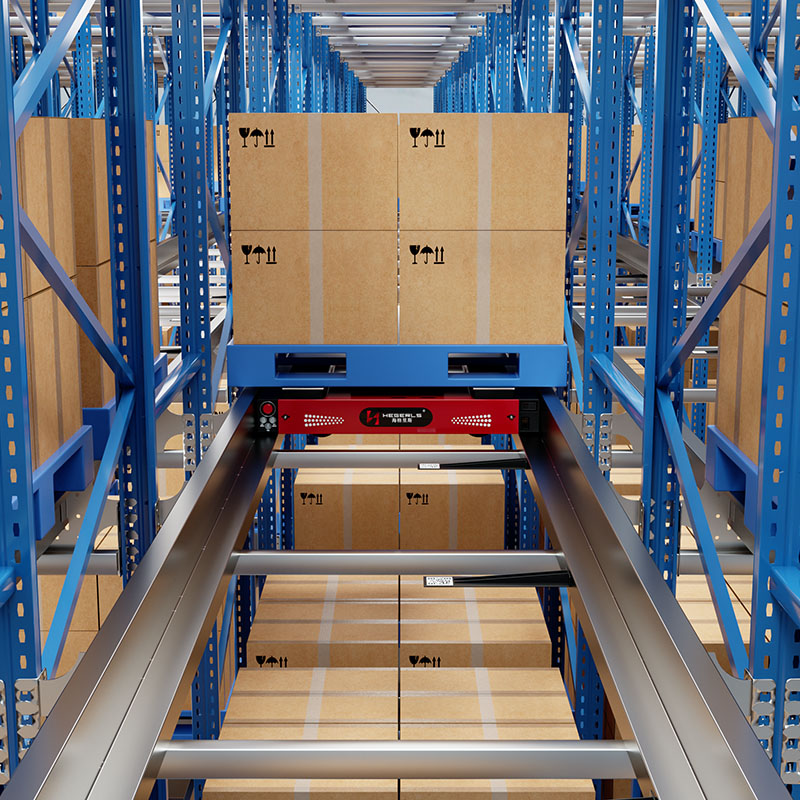
A pallet shuttle normally moves pallets along fixed rails inside a dedicated deep-storage lane. The vehicle is designed primarily for horizontal pallet movement within that lane. Depending on the rack configuration and operating method, pallet shuttle systems can support either FIFO or LIFO storage.
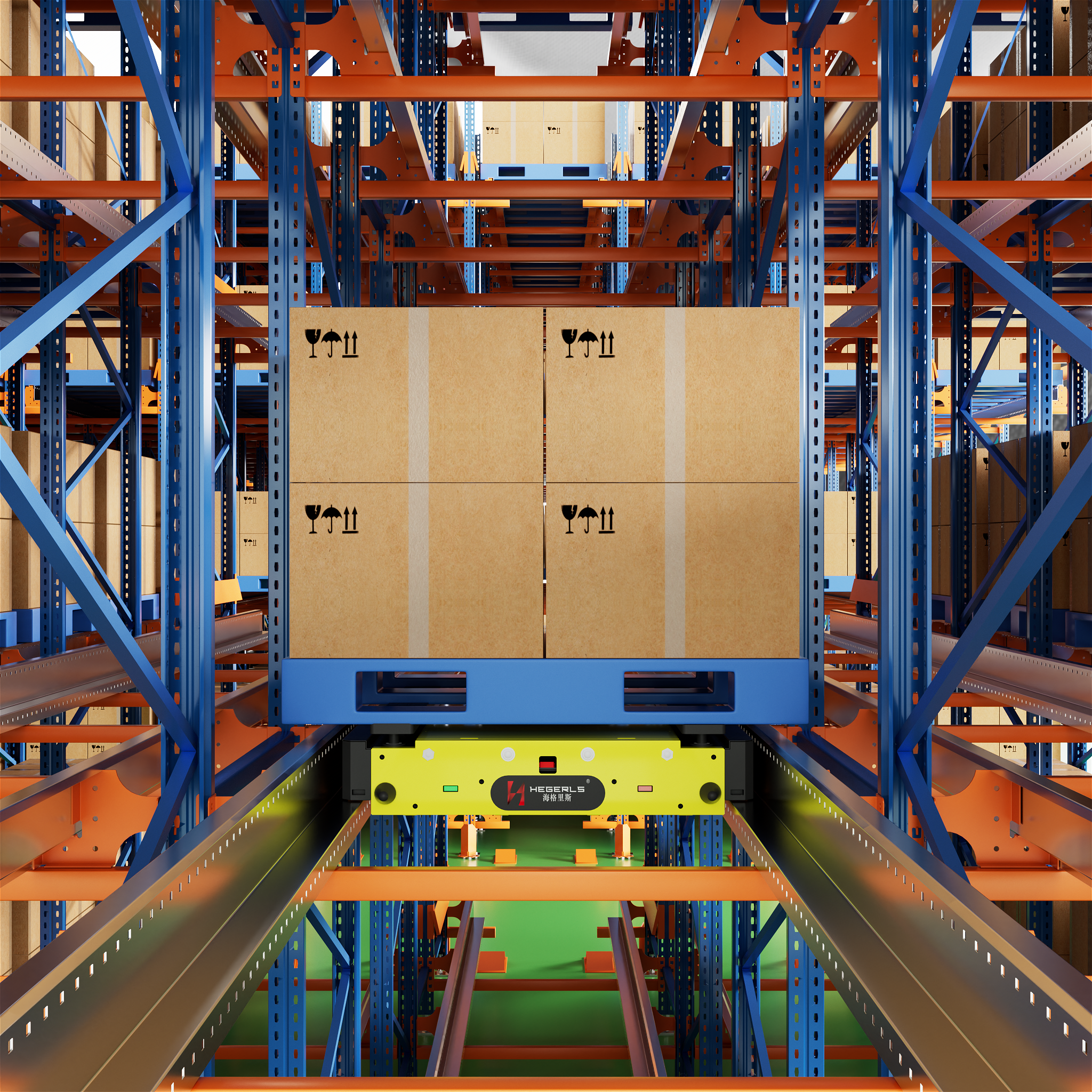
A four-way shuttle can move in both the longitudinal and transverse directions. Instead of being restricted to one fixed lane, the shuttle can travel across a rack system when the warehouse architecture includes the appropriate transfer, lift, and control mechanisms.
Quick answer
| Factor | Four-Way Shuttle | Pallet Shuttle |
| Vehicle movement | Longitudinal + transverse | Primarily along dedicated lanes |
| Storage configuration | Multi-lane, multi-level layouts | Deep-lane storage |
| Lane flexibility | High | More limited |
| Storage density | High | High |
| SKU flexibility | Generally higher | Best with grouped or repeated SKUs |
| Forklift involvement | Can be greatly reduced | Usually required for loading/unloading at lane level |
| Automation potential | High | Moderate to high, depending on system architecture |
| FIFO/LIFO | Depends on system design | Commonly FIFO or LIFO |
| Best suited to | Dynamic, high-density automated storage | High-density storage with stable pallet flows |
| System complexity | Higher | Generally simpler |
| Investment | Typically higher | Typically lower |
| Expansion | Highly configurable | Easier where additional lanes are needed |
The table provides a general comparison. Actual performance depends on warehouse dimensions, rack configuration, pallet specifications, software architecture, equipment quantity, and operating strategy.
How Does a Pallet Shuttle System Work?
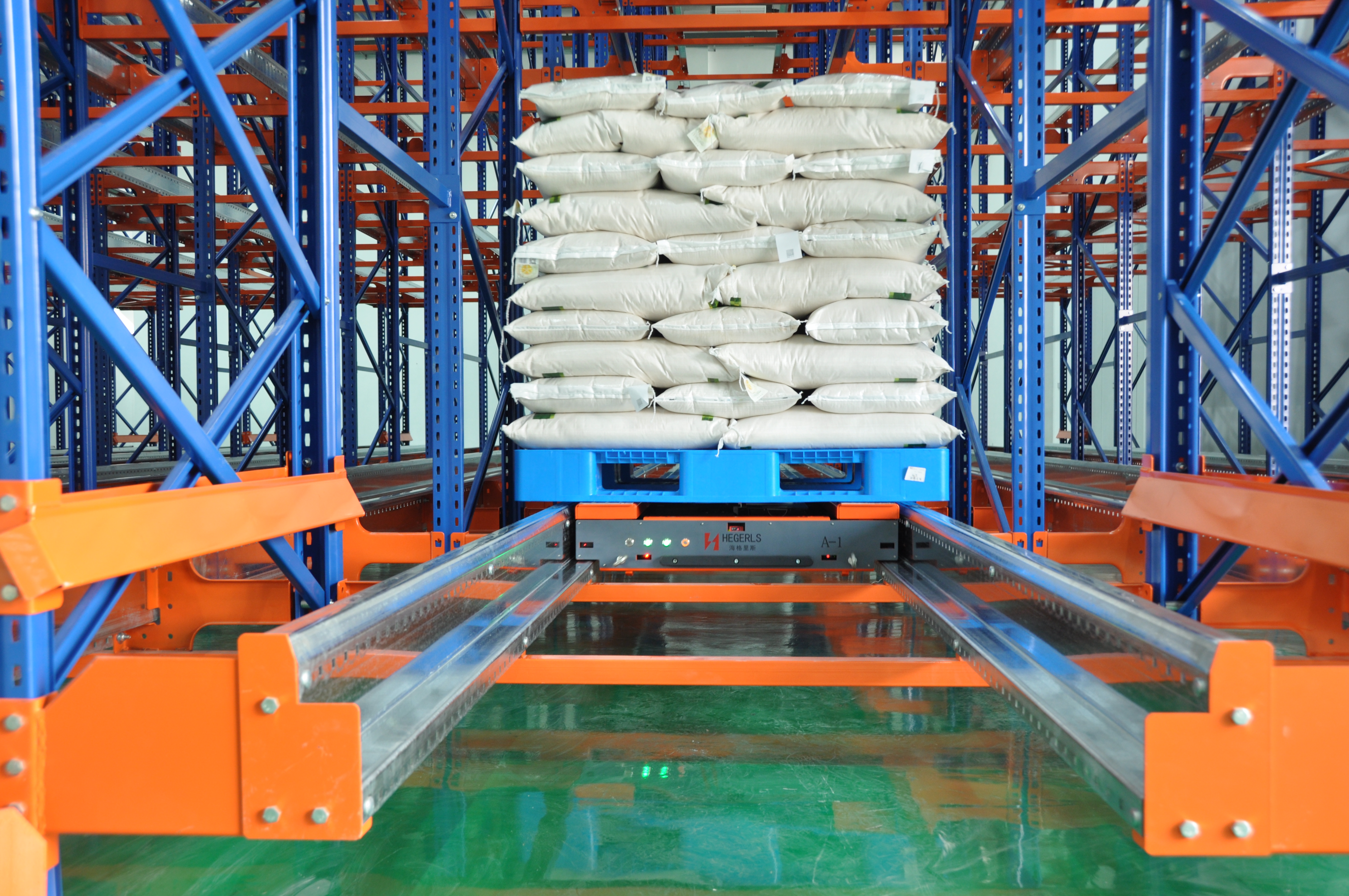
A pallet shuttle system uses a powered shuttle vehicle that travels inside rails installed within deep storage lanes.
A typical operating sequence is:
-
A forklift places a pallet at the lane entrance.
-
The shuttle vehicle positions itself beneath the pallet.
-
The shuttle lifts and transports the pallet into the lane.
-
The pallet is deposited at the designated storage position.
-
For retrieval, the shuttle collects the required pallet and returns it toward the lane entrance.
-
A forklift removes the pallet from the accessible position.
In automated versions, the shuttle may receive commands from a warehouse control system, while lifts, conveyors, or other material-handling equipment can connect the storage system with receiving and shipping areas.
What is the main advantage of pallet shuttle technology?
The main advantage is high-density deep-lane storage with relatively straightforward equipment architecture.
Because the system minimizes the need for forklifts to enter storage lanes, it can increase usable storage capacity and reduce forklift travel inside the rack area.
Pallet shuttle is particularly suitable when:
-
Many pallets share the same SKU or product family.
-
Storage depth is important.
-
The warehouse has relatively stable inventory flows.
-
FIFO or LIFO can be defined by the operating process.
-
Forklifts can efficiently handle the interface between staging areas and storage lanes.
-
The project prioritizes high-density storage without requiring maximum lane-to-lane flexibility.
How Does a Four-Way Shuttle System Work?
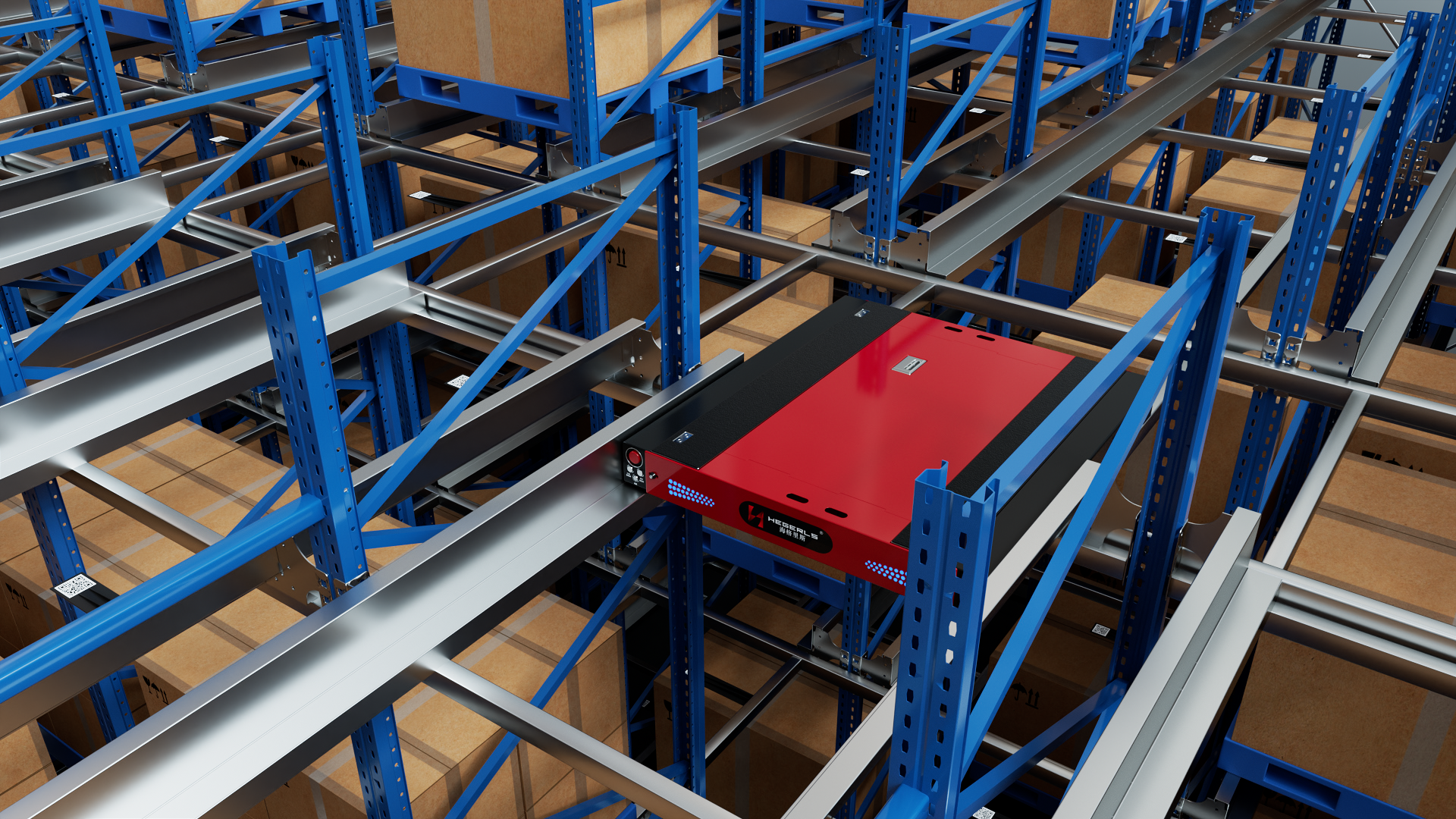
A four-way shuttle uses a vehicle capable of traveling in two perpendicular directions.
This means the vehicle can move:
-
Forward and backward along a storage lane
-
Laterally across the rack structure
-
Between designated storage areas through transfer mechanisms
-
Between levels when connected with lifts or elevators
A typical automated workflow may include:
Inbound → Conveyor/Staging → Lift → Four-Way Shuttle → Storage Position → Four-Way Shuttle → Lift → Conveyor → Outbound
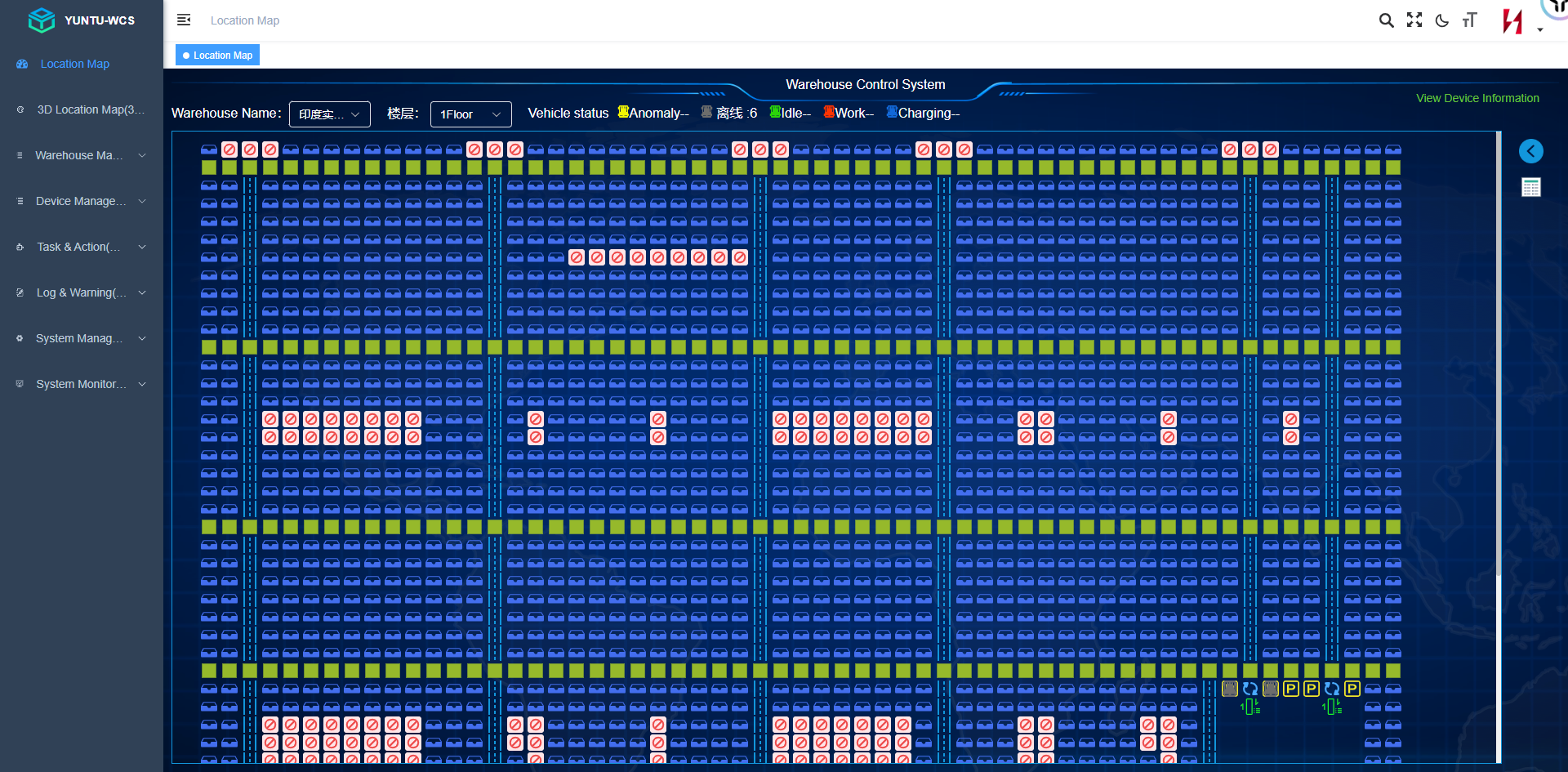
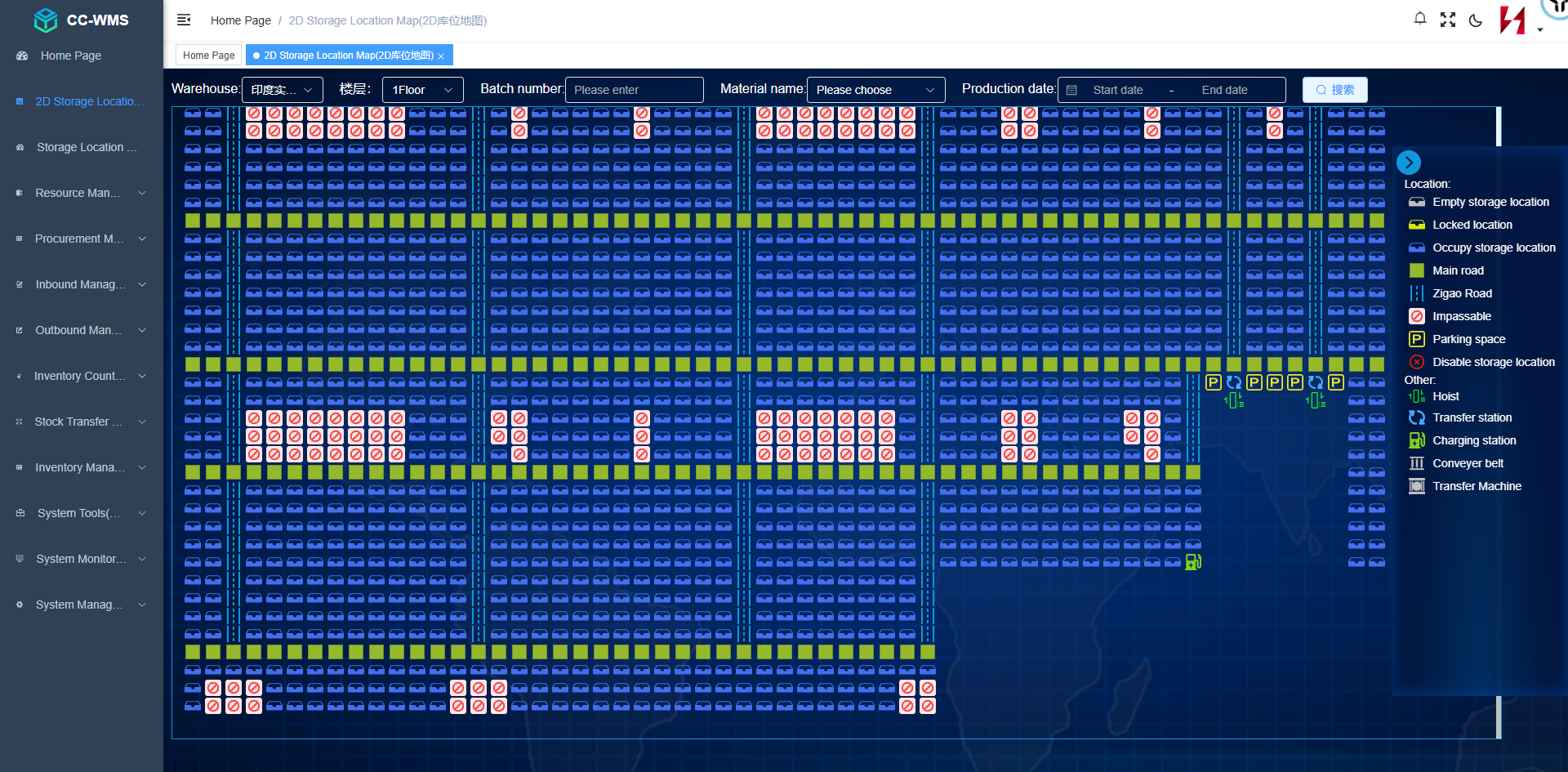
The WMS manages inventory and warehouse tasks, while the WCS coordinates equipment-level execution, including shuttle movements, lifts, conveyors, and other automation equipment.
This architecture makes four-way shuttle technology particularly relevant when the warehouse needs to combine high-density pallet storage with flexible automated movement.
What makes a four-way shuttle different?
The key difference is not simply that the vehicle has four-way movement.
The greater significance is that multi-directional movement can support a more flexible warehouse layout and equipment-sharing strategy.
However, four-way shuttle systems still require proper system architecture. Vehicle movement, rack geometry, lifts, transfer points, pallet specifications, safety systems, and WMS/WCS logic must all be designed together.
Four-Way Shuttle vs. Pallet Shuttle: Which Provides Higher Storage Density?
Both technologies can provide high-density pallet storage, so storage density alone should not determine the choice.
A pallet shuttle system can achieve very high density by using deep lanes and minimizing aisles. This makes it particularly effective when many pallets of the same or related SKUs need to be stored together.
A four-way shuttle can also create high-density layouts while providing greater flexibility between lanes and levels.
In practice, density depends on:
-
Warehouse height
-
Rack height and configuration
-
Number of storage levels
-
Lane depth
-
Required aisles and transfer zones
-
Pallet dimensions
-
Fire protection requirements
-
Required operating clearances
-
SKU distribution
-
Throughput requirements
Neither technology is automatically denser in every warehouse. Pallet shuttle is highly effective for deep-lane storage, while four-way shuttle can combine high-density storage with more flexible lane and level access. The final density should be calculated from the complete warehouse layout rather than the shuttle type alone.
Which System Is More Flexible for Multiple SKUs?
For warehouses with a large number of SKUs and changing storage requirements, system flexibility becomes increasingly important.
A pallet shuttle normally works most efficiently when storage lanes can be assigned to specific products or product groups. If inventory is highly mixed and individual pallet accessibility is required, the lane structure can become a limiting factor.
A four-way shuttle architecture can provide more flexible access because vehicles can move across a larger storage area when supported by the appropriate rack, lift, and control-system design.
This can be useful for:
-
Multiple SKUs
-
Variable inventory levels
-
Seasonal products
-
Batch-oriented operations
-
3PL warehouses
-
Warehouses requiring frequent inventory relocation
-
Operations that expect future changes in storage configuration
However, flexibility comes with additional system-design requirements. A four-way shuttle project should be engineered around the warehouse's actual storage and throughput model rather than selected simply because it provides multi-directional movement.
How Do FIFO and LIFO Requirements Affect the Choice?
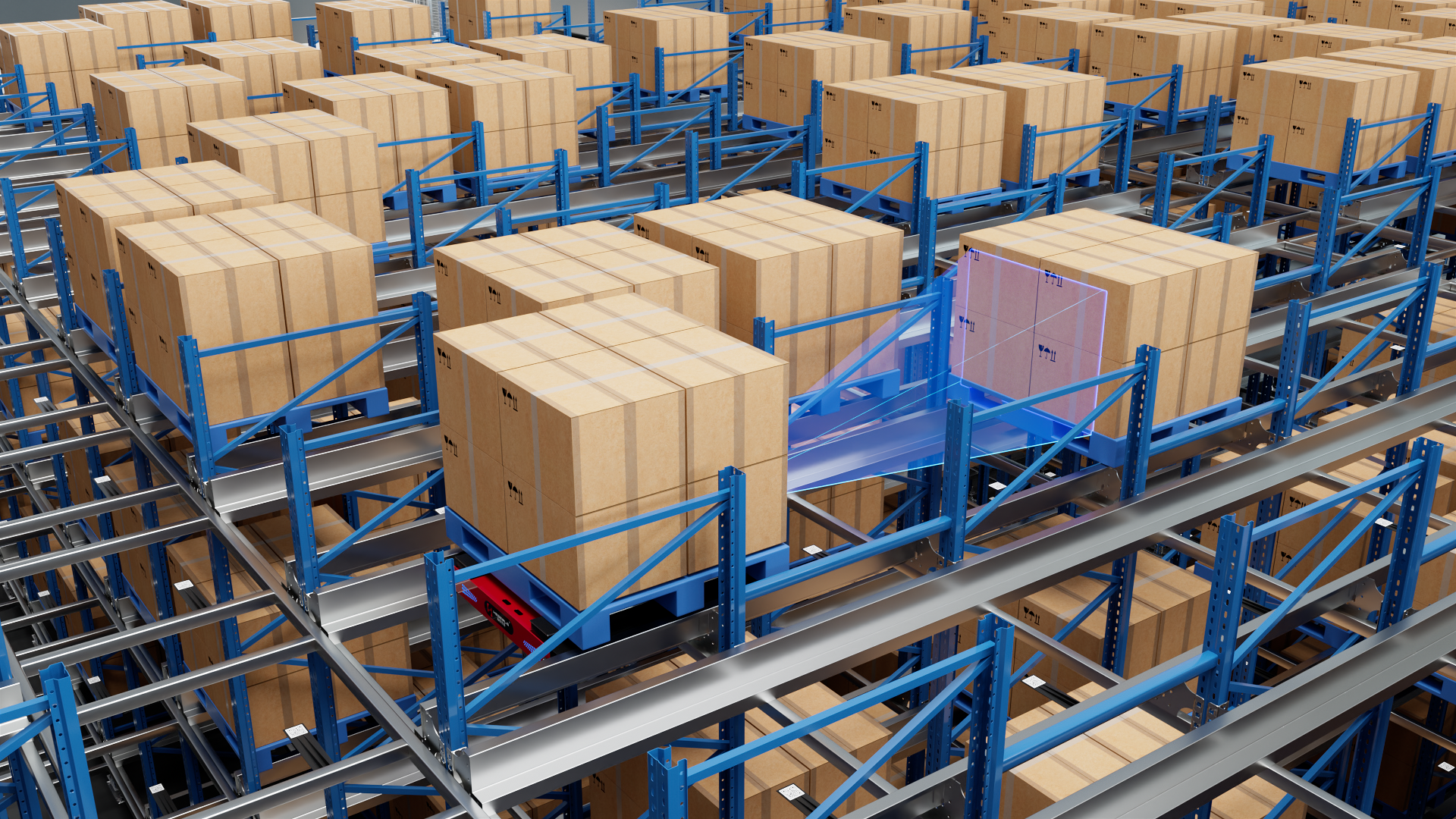
Inventory rotation is an important selection factor.
FIFO — First In, First Out
FIFO is commonly required when:
-
Product shelf life matters
-
Production batches must be rotated
-
Expiration dates need to be controlled
-
Older inventory should be shipped first
LIFO — Last In, First Out
LIFO can be appropriate when:
-
Product expiration is not a major constraint
-
Storage density has a higher priority
-
Inventory can remain in storage for extended periods
-
Products are homogeneous within a lane
Both four-way shuttle and pallet shuttle systems can be engineered around specific inventory-flow requirements, but the actual FIFO/LIFO capability depends on the rack configuration, inbound/outbound points, software rules, and operating process.
Therefore, FIFO versus LIFO should be treated as a system-design requirement rather than a simple equipment feature.
Does a Four-Way Shuttle Reduce Forklift Dependence?
Potentially, yes.
A highly automated four-way shuttle warehouse can connect storage and retrieval operations with:
-
Automated lifts
-
Conveyors
-
WMS
-
WCS
-
AGVs or AMRs
-
Automatic pallet handling
-
Automated staging
This can significantly reduce forklift travel inside the storage area.
A pallet shuttle system can also reduce forklift entry into deep storage lanes. However, forklifts commonly remain involved at the lane interface for pallet loading and unloading.
The difference is therefore one of automation architecture, not merely whether a shuttle vehicle is used.
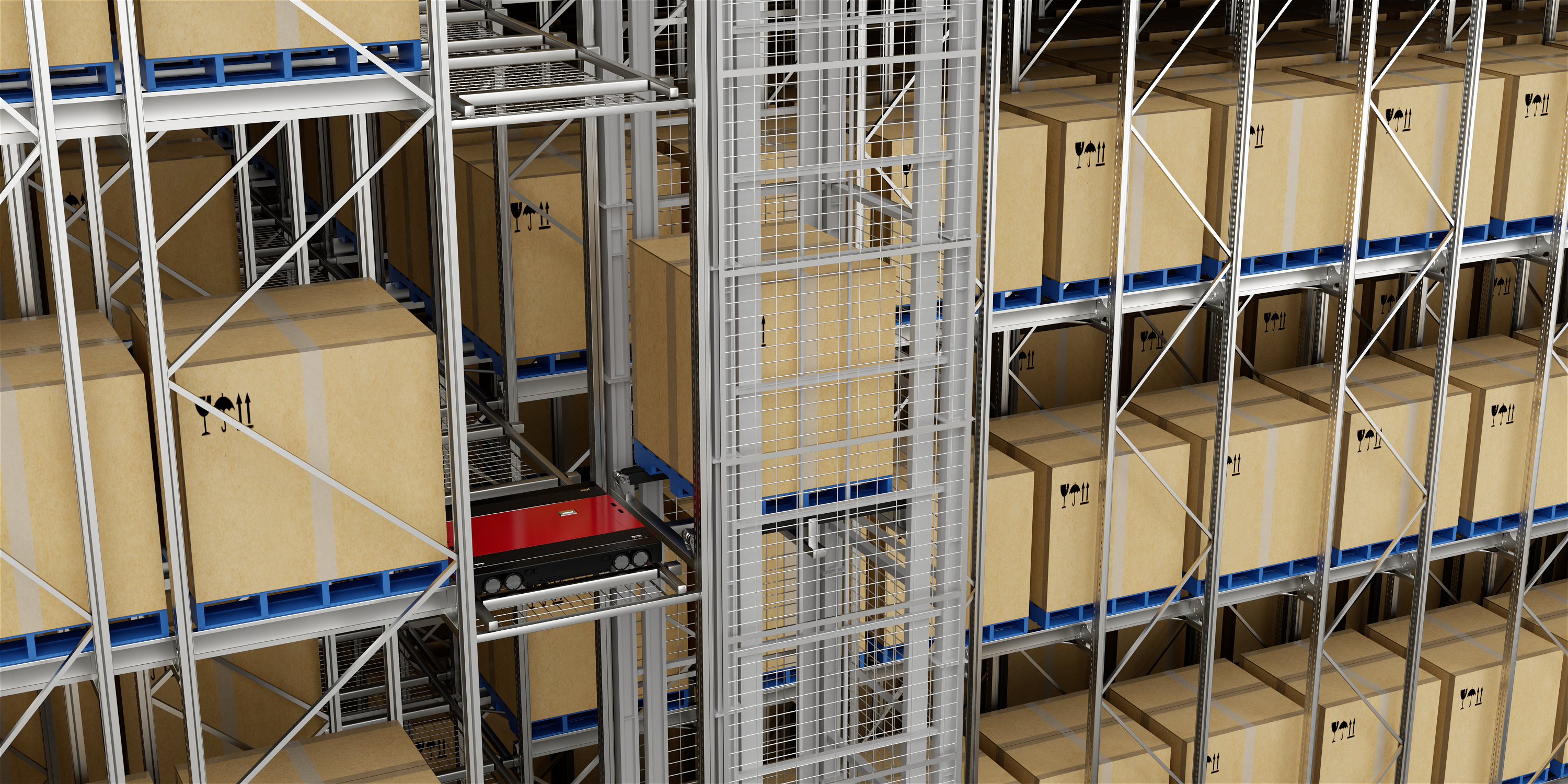
For a warehouse seeking a high level of unattended pallet movement, four-way shuttle technology can be integrated into a broader automated workflow.
Which System Is Better for Deep-Lane Storage?
For straightforward deep-lane pallet storage, pallet shuttle technology is often considered because its operating concept is directly aligned with deep-lane storage.
For example, a warehouse may use dedicated lanes for:
-
One SKU
-
One product family
-
One production batch
-
One temperature category
The more stable the inventory structure, the easier it is to design dedicated storage lanes.
Four-way shuttle technology can also support deep storage, but its value becomes more apparent when the project requires high density plus flexible access across multiple lanes and levels.
Which System Is More Suitable for Cold Storage?
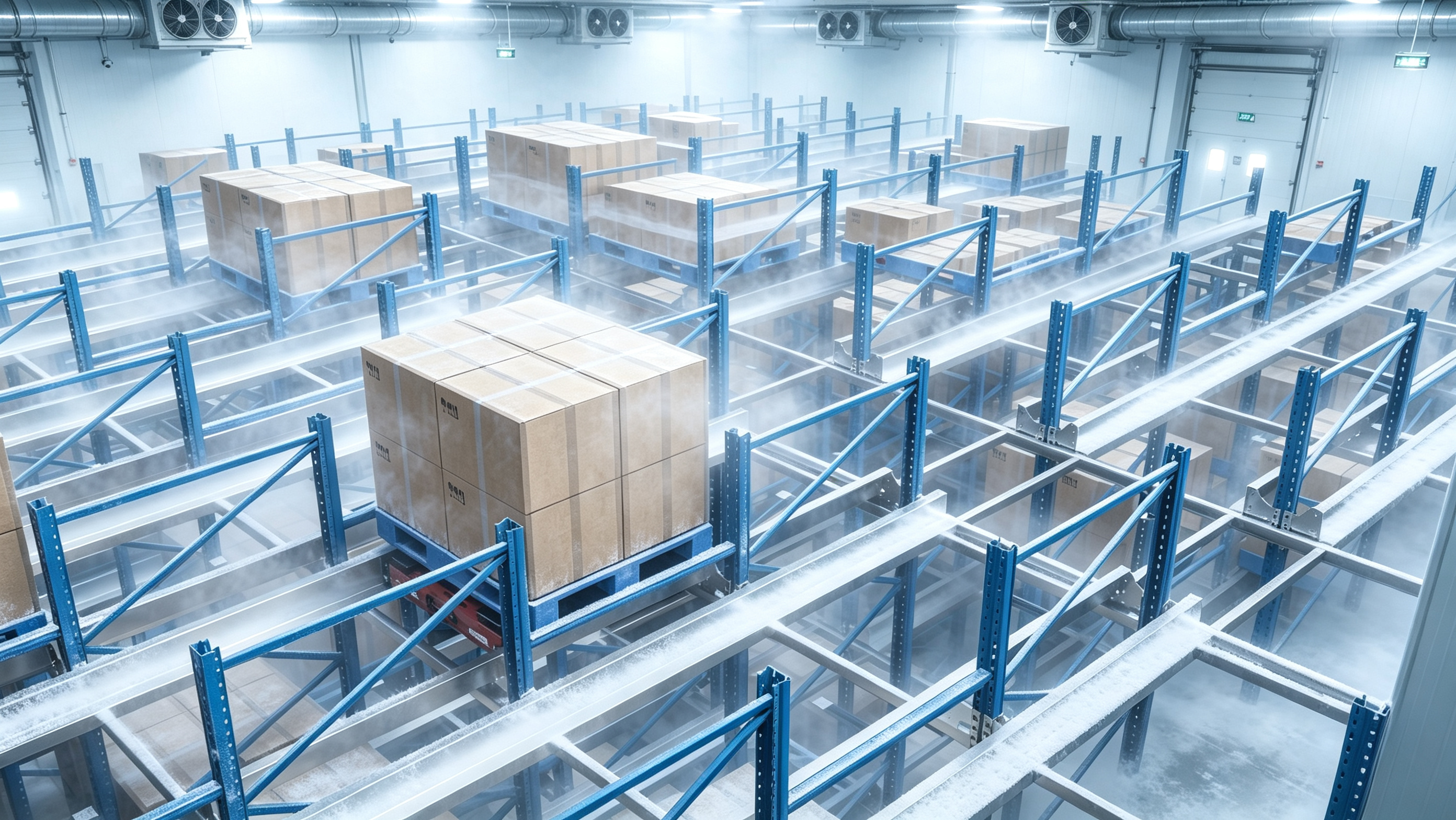
Both technologies can be used in temperature-controlled warehouses, provided the equipment and electrical components are designed for the specified operating environment.
Cold-storage projects introduce additional considerations:
-
Operating temperature
-
Battery performance
-
Condensation
-
Charging strategy
-
Equipment material selection
-
Maintenance access
-
Insulation and door cycles
-
Pallet condition
-
Emergency recovery procedures
For a cold warehouse, the correct question is therefore not simply:
“Four-way shuttle or pallet shuttle?”
It should be:
“Which complete storage and automation architecture can reliably operate at the required temperature while meeting the required density, throughput, and inventory-control objectives?”
This is particularly important for frozen food, dairy, meat, pharmaceuticals, and other temperature-sensitive products.
Four-Way Shuttle vs. Pallet Shuttle for High-SKU Warehouses
A high-SKU warehouse typically needs more selective access to inventory.
Consider two simplified scenarios:
Scenario A: 20 SKUs with thousands of pallets
If each SKU has a large number of pallets, dedicated deep lanes can be efficient. Pallet shuttle may therefore fit the operating model.
Scenario B: 1,000+ SKUs with relatively small pallet quantities
If each SKU has only a limited number of pallets, dedicating entire deep lanes to individual SKUs may reduce storage flexibility.
A four-way shuttle architecture may provide more options for distributing inventory across a high-density rack structure.
This does not mean that four-way shuttle is automatically the correct choice. Slotting logic, inventory turnover, retrieval frequency, and pallet accessibility must still be modeled.
Which System Has a Higher Level of Automation?
Automation level depends on the complete system rather than the shuttle vehicle alone.
| Automation Level | Pallet Shuttle | Four-Way Shuttle |
| Shuttle movement | Automated | Automated |
| Forklift interface | Common | Can be minimized |
| Automated lift integration | Possible | Common in multi-level designs |
| Conveyor integration | Possible | Common |
| WMS integration | Possible | Common |
| WCS coordination | Possible | Important for multi-equipment systems |
| AGV/AMR integration | Possible | Possible |
| Automated inventory management | Possible | Possible |
| Fully integrated AS/RS architecture | Project-dependent | Project-dependent |
A pallet shuttle can be highly automated, while a four-way shuttle can also operate as part of a semi-automated system.
Therefore, “four-way shuttle = fully automated” and “pallet shuttle = semi-automated” are oversimplifications.
When Should You Consider a Pallet Shuttle?
A pallet shuttle may be appropriate when the warehouse has:
-
High pallet volumes per SKU or product family
-
A strong requirement for deep-lane storage
-
Relatively stable inventory patterns
-
Clear FIFO or LIFO requirements
-
A suitable forklift interface
-
A preference for a comparatively straightforward shuttle architecture
-
High-density storage requirements without extensive cross-lane vehicle movement
The system can be particularly practical where the warehouse layout naturally supports dedicated storage lanes.
When Should You Consider a Four-Way Shuttle?
A four-way shuttle should be evaluated when the warehouse requires a combination of:
-
High storage density
-
Multi-lane access
-
Multi-level storage
-
High SKU diversity
-
Reduced forklift movement
-
Automated inbound and outbound processes
-
Integration with WMS/WCS
-
Flexible warehouse layouts
-
Future capacity expansion
-
Cold-storage automation
-
Automated inventory counting or relocation
Four-way shuttle systems are especially relevant when the warehouse needs more than dense storage and requires a flexible automated material-flow architecture.
Can Four-Way Shuttle and Pallet Shuttle Be Used Together?
Yes, in some warehouse projects, different shuttle technologies can coexist.
For example, a distribution center may divide storage according to product characteristics:
-
High-volume homogeneous products → deep-lane pallet shuttle
-
High-SKU or variable inventory → four-way shuttle
-
Very high or very narrow storage → stacker crane AS/RS
-
Fast-moving cartons → goods-to-person or piece-picking automation
This is an important principle in warehouse automation:
The objective is not necessarily to automate everything with one technology. The objective is to match each storage and material-flow requirement with the appropriate technology.
A system integrator can therefore design a hybrid architecture where different automation technologies share the same WMS/WCS layer.
How Should You Decide Between Four-Way Shuttle and Pallet Shuttle?
Use the following decision framework.
| Warehouse Requirement | Technology to Evaluate |
| Stable SKU groups and deep-lane storage | Pallet Shuttle |
| Very high-density pallet storage | Both |
| Large number of SKUs | Four-Way Shuttle |
| Flexible access across storage lanes | Four-Way Shuttle |
| Simple dedicated-lane operation | Pallet Shuttle |
| Reduced forklift dependency | Four-Way Shuttle |
| FIFO with dedicated lanes | Pallet Shuttle or Four-Way Shuttle |
| LIFO deep storage | Pallet Shuttle or Four-Way Shuttle |
| Multi-level automated storage | Four-Way Shuttle |
| Cold-chain automation | Both, depending on system design |
| Future layout flexibility | Four-Way Shuttle |
| Lower system complexity | Pallet Shuttle |
| Integrated WMS/WCS automation | Both |
| Mixed automation technologies | Four-Way Shuttle architecture often provides broader integration options |
Five questions to answer before selecting the technology
- How many pallet positions are required?
- How many SKUs will be stored, and how many pallets does each SKU represent?
- What are the required inbound and outbound pallets per hour?
- Is FIFO, LIFO, or another inventory-rotation strategy required?
- How much forklift movement should remain inside the warehouse?
These five parameters can eliminate many unsuitable configurations before detailed engineering begins.
Why Is System Design More Important Than Shuttle Selection?
A shuttle vehicle is only one component of an automated warehouse.
A complete system may include:
Storage Racks → Shuttle Vehicles → Lifts → Conveyors → WMS → WCS → ERP/MES → AGV/AMR → Warehouse Operations
The final performance depends on how these components work together.
For example, increasing shuttle speed does not necessarily increase warehouse throughput if:
- The lift becomes a bottleneck.
- Conveyors cannot handle the required flow.
- Staging areas are undersized.
- WMS task allocation is inefficient.
- WCS scheduling creates conflicts.
- Inbound or outbound doors cannot support the required flow.
This is why technology selection should begin with warehouse process analysis and system simulation, rather than selecting a shuttle based on vehicle specifications alone.
Why Choose Zhuku for Shuttle-Based Warehouse Automation?
Zhuku approaches shuttle warehouse projects as integrated automation systems rather than standalone equipment selections.
Through Zhuku's warehouse automation integration capabilities, a project can be evaluated across:
- Storage-rack configuration
- Four-way shuttle or pallet shuttle selection
- Lift and conveyor design
- Warehouse process flow
- WMS and WCS architecture
- Automated pallet handling
- Equipment scheduling
- Warehouse control
- Inventory management
- System commissioning
The goal is to determine which architecture fits the actual warehouse requirements instead of forcing every project into the same technology.
For projects requiring flexible high-density storage, four-way shuttle systems can be evaluated alongside pallet shuttle, stacker crane, conveyor, AGV/AMR, and other automation technologies.
This integrated approach is particularly relevant for cold-chain, food and beverage, chemical, manufacturing, 3PL, and high-density pallet warehouses.
What Information Should You Provide for a Shuttle Warehouse Design?
A preliminary technical evaluation becomes much more accurate when the following information is available:
Warehouse information
|
Storage information
|
Operational information
|
Automation information
|
A CAD drawing, PDF layout, or even a hand-drawn warehouse sketch can provide a useful starting point for preliminary planning.
Conclusion: Four-Way Shuttle or Pallet Shuttle?
The difference between four-way shuttle and pallet shuttle is fundamentally a difference in movement architecture, storage flexibility, and system design.
Pallet shuttle is strongly aligned with high-density deep-lane storage, especially where SKUs can be grouped into dedicated lanes and inventory flows are relatively stable.
Four-way shuttle is designed for greater movement flexibility and can support multi-lane, multi-level automated storage when integrated with lifts, conveyors, WMS, and WCS.
Neither technology should be selected from equipment specifications alone.
The right choice should be based on:
Storage Density + SKU Profile + Throughput + Inventory Flow + Warehouse Layout + Automation Level + Future Expansion
For many modern warehouses, the most effective solution may also combine multiple automation technologies within one integrated WMS/WCS architecture.
Send Your Warehouse Drawing → Get a Shuttle Automation Recommendation
Have a pallet warehouse, cold-storage facility, manufacturing warehouse, or 3PL distribution center to automate?
Send your CAD drawing, PDF layout, or warehouse sketch together with your pallet specifications, SKU information, storage requirement, and inbound/outbound targets.
Zhuku can evaluate the warehouse structure and operating requirements and help determine whether a four-way shuttle, pallet shuttle, stacker crane AS/RS, or hybrid automation architecture is more appropriate for the project.