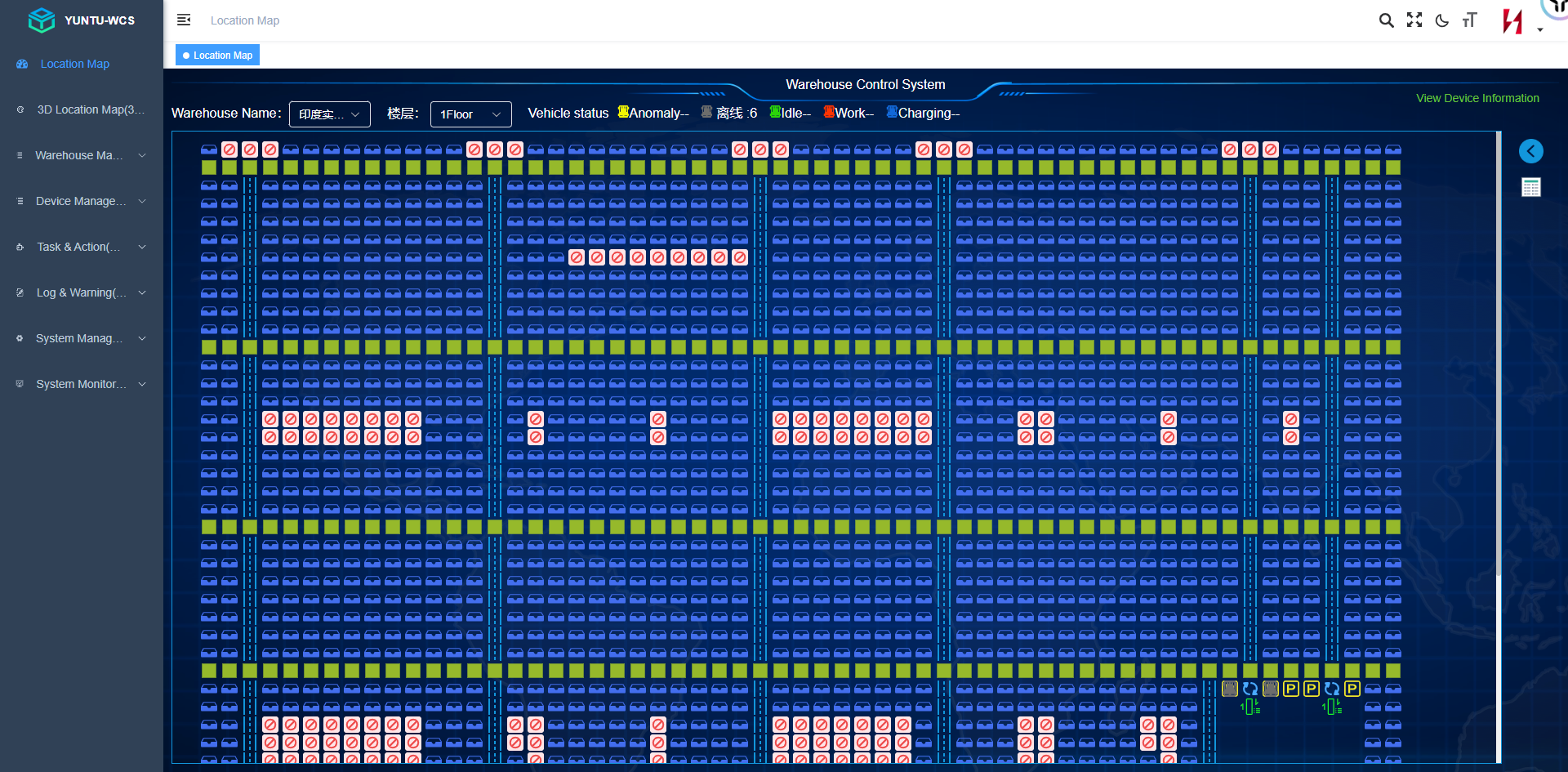
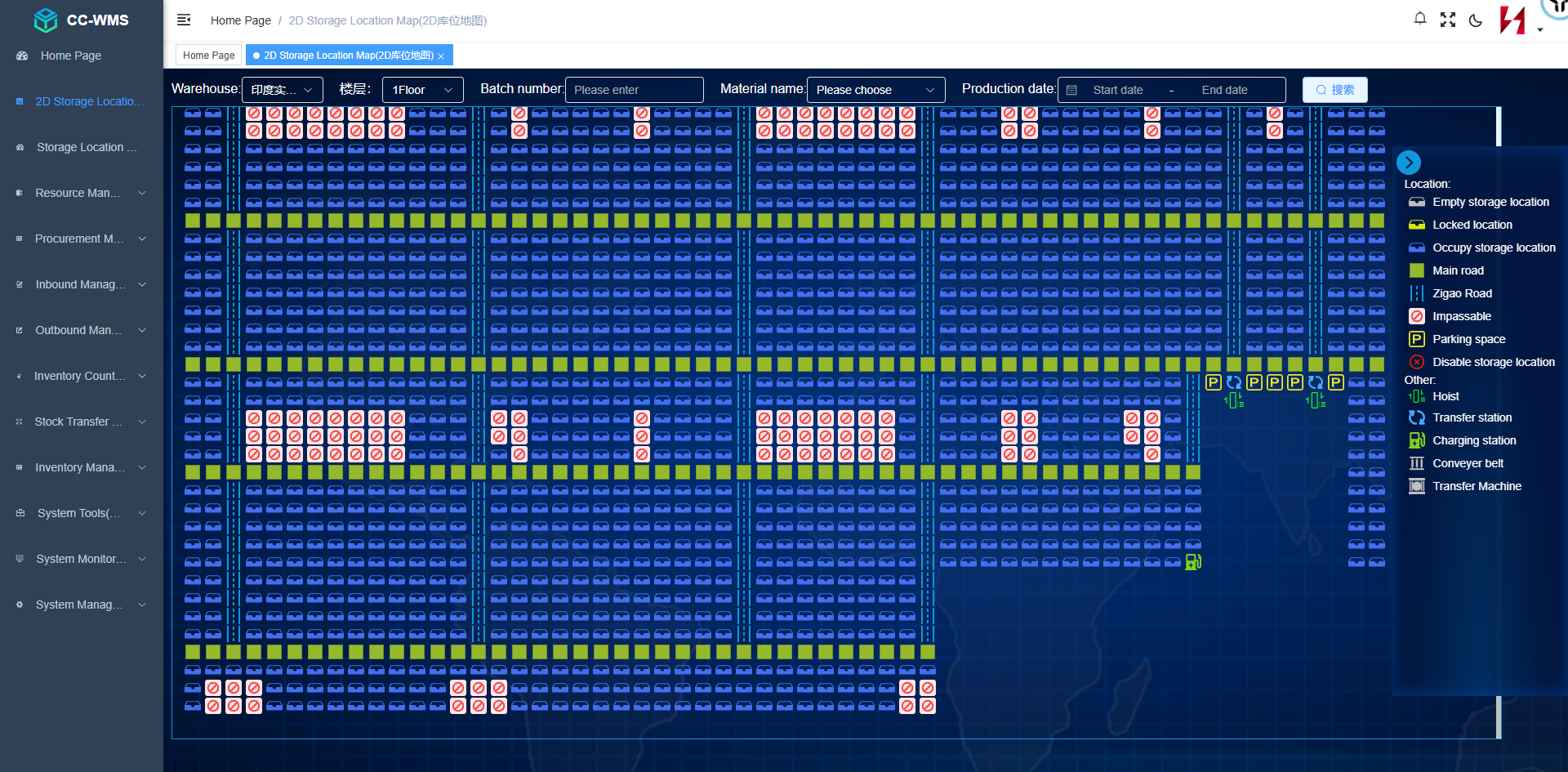
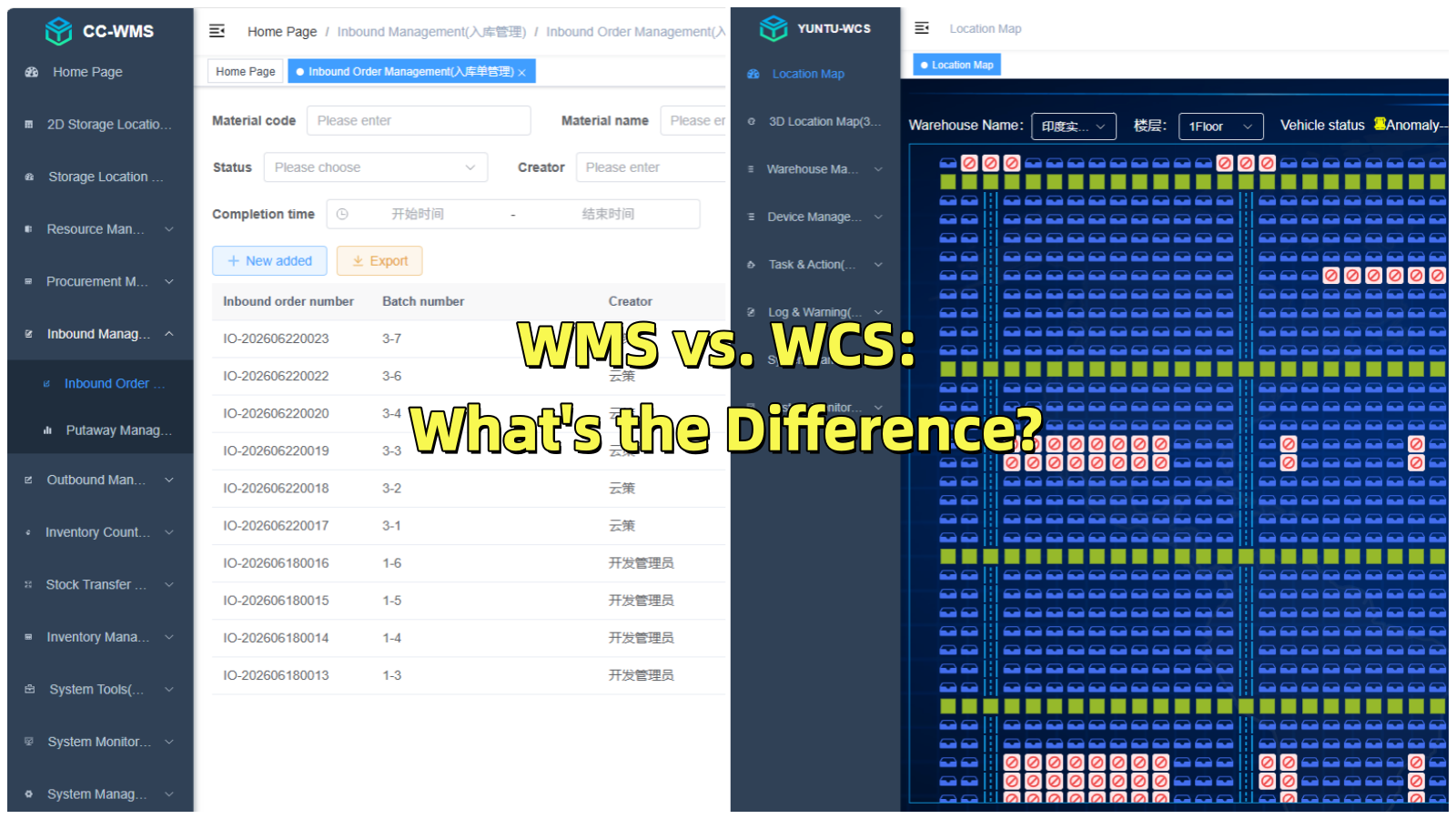
WMS vs. WCS is an important distinction when designing an automated warehouse. Both systems support warehouse operations, but they serve different purposes: a Warehouse Management System (WMS) manages inventory, warehouse processes and order fulfillment, while a Warehouse Control System (WCS) coordinates automated equipment such as conveyors, lifts, shuttle systems and stacker cranes.
The key difference is that WMS determines what warehouse tasks need to be completed, while WCS coordinates how connected automation equipment executes those tasks. In an integrated warehouse, the two systems exchange information to synchronize inventory decisions, material movement and operational status.
Understanding the difference between WMS and WCS helps businesses choose the right software architecture, integrate warehouse automation equipment and avoid costly control or data-management gaps.
What Is a Warehouse Management System (WMS)?
A Warehouse Management System is software that manages warehouse inventory and operational processes. It provides visibility into what goods are stored, where they are located, how inventory moves and which orders need to be fulfilled.
A WMS typically supports the following functions:
-
Inventory management: Tracks stock quantities, locations, batches and relevant product attributes.
-
Inbound management: Coordinates receiving, inspection, identification and putaway.
-
Storage allocation: Assigns inventory to suitable storage locations according to configured rules.
-
Order management: Processes picking tasks, replenishment and outbound requirements.
-
Inventory traceability: Supports batch, lot, serial-number or expiration-date tracking where required.
-
Reporting and analysis: Provides operational reports on inventory, order processing and warehouse performance.
-
Business system integration: Exchanges relevant data with ERP, MES, order management and other enterprise systems.
For example, when a warehouse receives a pallet of raw materials, the WMS registers the inventory and determines an appropriate storage location based on configured rules. When production requires the materials, the WMS can create a retrieval request and track the inventory transaction.
A WMS may operate in a manual warehouse, a semi-automated facility or a highly automated distribution center. Its core purpose is warehouse process and inventory management, regardless of the level of physical automation.
What Is a Warehouse Control System (WCS)?
A Warehouse Control System is software that coordinates the execution of warehouse tasks by automated material-handling equipment.
Where a WMS manages inventory and warehouse processes, a WCS focuses on equipment coordination, task execution and operational flow within the automation system.
Depending on the equipment and software architecture, a WCS may coordinate:
-
Conveyors and transfer units.
-
Vertical lifts and pallet elevators.
-
Stacker cranes and AS/RS equipment.
-
Two-way pallet shuttles and four-way shuttle systems.
-
Automated guided vehicles (AGVs) and compatible mobile robots.
-
Sorting, diverting and transfer mechanisms.
-
Equipment status, task sequencing and execution exceptions.
A WCS can coordinate equipment availability, transfer sequences and task priorities while receiving feedback from connected controllers and devices. The exact level of control depends on the integration architecture: real-time motion and safety functions are commonly handled by equipment PLCs, vehicle controllers or dedicated safety systems.
For example, when a pallet must be retrieved from a high-density shuttle warehouse, the WCS may coordinate the relevant shuttle, lift and conveyor sequence, monitor task status and report completion to the higher-level warehouse software.
A WCS does not necessarily replace the WMS. Instead, the two systems usually cooperate to connect warehouse business decisions with physical material movement.
WMS vs. WCS: What Are the Main Differences?
The most useful way to compare WMS and WCS is to examine their responsibilities, data and relationship with warehouse equipment.
| Comparison | WMS | WCS |
| Full name | Warehouse Management System | Warehouse Control System |
| Primary role | Warehouse processes and inventory management | Automated equipment coordination |
| Main question | What goods and warehouse tasks need attention? | How should connected equipment execute the task? |
| Inventory records | Maintains operational inventory records | Uses task and equipment information; may exchange inventory-related status |
| Inbound and outbound | Manages receiving, putaway and order processes | Coordinates the equipment movements needed to execute tasks |
| Storage allocation | Commonly assigns or recommends storage locations | Executes the required movements through the available equipment |
| Equipment control | Usually issues tasks through an integration layer | Coordinates compatible equipment and execution sequences |
| Typical data | SKUs, quantities, locations, batches and orders | Equipment status, task progress, routing and transfer availability |
| ERP integration | Commonly manages business and inventory transactions | Typically connects through WMS or an integration architecture |
| Manual warehouse suitability | Yes | Usually unnecessary unless automation equipment requires it |
| Automated warehouse suitability | Manages warehouse operations | Coordinates the automated material flow |
In short: WMS manages warehouse operations and inventory, while WCS coordinates the automated equipment used to execute warehouse tasks. The boundary can vary by vendor, so system responsibilities should be documented before implementation.
How Do WMS and WCS Work Together?
|
WMS and WCS deliver the most value when their responsibilities are clearly defined and their interfaces are reliable. A typical automated warehouse architecture looks like this: ERP / MES → WMS → WCS → Equipment Controllers → Automated Warehouse Equipment The ERP or MES supplies relevant business or production requirements. The WMS manages warehouse inventory and generates operational tasks. The WCS coordinates equipment execution, while local controllers operate individual machines and enforce their configured control and safety functions. A typical pallet retrieval process works as follows:
The exact sequence depends on the system design. Some installations include a Warehouse Execution System (WES), middleware or other orchestration components between WMS and WCS. Successful integration requires more than connecting software interfaces. Task identifiers, inventory references, equipment status, error codes, timeouts and recovery procedures must be defined so that the software can handle both normal operations and exceptions. | 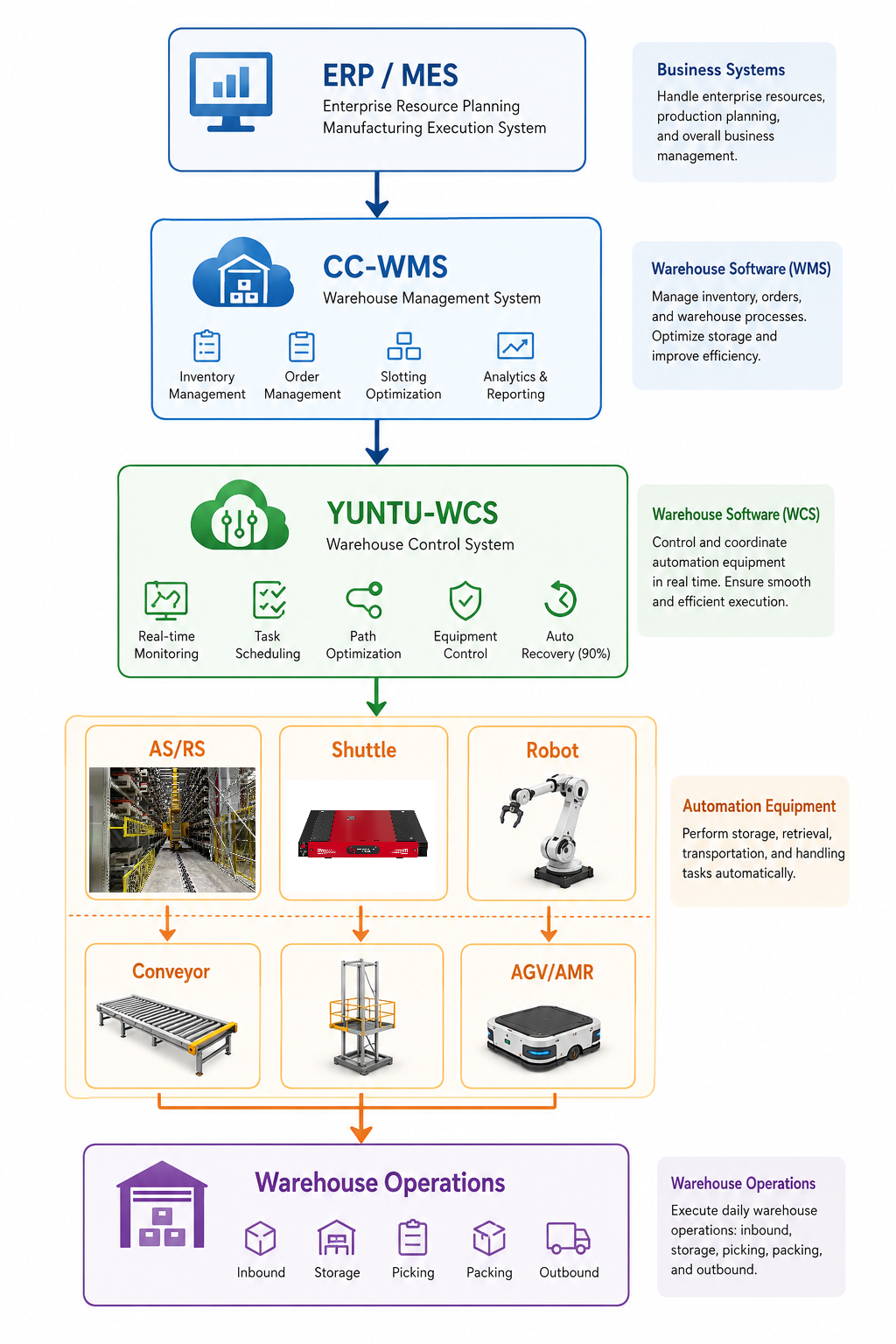 |
What Is the Difference Between WMS and WCS in a Four-Way Shuttle Warehouse?
A four-way shuttle warehouse is a good example of why WMS and WCS perform different functions.
Suppose an outbound order requires pallet P018.
WMS responsibility
The WMS determines:
-
Which pallet should be retrieved
-
Where the pallet is stored
-
Whether the pallet meets the order requirements
-
Which warehouse task should be generated
The WMS may create:
Retrieve P018 from R05-03-07.
WCS responsibility
The WCS then coordinates the physical operation.
It may:
-
Select an available four-way shuttle.
-
Check the shuttle's operating status.
-
Determine the movement sequence.
-
Coordinate the required lift.
-
Manage transfer points.
-
Send equipment commands.
-
Monitor shuttle position.
-
Confirm pallet retrieval.
-
Send execution feedback.
-
Handle or report exceptions.
The difference is therefore clear:
WMS manages the warehouse task.
WCS manages the automated execution of that task.
Does WMS Manage Inventory While WCS Manages Equipment?
Generally, yes.
A WMS maintains the warehouse's logical inventory model.
For example:
SKU: A100
Pallet ID: P001
Location: R05-03-07
Quantity: 48 units
Batch: B2026-09
Status: Available
The WCS does not normally replace the WMS as the master inventory-management layer.
Instead, the WCS provides execution information such as:
Shuttle 04 → Retrieved P001 → Transfer completed → Conveyor C07
The WMS can then update the warehouse transaction and inventory state.
This separation helps prevent the equipment-control layer from becoming overloaded with business-level inventory logic.
Does WCS Directly Control Warehouse Equipment?
The WCS is commonly responsible for coordinating automated equipment, but the actual architecture may include PLCs, robot controllers, fleet-management systems, or equipment-specific controllers.
A simplified structure may therefore look like:
WMS
↓
WCS
↓
PLC / Equipment Controller
↓
Conveyor / Shuttle / Lift / Crane
This layered approach allows each system to perform a defined role.
For example:
-
WMS: What pallet needs to move?
-
WCS: Which equipment should execute it and in what sequence?
-
PLC: How should the conveyor or machine execute the physical control logic?
-
Equipment: Perform the movement.
This distinction becomes increasingly important as the number of automation devices increases.
Can a WMS Control Conveyors, Shuttles or Stackers Directly?
A WMS can initiate warehouse tasks that involve automated equipment, but it does not normally handle every low-level equipment command itself.
In many integrated warehouses, the WMS communicates with a WCS or another control layer. The WCS coordinates task execution, while PLCs, vehicle controllers and other dedicated controllers manage machine-level operations.
This separation helps keep inventory and order logic distinct from equipment-specific control.
For example, the WMS may request that a pallet be delivered to an outbound station. The WCS coordinates the required conveyor, lift and shuttle movements. The relevant equipment controllers then execute their commands and return status information.
However, not every project uses a separate WCS. Some simpler automation systems integrate control functions into equipment software or a WMS platform. The appropriate architecture depends on the number of devices, equipment complexity, throughput requirements and vendor interfaces.
When evaluating a solution, ask which system is responsible for task assignment, route coordination, equipment interlocks, error recovery and inventory confirmation. Clear ownership reduces the risk of duplicated logic or unresolved exceptions.
Does Every Warehouse Need a WMS and WCS?
No. The required software depends on the warehouse's operational complexity and the automation equipment involved.
| Warehouse scenario | Typical software approach |
| Manual warehouse with basic storage and picking | WMS may be sufficient |
| Warehouse with limited conveyor automation | WMS with suitable equipment integration; a separate WCS depends on complexity |
| AS/RS with stacker cranes and transfer equipment | WMS plus a suitable equipment-control architecture, often including WCS |
| Multi-level shuttle warehouse with several lifts and conveyors | WMS and coordinated equipment control are generally important |
| Large automated distribution center with diverse equipment | WMS, WCS and potentially WES or additional orchestration layers |
A manual warehouse may not need a dedicated WCS because there is little automated equipment to coordinate. Conversely, a complex automated warehouse may require a WCS or equivalent control layer to synchronize equipment and handle execution exceptions.
The decision should be based on functional requirements rather than the software names alone. A vendor may combine multiple functions into one platform, but the required responsibilities still need to be covered.
WMS vs. WCS vs. WES: What Is the Difference?
Another term frequently used in warehouse automation is WES — Warehouse Execution System.
Although terminology varies among vendors, the three concepts can be broadly distinguished as follows:
| System | Main Responsibility | Typical Question |
| WMS | Warehouse management | What should the warehouse process? |
| WES | Execution orchestration and optimization | How should warehouse tasks be prioritized and coordinated? |
| WCS | Equipment control | How should the equipment execute the task? |
For example:
WMS:
Retrieve 20 pallets for outbound order O100.
WES:
Prioritize the tasks according to workload, order urgency, equipment availability, and operational conditions.
WCS:
Coordinate the shuttle, lift, conveyor, or other equipment to execute the selected tasks.
However, these boundaries are not universal.
Some vendors combine WES capabilities into WMS or WCS platforms. Others use a dedicated WES layer.
Therefore, companies should compare actual functions, interfaces, and system architecture, rather than relying on terminology alone.
How Do WMS and WCS Integrate with ERP and MES?
ERP and MES systems manage business and production information that may trigger warehouse activity.
An ERP system may provide purchase orders, sales orders, item master data and shipment requirements. An MES may communicate production schedules, material requests or finished-goods status.
The WMS translates relevant requirements into warehouse processes. The WCS coordinates equipment execution where automated handling is involved.
Integration planning should define:
-
Which system owns item master data and inventory records.
-
How inbound, outbound and production requests are exchanged.
-
How task acknowledgments and completion events are reported.
-
How failed transfers, communication loss and equipment downtime are handled.
-
How inventory discrepancies and canceled orders are reconciled.
-
How interfaces are monitored, logged and maintained.
Data exchange may use APIs, message-based communication, databases or vendor-specific interfaces. The right choice depends on the existing enterprise systems, response requirements and integration standards.
Reliable integration helps prevent situations in which a business application expects a pallet to be available while the physical warehouse is still processing a movement or handling an exception.
What Problems Can Poor WMS/WCS Integration Cause?
Even well-designed warehouse equipment can underperform if the software architecture is poorly defined.
Common problems include:
Inventory mismatches: The software records a movement before it has been confirmed, or the physical movement is completed without the inventory transaction being reconciled.
Equipment waiting time: A conveyor, lift or shuttle remains idle because the next task is unavailable, incorrectly sequenced or blocked by another process.
Unclear exception ownership: Operations staff cannot determine whether an issue belongs to inventory management, task orchestration, equipment control or a local controller.
Communication failures: Missing acknowledgments, duplicated messages or incomplete recovery logic can leave tasks in an uncertain state.
Bottlenecks during peak demand: Storage equipment may have sufficient capacity but fail to meet outbound targets because picking, transfer or dispatch processes cannot keep pace.
To reduce these risks, define interface contracts, task states, exception handling and recovery procedures before commissioning. Simulate peak workloads and validate complete inbound-to-outbound workflows, not only individual equipment movements.
How Do WMS and WCS Affect Warehouse Throughput?
Neither WMS nor WCS should be evaluated only by software features.
Warehouse throughput depends on the complete system:
Order Profile + Inventory Logic + Task Allocation + Equipment Capacity + Routing + Staging + Software Coordination
For example, a four-way shuttle may be capable of rapid movement, but actual warehouse throughput can still be limited by:
-
Lift capacity
-
Conveyor speed
-
Transfer efficiency
-
Staging capacity
-
Number of shuttles
-
Task scheduling
-
Outbound dock capacity
-
WMS allocation logic
-
WCS coordination
This is why software and automation equipment should be designed as one system.
What Should You Look for in a WMS?
When evaluating a WMS, focus on warehouse-management requirements.
Important capabilities can include:
-
Inventory visibility
-
Multi-location management
-
SKU management
-
Batch and lot management
-
FIFO / FEFO / LIFO
-
Receiving
-
Putaway
-
Replenishment
-
Picking
-
Packing
-
Shipping
-
Inventory counting
-
Order allocation
-
Traceability
-
ERP/MES integration
-
API support
-
Reporting
-
User and permission management
-
Multi-site or multi-warehouse management
The key question is:
Can the WMS accurately represent and manage the warehouse's inventory and business processes?
What Should You Look for in a WCS?
A WCS should be evaluated according to the automation environment.
Important capabilities can include:
-
Equipment communication
-
PLC integration
-
Conveyor control
-
Shuttle control
-
Lift coordination
-
Stacker crane control
-
AGV/AMR integration
-
Task scheduling
-
Route management
-
Traffic coordination
-
Equipment monitoring
-
Alarm management
-
Exception handling
-
Real-time status
-
Equipment utilization analysis
-
System scalability
The key question is:
Can the WCS coordinate the warehouse's automation equipment reliably in real time?
How Should You Design a WMS/WCS Architecture?
A practical design process should begin with the warehouse rather than the software.
Step 1: Analyze warehouse operations
Define:
-
Receiving
-
Storage
-
Replenishment
-
Picking
-
Inventory
-
Shipping
Step 2: Analyze inventory
Determine:
-
SKU quantity
-
Pallet quantity
-
Inventory turnover
-
Batch requirements
-
Expiration requirements
-
FIFO/FEFO/LIFO
Step 3: Analyze automation
Determine which equipment is required:
-
Four-way shuttle
-
Pallet shuttle
-
Stacker crane
-
Conveyor
-
Lift
-
AGV
-
AMR
-
Robot
Step 4: Define software responsibilities
Determine what should be managed by:
-
ERP
-
MES
-
WMS
-
WES, if required
-
WCS
-
PLCs
-
Equipment controllers
Step 5: Define interfaces
Specify:
-
Data exchange
-
API
-
Communication protocols
-
Task messages
-
Status messages
-
Error messages
-
Inventory confirmations
Step 6: Validate the architecture
Use simulation, workflow testing, equipment testing, and commissioning procedures to verify that the software and physical system can achieve the required throughput.
What Is CC-WMS and YUNTU-WCS?
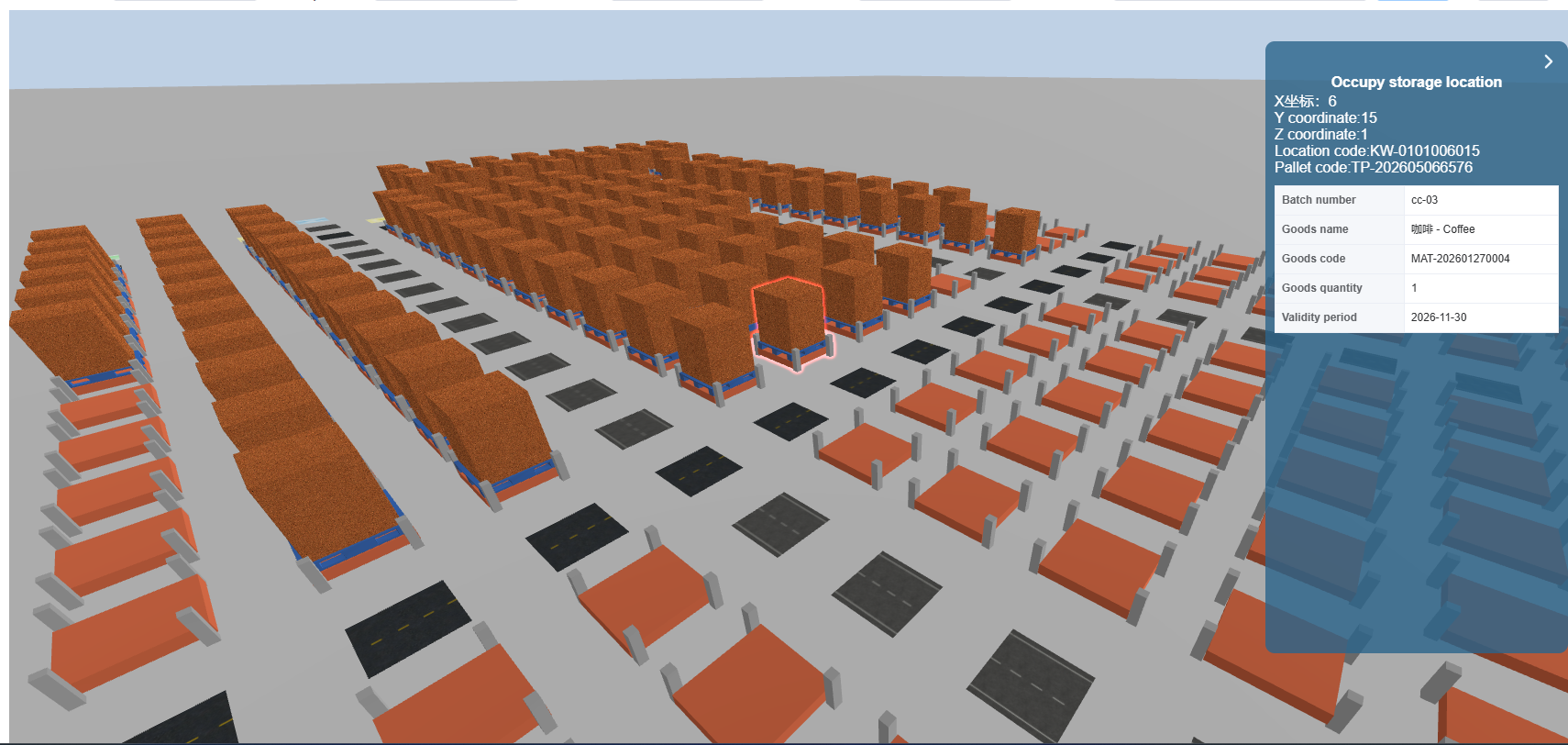
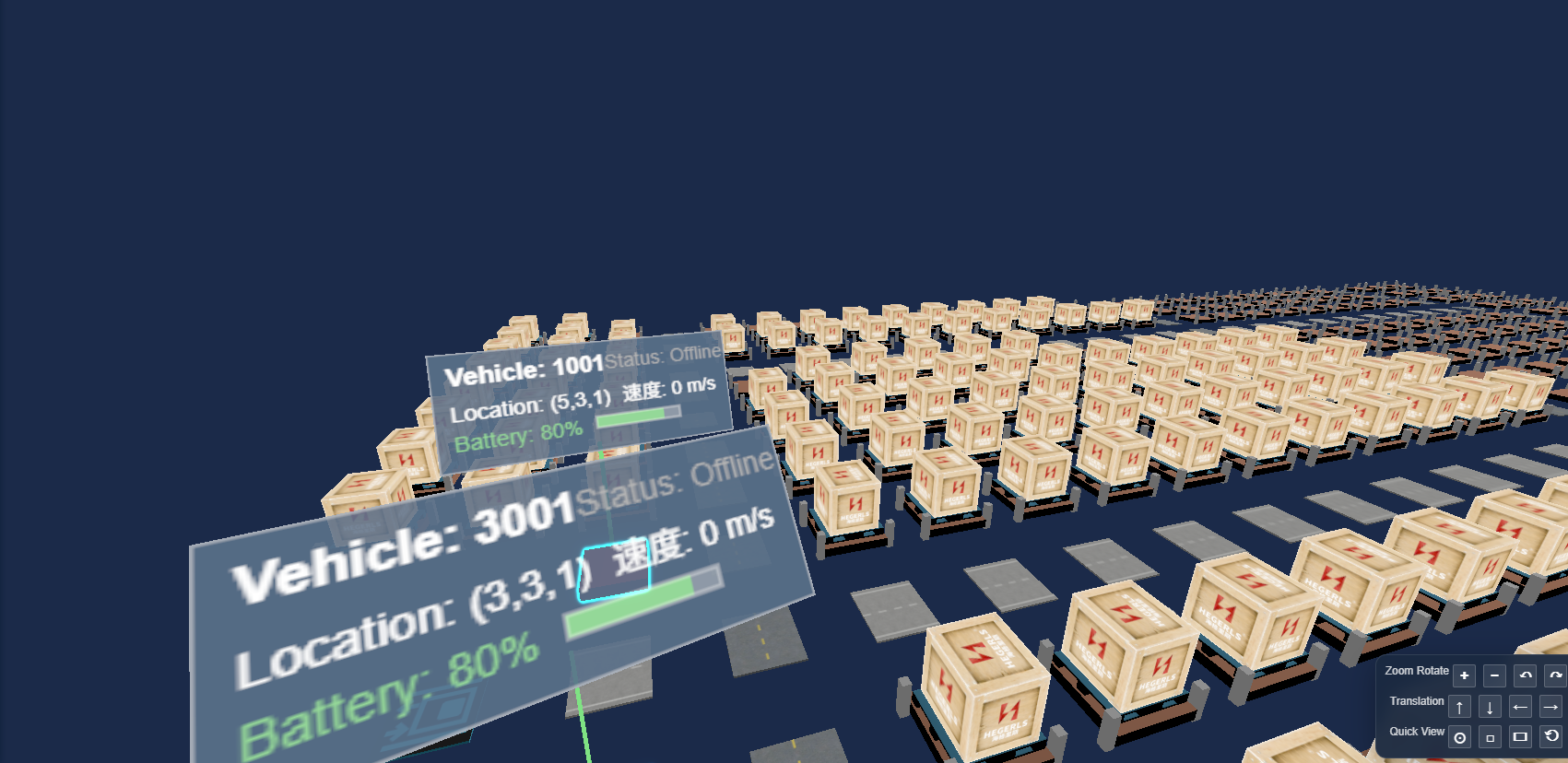
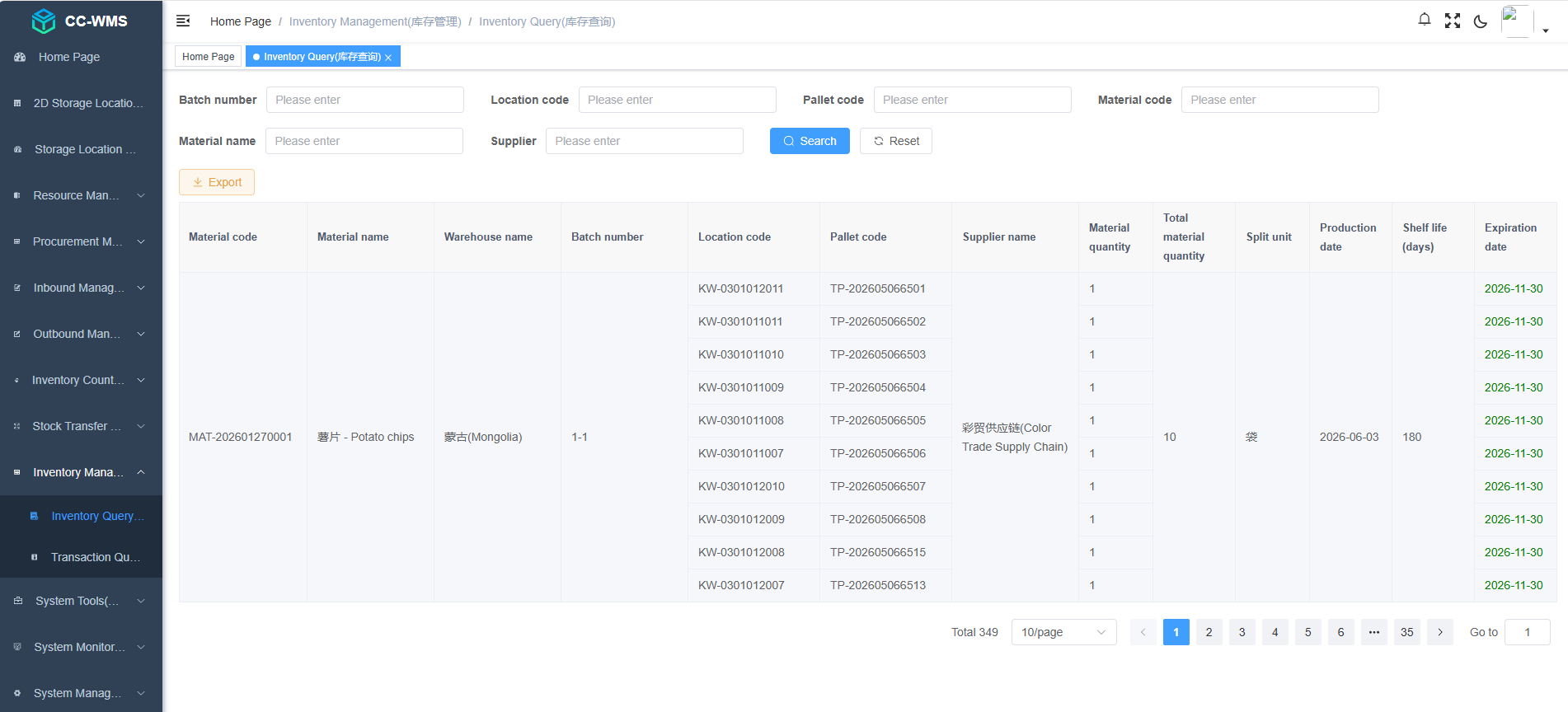
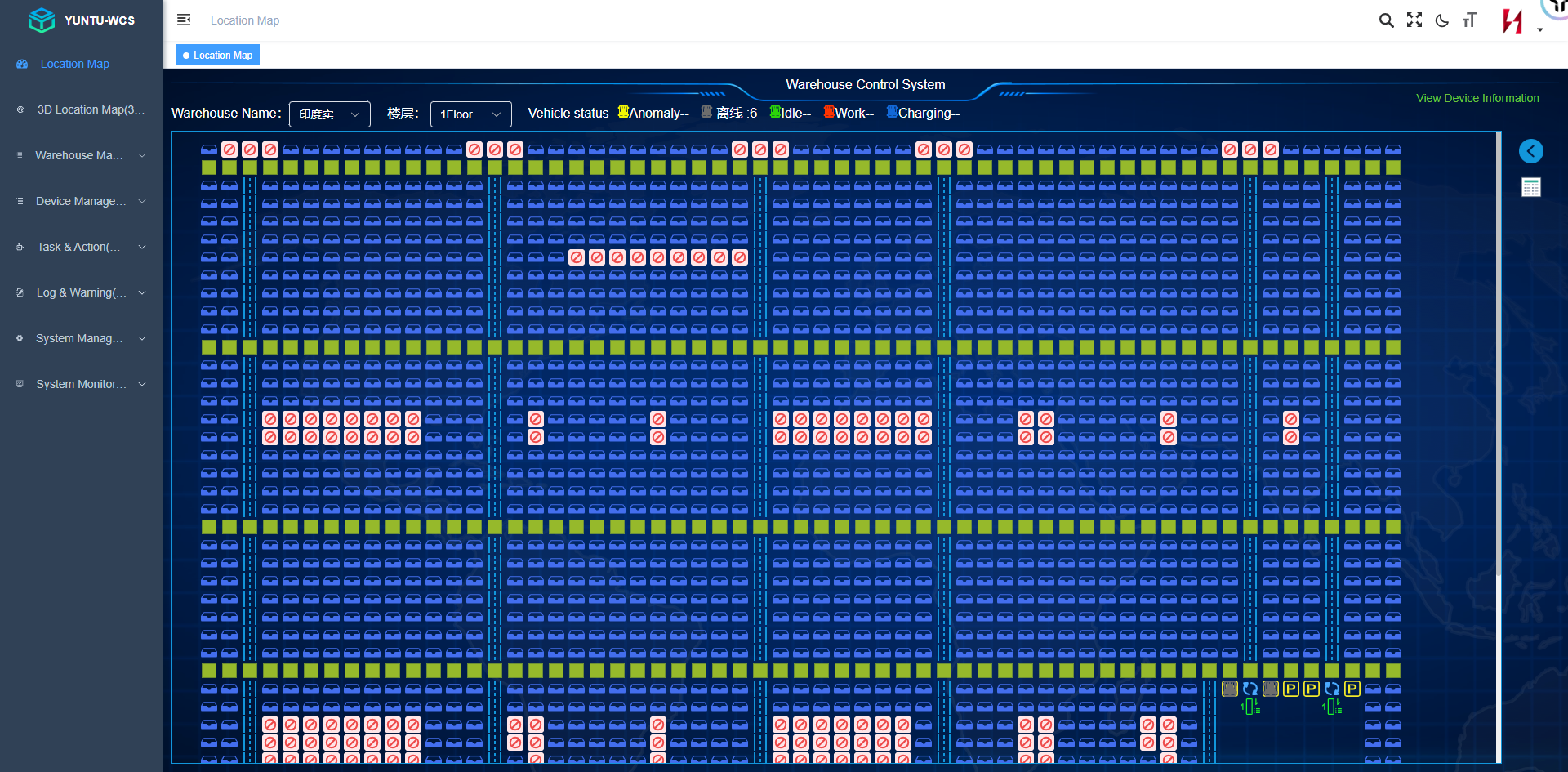
For Zhuku's warehouse automation architecture, CC-WMS and YUNTU-WCS represent two complementary software layers.
CC-WMSCC-WMS is designed for warehouse-level management and execution, including functions such as:
|
YUNTU-WCSYUNTU-WCS operates closer to the automation layer and can coordinate equipment such as:
|
|
|
|
A simplified Zhuku architecture is:
ERP / MES → CC-WMS → YUNTU-WCS → Automation Equipment
This separation allows warehouse-level tasks and equipment-level execution to work together without forcing every equipment-control function into the WMS.
How Does Zhuku Integrate WMS and WCS?
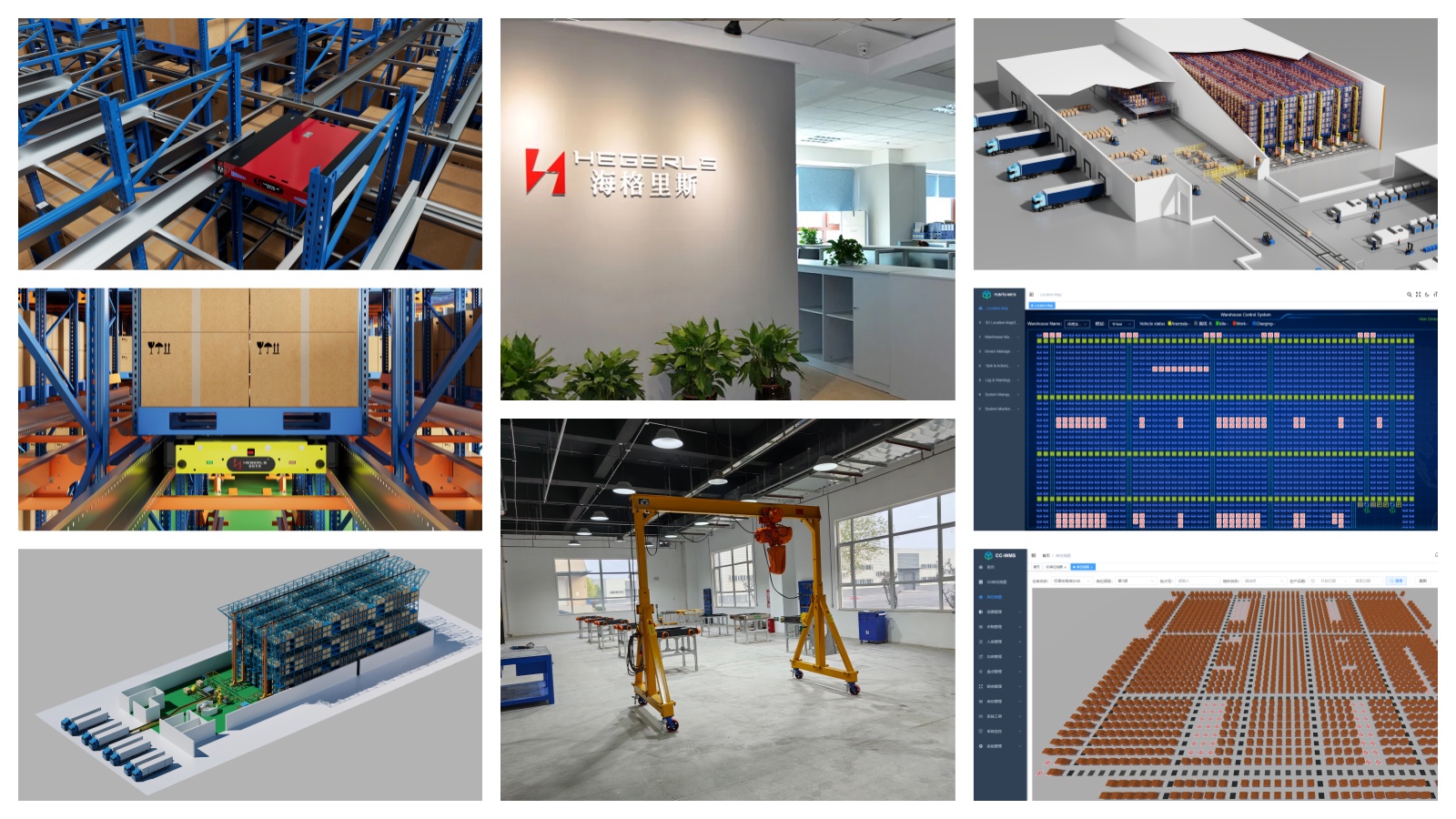
Zhuku (Hebei) Automatic Storage Technology Co., Ltd. provides warehouse automation and system integration solutions that connect warehouse software with storage and material-handling equipment.
Depending on the project requirements, the software architecture may include CC-WMS for warehouse management and YUNTU-WCS for equipment coordination.
CC-WMS supports warehouse processes and inventory management. YUNTU-WCS supports the coordination of compatible automated equipment, such as shuttle systems, lifts and conveyors, according to the configured solution architecture.
The integration design should reflect the physical warehouse layout, storage strategy, material flow, equipment interfaces and business-system requirements. This helps ensure that inventory decisions, retrieval requests and equipment status remain aligned throughout the operating process.
Zhuku's solution scope may combine warehouse racks, four-way shuttle systems, stacker crane AS/RS, conveyors, lifts and software integration. The actual equipment and control architecture should be selected according to storage capacity, throughput, operating conditions and the customer's existing systems.
Which Industries Need WMS and WCS Integration?
The requirement varies by automation level, but integrated software architectures are particularly relevant to:
Cold Storage and Cold Chain
Automated pallet handling can reduce manual movement in temperature-controlled environments.
Food and Beverage
Batch, expiration, FIFO, and high-volume pallet flows can require structured inventory management and automated execution.
Chemical
Inventory traceability, controlled storage, and automated material movement can benefit from integrated software and equipment.
Manufacturing
MES and WMS integration can connect production requirements with raw-material and finished-goods storage.
3PL and Distribution
Multiple customers, SKUs, inventory rules, and variable order patterns can create complex warehouse-management requirements.
E-Commerce and Distribution
High order volumes and dynamic task allocation can require coordination between WMS, execution software, and multiple automation technologies.
The correct architecture should always be based on the actual operating process.
WMS vs. WCS: Quick Decision Guide
| Your Main Requirement | Primary Software Layer |
| Inventory management | WMS |
| Storage-location management | WMS |
| Receiving and putaway rules | WMS |
| Order allocation | WMS |
| Picking logic | WMS |
| ERP integration | WMS |
| Production-to-warehouse coordination | WMS / MES |
| Warehouse task prioritization | WMS / WES |
| Conveyor control | WCS |
| Shuttle control | WCS |
| Lift coordination | WCS |
| Stacker crane control | WCS |
| Equipment scheduling | WCS |
| Real-time equipment monitoring | WCS |
| Traffic coordination | WCS |
| Multi-equipment automation | WCS |
| Complete automated warehouse | WMS + WCS |
The table is a starting point, not a universal software architecture. Actual responsibilities should be defined during system design.
Why Choose Zhuku for WMS and WCS Integration?
Zhuku combines warehouse automation system integration with warehouse software and equipment coordination.
The approach is based on connecting the complete warehouse architecture:
Warehouse Process → WMS → WCS → Automation Equipment
This allows the software design to reflect the actual physical warehouse.
Zhuku can integrate software with automation systems including:
-
Four-way shuttle systems
-
AS/RS
-
Stacker cranes
-
Conveyors
-
Intelligent lifts
-
AGVs
-
AMRs
-
Automated pallet-handling systems
The objective is not simply to install a WMS or WCS. It is to create an integrated environment in which inventory, warehouse tasks, equipment execution, and operational feedback remain synchronized.
For complex automated warehouses, this system-level approach can also support future expansion and integration with additional automation technologies.
What Information Should You Provide for a WMS/WCS Project?
A preliminary software and automation evaluation should include both warehouse and IT information.
Warehouse data
|
Operational data
|
Automation data
|
Existing IT environment
|
A CAD drawing, PDF warehouse layout, or preliminary warehouse sketch can also provide an important starting point for system architecture planning.
Conclusion: WMS vs. WCS—Which One Do You Need?
WMS and WCS solve different but closely related warehouse problems. WMS manages inventory and warehouse processes, while WCS coordinates automated equipment execution. A WES or another orchestration layer may also be appropriate in more complex architectures.
A manual warehouse may need only a WMS, while a complex AS/RS or multi-level shuttle warehouse typically requires a well-defined equipment-control layer. The right decision depends on the automation scope, throughput, integration requirements and exception-handling needs.
Plan Your Warehouse Software Architecture with Zhuku
Planning a new automated warehouse or upgrading an existing warehouse management system?
Send Zhuku your CAD drawing, PDF layout, warehouse requirements, pallet specifications, SKU information, inbound/outbound volumes, and existing ERP/MES information.
Zhuku can evaluate the warehouse process and automation architecture and help define the appropriate WMS, WCS, equipment-control, and system-integration structure for your project.
Submit Your Warehouse Requirements → Get a Customized WMS/WCS Integration Concept