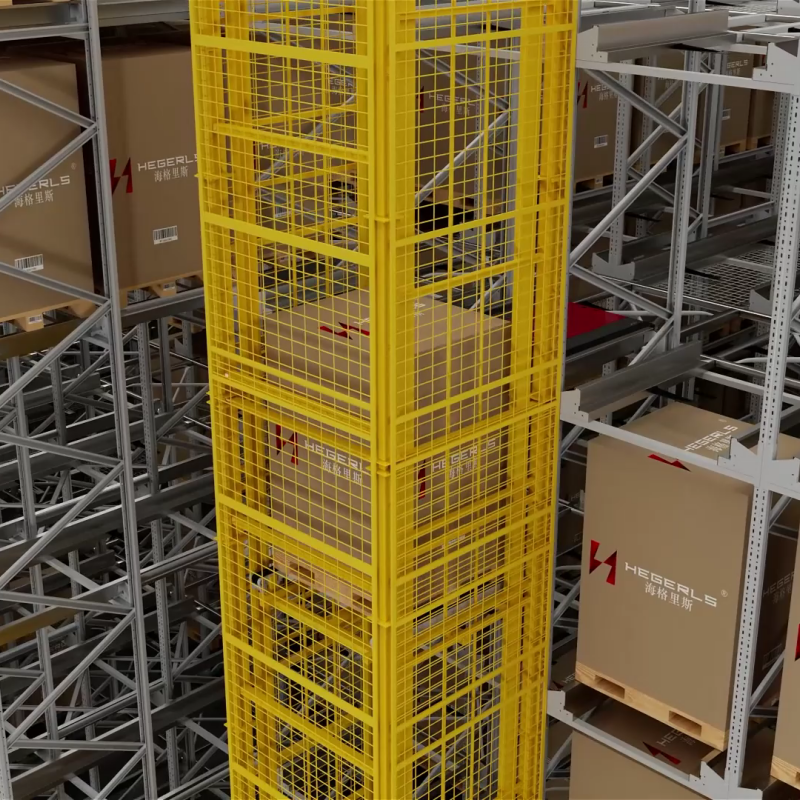
Vertical conveyors and lifting systems move materials between different elevations in warehouses, distribution centers, and manufacturing facilities. They connect ground floors with mezzanines, transfer pallets between conveyor levels, feed automated storage systems, and support material flow in multi-level operations.
Unlike conventional horizontal conveyors, vertical material-handling equipment must accommodate elevation changes, load stability, transfer alignment, and the safe movement of goods between levels. The right solution depends on the load type, lifting height, throughput, available floor space, and integration requirements.
Common solutions include continuous vertical conveyors, vertical reciprocating conveyors (VRCs), pallet lifts, fork-type lifting systems, and lifting devices integrated with automated storage and retrieval systems (AS/RS). Although these technologies share the goal of vertical material transfer, they differ in operating principle, load-handling method, and suitable workflow.
This guide explains the main types of vertical conveyors and lifting systems, compares their applications, and outlines how to select and integrate the right equipment for a warehouse automation project.
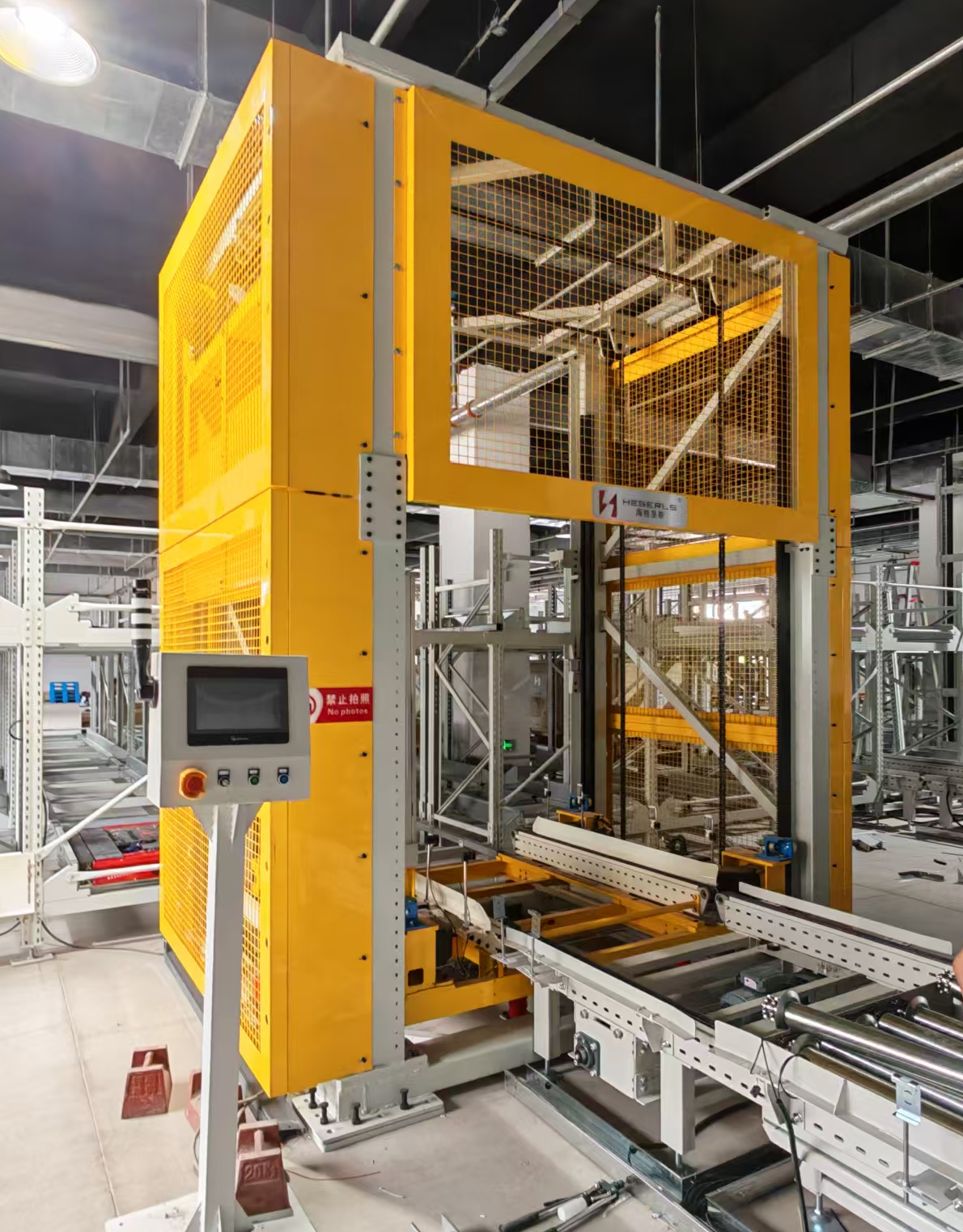
1. What Are Vertical Conveyors and Lifting Systems?
Vertical conveyors and lifting systems are material-handling devices designed to move products from one elevation to another. Depending on their design, they can transport cartons, totes, trays, pallets, containers, or other compatible loads.
They are commonly used to connect different warehouse floors, mezzanines, production lines, storage systems, and dispatch areas.
Typical applications include:
-
Transferring cartons and totes between conveyor levels.
-
Moving palletized goods between floors.
-
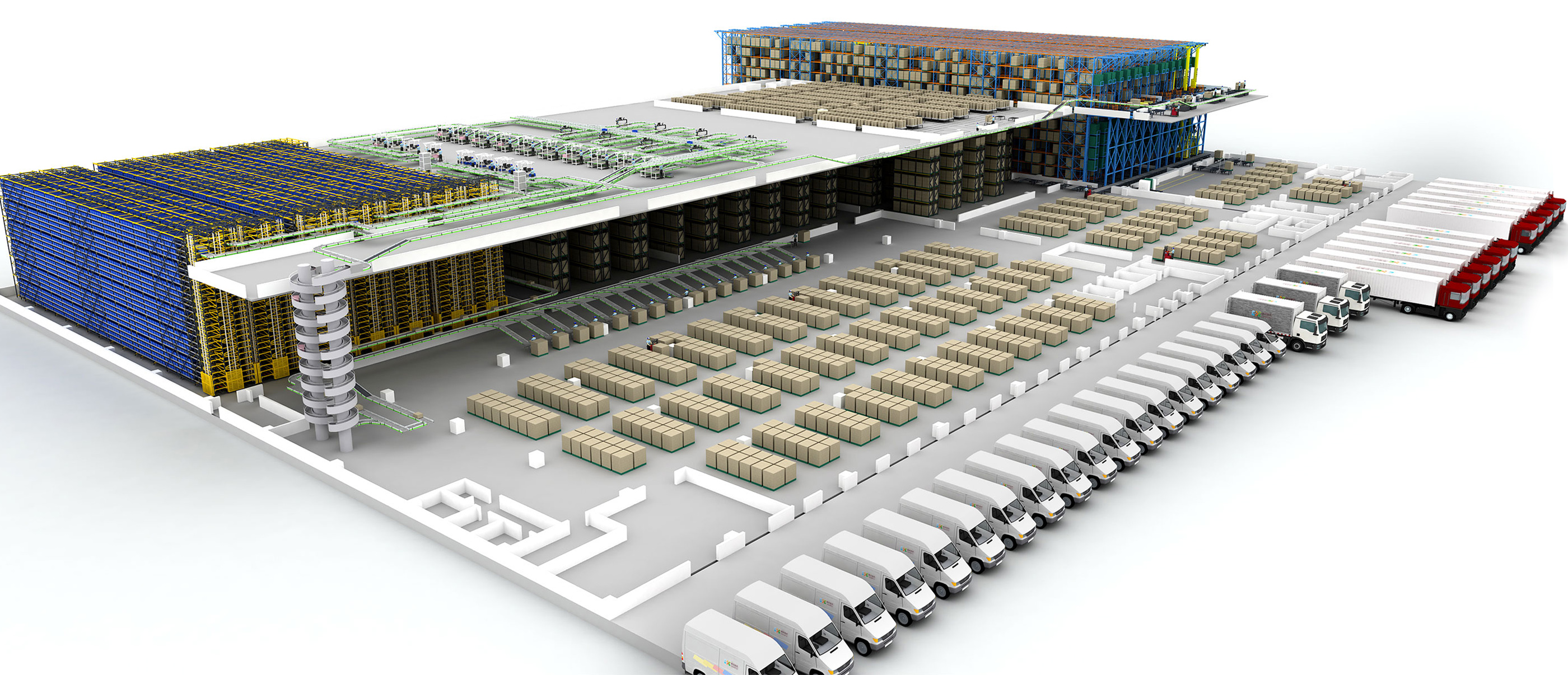
Connecting mezzanine picking areas with packing and dispatch.
-
Feeding or removing loads from AS/RS installations.
-
Linking production lines with elevated material-handling routes.
-
Coordinating vertical movements within automated warehouse workflows.
A vertical conveyor is generally suited to transferring goods as part of a material-flow system. A lifting platform may instead handle individual loads in discrete cycles. The exact terminology varies among manufacturers, so equipment should be evaluated by its actual movement, load interface, and operating sequence.
The primary purpose of a vertical conveyor or lifting system is to overcome height differences while maintaining a safe, reliable, and coordinated flow of materials.
2. Main Types of Vertical Conveyors and Lifting Systems
2.1 Continuous Vertical Conveyors
A continuous vertical conveyor moves compatible products between levels through a continuously circulating or sequential conveying mechanism. Depending on the design, products may be carried on platforms, shelves, belts, or other load-supporting elements.
These systems can suit operations that require frequent transfers of cartons, totes, or packages between fixed elevations.
Typical applications
-
E-commerce fulfillment.
-
Parcel and carton handling.
-
Multi-level conveyor networks.
-
Packaging and distribution operations.
-
Production lines with recurring vertical transfers.
Advantages
Continuous vertical conveyors can support a steady material flow and reduce the need for repeated manual transfers. They can also help connect multiple process levels within a compact layout.
Considerations
The equipment must match product dimensions, load stability, transfer orientation, and required throughput. Infeed and discharge conveyors must be coordinated with the vertical conveyor so that goods do not accumulate excessively or arrive at the wrong time.
2.2 Vertical Reciprocating Conveyors (VRCs)
A vertical reciprocating conveyor uses a platform or carriage that travels vertically between designated levels. It receives a load, moves it to the target elevation, transfers or unloads the goods, and returns or proceeds according to its operating sequence.
VRCs are commonly considered for moving pallets, containers, carts, and other loads between floors or mezzanines.
Typical applications
-
Pallet transfer between warehouse levels.
-
Mezzanine replenishment.
-
Material movement between production floors.
-
Transfer between ground-level and elevated conveyor systems.
Advantages
A VRC can provide a defined vertical transfer point for loads that are too heavy, large, or unsuitable for a continuous carton conveyor. It can also be integrated into a controlled material-handling workflow.
Considerations
Throughput depends on lifting height, travel speed, loading and unloading time, and the number of transfers required. Because loads are handled in cycles, the system may require buffering or parallel equipment when demand is high.
A cargo-only VRC must not be treated as a passenger elevator. Equipment classification, guarding, access control, and applicable safety requirements must be confirmed for the installation site.
2.3 Pallet Lifts
Pallet lifts are lifting systems designed to raise or lower palletized loads. Depending on the application, they may operate as standalone material lifts or as part of a larger conveyor and warehouse automation system.
The term can refer to different mechanisms, including platform-based lifts and specialized pallet-transfer devices. Selection should therefore be based on the actual design rather than the product name alone.
Typical applications
-
Moving pallets to mezzanine levels.
-
Aligning pallets with elevated conveyors.
-
Feeding pallet-handling equipment.
-
Transferring loads between production and storage areas.
The key design factors include pallet dimensions, maximum load weight, load-center characteristics, lifting height, cycle frequency, and the method used to load and unload the platform.
2.4 Fork-Type Vertical Lifting Systems
Fork-type lifting systems use a fork mechanism or similar load-engagement structure to handle compatible pallets or loads at different elevations.
They may be used in automated pallet handling where the equipment needs to engage a load, transfer it vertically, and present it to another handling device or storage interface.
Potential applications include automated storage and retrieval workflows, pallet conveyor systems, and transfer points between equipment levels.
The design must ensure that the forks, pallet openings, load dimensions, and transfer interface are compatible. Load positioning and confirmation are particularly important where the lifting system exchanges goods with automated equipment.
2.5 Spiral Conveyors
Spiral conveyors move suitable products along a continuous helical path to change elevation. They can provide an alternative to a vertical lift where products need to move continuously and a suitable spiral footprint is available.
They are commonly considered for cartons, packages, totes, and other products compatible with the conveying surface.
Advantages
-
Continuous product movement.
-
Integration with horizontal conveyor lines.
-
Potential reduction in the need for separate lift-and-transfer cycles.
-
Suitable for selected high-frequency carton and package flows.
Considerations
Spiral conveyors require sufficient floor space, a compatible product envelope, and suitable infeed and discharge geometry. Their performance depends on product dimensions, conveying speed, accumulation requirements, and the complete conveyor layout.
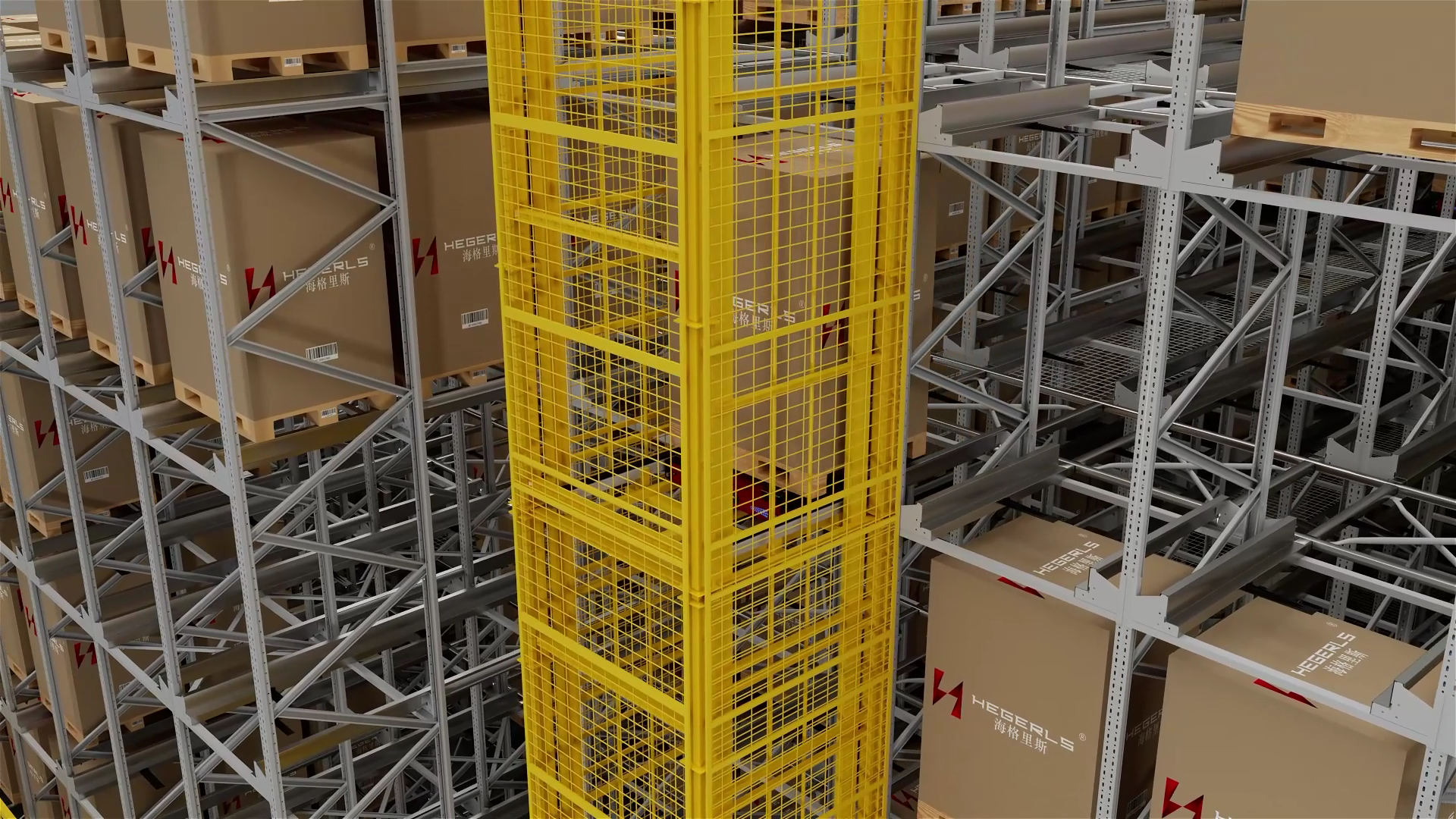
2.6 Vertical Lifts Integrated with AS/RS and Shuttle Systems
In automated warehouses, vertical lifting equipment may work as part of a larger storage and retrieval architecture rather than as a standalone machine.
For example, a lift may transfer compatible pallets or carriers between different conveyor levels or serve as part of a shuttle-based storage workflow. The specific arrangement depends on the equipment design.
Such systems may coordinate vertical movement with horizontal conveying, shuttle travel, storage retrieval, and warehouse software.
The design objective is to ensure that lifting capacity, shuttle availability, conveyor transfers, and storage tasks remain balanced across the operation.
3. Vertical Conveyors vs. Lifting Systems: What Is the Difference?
The terminology overlaps in the material-handling industry. A useful comparison is based on how the equipment moves products and how it interacts with the rest of the system.
| Equipment type | Movement principle | Typical loads | Common application |
| Continuous vertical conveyor | Continuous or circulating vertical movement | Cartons, totes, packages | Frequent product flow between levels |
| VRC | Reciprocating platform or carriage | Pallets, containers, compatible loads | Discrete transfers between floors |
| Pallet lift | Lift platform or specialized pallet mechanism | Palletized goods | Pallet elevation and level transfer |
| Fork-type lift | Fork-based load engagement and vertical travel | Compatible pallets or unit loads | Automated pallet transfer |
| Spiral conveyor | Continuous helical conveying path | Cartons, packages, totes | Space-conscious continuous elevation change |
| AS/RS-integrated lift | Vertical movement coordinated with storage equipment | Compatible pallets, totes, or carriers | Automated storage and material-flow operations |
No single type is best for every application. A continuous conveyor may be suitable for frequent carton movement, while a VRC may better fit batch pallet transfers. An integrated lift may be necessary when vertical movement must be coordinated with automated storage equipment.
4. How Vertical Lifting Systems Work in a Warehouse
A typical vertical transfer workflow includes several coordinated stages.
Step 1: Load Identification and Arrival
Goods arrive at the lift or vertical conveyor through a manual loading point, pallet conveyor, roller conveyor, or another compatible interface.
Where inventory traceability is required, the system identifies the load using the configured barcode, RFID, or other identification method.
Step 2: Transfer Readiness Check
The system verifies that the load is in an acceptable position and that the destination and transfer conditions are valid.
Depending on the design, this may include checking the platform position, access gates, load presence, downstream availability, and relevant safety interlocks.
Step 3: Vertical Movement
The lifting mechanism moves the load to the designated level according to the equipment's operating sequence.
The permitted load, travel range, speed, and duty cycle depend on the selected design and must be established during engineering.
Step 4: Load Transfer
Once the lift reaches the appropriate position and the required conditions are satisfied, the load transfers to the receiving conveyor, storage interface, or handling station.
The transfer must account for load alignment, interface height, and the status of upstream and downstream equipment.
Step 5: Completion Confirmation
The control system records the relevant task status. If inventory records are linked to the movement, the configured transaction rules determine when the stock location or movement status is updated.
A task request should not automatically be treated as proof that the physical transfer has been completed.
Step 6: Next Task or Recovery
The equipment accepts the next valid task or enters an appropriate recovery state if an abnormal condition occurs.
Well-defined recovery procedures help prevent blocked conveyors, repeated transfers, and inconsistent warehouse records.
5. Benefits of Vertical Conveyors and Lifting Systems
Better Use of Available Floor Space
Vertical lifting allows warehouses to connect different elevations without relying exclusively on long ramps or extensive forklift travel routes.
This can be particularly valuable in facilities with mezzanines, multiple operating levels, or limited horizontal space.
The actual space benefit depends on the equipment footprint, access requirements, guarding, maintenance clearance, and the design of the surrounding material flow.
Reduced Manual Handling
Automated lifting can reduce the need for workers to manually move compatible goods between levels.
It can also reduce reliance on repeated forklift transfers at designated vertical movement points, provided the overall process is designed to support automated loading and unloading.
More Consistent Material Flow
When integrated with conveyors and warehouse controls, vertical transfer equipment can coordinate movements between receiving, storage, picking, production, and dispatch.
This can improve workflow consistency, but only if upstream and downstream capacities are properly balanced.
Support for Multi-Level Warehousing
Vertical lifting enables material movement between ground floors, mezzanines, elevated picking areas, and other warehouse levels.
It can therefore support facilities that use multiple elevations to separate storage, picking, production, or packing processes.
Improved Automation Integration
Vertical conveyors and lifts can connect equipment that would otherwise operate as separate process islands.
When designed with compatible controls and interfaces, they can form part of a coordinated automation system involving AS/RS, shuttle systems, conveyors, and warehouse software.
6. How to Choose the Right Vertical Conveyor or Lift
6.1 Load Type, Weight, and Dimensions
Start by identifying the heaviest load, maximum dimensions, pallet type, and load stability requirements.
A system designed for cartons may not be suitable for full pallets. Similarly, a pallet lift must accommodate the actual load footprint and the method used to engage and transfer the pallet.
Include packaging, load overhang, and any special handling constraints in the specification.
6.2 Lifting Height and Number of Stops
Determine the elevation difference and all required transfer levels.
A simple two-level transfer may require a different solution from a system that serves several elevations or coordinates with multiple conveyor routes.
The layout must include enough clearance for equipment travel, transfer interfaces, guarding, and maintenance access.
6.3 Throughput and Operating Pattern
Estimate average and peak transfers, load arrival patterns, and the required response time.
Continuous conveyors may suit steady flows, while reciprocating lifts may suit discrete transfers. If peak demand exceeds the capacity of a single lift, consider buffering, parallel transfer equipment, or changes to task sequencing.
Calculate capacity using the complete cycle—including loading, vertical travel, unloading, and return movements—rather than relying solely on travel speed.
6.4 Infeed and Outfeed Integration
Confirm how goods will enter and leave the vertical transfer system.
Relevant considerations include conveyor height, transfer direction, load orientation, pallet handling method, and the availability of upstream and downstream equipment.
Poorly matched interfaces can become bottlenecks even when the lift itself has sufficient mechanical capacity.
6.5 Control and Software Integration
For automated operations, determine how transfer tasks will be assigned, authorized, executed, and confirmed.
The control architecture may include local equipment controls, a WCS, a WMS, and interfaces to AS/RS or shuttle equipment.
Clarify which system owns task sequencing, equipment status, inventory transactions, and exception recovery.
6.6 Safety and Maintenance
Review access guarding, interlocks, emergency stops, load protection, maintenance access, and the applicable local regulatory requirements.
Cargo-only lifting equipment must not be used to transport personnel unless the equipment is specifically designed, approved, and classified for that purpose.
The final design should include installation, commissioning, inspection, maintenance, and operator training requirements.
7. Integration with WMS, WCS, Conveyors, and AS/RS
A vertical lifting system is most effective when its physical operation and control logic are aligned with the wider warehouse workflow.
A simplified architecture may look like this:
ERP or MES → WMS → WCS or equipment control layer → Vertical lifts, conveyors, shuttles, and AS/RS
The exact architecture varies by project.
WMS: Inventory and Warehouse Transactions
A WMS generally manages inventory records, storage locations, order allocation, and warehouse tasks. It may initiate or track the warehouse transaction associated with a vertical transfer.
WCS: Equipment Coordination
A WCS can coordinate connected material-handling equipment, including transfer sequences, conveyor routes, and equipment task execution, depending on the system architecture.
Conveyor and Lift Controls
Local controls handle equipment-specific operating sequences, interlocks, and movement functions. Their interface with higher-level systems should clearly report task status and relevant faults.
AS/RS and Shuttle Coordination
When lifts are integrated with automated storage equipment, the overall system must coordinate the arrival of loads, equipment availability, transfer readiness, and downstream capacity.
For example, a pallet retrieval task may require the storage equipment to deliver a load to a transfer point, a lift to move it to another level, and a conveyor to route it toward picking or dispatch.
Zhuku's CC-WMS and YUNTU-WCS software portfolio can be evaluated as part of a project-specific warehouse automation architecture, subject to the required functions, equipment compatibility, and supported interfaces.
8. Common Challenges and How to Avoid Them
Bottlenecks at transfer points: The lift may become a constraint if loads arrive faster than it can complete its cycles. Model peak demand and include suitable buffering or parallel capacity where necessary.
Unstable or incompatible loads: Products that shift, overhang, or do not fit the transfer interface can disrupt operations. Validate load dimensions, pallet conditions, and stability before finalizing the design.
Poor conveyor synchronization: A downstream conveyor that is blocked or unavailable can prevent unloading. Define transfer permissions, accumulation rules, and fault responses across connected equipment.
Unclear task completion: A requested lift movement may not complete as expected. Separate task assignment from physical confirmation and define recovery rules for interrupted movements.
Insufficient maintenance access: A compact installation may leave too little space for inspection or component replacement. Include maintenance and access requirements during the initial layout design.
Safety and compliance gaps: Requirements vary according to equipment type, jurisdiction, and installation. Confirm the applicable standards, guarding, access control, and regulatory obligations with qualified engineering and safety personnel.
9. Applications Across Different Industries
| Application | Suitable equipment to evaluate | Main design priority |
| E-commerce fulfillment | Continuous vertical conveyors, spiral conveyors, selected lifts | Carton flow and order throughput |
| Pallet warehouse | Pallet lifts, VRCs, compatible automated lifting systems | Load capacity and transfer reliability |
| Multi-level distribution center | Vertical conveyors and coordinated conveyor networks | Balanced flow between floors |
| Manufacturing | VRCs, pallet lifts, and conveyor-integrated lifts | Production continuity and material supply |
| High-density automated warehouse | Lifts integrated with AS/RS or shuttle systems | Coordinated storage and retrieval |
| Mezzanine picking operation | VRCs, pallet lifts, or carton vertical conveyors | Safe and predictable replenishment |
| Packaging and sorting | Continuous vertical conveyors or spiral conveyors | Product compatibility and flow continuity |
These are preliminary application guides rather than fixed specifications. The correct solution depends on the actual loads, layout, throughput, and operational sequence.
Why Choose Zhuku for Warehouse Automation Integration?
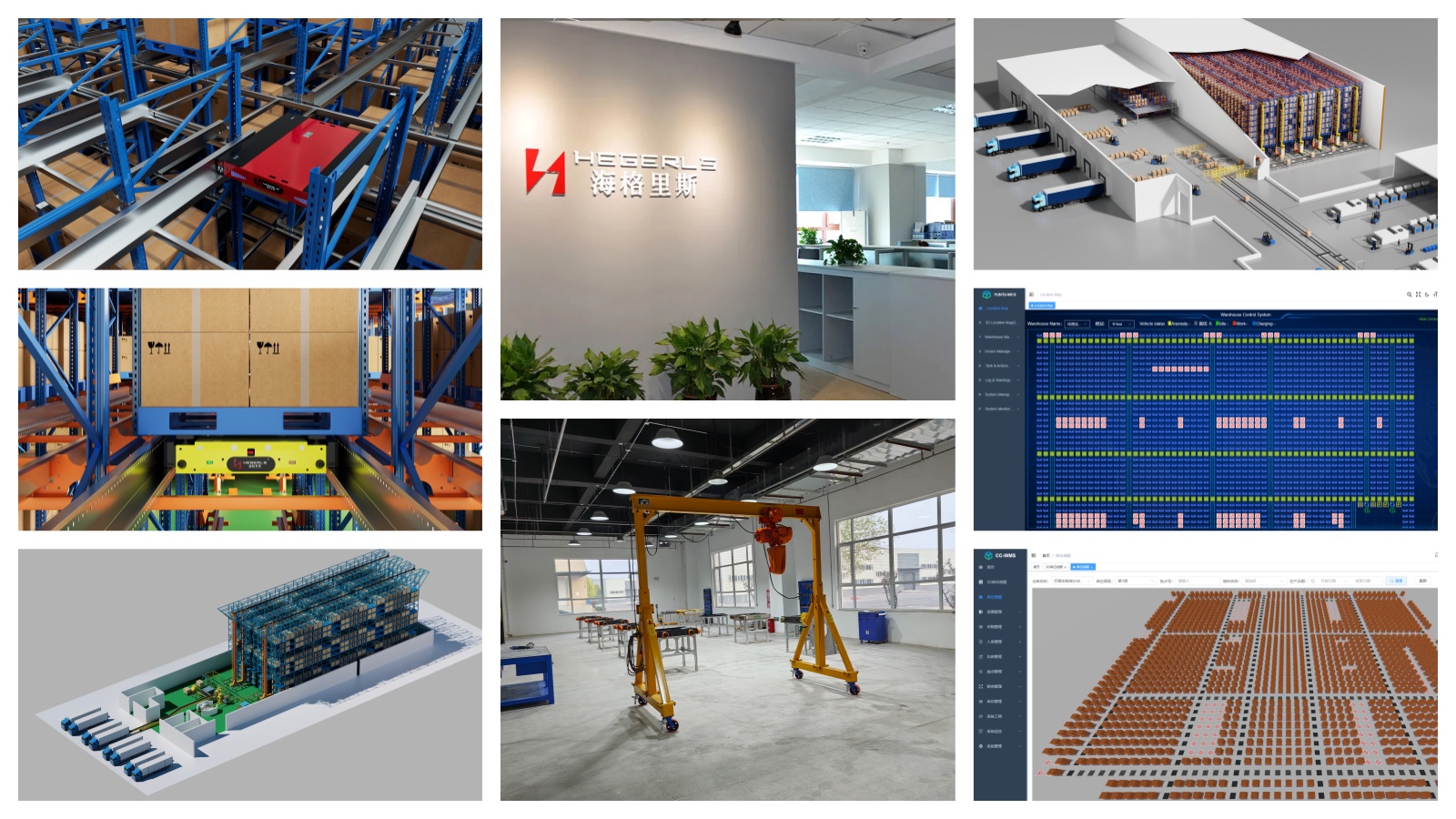
Zhuku (Hebei) Automatic Storage Technology Co., Ltd. provides warehouse automation and integrated storage solutions, including four-way shuttle systems, automated storage and retrieval systems, storage racking, and warehouse software.
For projects that involve vertical lifting, the key is to ensure that the lift, conveyors, storage equipment, and software operate as a coordinated material-handling system.
A project assessment should consider:
-
Load types, dimensions, weights, and transfer elevations.
-
Required transfer frequency and peak throughput.
-
Upstream and downstream conveyor interfaces.
-
Compatibility with shuttle systems and AS/RS.
-
WMS/WCS responsibilities and equipment communication.
-
Safety, maintenance, and fault-recovery requirements.
-
Expansion needs and the total cost of ownership.
Zhuku's CC-WMS and YUNTU-WCS software portfolio can be evaluated for the relevant warehouse coordination and integration requirements, subject to project-specific functionality and equipment interfaces.
The objective is to select a vertical transfer solution that fits the complete warehouse workflow—not simply a lift with the desired height or rated capacity.
Conclusion
Vertical conveyors and lifting systems help warehouses move goods between different elevations while supporting space utilization, safer material handling, and coordinated automation.
Continuous vertical conveyors and spiral conveyors can support suitable ongoing carton flows, while VRCs and pallet lifts are often considered for discrete transfers of heavier loads. Fork-type lifting systems and lifts integrated with AS/RS may serve specialized automated pallet-handling requirements.
The right selection depends on load characteristics, lifting height, transfer frequency, layout, integration, and safety requirements. A successful design balances the vertical transfer equipment with the capacity of the entire material-handling system.
Planning a multi-level warehouse or automated material-transfer project? Share your warehouse layout in CAD or PDF format, along with load dimensions, maximum weight, transfer heights, required throughput, and details of connected equipment. Zhuku can help evaluate suitable warehouse automation and system-integration options for your operation.