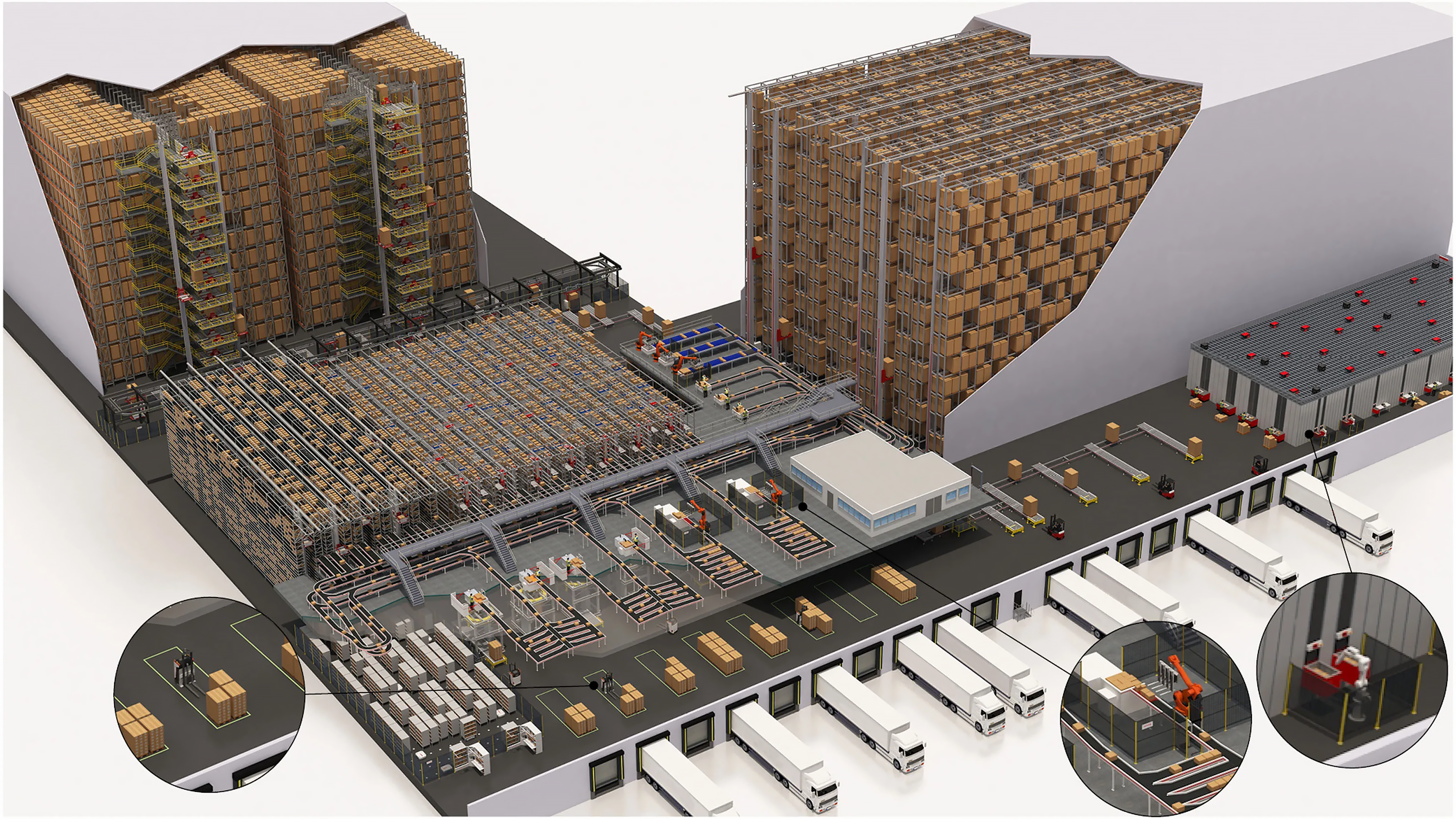
Autonomous mobile robots (AMRs) are helping warehouses, distribution centers, and manufacturing facilities automate internal material transport. From moving totes between picking stations to delivering components to production lines, these robots can reduce repetitive handling and make material flows more flexible.
However, AMRs are not the right solution for every warehouse. Their performance depends on transport demand, facility layout, robot capabilities, and the software coordinating daily operations.
In this guide, we explore what autonomous mobile robots are, their advantages and disadvantages, when to choose them, how AI and control software support their operation, and how they fit into a wider warehouse automation system.
1. What Are Autonomous Mobile Robots?
Autonomous mobile robots are automated material handling equipment that use sensors, navigation technology, and control software to move through an environment and perform assigned tasks. In warehouses, they typically transport goods between receiving, storage, picking, packing, production, and dispatch areas.
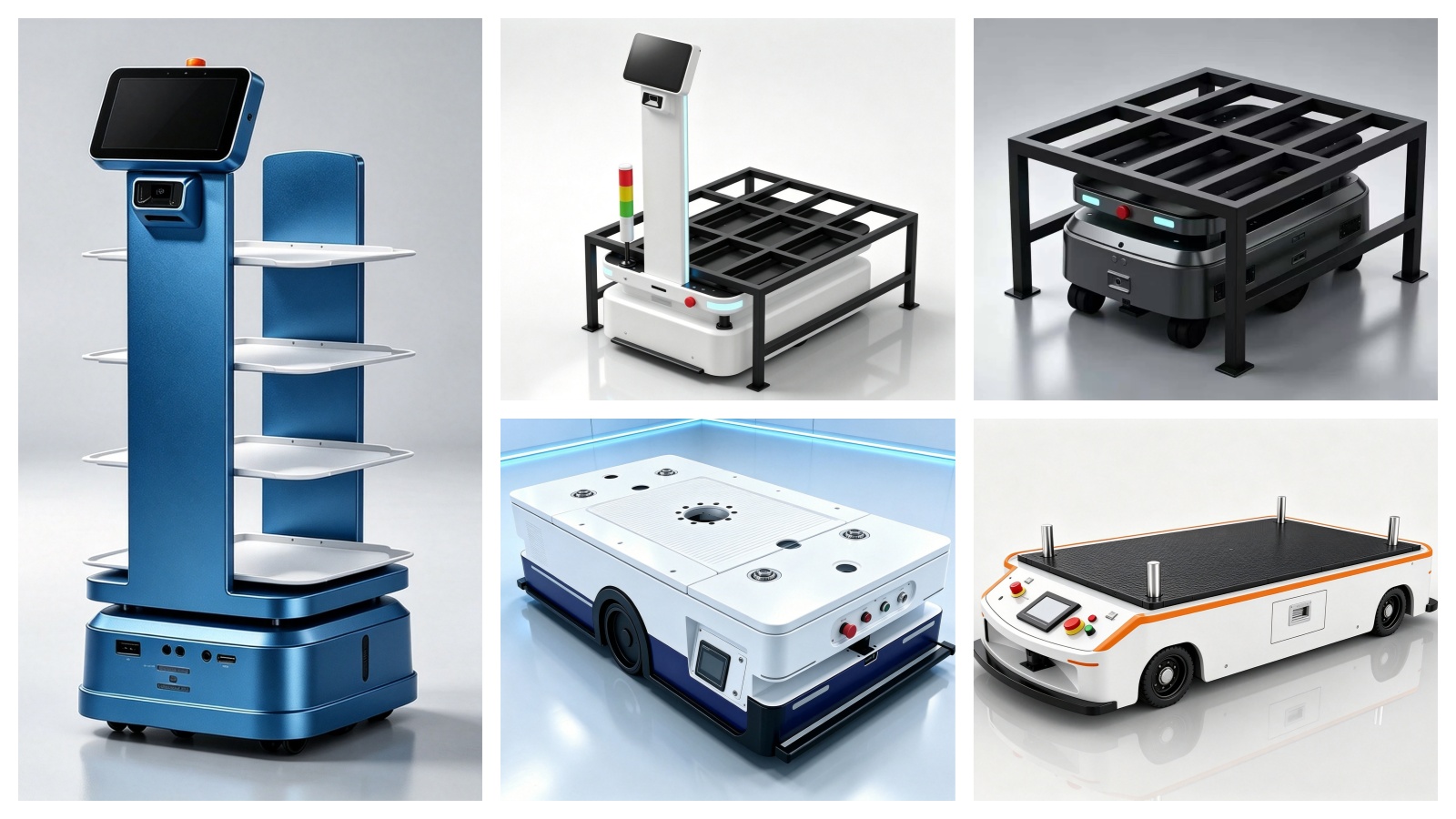
Common AMR equipment includes:
-
Tote-carrying robots: Transport bins, cartons, and small items.
-
Pallet-handling robots: Move palletized loads between designated locations.
-
Autonomous mobile forklifts: Handle compatible pallets and support selected lifting and transport tasks.
-
Towing robots: Pull carts or material trains.
-
Shelf-moving robots: Bring compatible mobile shelving units to picking stations.
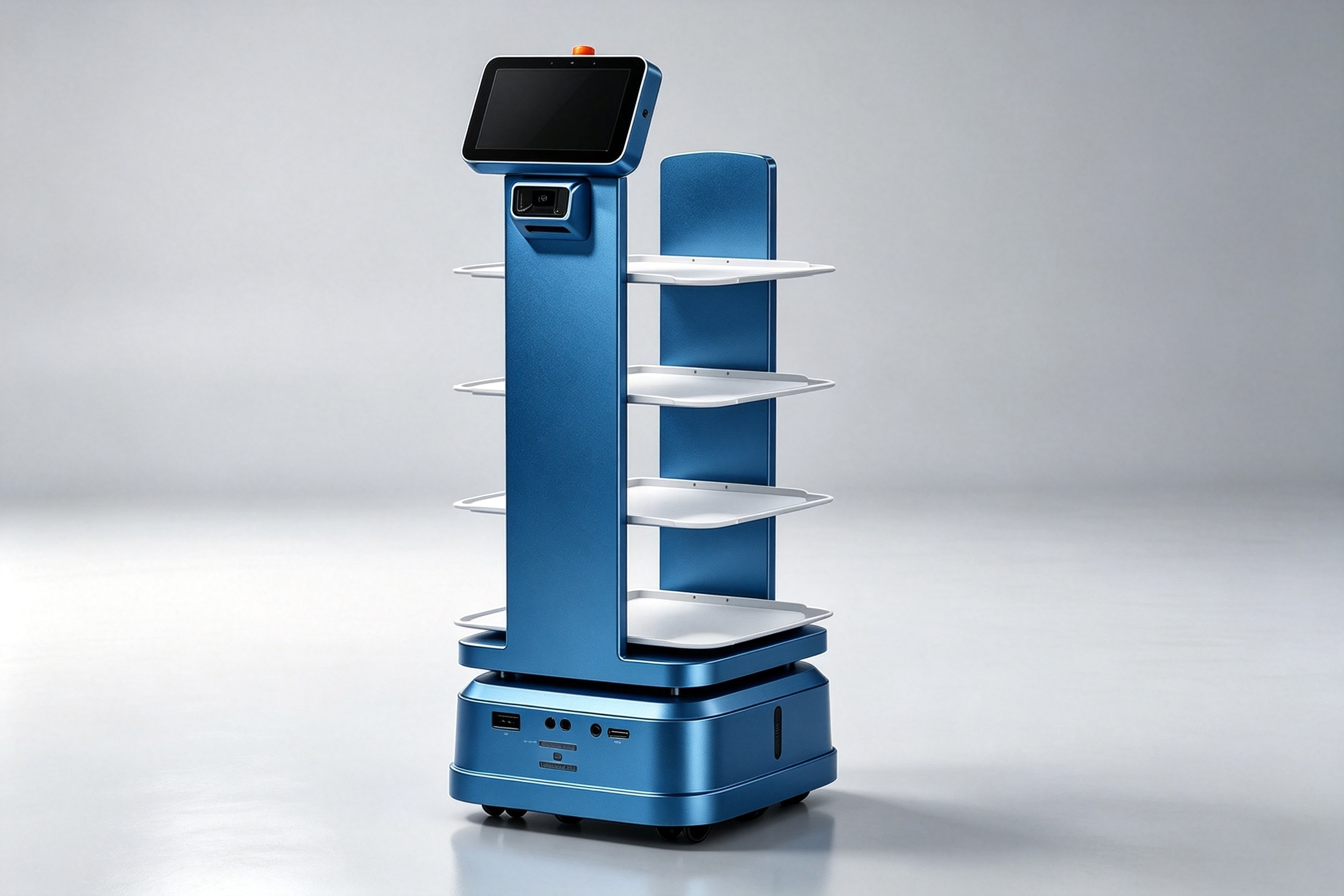
An AMR vehicle usually combines a mobile platform, navigation and sensing equipment, safety functions, and onboard control software. Some models also include lifting mechanisms or conveyor interfaces.
When evaluating an AMR robot, look beyond its maximum speed. Payload, load dimensions, docking accuracy, operating temperature, route conditions, and integration capabilities all influence whether it can perform the required task reliably.
2. Advantages and Disadvantages of AMR Equipment
AMRs offer flexibility, but their value depends on how well they match the operation.
Advantages of Autonomous Mobile Robots
Flexible navigation
Many AMRs use onboard sensors and localization technology to navigate their operating environment. Depending on the model, they can adjust routes when obstacles appear or traffic conditions change.
Reduced manual material handling
AMRs can automate repetitive transport between workstations, storage areas, and packing zones. This can reduce unnecessary walking and allow employees to focus on picking, inspection, replenishment, and other tasks.
Scalable operations
A business may start with a small fleet and expand as transport demand grows. Successful expansion still requires adequate charging capacity, suitable routes, and effective traffic management.
Improved operational visibility
AMR control software can provide information about robot locations, task status, battery levels, and faults. This helps warehouse teams monitor transport activity and identify recurring delays.
Flexible material flow
Unlike a fully fixed conveyor route, a mobile robot fleet can serve multiple destinations. This can be useful when workflows change or when several departments share transport resources.
Disadvantages and Limitations
Initial investment and integration costs
The total project cost includes robots, fleet management software, charging equipment, safety measures, commissioning, training, and system integration.
Traffic congestion
Multiple robots may compete for narrow aisles, doorways, or handover stations. Poor fleet coordination can reduce throughput, even if individual robots travel quickly.
Environmental constraints
Floor conditions, slopes, aisle widths, temperature, and sensor limitations can affect performance. The actual operating limits vary by model.
Maintenance and charging
AMRs need charging plans, preventive maintenance, fault recovery procedures, and appropriate technical support.
Not suitable for every task
Some transport requirements are better served by conveyors, forklifts, AGVs, or automated storage equipment. Choosing AMRs without assessing the complete workflow can add cost without delivering sufficient operational value.
3. AMR vs. AGV: Which Is Better for Your Warehouse?
AGV and AMR differ mainly in their navigation and decision-making capabilities. AGVs (Automated Guided Vehicles) typically follow predefined routes using magnetic strips, QR codes, reflectors, or other guidance systems, making them suitable for repetitive and predictable material transport. AMRs (Autonomous Mobile Robots) use onboard sensors, mapping, and localization technology to understand their surroundings and plan or adjust routes dynamically. In simple terms, AGVs generally follow established paths, while AMRs have greater flexibility to navigate changing environments and avoid obstacles.
| Factor | AMR | AGV |
| Navigation | Commonly uses onboard sensing, localization, and route planning | Often follows predefined routes or guidance systems |
| Route changes | May adjust routes dynamically, depending on capabilities | Changes may require route or guidance reconfiguration |
| Infrastructure | Can reduce reliance on physical guidepaths | Some systems require dedicated guidance infrastructure |
| Typical application | Variable routes and changing transport demands | Stable, repetitive transport routes |
| Key consideration | Navigation, traffic coordination, and fleet management | Route reliability, throughput, and infrastructure cost |
These distinctions are not absolute. Some AGVs support advanced navigation, while some AMRs operate within defined routes and zones.
For example, a warehouse transporting containers continuously between two fixed points may benefit more from a conveyor or AGV. A distribution center serving several destinations with changing priorities may find AMRs more flexible.
The right choice depends on workflow stability, throughput requirements, facility conditions, safety, and total cost of ownership.
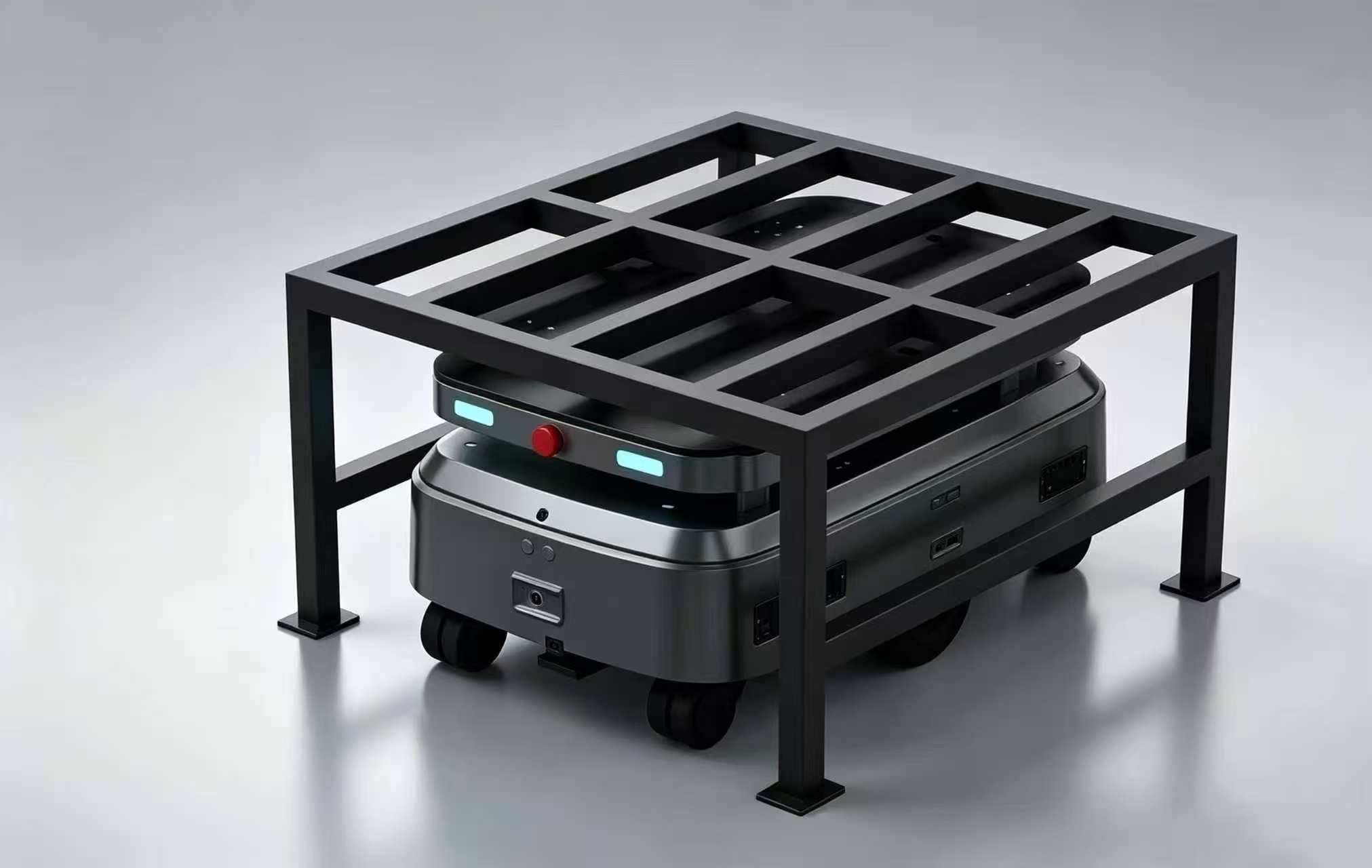
4. Autonomous Mobile Robots for Logistics: Key Applications
Autonomous mobile robots for logistics are used to move materials between operational areas. The specific application depends on the load, transport frequency, and surrounding equipment.
4.1 Autonomous Mobile Robots in Warehouses
In distribution centers and e-commerce warehouses, AMRs can support:
-
Tote and carton delivery between picking and packing
-
Replenishment of picking locations
-
Pallet transport between staging areas
-
Movement of goods between receiving and dispatch
-
Transfers between storage handover points and workstations
For example, an AMR can collect a tote from a designated transfer point and deliver it to a packing station. After the handover is confirmed, the fleet management system can assign another task.
Actual throughput depends on travel distance, loading and unloading time, traffic, charging, and workstation capacity—not just maximum travel speed.
4.2 Manufacturing and Production Supply
Manufacturing facilities often need frequent deliveries of components, tools, and work-in-progress materials.
AMRs can deliver materials to production lines according to defined priorities and replenishment schedules. To avoid delays, the transport system should account for production demand, line-side inventory, and workstation capacity.
4.3 Storeroom Autonomous Mobile Robots
Storeroom autonomous mobile robots can transport spare parts, tools, bins, and components between storage locations and work areas.
A robot might deliver a container of components to an assembly station and return for the next task. This can reduce repetitive walking in facilities with frequent, predictable material movements.
For small storerooms with low transport volumes, manual carts or simpler material-handling methods may still be more economical.
4.4 Autonomous Mobile Robots Examples in Daily Operations
Consider three typical workflows:
-
Order fulfillment: AMRs deliver totes between picking and packing stations.
-
Production replenishment: Robots transport components from a storeroom to assembly workstations.
-
Pallet transfer: Suitable pallet-handling robots move loads between staging areas and designated storage handover points.
These examples illustrate how AMRs can support specific transport tasks. They do not mean that every warehouse needs a mobile robot fleet.
5. When to Choose AMRs—and When Not to Choose Them
The decision to deploy AMRs should begin with the operational problem you want to solve.
When AMRs Are a Good Fit
AMRs are worth evaluating when:
-
Materials move frequently between several locations.
-
Employees spend significant time on repetitive transport.
-
Destinations or transport priorities change throughout the day.
-
Fixed conveyor infrastructure would be difficult or costly to extend.
-
The facility has suitable routes and safe handover points.
-
The expected productivity gains justify the investment.
For example, a distribution center may need to deliver totes to multiple packing stations, with demand changing throughout the day. A coordinated fleet can offer more flexibility than a fixed route designed for a single destination.
When AMRs May Not Be the Best Choice
AMRs may be unsuitable or uneconomical when:
-
Transport demand is too low to justify automation.
-
Goods move continuously along a stable route.
-
Aisle widths, floor conditions, or environmental requirements exceed the robot's capabilities.
-
Loads require handling beyond the available payload or lifting specifications.
-
Required throughput cannot be achieved within the available space and fleet size.
-
Integration and maintenance requirements have not been adequately planned.
For instance, a production line moving large volumes of identical cartons continuously between two fixed points may be better served by a conveyor.
Alternatives to Consider
| Alternative | When it may be suitable |
| Manual carts or forklifts | Low-volume transport or workflows requiring frequent human judgment |
| Conveyors | Continuous, predictable material movement |
| AGVs | Stable and repetitive transport routes |
| AS/RS or shuttle systems | High-density storage and automated retrieval |
| Hybrid automation | Facilities with different transport and storage requirements across zones |
These options can also work together. An effective warehouse may use conveyors for continuous flows, AMRs for flexible transport, and AS/RS for automated storage and retrieval.
6. Software and AI for Controlling AMRs
An AMR performs the physical movement, but software coordinates tasks, routes, and interactions with the wider operation. Understanding the different control functions helps businesses assess an autonomous mobile robot control system more accurately.
6.1 AMR Control Software and Fleet Management
AMR control software and fleet management platforms commonly support:
-
Task assignment and prioritization
-
Coordination of multiple robots
-
Route planning and traffic management
-
Robot status and battery monitoring
-
Fault reporting and task recovery
-
Charging and fleet utilization management
Imagine a warehouse with several robots delivering totes to different workstations. If too many robots arrive at the same narrow aisle or transfer station, congestion can delay deliveries. Fleet management software coordinates assignments and traffic to reduce unnecessary waiting.
Many of these functions can be handled by conventional algorithms and predefined rules. They do not automatically require AI.
6.2 How AI Improves AMR Operations
AI can support specific functions when the robot or software platform has the necessary capabilities.
Environmental perception: Computer vision and machine-learning models may help robots interpret sensor data and recognize objects or environmental features.
Navigation support: AI-based methods may contribute to perception, localization, or route decisions in complex environments, depending on the implementation.
Task optimization: Advanced optimization or learning-based methods may help allocate tasks under changing demand. Conventional scheduling algorithms can also perform this function.
Operational analysis: Historical task data can reveal recurring delays, waiting times, and inefficient routes. AI-based analysis may help identify patterns, provided the underlying data is reliable.
AI does not guarantee better performance. For predictable workflows, conventional control software may be sufficient. The value of AI should be measured against a specific operational objective.
6.3 What to Check in an AMR Control System
When comparing an autonomous mobile robot control system, ask:
-
Can tasks be prioritized according to business requirements?
-
How does the system coordinate traffic and prevent conflicts?
-
What happens when an aisle is blocked or a robot develops a fault?
-
Can it exchange task and status data with the existing WMS or WCS?
-
Does it provide useful performance reports and diagnostic information?
-
Which functions actually use AI, and how are their results validated?
These questions help distinguish practical capabilities from broad marketing claims about intelligent automation.
7. Integrating AMRs with AS/RS, WMS, and WCS
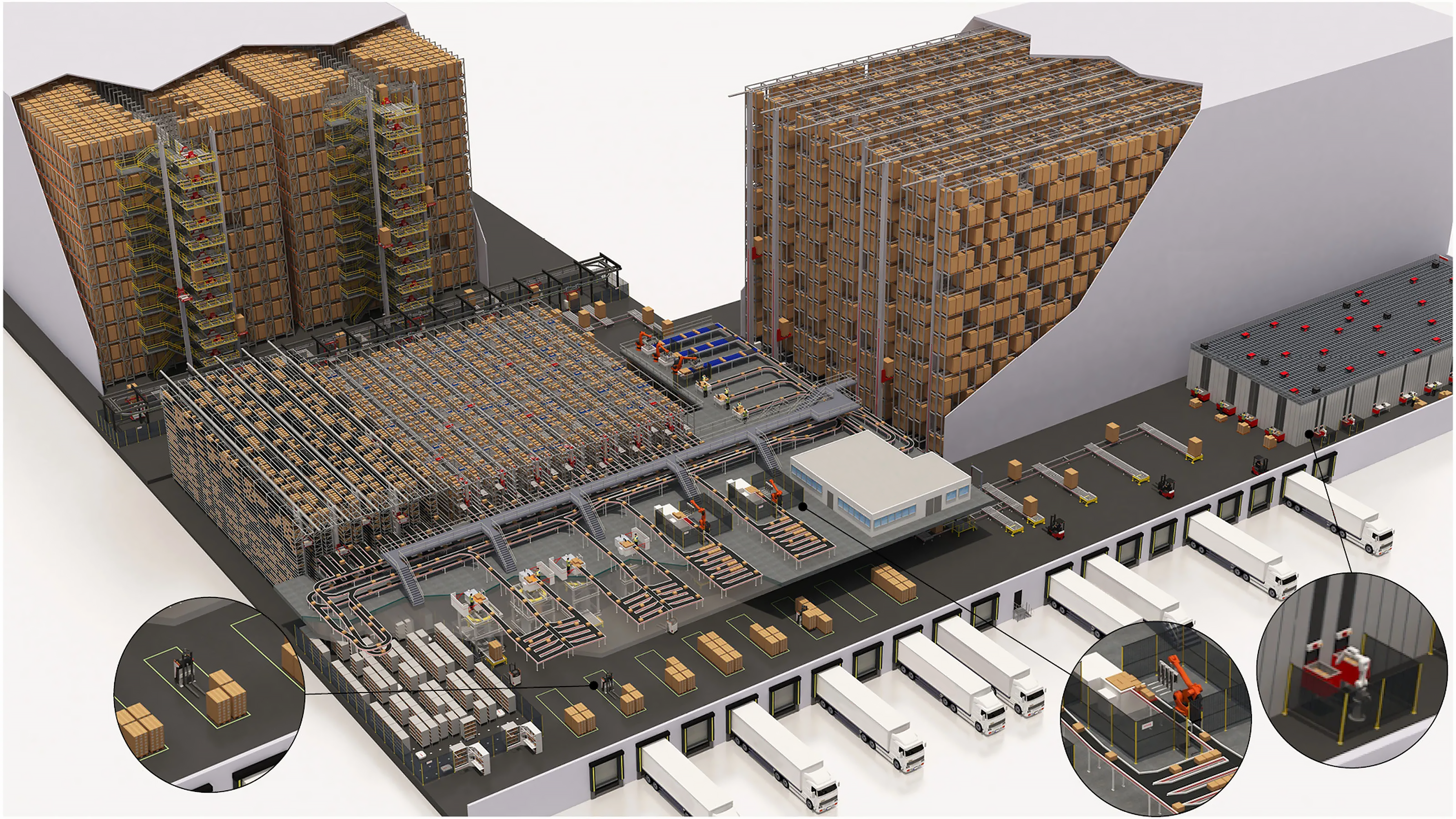
AMRs are most effective when they form part of a coordinated material-handling workflow rather than operating as an isolated fleet.
An automated storage and retrieval system (AS/RS) handles storage and retrieval within a storage structure. AMRs can transport compatible goods between AS/RS handover points and other operational areas.
For example, an AS/RS may retrieve a pallet and deliver it to a transfer station. A compatible AMR can then transport the pallet to a staging or production area. The mechanical interface, load dimensions, and transfer process must be designed for this workflow.
Conveyors and lifts can handle other transfers, particularly where movement is continuous or follows a fixed path.
The Roles of WMS and WCS
A warehouse management system (WMS) generally manages inventory and warehouse work. A warehouse control system (WCS) coordinates material-handling equipment and execution workflows. Exact responsibilities vary by system architecture.
An AMR fleet management system typically manages robot-specific tasks, including dispatch, coordination, and status monitoring.
A possible architecture is:
ERP or MES → WMS → WCS or integration layer → AMR fleet management system → AMR vehicles
This is an illustrative example, not a universal requirement. Some installations connect the WMS directly to the fleet manager, while others use a WCS to coordinate AMRs with conveyors, lifts, and AS/RS equipment.
Before implementation, define how tasks are created, how inventory movements are confirmed, how equipment communicates, and how faults or incomplete transfers are handled.
Zhuku provides warehouse automation solutions, including shuttle systems, stacker crane AS/RS, and warehouse software. For projects involving AMRs, these storage and control elements should be evaluated as part of the overall warehouse design.
Explore Zhuku's automated storage systems, CC-WMS, and YUNTU-WCS to learn more about storage automation and warehouse software coordination.
8. How to Choose the Right AMR Vehicle
Before purchasing AMR equipment, evaluate the entire transport workflow.
1. Define the load. Record weight, dimensions, packaging, and handling requirements. Confirm the robot's rated payload and compatibility with the load.
2. Assess the facility. Check aisle width, floor conditions, slopes, doors, pedestrian traffic, and transfer points. Verify that the robot's operating limits match the site.
3. Calculate transport demand. Estimate average and peak-hour tasks, travel distances, loading and unloading time, and waiting time. Maximum travel speed alone is not a reliable measure of throughput.
4. Evaluate safety. Review obstacle detection, emergency-stop functions, pedestrian interaction, and applicable safety requirements.
5. Check software integration. Confirm that the fleet manager can exchange the required tasks and status data with your WMS, WCS, and connected equipment.
6. Compare total cost of ownership. Include hardware, software, integration, charging, maintenance, training, and facility modifications.
7. Validate performance. Where practical, run a pilot using real loads and representative routes. Test traffic behavior, docking accuracy, task completion, and fault recovery before expanding the fleet.
A successful pilot should validate the complete workflow, not simply demonstrate that the robot can travel from one point to another.
Conclusion
Autonomous mobile robots can improve material transport when their capabilities match a warehouse's operational requirements. Their effectiveness depends not only on the robot itself, but also on fleet management, traffic coordination, control software, and integration with storage and handling equipment.
AMRs are worth considering when transport is frequent, destinations require flexibility, and the business case supports automation. For stable, high-volume flows or low-demand operations, conveyors, AGVs, manual handling, or a hybrid solution may be more appropriate.
Planning a warehouse automation project? Share your warehouse drawings, load specifications, storage requirements, and throughput targets with Zhuku. We can help you evaluate the wider storage and automation architecture so that equipment and software work together effectively.