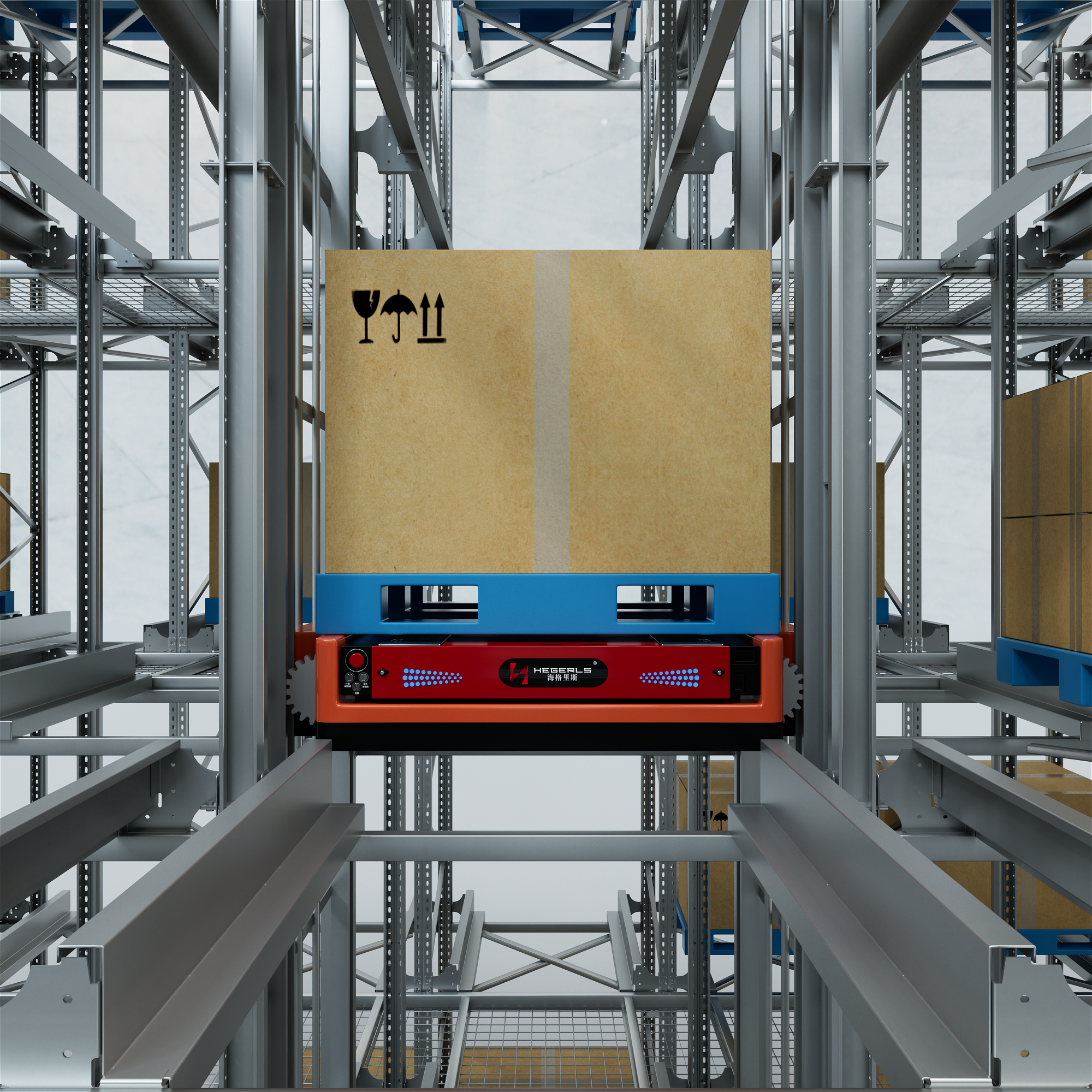
Automated storage and retrieval systems (AS/RS) help warehouses and manufacturing facilities store, locate, and retrieve inventory with less manual handling. From high-bay pallet warehouses to compact systems for small components, different AS/RS technologies are designed to meet different storage and operational requirements.
However, there is no single AS/RS solution that works best for every warehouse. The right choice depends on load size, inventory profile, storage density, order throughput, available building space, and budget.
This guide explains the main types of AS/RS systems, how they work, their advantages and limitations, and how to select the right solution for your warehouse automation project.
What Is an AS/RS System?
An automated storage and retrieval system is a computer-controlled solution that automatically places goods into designated storage locations and retrieves them when required.
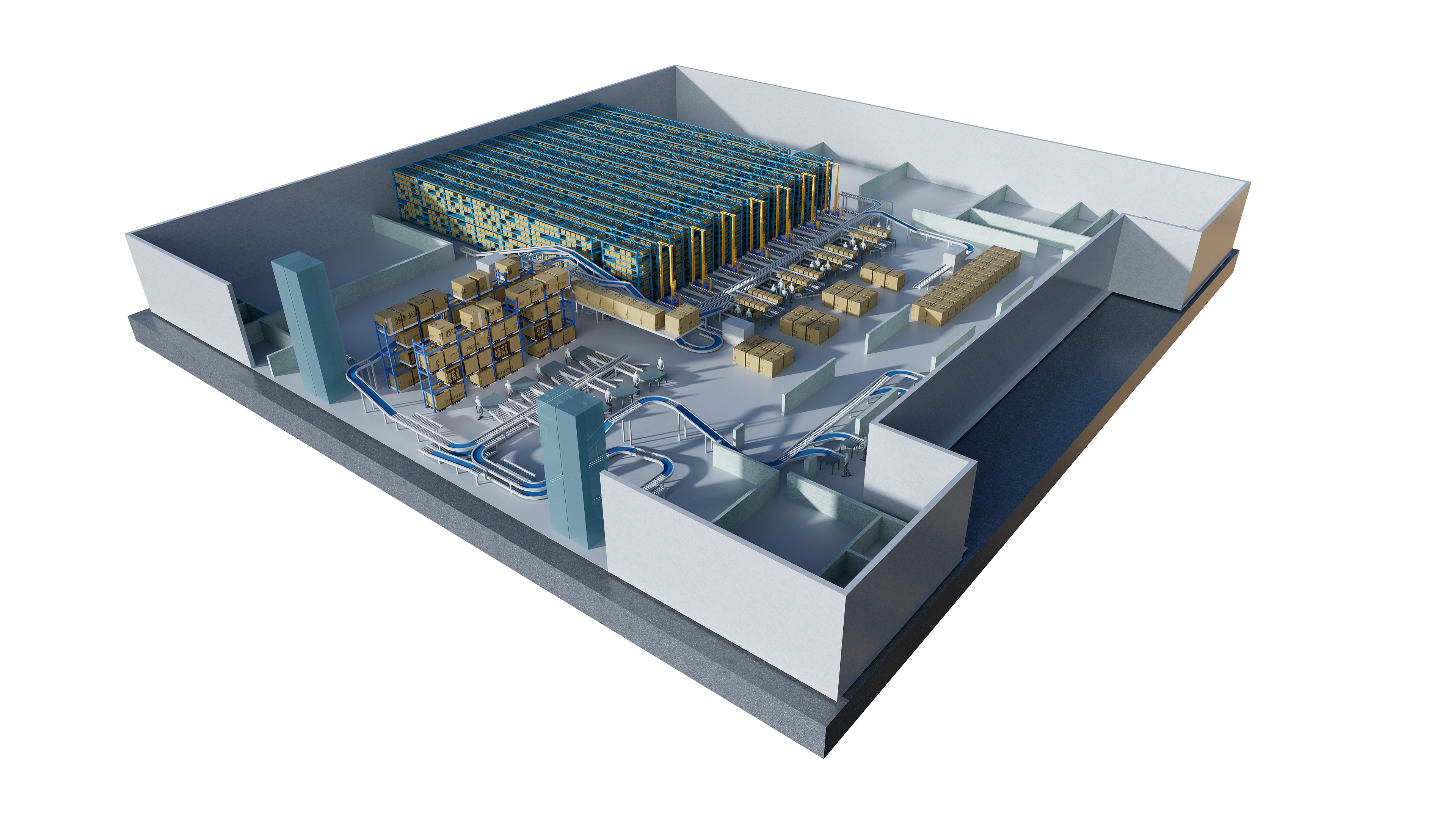
A typical AS/RS integrates storage racks or structures, automated handling equipment, transfer systems, and warehouse software. Depending on the application, the equipment may include stacker cranes, shuttle vehicles, conveyors, lifts, or autonomous mobile robots.
AS/RS warehouse systems are commonly used in manufacturing, distribution, e-commerce, food and beverage, automotive, pharmaceutical, and cold-chain operations.
Their primary purposes include:
-
Increasing storage capacity within available floor space
-
Reducing manual material handling
-
Improving inventory visibility and traceability
-
Supporting consistent storage and retrieval processes
-
Integrating warehouse operations with production and order fulfillment
What Are the Main Types of AS/RS Systems?
AS/RS technologies can be classified by the loads they handle and the mechanisms used to store and retrieve them. The main types include unit-load AS/RS, mini-load AS/RS, shuttle-based systems, multi-directional shuttle systems, cube-based storage, vertical lift modules, and carousel systems.
1. Unit-Load AS/RS
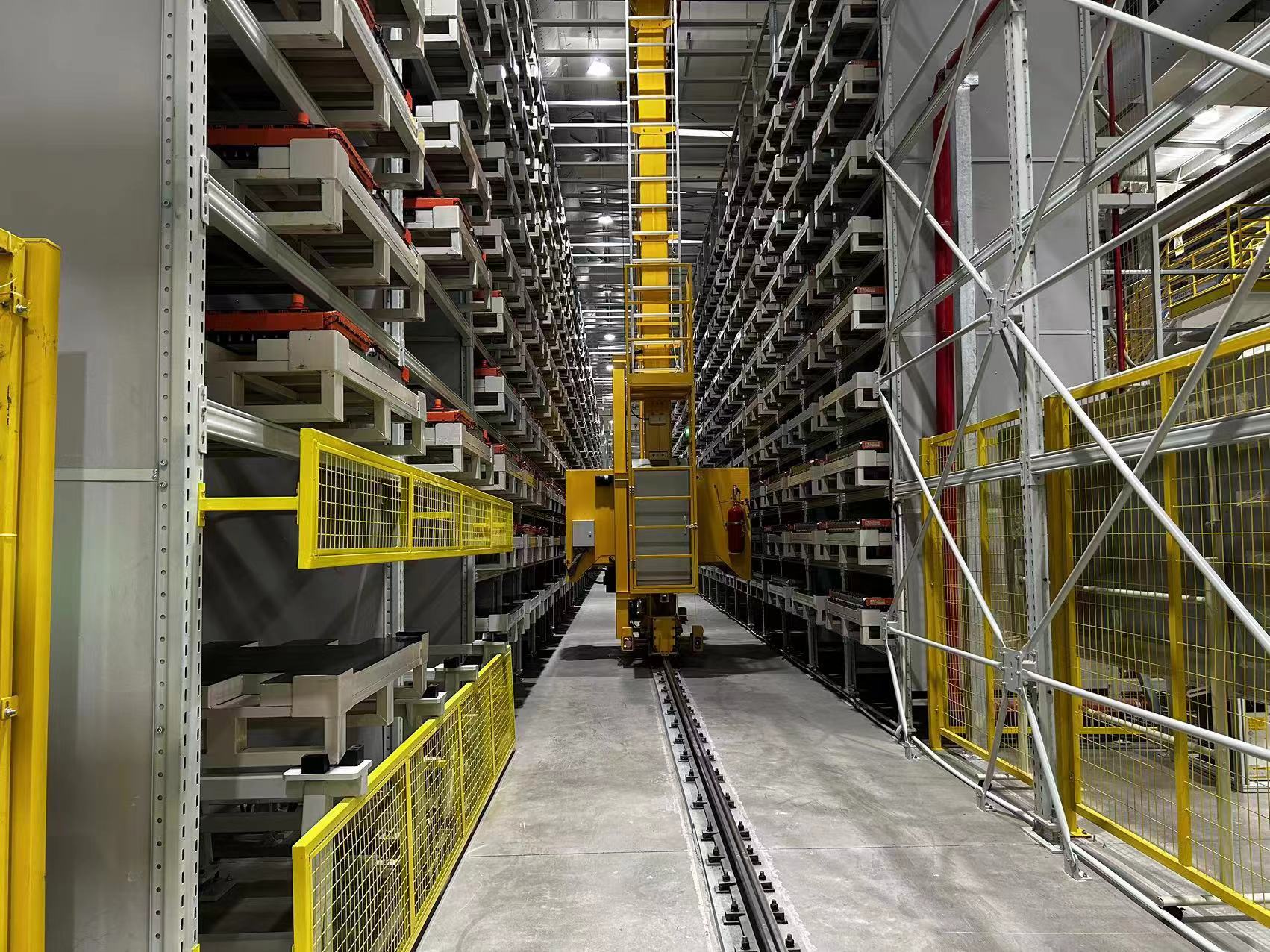
Unit-load AS/RS is designed primarily for palletized goods and other relatively large loads. A common configuration uses a stacker crane that travels along a storage aisle, moving horizontally and vertically to place or retrieve pallets from designated rack locations.
These systems are widely considered for high-bay warehouses that need organized pallet storage and automated material handling.
Key advantages
-
Suitable for heavy pallet loads
-
Supports high-bay storage
-
Provides systematic storage location management
-
Can integrate with conveyors, lifts, and warehouse software
Potential limitations
-
Requires careful aisle and rack planning
-
Equipment performance depends on the configuration and required travel cycles
-
Changes to the rack layout may be more complex than in some shuttle-based designs
Best suited for: Manufacturing warehouses, distribution centers, and facilities handling standardized pallets with relatively predictable storage and retrieval requirements.
2. Mini-Load AS/RS
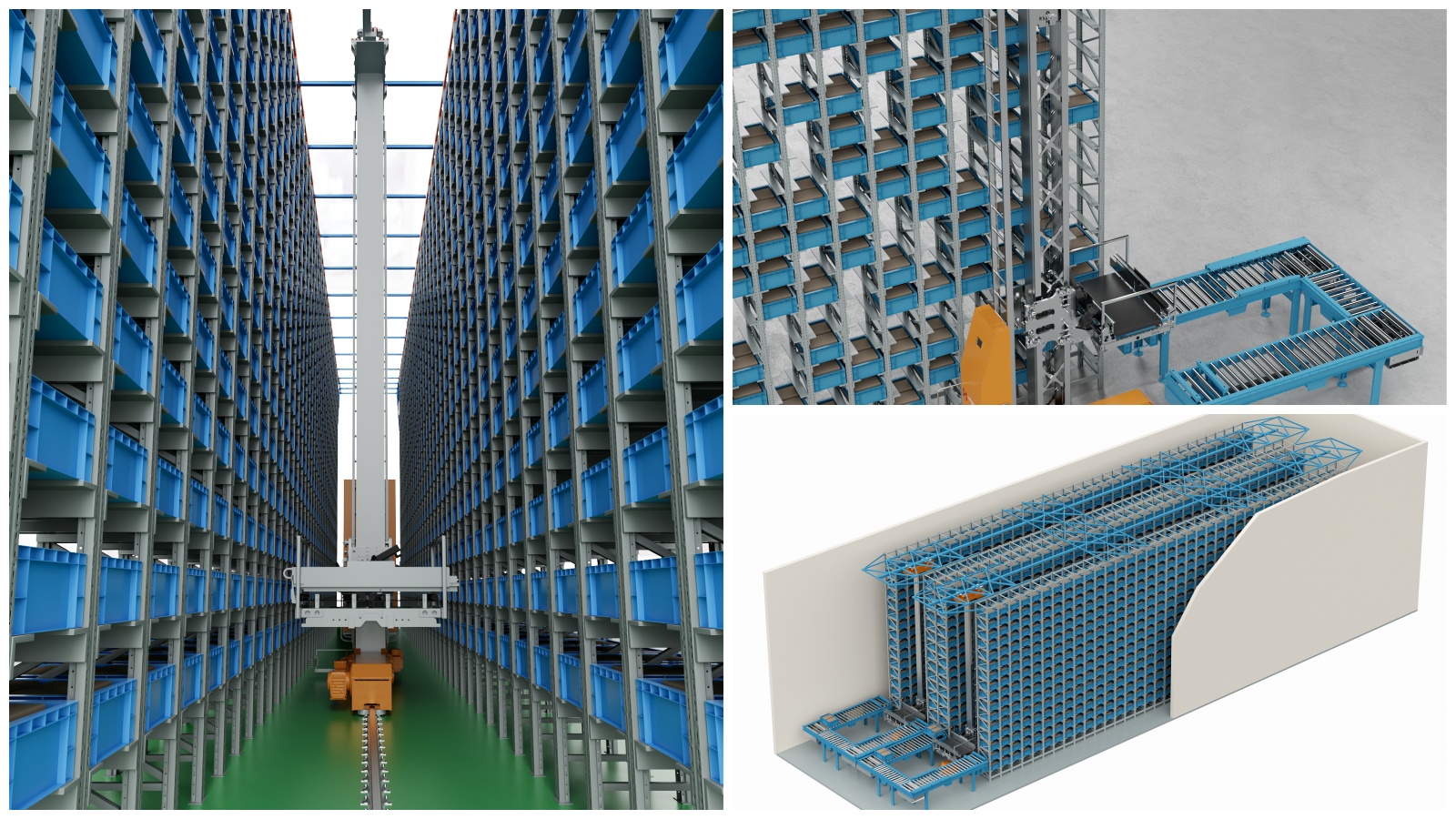
Mini-load AS/RS handles smaller storage units, such as totes, cartons, trays, and containers containing individual components. Instead of retrieving full pallets, the equipment accesses smaller loads that can be delivered to picking or production workstations.
Depending on the configuration, a mini-load system may use a dedicated crane or another automated handling mechanism.
Key advantages
-
Efficient storage of small items
-
Supports organized parts and tote inventory
-
Can integrate with goods-to-person picking
-
Suitable for operations with many SKUs
Potential limitations
-
Load dimensions and weight must fit the equipment design
-
Picking throughput depends on workstation capacity and system configuration
-
May not be appropriate for large or heavy pallet loads
Best suited for: Spare parts warehouses, electronics manufacturing, pharmaceutical distribution, and order fulfillment operations handling small containers.
3. Shuttle-Based AS/RS
Shuttle-based AS/RS uses powered shuttle vehicles to transport pallets, totes, or cartons within a storage structure. Depending on the system, shuttles may operate on individual levels, transfer between levels through lifts, or work with other automated handling equipment.
Pallet shuttle systems and tote shuttle systems are related technologies, but they handle different load types and operational requirements.
Key advantages
-
Can support high-density storage
-
Allows multiple vehicles to operate within a configured system
-
Can be designed for different storage depths and load types
-
Offers flexibility in system sizing and expansion, depending on architecture
Potential limitations
-
Requires coordination between shuttles, lifts, conveyors, and control software
-
Throughput depends on the number of vehicles, transfer points, and system bottlenecks
-
System design and maintenance can be more complex than conventional racking
Best suited for: High-density pallet storage, manufacturing buffers, distribution centers, and tote-based fulfillment operations.
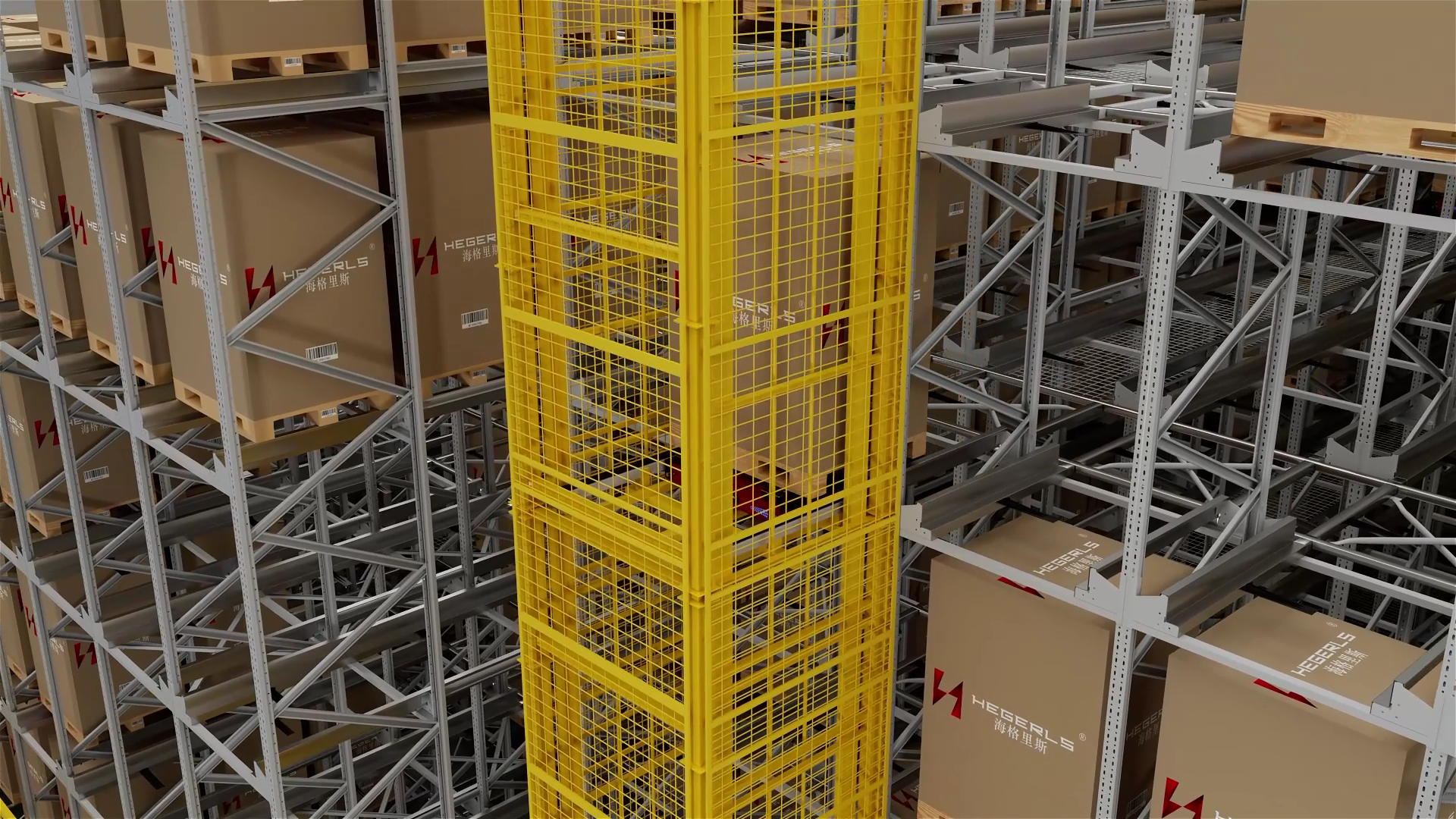
4. Four-Way Shuttle AS/RS
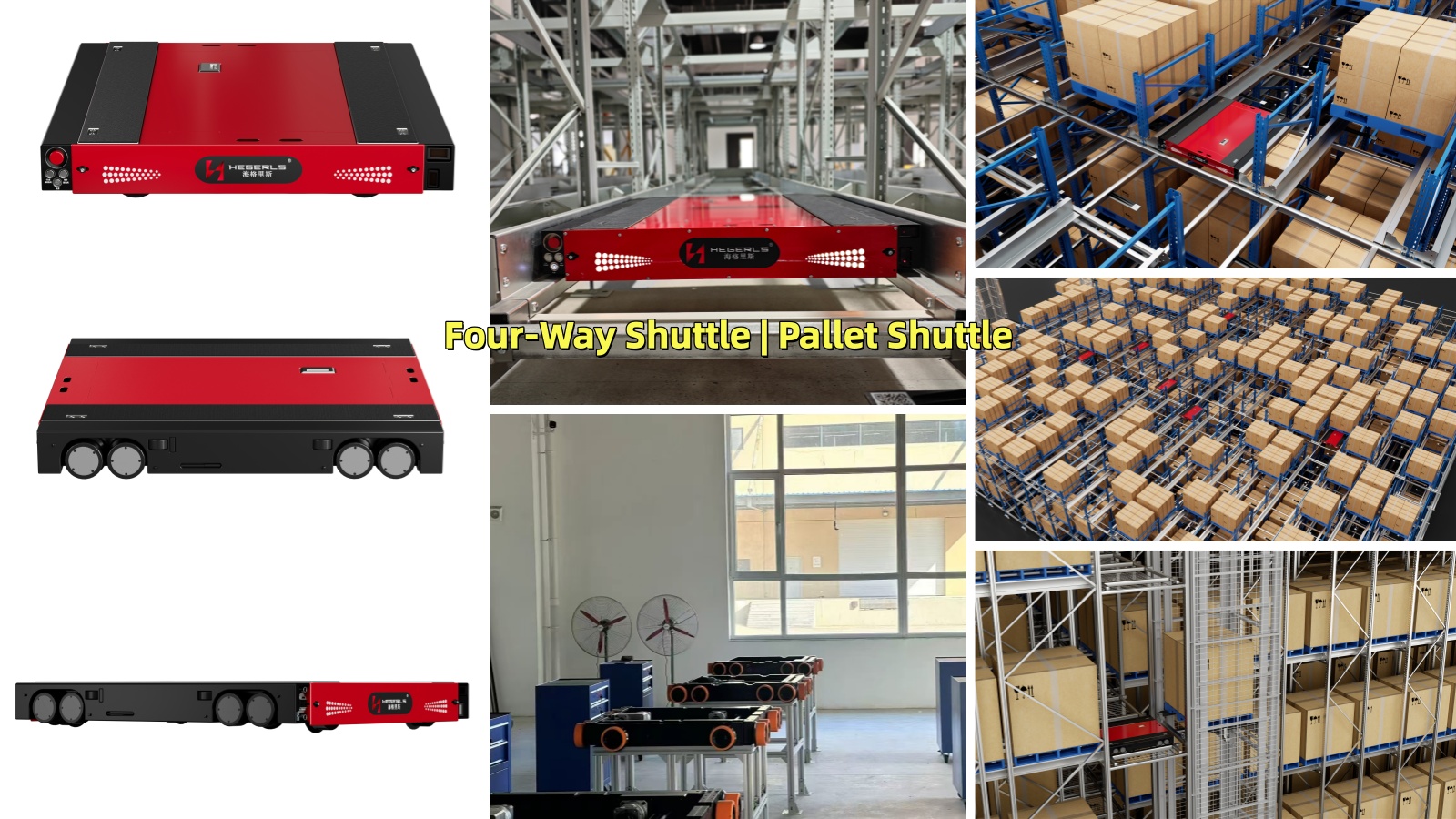
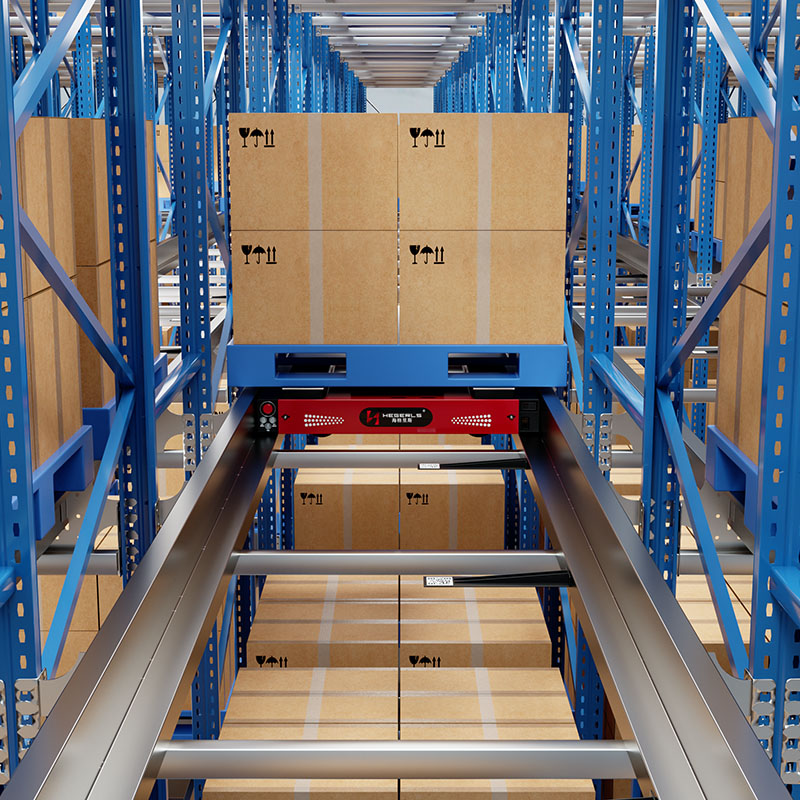
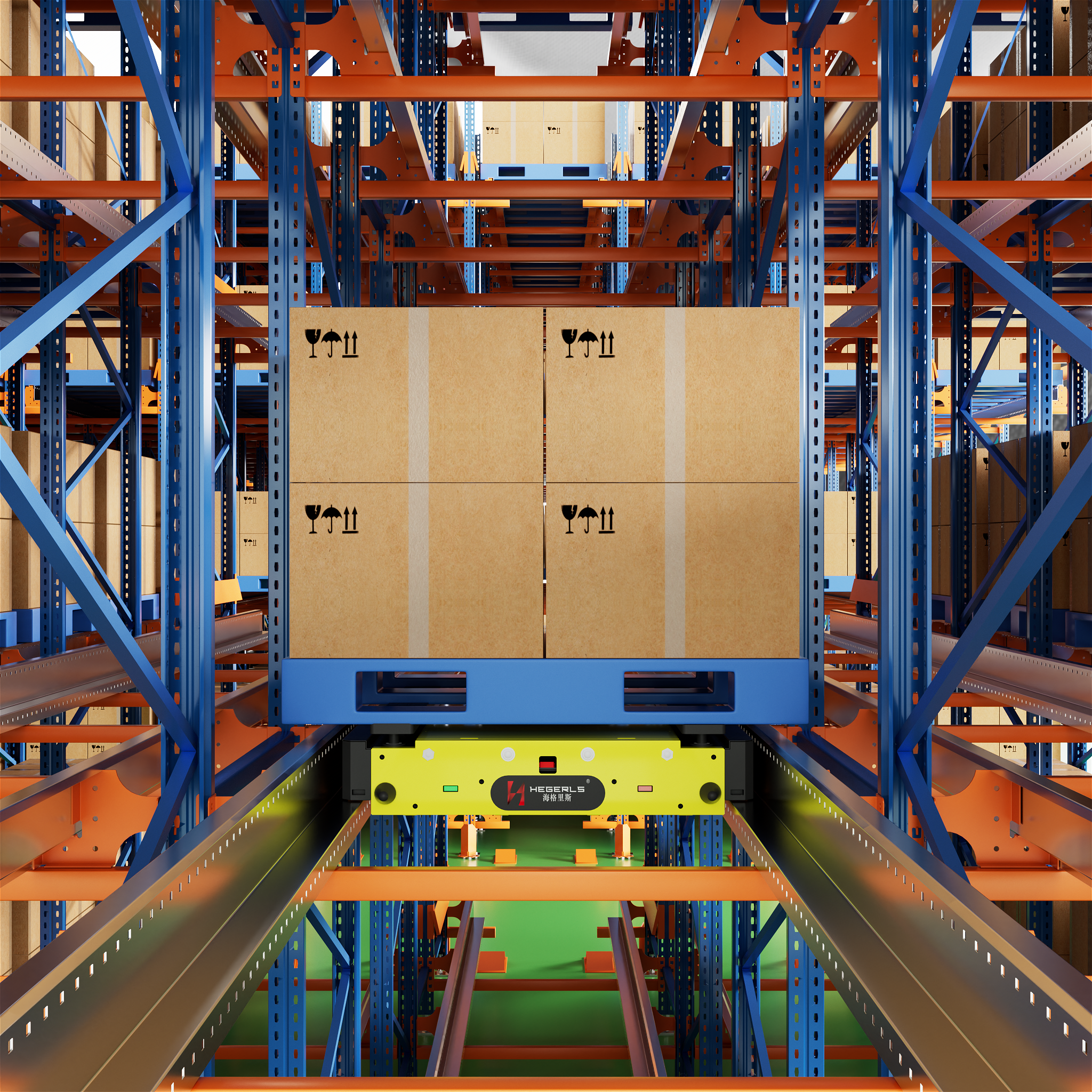
A four-way shuttle system is a type of shuttle-based automated storage system designed to move pallets in multiple horizontal directions within a compatible rack structure. With coordinated lifting equipment and control software, the system can transfer loads between storage levels and serve multiple storage lanes.
Unlike a conventional shuttle restricted to a single lane, a four-way shuttle can provide greater routing flexibility within its designed operating area.
Key advantages
-
Supports high-density pallet storage
-
Enables multi-directional shuttle movement
-
Can accommodate multiple storage zones and lanes
-
May suit warehouses with changing inventory distribution or complex storage requirements
Potential limitations
-
Rack geometry, shuttle dimensions, and load specifications must be compatible
-
Lifts and transfer points require careful capacity planning
-
Actual throughput depends on task allocation, travel distances, equipment availability, and inbound/outbound design
Best suited for: Pallet warehouses requiring dense storage and flexible access across multiple lanes and levels.
For irregular buildings or facilities with limited space, four-way shuttle technology may be worth evaluating alongside other AS/RS options. The final choice should be based on a detailed layout and throughput study.
Explore the Zhuku Four-Way Shuttle System.
5. Cube-Based Robotic Storage Systems
Cube-based systems arrange storage bins in a compact grid. Robots travel across the top of the grid and retrieve bins for delivery to designated workstations.
The storage structure is designed around bins rather than conventional pallet racking, making this technology particularly relevant to small-item fulfillment.
Key advantages
-
Dense storage of bins and containers
-
Automated bin retrieval
-
Supports goods-to-person order picking
-
Can be configured for specific inventory and workstation requirements
Potential limitations
-
Generally designed for bins rather than full pallet storage
-
Bin dimensions and weight must match system requirements
-
Performance depends on robot availability, bin access, and workstation capacity
Best suited for: E-commerce fulfillment, small-item distribution, and operations that handle many different products in bins.
6. Vertical Lift Modules (VLMs)
A vertical lift module stores trays on either side of a central extraction mechanism. When an item is requested, the mechanism retrieves the required tray and presents it at an access opening.
VLMs use vertical space to store small and medium-sized items in a relatively compact footprint.
Key advantages
-
Makes use of available vertical space
-
Reduces the need for operators to walk between storage locations
-
Supports organized inventory access
-
Can improve ergonomics and item security
Potential limitations
-
Tray dimensions and load capacities are restricted by the equipment design
-
Throughput depends on tray retrieval cycles and operator or workstation processes
-
Multiple units may be needed for higher-volume operations
Best suited for: Tool rooms, spare parts storage, component inventory, and small-item picking.
7. Horizontal and Vertical Carousel Systems
Carousel systems move shelves, carriers, or storage compartments along a continuous track to bring the required items to an operator.
Horizontal carousels move storage carriers around a horizontal loop, while vertical carousels move them around a vertical loop.
Key advantages
-
Provides automated access to stored items
-
Can reduce unnecessary operator travel
-
Supports organized small-item storage
-
Vertical configurations can make better use of floor space
Potential limitations
-
Storage configuration may be less flexible when inventory changes significantly
-
Throughput depends on the number of units, carrier arrangement, and picking workflow
-
Not generally intended for full-pallet high-bay storage
Best suited for: Small parts, tools, components, and operations requiring repeated access to relatively compact items.
AS/RS Types Compared
The following table summarizes the main differences. Actual capacities and performance depend on the specific equipment and system design.
| AS/RS type | Typical load | Main strength | Typical application |
| Unit-load AS/RS | Pallets | High-bay pallet storage | Manufacturing and distribution |
| Mini-load AS/RS | Totes, cartons, trays | Automated small-load handling | Parts and component storage |
| Shuttle-based AS/RS | Pallets, totes, or cartons | Flexible automated movement | Dense storage and fulfillment |
| Four-way shuttle AS/RS | Pallets | Multi-directional movement in compatible racks | High-density pallet warehouses |
| Cube-based storage | Bins | Compact robotic storage | E-commerce and small-item fulfillment |
| Vertical lift module | Trays | Vertical space utilization | Spare parts and tools |
| Carousel system | Bins, trays, or small items | Automated presentation of stored items | Small-item picking and kitting |
These categories are not always mutually exclusive. For example, a four-way pallet shuttle is also a shuttle-based AS/RS, while a mini-load system may use either crane-based or shuttle-based handling technology.
Other Ways to Classify AS/RS Systems
In addition to classifying automated storage and retrieval systems by equipment type, AS/RS can also be categorized according to building structure, load type, storage density, automation level, handling equipment, and operating environment. These perspectives help warehouse planners evaluate system requirements before selecting a specific technology.
1. Classification by Building Structure
AS/RS installations can be divided into two broad categories based on the relationship between the storage system and the building.
-
AS/RS in conventional buildings: Automated racking and handling equipment are installed inside an existing or newly constructed warehouse. The building structure and storage system are designed and evaluated separately, while still accounting for equipment loads, clearances, and operating requirements.
-
Rack-supported automated warehouses: The racking structure supports specified building loads, with roof and wall cladding integrated into the overall structural design. This approach may be suitable for high-bay storage projects where the building and storage system can be planned together.
The choice depends on the existing facility, required storage height, site conditions, structural design, and local building regulations.
2. Classification by Load Type
AS/RS systems can also be grouped according to the unit loads they store and retrieve.
-
Pallet AS/RS: Designed for palletized goods, including raw materials, finished products, and industrial components.
-
Tote and carton AS/RS: Designed for smaller containers and cartons, often used in order fulfillment, parts storage, and distribution operations.
-
Tray and small-item systems: Used for tools, spare parts, electronic components, and other items that require organized access through trays, bins, or specialized storage units.
Load dimensions, maximum weight, packaging stability, and handling requirements should be confirmed before choosing the equipment.
3. Classification by Storage Density and Accessibility
Another important distinction is how storage locations are arranged and accessed.
-
Direct-access storage: Individual pallet locations can be accessed without first moving another pallet. Single-deep racking is a common example and may be appropriate for warehouses managing many SKUs with relatively few pallets per SKU.
-
Double-deep storage: Two pallets are stored one behind the other. This increases storage density, but accessing the rear pallet may require moving the front pallet first.
-
High-density channel storage: Multiple pallets are stored within a channel, reducing the number of aisles needed. Shuttle-based systems can support this approach, depending on their design.
Higher density does not automatically mean better performance. Warehouse operators should balance storage capacity with SKU variety, pallet accessibility, inventory rotation rules, and retrieval throughput.
4. Classification by Degree of Automation
AS/RS projects can also be differentiated by how much of the warehouse operation is automated.
-
Semi-automated storage: Automated equipment performs specific tasks, while operators or forklifts handle other movements. A pallet shuttle operating inside storage channels is one example of this approach.
-
Integrated automated storage: Automated storage equipment works with conveyors, lifts, or other handling systems, while people may still perform picking, inspection, or packing tasks.
-
Highly automated warehouse operations: Storage, retrieval, transportation, and selected order-handling processes are coordinated through automated equipment and warehouse software, with personnel responsible for supervision, exceptions, and maintenance.
The degree of automation should reflect the operation's business requirements. Full automation may not be necessary or cost-effective for every warehouse.
5. Classification by Material-Handling Equipment
The equipment used to move loads provides another way to distinguish AS/RS configurations.
-
Stacker crane systems: Use cranes operating along defined rack aisles to store and retrieve loads.
-
Shuttle-based systems: Use powered vehicles to move loads within compatible rack structures. Depending on the design, shuttles may operate in individual lanes or move in multiple directions.
-
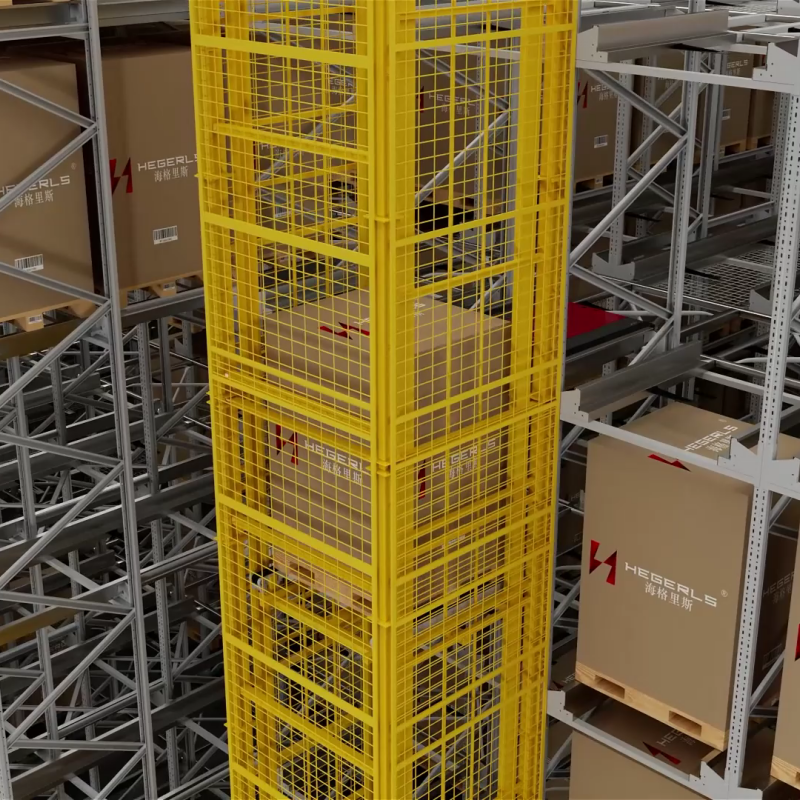
Lift-assisted systems: Use lifts to transfer loads between levels, often in combination with shuttles, conveyors, or other handling equipment.
-
Integrated transport systems: Connect storage equipment with conveyors, automated guided vehicles (AGVs), autonomous mobile robots (AMRs), or other material-handling technologies.
These categories can overlap. For example, a shuttle-based AS/RS may also include lifts and conveyors, so the overall system should be evaluated as an integrated solution rather than as a single machine.
6. Classification by Operating Environment
AS/RS systems can also be designed for different warehouse environments.
-
Ambient-temperature systems: Used in conventional warehouses and manufacturing facilities.
-
Cold-storage systems: Designed for refrigerated or frozen environments, with equipment and components suitable for the specified operating temperatures.
-
Special-environment systems: May require additional design considerations for dust, humidity, corrosion, or other site-specific conditions.
Operating temperature and environmental requirements affect equipment selection, maintenance planning, component specifications, and operating procedures. Compatibility should be confirmed with the system supplier for each project.
How Should These Classification Methods Be Used?
These categories are complementary rather than mutually exclusive. A single warehouse, for example, may use a rack-supported building, pallet-based four-way shuttle AS/RS, high-density storage channels, and cold-storage equipment within a highly automated operation.
For this reason, warehouse planners should first identify the load type, building constraints, storage density requirements, operating environment, and desired level of automation. They can then compare suitable equipment configurations and determine how the storage system should integrate with warehouse management software and material-handling equipment.
For businesses evaluating automated storage solutions, this multi-dimensional approach provides a more practical basis for comparing technologies than equipment names alone.
How to Choose the Right AS/RS System
Selecting an AS/RS system should start with the warehouse's operational requirements, not simply the equipment type.
1. Identify the Load Type
Determine whether the warehouse handles full pallets, cartons, totes, trays, or individual items. Confirm load dimensions, maximum weight, packaging characteristics, and any special handling requirements.
Pallet-oriented systems and small-item systems have different storage structures and handling mechanisms.
2. Calculate Storage Capacity
Estimate current and future inventory requirements. Consider peak stock levels, SKU count, inventory turnover, and the need to separate products by batch, temperature, or other storage conditions.
High-density storage may improve space utilization, but the usable capacity must be balanced against accessibility and retrieval requirements.
3. Define Throughput Targets
Determine the required number of inbound and outbound movements during average and peak operating periods.
A warehouse that stores goods for long periods may prioritize capacity. A distribution center processing frequent orders may place greater emphasis on retrieval speed, workstation performance, and system throughput.
4. Assess the Building Layout
Review available floor space, clear height, column positions, floor conditions, loading access, and fire protection requirements.
For irregular buildings, consider whether a standardized automated storage zone combined with conventional racking or staging areas would provide a more practical layout than trying to automate the entire footprint.
5. Evaluate Software and Integration
A complete AS/RS project typically requires coordination between warehouse management software, equipment control systems, and connected material-handling equipment.
A warehouse management system (WMS) manages inventory and warehouse processes, while a warehouse control system (WCS) coordinates compatible automated equipment. Their exact responsibilities and interfaces depend on the system architecture.
6. Compare Total Project Cost
The investment assessment should include more than the initial equipment price. Consider racking, building modifications, software integration, installation, commissioning, maintenance, spare parts, and future expansion.
The right solution is the one that meets operational requirements and provides a sustainable business case over its expected service life.
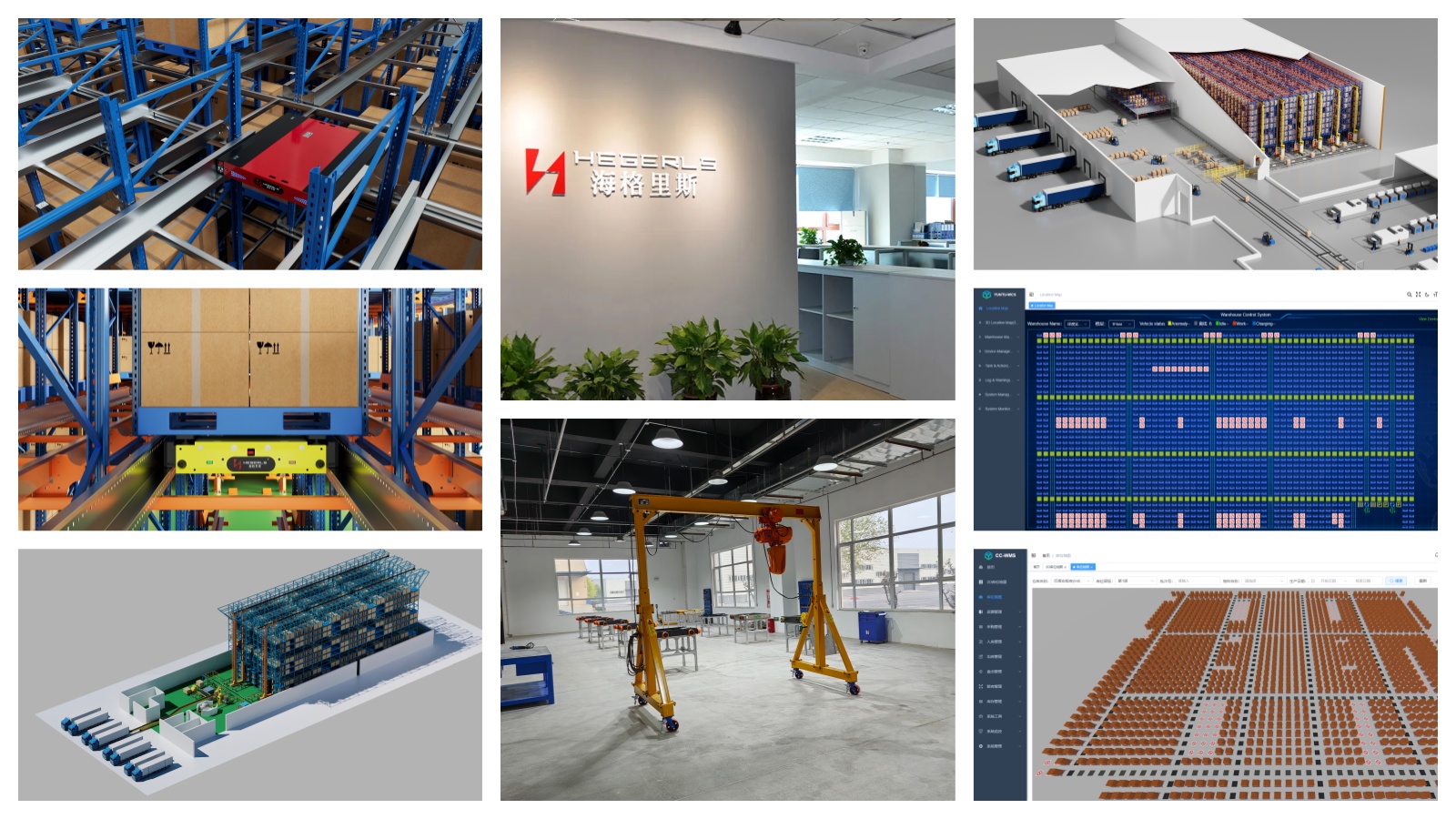
How Zhuku Supports AS/RS Warehouse Automation
Zhuku (Hebei) Automatic Storage Technology Co., Ltd. provides warehouse automation and storage-system solutions for different warehouse layouts and material-handling requirements.
Depending on project needs, Zhuku's solution scope can be evaluated around several key areas:
Four-way shuttle systems: For projects requiring dense pallet storage and multi-directional shuttle movement within a compatible racking structure.
Stacker crane AS/RS: For high-bay pallet storage where defined aisles and crane-based handling suit the building and operating requirements.
Rack-supported warehouse solutions: For suitable projects where storage racks and the building structure are planned together, subject to engineering review and applicable regulations.
Warehouse management and control software: Zhuku's CC-WMS and YUNTU-WCS can be considered when defining inventory management, equipment coordination, and system integration requirements. Specific functions and interfaces should be confirmed for each project.
The best solution depends on the relationship between storage capacity, throughput, building conditions, inventory characteristics, and investment objectives.
Learn more about Zhuku warehouse automation solutions and the Four-Way Shuttle System.
Conclusion
The main types of AS/RS systems differ in the loads they handle, how they access storage locations, and the warehouse operations they support. Unit-load and stacker crane systems are commonly considered for pallet storage, while mini-load, shuttle, cube-based, VLM, and carousel systems address different small-load and fulfillment requirements.
Choosing the right technology requires a clear understanding of inventory, throughput, building constraints, software integration, and total project cost.
For warehouse operators planning a new automated facility or upgrading an existing one, the most effective starting point is to define the operational requirements and compare feasible system configurations before selecting equipment.
Planning an AS/RS project? Contact Zhuku with your warehouse drawings, load specifications, target storage capacity, and throughput requirements to evaluate suitable warehouse automation options.