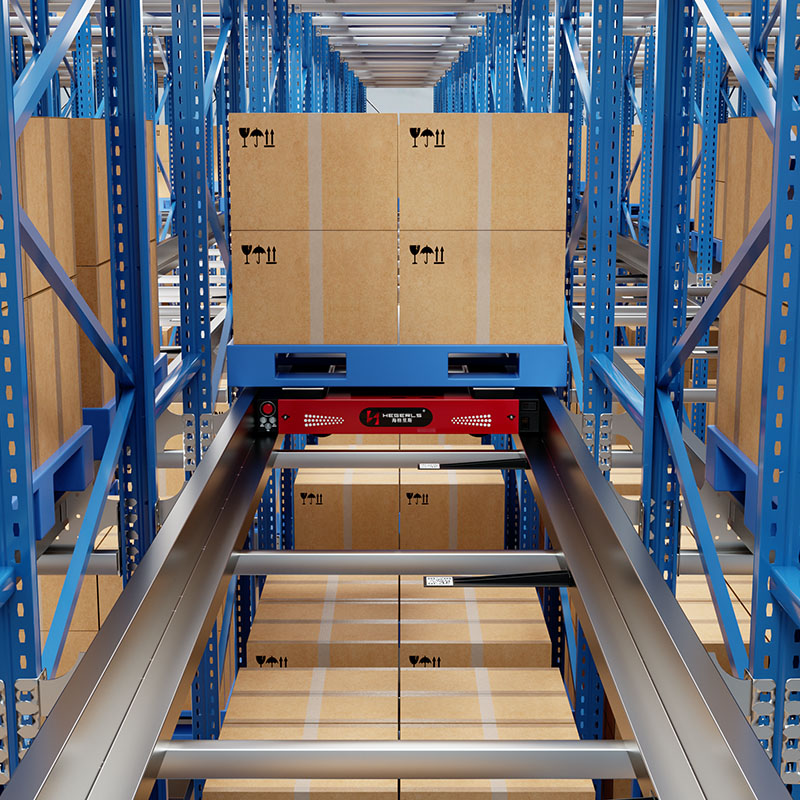
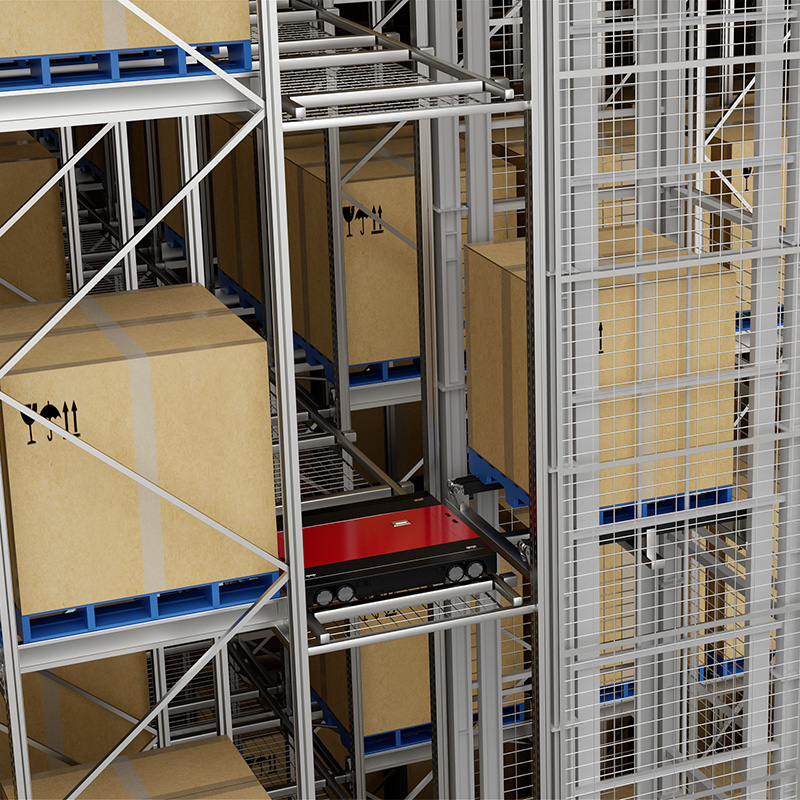
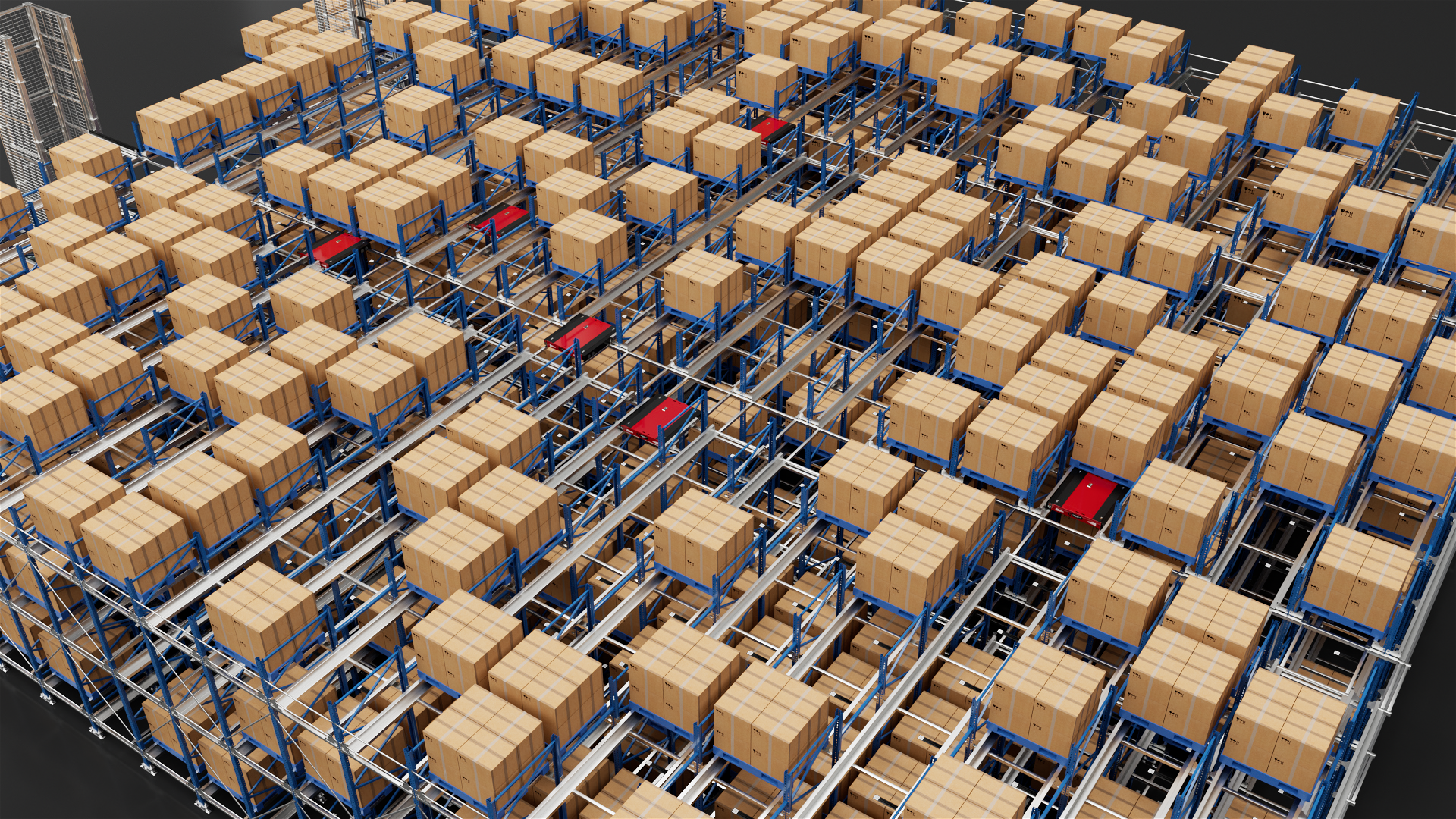
A four-way shuttle system is an automated high-density pallet storage solution that uses autonomous shuttle vehicles to move pallets horizontally and vertically within a specially designed racking system. Unlike conventional two-way shuttle systems, a four-way shuttle can travel in multiple directions, allowing it to move forward, backward, left, and right within the storage system.
By combining four-way shuttle vehicles, shuttle lifts, pallet racking, conveyors, Warehouse Management Systems (WMS), and Warehouse Control Systems (WCS), a four-way shuttle system creates a flexible and intelligent automated storage and retrieval system (ASRS) for modern warehouses.
Four-way shuttle technology is particularly suitable for warehouses that require high storage density, efficient pallet handling, flexible storage layouts, and scalable automation.
What Does a Four-Way Shuttle System Do?
The primary function of a four-way shuttle system is to automatically store and retrieve pallets in high-density racking.
A typical system can:
-
Automatically transport pallets into storage locations
-
Retrieve pallets according to warehouse tasks
-
Move horizontally and vertically between storage levels
-
Coordinate multiple shuttle vehicles
-
Reduce forklift operations inside storage aisles
-
Increase warehouse storage density
-
Connect with WMS and WCS software
-
Support automated inbound and outbound operations
Unlike traditional pallet racking, where forklifts frequently enter storage aisles, a four-way shuttle system allows automated shuttle vehicles to perform pallet movements inside the racking structure.
This makes the technology particularly valuable for automated warehouse storage, high-density pallet storage, cold storage, manufacturing logistics, and distribution centers.
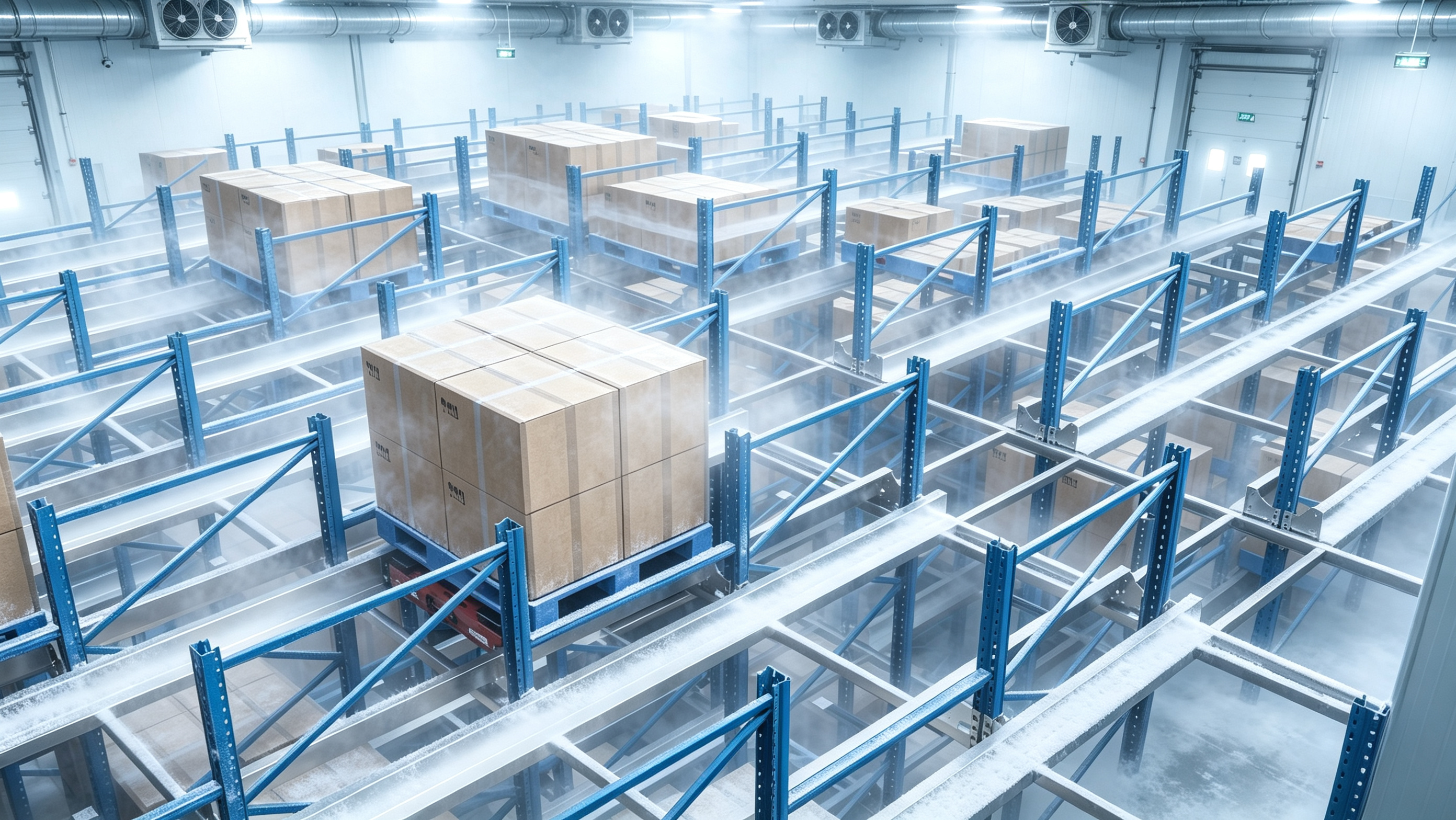
How Does a Four-Way Shuttle System Work?
A four-way shuttle warehouse normally consists of several interconnected components:
-
Four-way shuttle vehicles
-
Shuttle racking
-
Shuttle lifts
-
Conveyors
-
Warehouse Management System (WMS)
-
Warehouse Control System (WCS)
-
Pallet transfer equipment
The operating process generally follows these steps:
Step 1: Pallet Inbound
A pallet enters the automated warehouse through conveyors or another material handling system.
The WMS receives inventory information and creates an inbound storage task.
Step 2: Storage Location Assignment
The WMS determines an appropriate storage location based on factors such as:
-
Product characteristics
-
Inventory status
-
Storage capacity
-
Turnover rate
-
Warehouse operating rules
The WCS then converts the warehouse task into equipment instructions.
Step 3: Shuttle Transportation
The four-way shuttle receives the task and transports the pallet to the assigned storage position.
Because the vehicle can travel in multiple directions, it can move between different storage channels and positions with the assistance of lifts and transfer equipment.
Step 4: Automated Pallet Storage
The shuttle positions the pallet accurately inside the racking.
The WCS monitors the operation and updates equipment status in real time.
Step 5: Automated Retrieval
When a pallet is required, the WMS generates a retrieval task.
The WCS coordinates the shuttle, lift, conveyor, and other equipment to retrieve the pallet and transport it to the designated outbound location.
This creates a continuous automated storage and retrieval process with minimal manual intervention.
Four-Way Shuttle System Architecture
A complete four-way shuttle solution typically connects warehouse management software, control software, and automated equipment.
The architecture can be described as:
|
ERP / MES ↓ AI Analytics & Optimization ↓ WMS ↓ WCS ↓ Four-Way Shuttle & Material Handling Equipment ↓ Smart Warehouse Operations |
What Are the Main Components of a Four-Way Shuttle System?
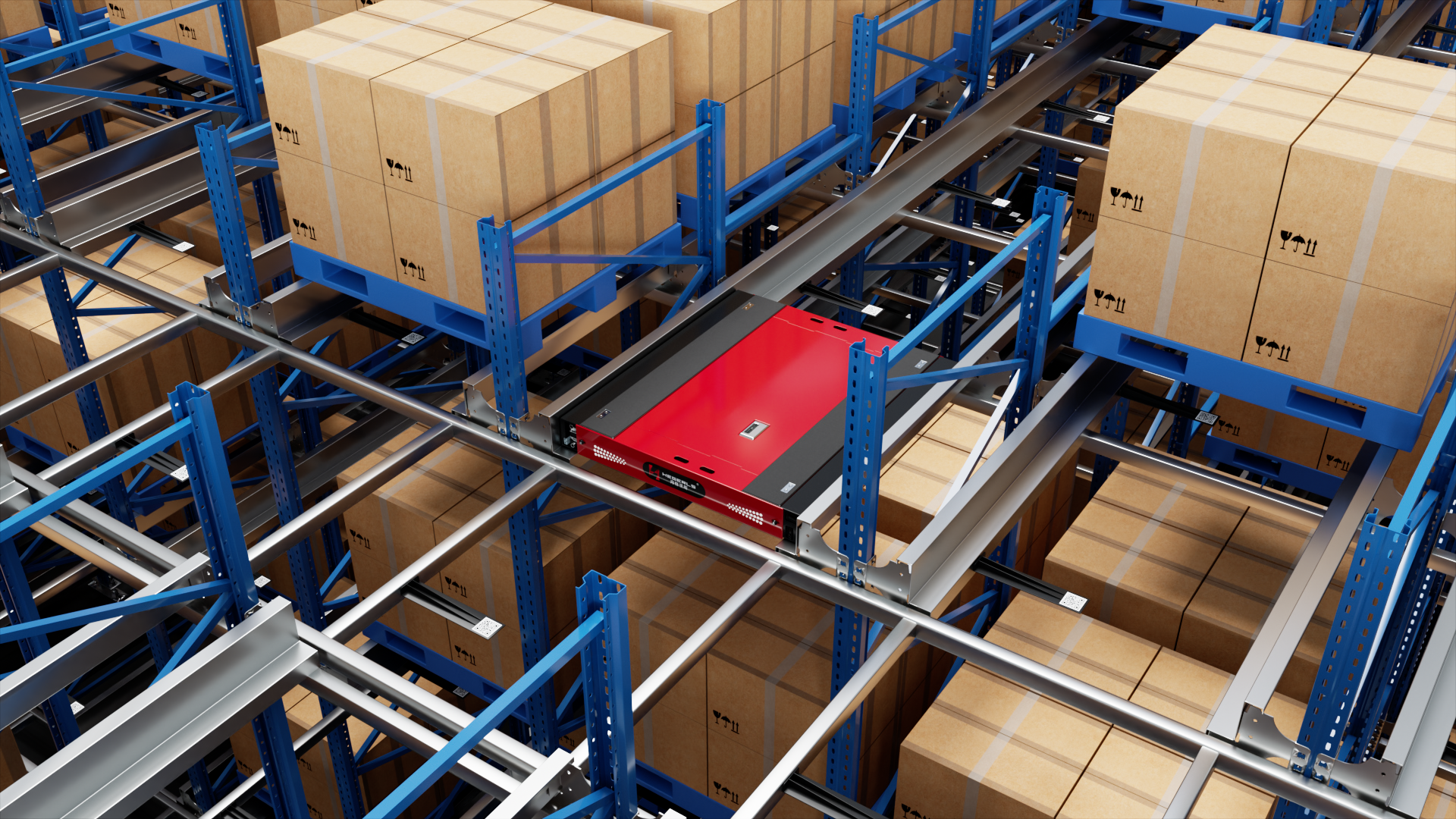
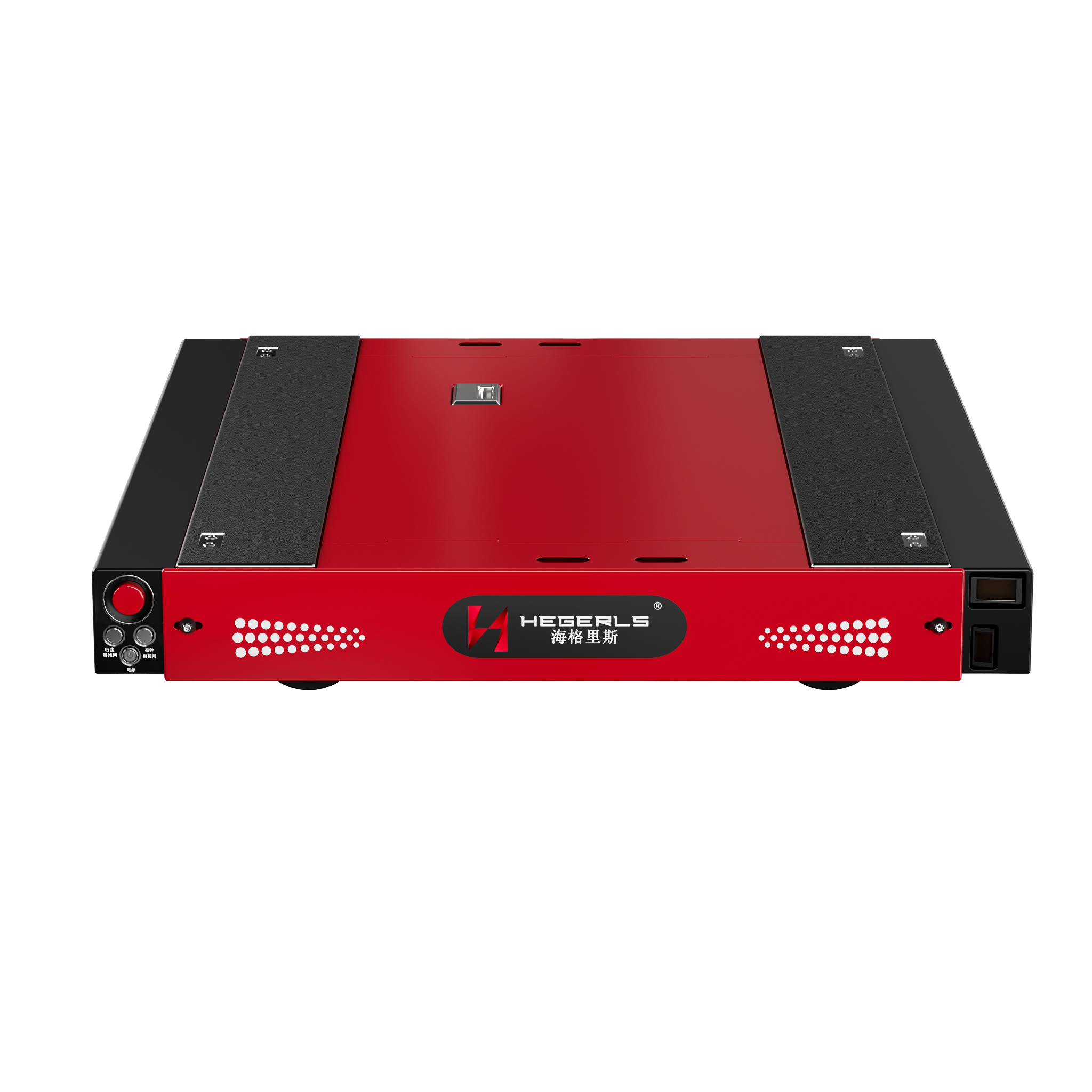
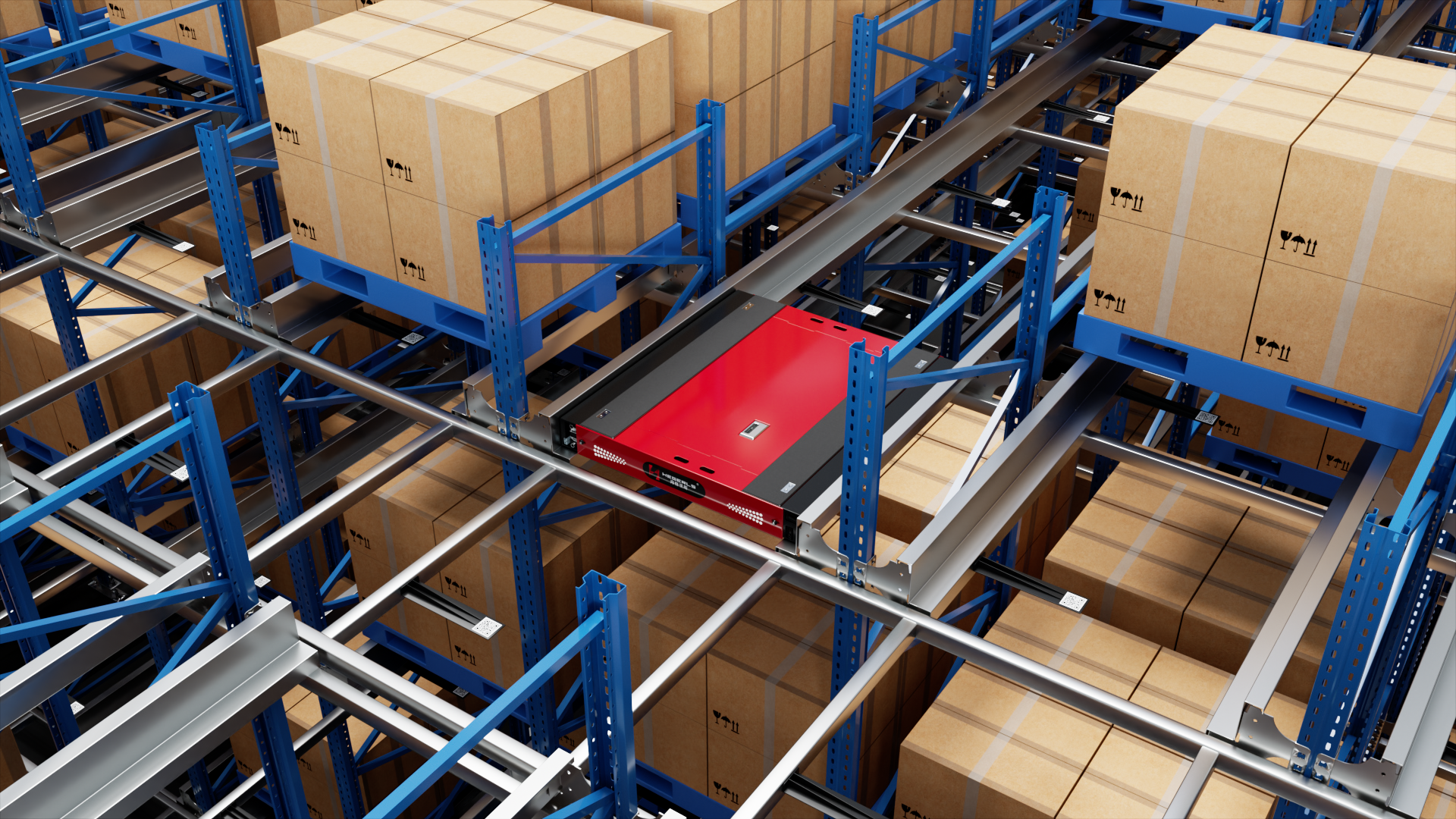
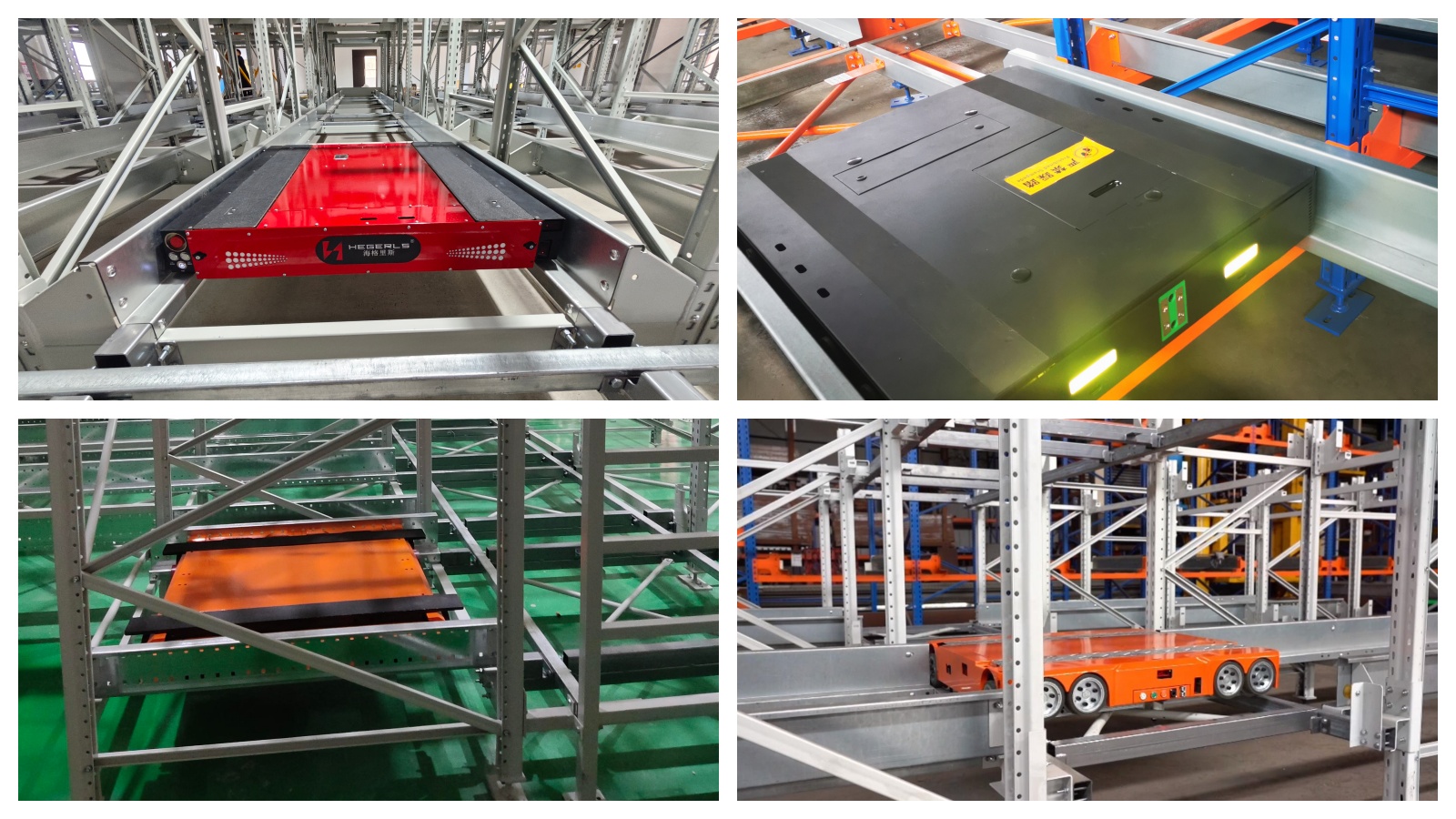
Four-Way Shuttle VehicleThe shuttle vehicle is the core automation equipment. It is designed to move pallets within the racking system and can change travel direction according to the warehouse layout and operating requirements. Compared with conventional pallet shuttles, four-way shuttle vehicles provide greater flexibility because they can move in multiple directions. |
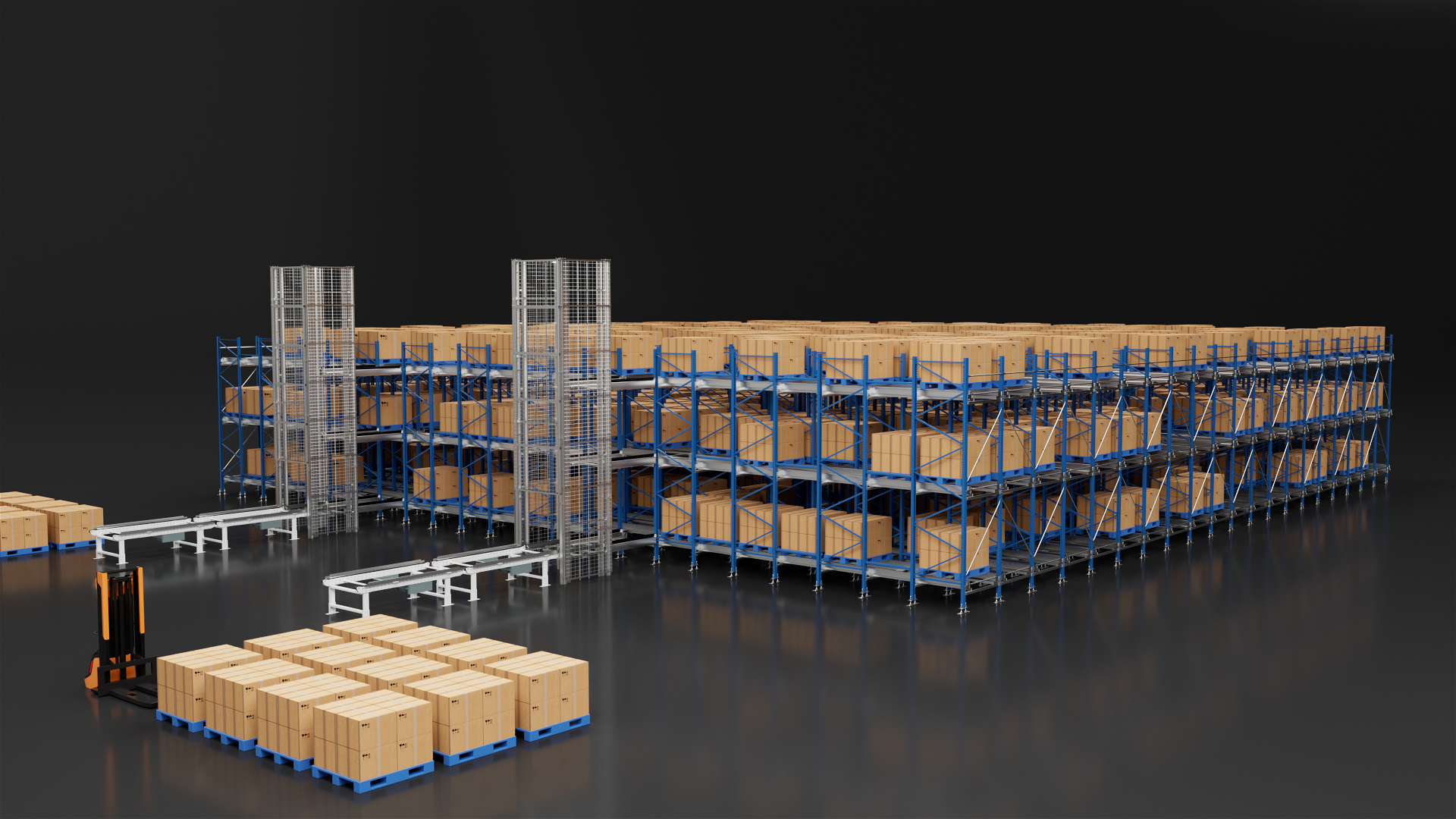
Shuttle RackingThe racking system provides the physical storage structure. Four-way shuttle racking is designed with deep storage lanes and dedicated shuttle travel paths, enabling high-density pallet storage. |
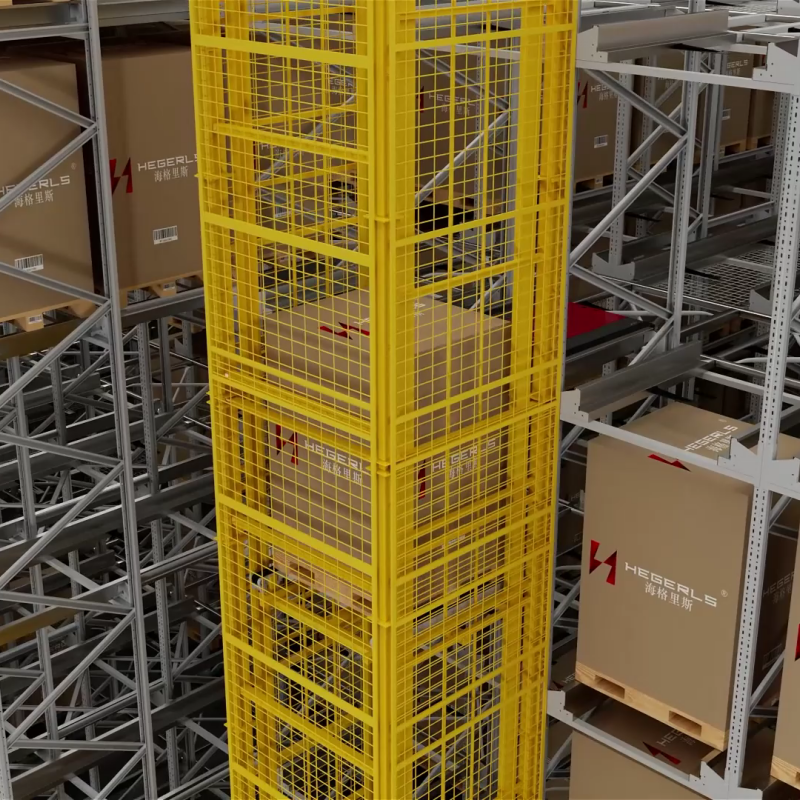
Shuttle LiftShuttle lifts connect different storage levels. They transport shuttle vehicles and/or pallets between levels, allowing the system to operate across a multi-level warehouse. |
ConveyorsConveyors connect the automated storage system with:
|
WMSThe Warehouse Management System (WMS) manages inventory and warehouse processes. Typical functions include:
|
WCSThe Warehouse Control System (WCS) acts as the real-time control layer between WMS and warehouse automation equipment. It manages:
|
 |  |  |
What Are the Advantages of a Four-Way Shuttle System?
1. High-Density Storage
One of the most important advantages of four-way shuttle automation is its ability to maximize warehouse space.
Deep-lane storage reduces the number of traditional forklift aisles required, allowing more pallets to be stored within the same building footprint.
This is particularly valuable when:
-
Land is expensive
-
Warehouse expansion is difficult
-
Storage demand is increasing
-
High-density pallet storage is required
2. Flexible Storage Layout
The four-way movement capability allows shuttle vehicles to operate across different storage areas and levels.
This provides greater layout flexibility compared with fixed-path automation systems.
3. Reduced Forklift Dependency
Forklifts do not need to enter every storage lane to retrieve pallets.
Instead, automated shuttle vehicles perform internal pallet movement.
This can help improve:
-
Operator safety
-
Storage density
-
Warehouse consistency
-
Automation efficiency
4. High Throughput
Multiple shuttle vehicles can work simultaneously under WCS coordination.
The system can dynamically assign tasks according to:
-
Storage requirements
-
Retrieval priorities
-
Equipment availability
-
Traffic conditions
This makes four-way shuttle systems suitable for warehouses with high inbound and outbound activity.
5. Scalable Automation
Four-way shuttle systems can be designed according to current warehouse requirements and expanded as business needs change.
Additional vehicles, storage levels, lifts, or other equipment can be incorporated into the overall system architecture depending on project design.
6. Suitable for Challenging Environments
Four-way shuttle systems can be customized for specific operating environments, including temperature-controlled warehouses and cold storage applications.
Appropriate equipment configuration and component selection are essential when operating at low temperatures.
Four-Way Shuttle System vs Two-Way Shuttle System
The major difference is vehicle mobility.
| Feature | Two-Way Shuttle | Four-Way Shuttle |
| Travel direction | Mainly forward/backward | Multiple directions |
| Layout flexibility | Moderate | High |
| Cross-lane movement | Limited | Supported |
| System complexity | Lower | Higher |
| Storage density | High | High |
| Multi-level applications | Available | Highly flexible |
| Automation potential | High | Very high |
| Typical application | High-density lane storage | Flexible high-density automation |
A two-way shuttle can be an excellent choice for warehouses with relatively fixed storage requirements and high volumes of similar products.
A four-way shuttle is more suitable when flexibility, high-density storage, multi-level operation, and intelligent equipment coordination are important.
Four-Way Shuttle vs Stacker Crane ASRS
Four-way shuttle systems and stacker crane ASRS are both automated storage solutions, but their operating principles are different.
| Feature | Four-Way Shuttle | Stacker Crane ASRS |
| Main equipment | Shuttle vehicle | Stacker crane |
| Storage method | Deep-lane storage | Rack-based pallet storage |
| Vehicle flexibility | High | Fixed crane aisle |
| Multi-depth storage | Excellent | Usually limited by configuration |
| Equipment redundancy | High potential | More centralized |
| Suitable for high-density storage | Excellent | Excellent |
| Layout flexibility | High | Moderate |
| Typical use | High-density flexible storage | High-throughput automated storage |
The appropriate technology depends on warehouse dimensions, pallet characteristics, required throughput, storage density, and operational strategy.
What Types of Warehouses Use Four-Way Shuttle Systems?
Four-way shuttle systems are widely applicable to industries requiring high-density pallet storage and automated material handling.
Manufacturing WarehousesApplications include:
|
Food and Beverage WarehousesFour-way shuttle automation can support high-density storage of palletized products while improving inventory visibility. |
Cold Chain WarehousesThe technology is suitable for temperature-controlled environments when the shuttle vehicles and other components are properly configured for low-temperature operation. |
E-Commerce Distribution CentersFour-way shuttle ASRS can support high-volume inventory storage and automated order fulfillment. |
Pharmaceutical WarehousesAutomated storage can improve inventory traceability and reduce manual handling. |
3PL WarehousesFlexible storage locations and automated equipment can help third-party logistics providers manage different customers and product categories. |
Four-Way Shuttle System and WMS/WCS Integration
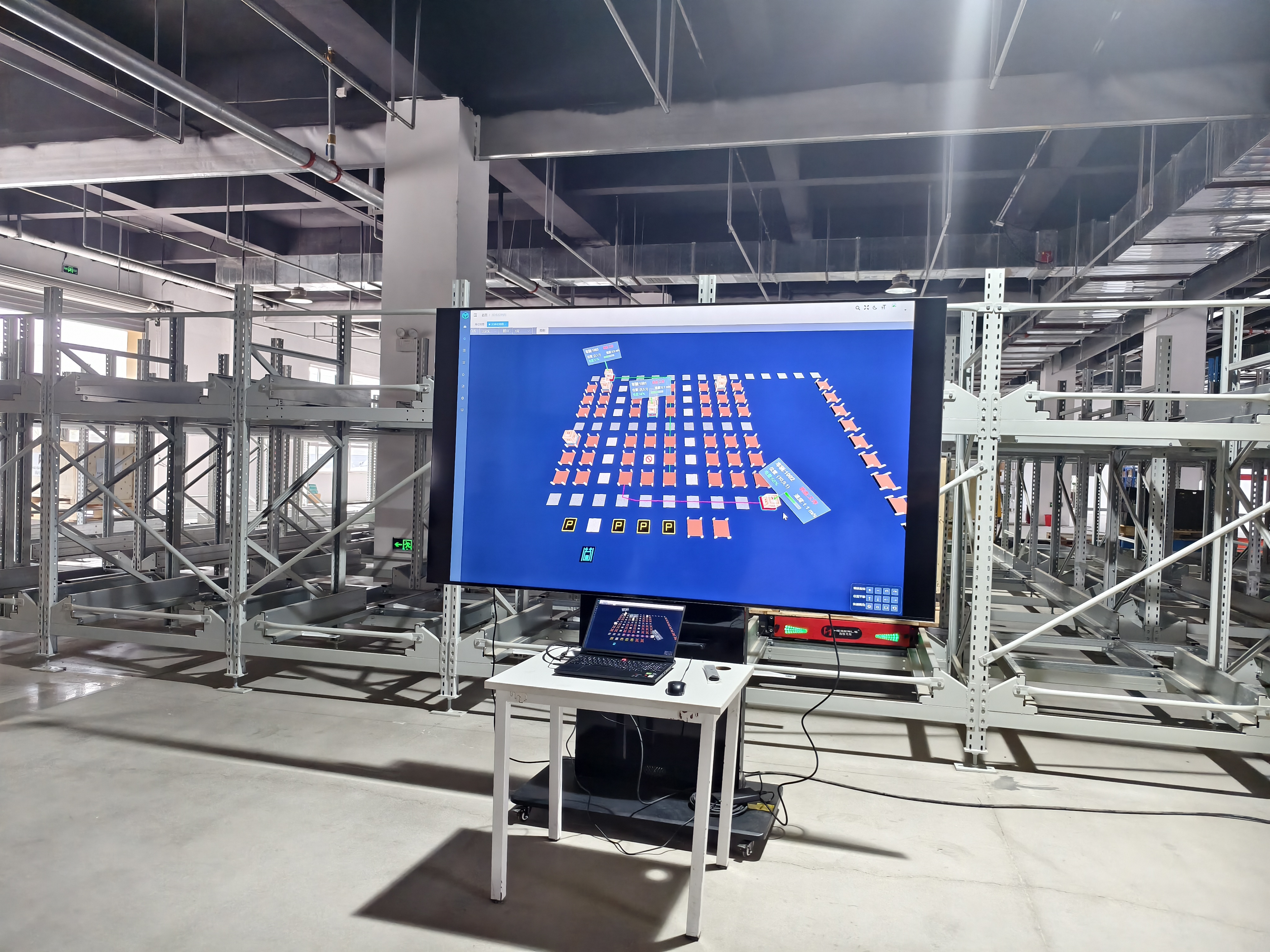
Software integration is essential to a modern four-way shuttle warehouse.
The WMS manages the business and warehouse management layer, while the WCS manages real-time equipment execution.
The interaction can be summarized as:
WMS → Creates and prioritizes warehouse tasks
WCS → Converts tasks into equipment instructions
Shuttle System → Executes storage and retrieval operations
WCS → Reports equipment status
WMS → Updates inventory information
This closed-loop architecture enables real-time coordination between inventory information and physical warehouse operations.
How Does AI Improve Four-Way Shuttle Automation?
Artificial intelligence can further enhance four-way shuttle systems by analyzing warehouse data and optimizing operations.
Potential AI applications include:
-
Intelligent storage location optimization
-
Demand forecasting
-
Retrieval sequence optimization
-
Equipment scheduling
-
Traffic management
-
Predictive maintenance
-
Energy optimization
For example, AI can analyze historical order data to identify fast-moving products and recommend storage locations that reduce retrieval time.
Combined with WMS and WCS, AI can transform a conventional automated warehouse into a more intelligent and continuously optimized warehouse.
Four-Way Shuttle System Performance
The actual performance of a four-way shuttle system depends on project configuration, including warehouse dimensions, storage depth, pallet weight, number of shuttles, lift configuration, conveyor layout, and software scheduling.
For example, Zhuku's four-way shuttle technology can be configured with features such as:
-
Ultra-thin shuttle design
-
Multi-directional movement
-
High-speed operation
-
High positioning accuracy
-
Intelligent task scheduling
-
Multi-shuttle coordination
-
Adaptability to different warehouse environments
Project-specific performance should always be evaluated through detailed warehouse simulation and engineering design rather than relying on a single equipment specification.
How to Design a Four-Way Shuttle Warehouse
A successful four-way shuttle project requires more than selecting the shuttle vehicle.
The system should be designed around the complete warehouse operation.
1. Analyze Storage RequirementsEvaluate:
|
2. Determine Required Storage CapacityCalculate the number of pallet positions required and determine whether deep-lane storage is appropriate. |
3. Analyze ThroughputDetermine:
|
4. Design Equipment ConfigurationSelect:
|
5. Develop WMS/WCS ArchitectureSoftware should be designed to coordinate inventory management, task scheduling, equipment control, and real-time monitoring. |
6. Simulate Warehouse PerformanceSimulation can help evaluate:
This helps optimize the system before implementation. |
Four-Way Shuttle System Cost
The cost of a four-way shuttle system varies significantly from project to project.
Major cost factors include:
| Cost Factor | Impact on Project |
| Storage capacity | Determines rack and equipment quantity |
| Warehouse height | Affects lifts and storage structure |
| Number of shuttles | Influences throughput and redundancy |
| Number of lifts | Affects vertical transportation capacity |
| Conveyor system | Determines material flow configuration |
| WMS/WCS | Affects software integration complexity |
| Building conditions | May require customized engineering |
| Temperature | Affects equipment configuration |
| Installation | Depends on project complexity |
Therefore, a meaningful quotation should be based on actual project data rather than a standard price per shuttle.
How to Choose a Four-Way Shuttle System Supplier
Choosing the right supplier is an important part of an automation project.
Companies should evaluate:
Engineering Capability
Can the supplier design a complete warehouse automation system rather than only provide individual equipment?
Hardware Manufacturing
Does the supplier have reliable manufacturing and quality control capabilities?
Software Integration
Can the supplier integrate:
-
WMS
-
WCS
-
ERP
-
MES
-
ASRS equipment
Project Experience
Review completed projects with similar:
-
Storage capacity
-
Product characteristics
-
Throughput requirements
-
Warehouse environment
After-Sales Service
Consider:
-
Installation
-
Commissioning
-
Training
-
Spare parts
-
Remote support
-
Long-term maintenance
A four-way shuttle system is a complete warehouse automation project, so the supplier's system integration capability is often as important as the equipment itself.
Why Choose Zhuku for Four-Way Shuttle Systems?
Zhuku specializes in warehouse automation and intelligent storage solutions, combining automated storage equipment, racking, software, and system integration.
Zhuku's four-way shuttle solutions can be integrated with:
-
High-density pallet racking
-
Shuttle lifts
-
Conveyors
-
ASRS systems
-
CC-WMS
-
YUNTU-WCS
-
ERP/MES systems
The integrated approach enables customers to move from standalone storage equipment to a complete four-way shuttle ASRS warehouse system.
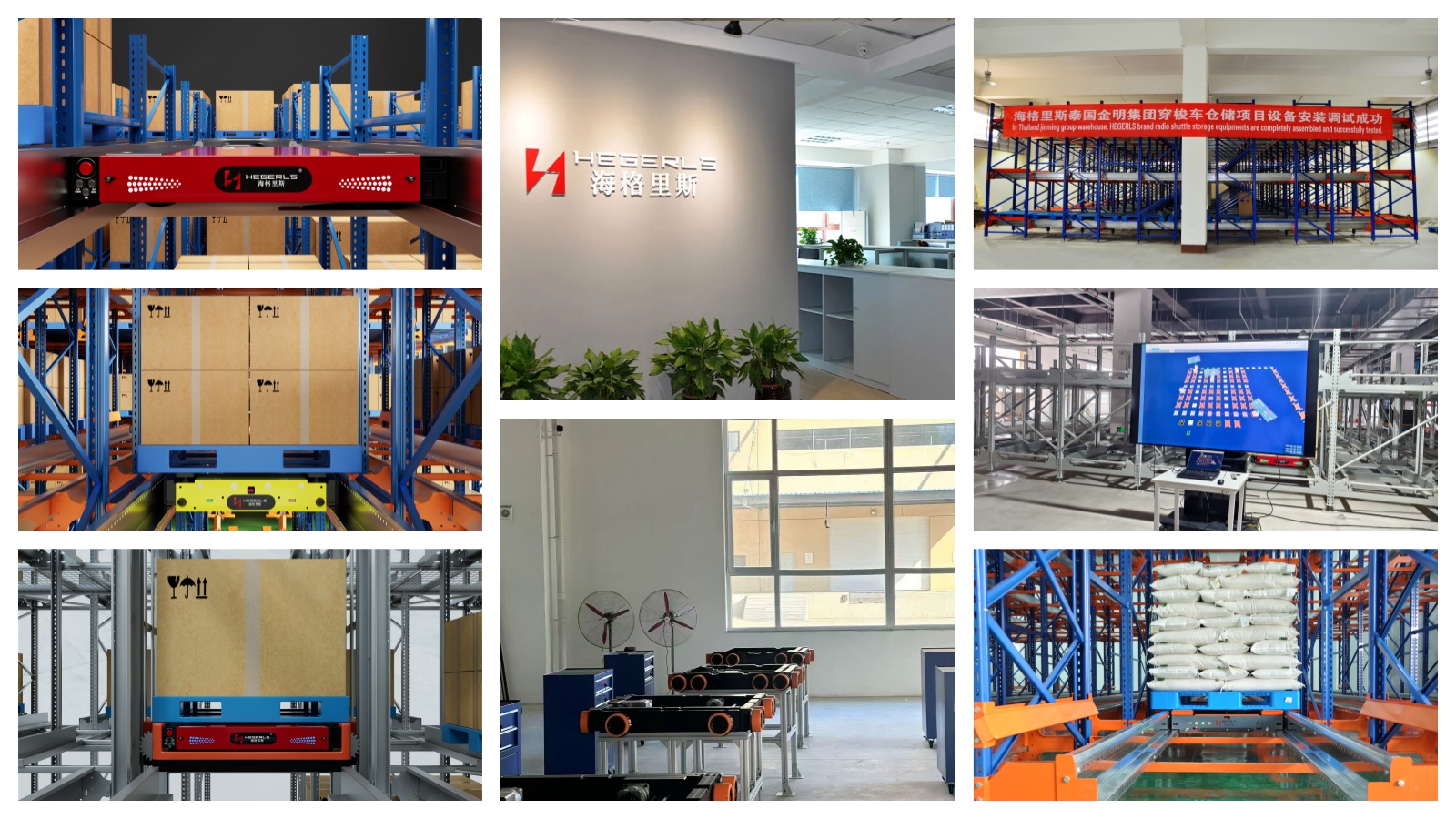
Zhuku's four-way shuttle technology is designed to support high-density storage, flexible warehouse layouts, intelligent equipment coordination, and automated pallet handling.
From warehouse planning and system design to equipment manufacturing, software integration, installation, and commissioning, Zhuku provides an integrated approach to warehouse automation projects.
Conclusion
A four-way shuttle system is more than an automated storage vehicle. It is an integrated warehouse automation solution that combines high-density racking, autonomous shuttle vehicles, lifts, conveyors, WMS, and WCS to create an efficient automated storage and retrieval environment.
Its multi-directional movement capability provides greater flexibility than conventional fixed-path shuttle solutions, making it suitable for high-density pallet storage, manufacturing, logistics, distribution, food and beverage, cold chain, and other demanding warehouse applications.
As warehouses move toward higher levels of automation and intelligence, four-way shuttle technology can work together with AI, WMS, WCS, ASRS, and warehouse robotics to create scalable and data-driven smart warehouses.
For companies evaluating four-way shuttle automation, the most important consideration is not simply the shuttle vehicle itself, but how the entire system is designed around storage capacity, throughput, software integration, warehouse layout, and future expansion requirements.