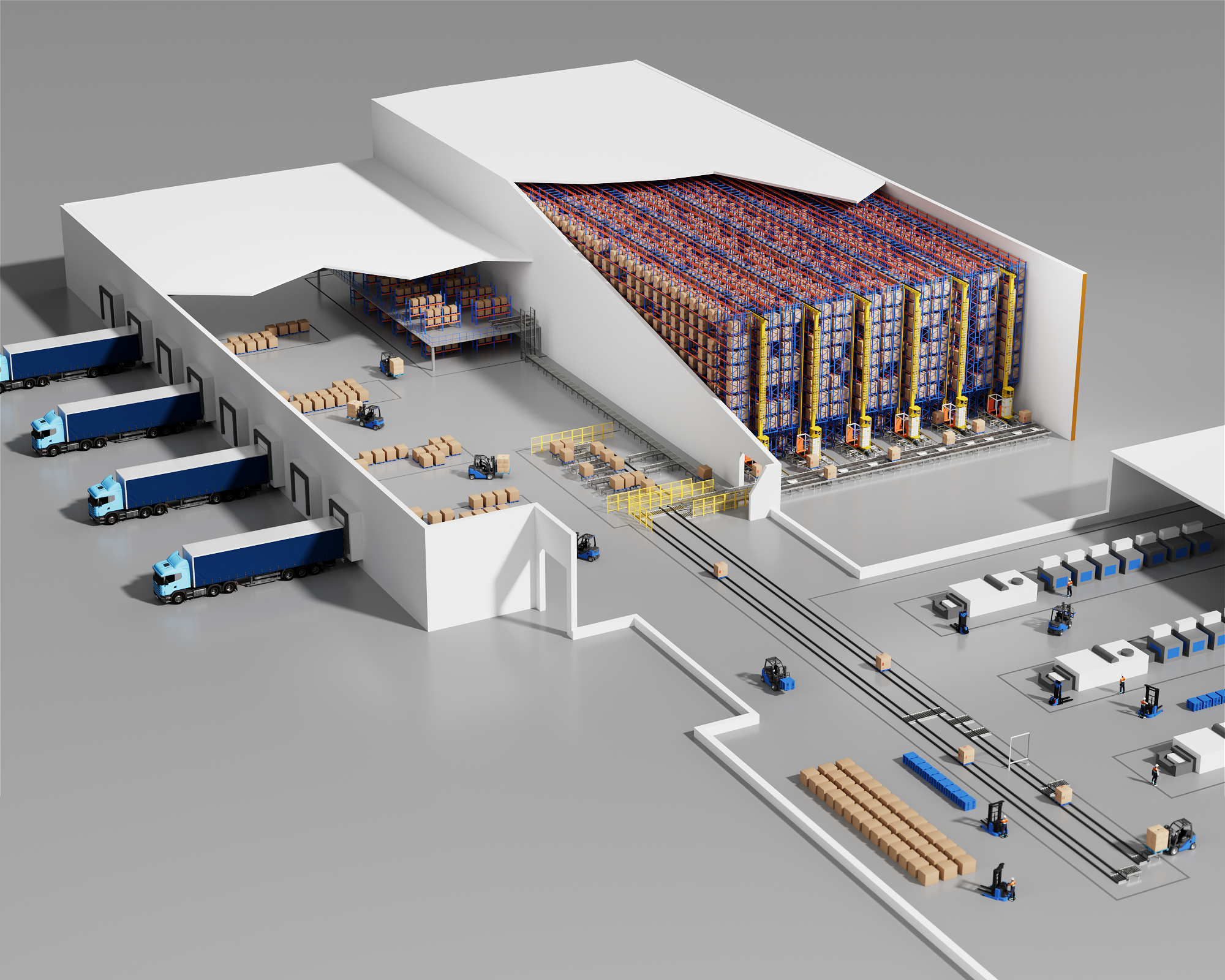
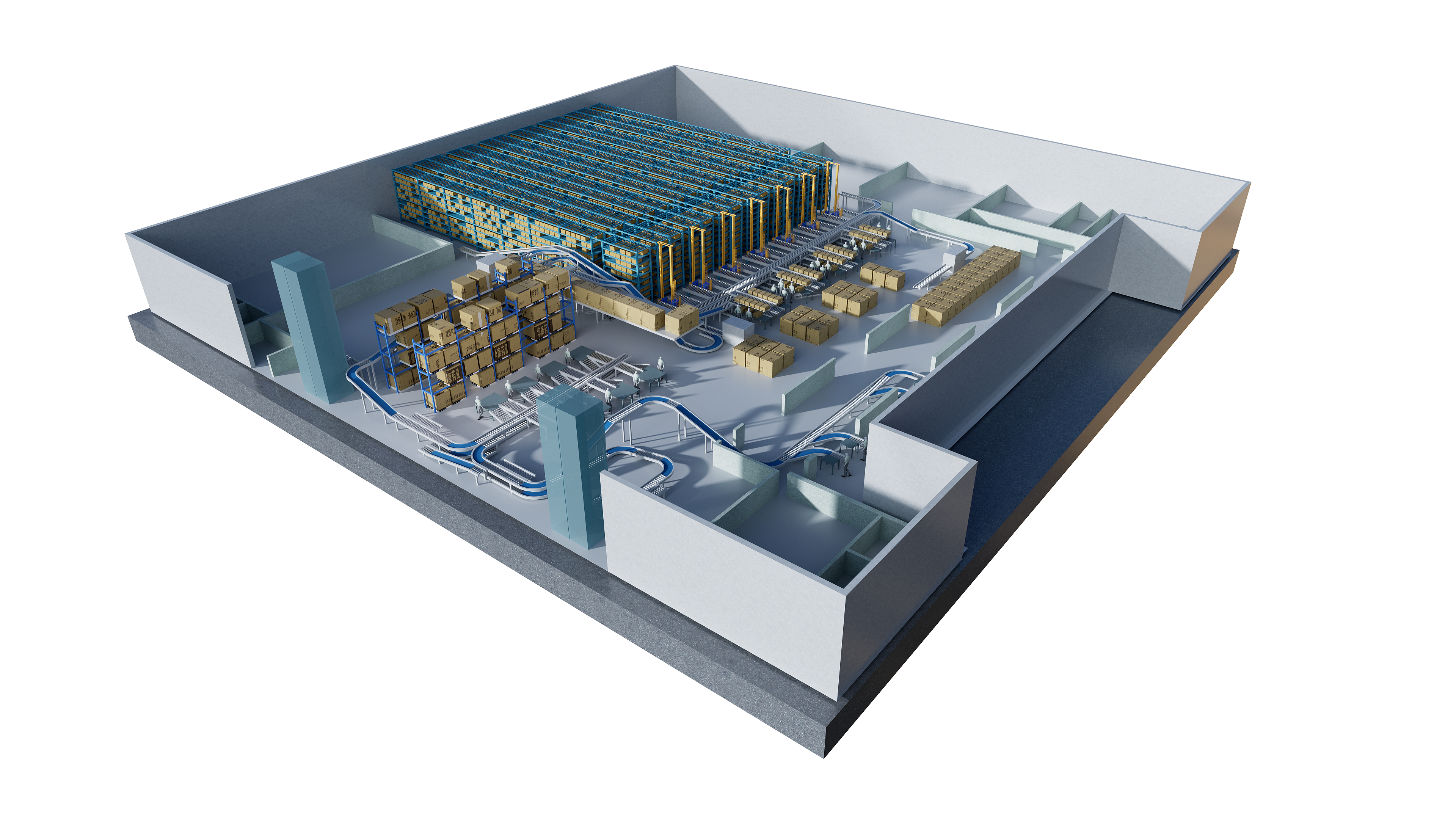
When planning a high-density or automated warehouse, you may encounter the terms rack-clad warehouse, rack-supported warehouse, and rack-clad building. These terms are closely related, but they can emphasize different aspects of the warehouse structure.
A rack-supported warehouse emphasizes the structural role of the storage rack, while a rack-clad warehouse generally emphasizes the integration of the rack structure with the roof and wall cladding. In many projects, the two terms may describe essentially the same integrated warehouse concept.
Understanding the terminology is important when evaluating high-bay warehouses, ASRS warehouses, automated storage systems, and large-scale logistics facilities.
What Is a Rack-Supported Warehouse?
A rack-supported warehouse is a warehouse in which the storage rack structure forms a major part of the building's load-bearing system.
Unlike a conventional warehouse, where the building structure and storage racks are independent, a rack-supported warehouse integrates the two into a coordinated structural system.
The rack structure may support:
- Stored pallet loads
- Roof structure
- Wall cladding
- Wind loads
- Snow loads where applicable
- Seismic loads
- Equipment-related loads
- Other project-specific structural loads
The basic concept can be represented as:
Storage Rack + Building Structure + Storage Loads + Equipment = Integrated System
Rack-supported warehouses are particularly common in high-bay storage, automated warehouses, cold storage, and ASRS projects.
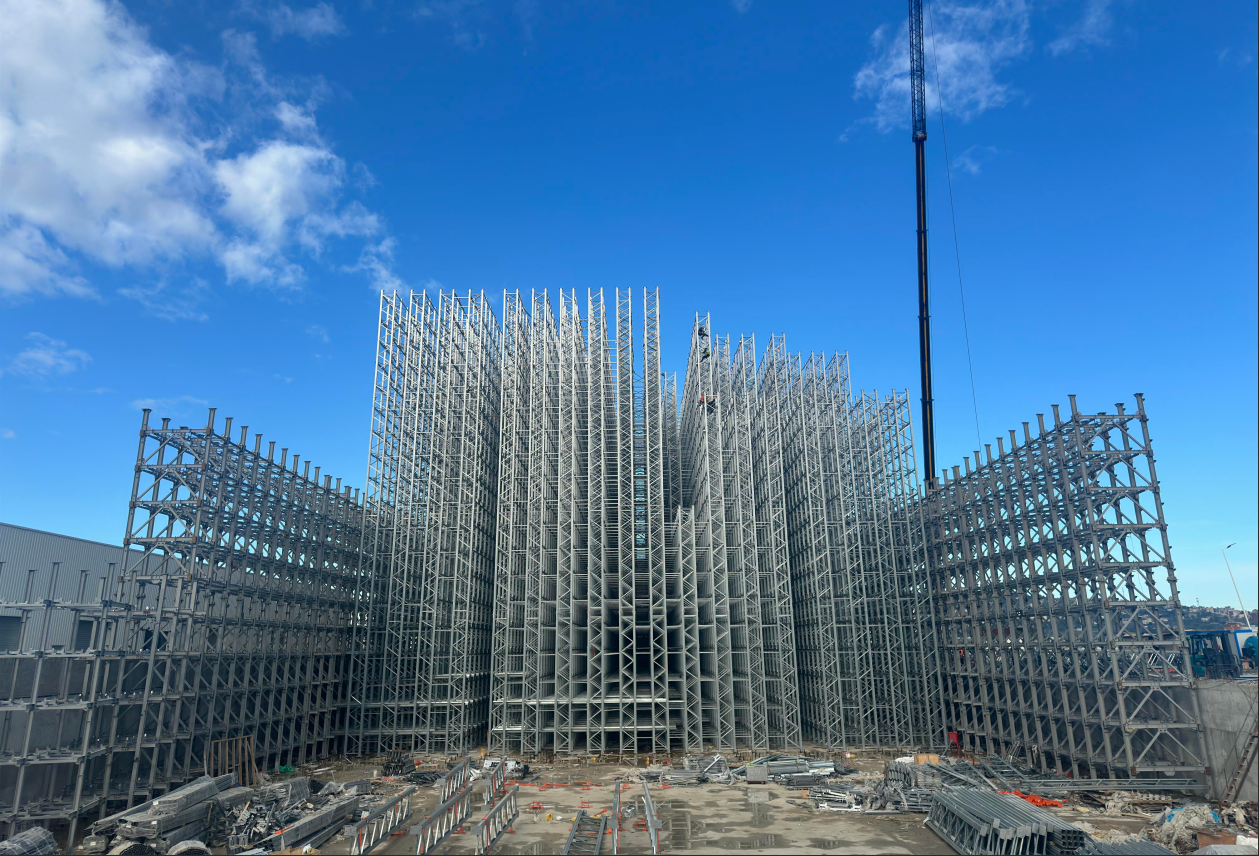
What Is a Rack-Clad Warehouse?
A rack-clad warehouse is an integrated warehouse in which the roof and wall cladding are constructed around or attached to a rack-supported structural framework.
The term rack-clad focuses more on the relationship between the structural rack system and the building envelope.
A typical rack-clad warehouse may include:
- Rack uprights
- Rack beams
- Bracing systems
- Roof structure
- Wall panels
- Insulation
- Doors and access systems
- Fire protection systems
- Automated storage equipment
Instead of constructing a complete independent building and then installing the racks inside, the rack system and building enclosure are developed as an integrated project.
Rack-Clad Warehouse vs. Rack-Supported Warehouse
The two terms are often used interchangeably, but their emphasis can be different.
| Feature | Rack-Supported Warehouse | Rack-Clad Warehouse |
| Main emphasis | Structural role of the rack | Integration of rack and building envelope |
| Rack structure | Major load-bearing structure | Main supporting framework |
| Roof | Supported by rack structure | Integrated with rack structure |
| Wall system | Connected to/integrated with rack structure | Cladding attached to rack framework |
| Storage function | Integrated with building structure | Integrated with building structure |
| Typical application | High-bay and automated warehouses | High-bay and integrated warehouse buildings |
| ASRS compatibility | Yes | Yes |
| Shuttle compatibility | Yes | Yes |
| Cold storage | Suitable | Suitable |
| Structural design | Rack + building system | Rack + building + cladding system |
The Simple Difference
A useful way to understand the distinction is:
Rack-supported describes what performs the structural supporting function, while rack-clad describes how the warehouse enclosure is integrated with the rack structure.
However, terminology varies between markets and engineering specifications, so the actual structural arrangement should always be confirmed in the project design documents.
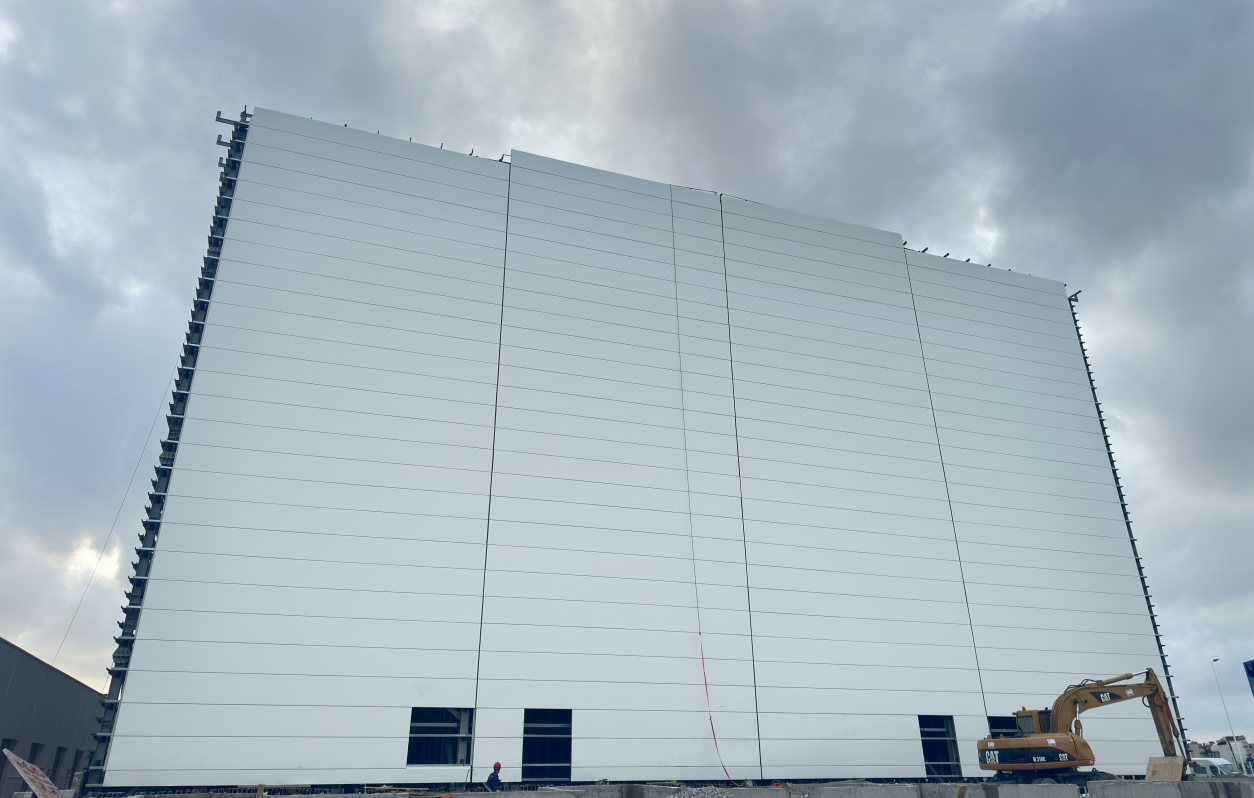
Are Rack-Clad and Rack-Supported Warehouses the Same?
Not necessarily in every engineering context, but they are often closely related.
A rack-supported warehouse can be described as rack-clad when its roof and wall cladding are directly integrated with the rack-supported structure.
Similarly, a project may be marketed as a rack-supported building even though its design documentation focuses on the rack-clad construction method.
Therefore, when comparing suppliers or warehouse solutions, it is better to examine:
- Structural load paths
- Rack configuration
- Building structure
- Foundation connections
- Roof and wall systems
- Equipment loads
- Applicable design standards
rather than relying only on the project name.
Rack-Clad vs. Rack-Supported vs. Conventional Warehouse
The difference becomes clearer when three warehouse concepts are compared.
| Factor | Conventional Warehouse | Rack-Supported Warehouse | Rack-Clad Warehouse |
| Building structure | Independent | Integrated with rack | Integrated with rack |
| Storage racks | Installed inside building | Part of structural system | Part of structural system |
| Roof support | Building structure | Rack structure | Rack structure |
| Wall cladding | Independent building system | Integrated | Integrated with rack framework |
| Storage density | Moderate to high | High | High |
| Construction concept | Building first, racks later | Integrated design | Integrated design |
| ASRS integration | Possible | Highly suitable | Highly suitable |
| High-bay application | Possible | Excellent | Excellent |
How Does a Conventional Warehouse Work?
A conventional warehouse generally follows:
Building Construction
↓
Storage Rack Installation
↓
Automation Equipment Installation
The warehouse building provides its own structural framework.
The storage racks are installed inside the completed or partially completed building and primarily support the stored goods.
This approach provides flexibility and is suitable for many general-purpose warehouses.
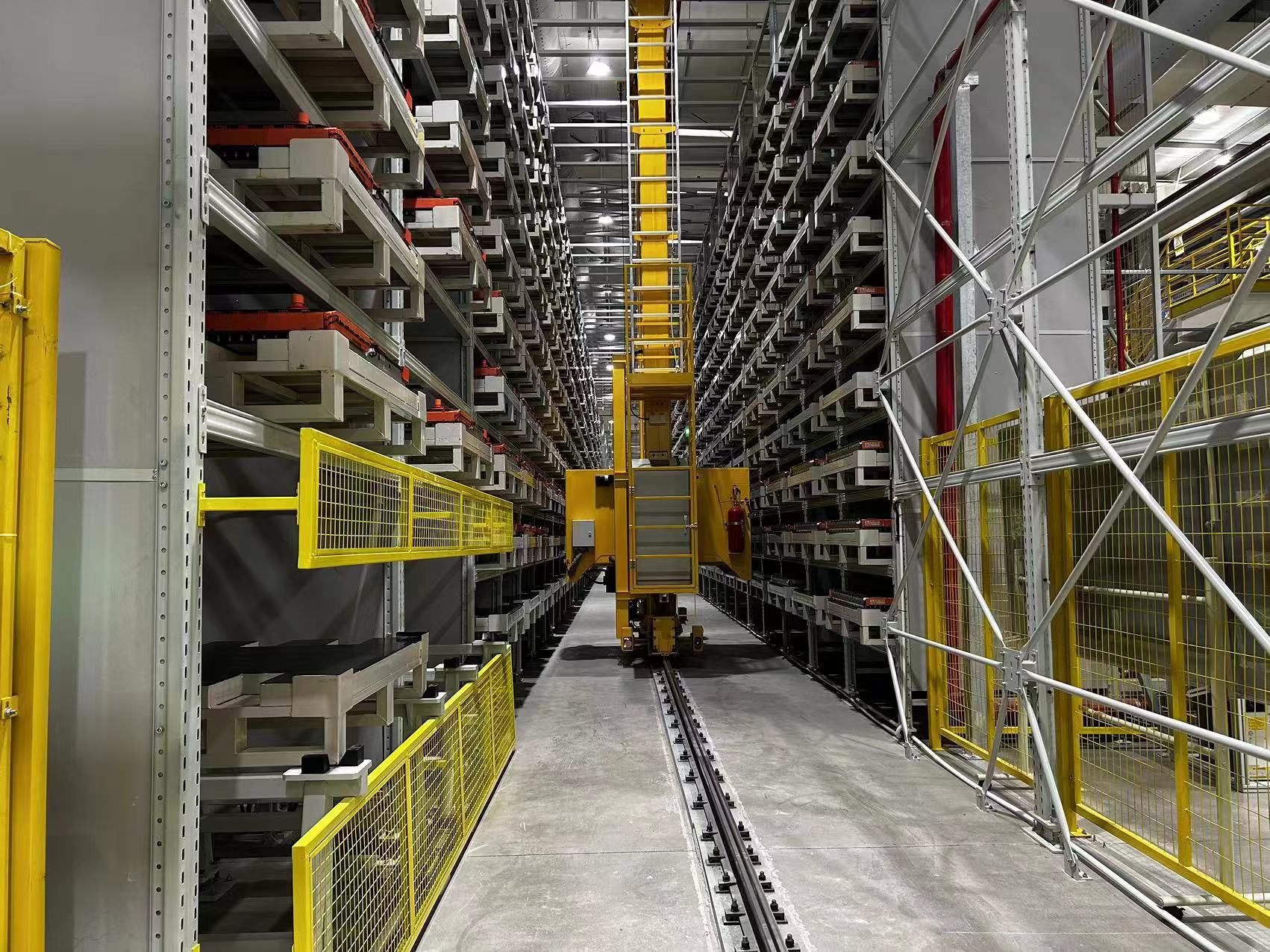
How Does a Rack-Supported Warehouse Work?
The design process is more integrated:
Warehouse Planning
↓
Rack + Structural Design
↓
Foundation + Rack Construction
↓
Roof & Wall Installation
↓
Automation Equipment
↓
WMS/WCS Integration
The rack structure performs both storage and structural functions.
This approach is particularly valuable for very high warehouses where constructing a separate building structure could require significant structural materials and space.
What Are the Advantages of Rack-Clad and Rack-Supported Warehouses?
Higher Storage DensityThe warehouse can be designed around the storage system rather than fitting the storage system into an existing building. This allows optimization of:
|
Better Vertical Space UtilizationRack-supported construction is particularly suitable for high-bay warehouses. The available vertical volume can be used more effectively for pallet storage, especially when integrated with:
|
Potentially Reduced Construction DuplicationBecause the rack structure also performs a building-support function, some structural components required in a conventional warehouse may be reduced or eliminated. This can potentially improve overall project cost efficiency. However, actual project cost depends on:
|
Faster Overall Project IntegrationBuilding and storage systems can be planned together from the beginning. This may reduce coordination problems between independent building and racking contractors and allow automation requirements to be considered earlier. |
What Are the Design Requirements?
Rack-supported and rack-clad warehouses require more comprehensive engineering than conventional storage racking.
The structural design may need to consider:
- Storage loads
- Dead loads
- Wind loads
- Snow loads
- Seismic loads
- Roof maintenance loads
- Stacker crane loads
- Conveyor loads
- Shuttle equipment loads
- Other dynamic loads
The exact load combinations depend on the warehouse location, building design, equipment, and applicable standards.
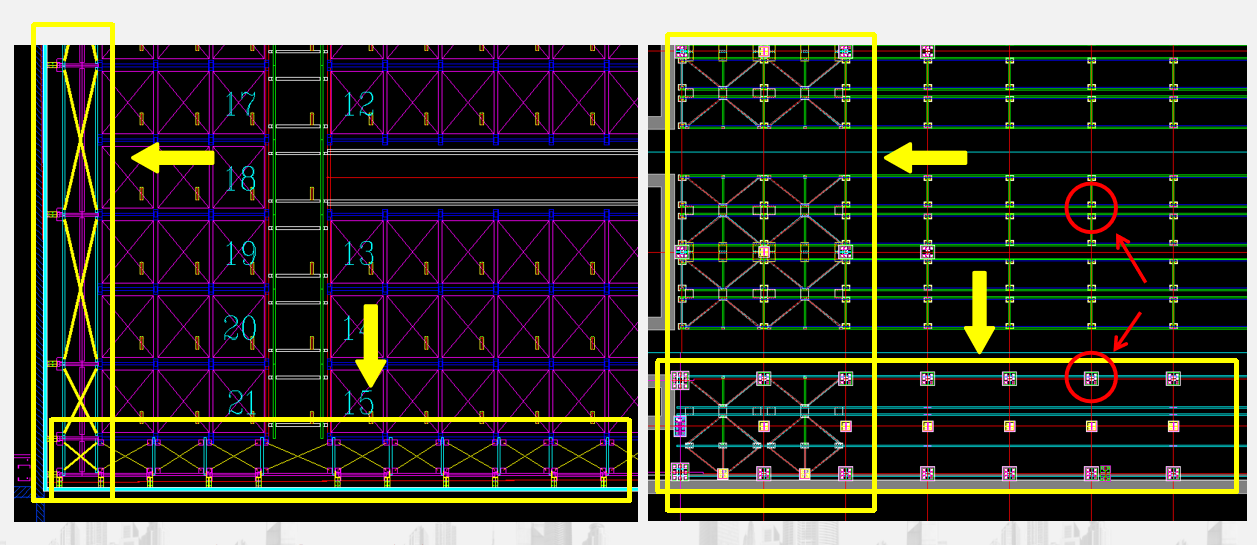
Why Is Structural Coordination Important?
A rack-supported warehouse is not simply a larger version of conventional pallet racking.
The project should be approached as a complete structural system.
Rack Engineering
Rack geometry, pallet loads, deformation requirements, and stability need to be determined.
Structural Engineering
Building loads, environmental loads, connections, foundation conditions, and structural stability must be evaluated.
Automation Engineering
Equipment such as stacker cranes, shuttles, lifts, and conveyors may have specific structural and alignment requirements.
Construction Engineering
Installation tolerances, construction sequence, foundation settlement, and long-term structural performance need to be considered.
Fire Protection
Fire protection systems and emergency access should be incorporated into the warehouse design from the beginning.
How Does ASRS Fit Into a Rack-Clad Warehouse?
A rack-clad warehouse can be designed as an automated storage warehouse from the beginning.
For example:
ERP / MES
↓
CC-WMS
↓
YUNTU-WCS
↓
Stacker Crane / Four-Way Shuttle / Pallet Shuttle
↓
Conveyor & Lift System
↓
Automated Storage and Retrieval
This integrated approach allows the building structure, storage racks, automation equipment, and warehouse software to work together.
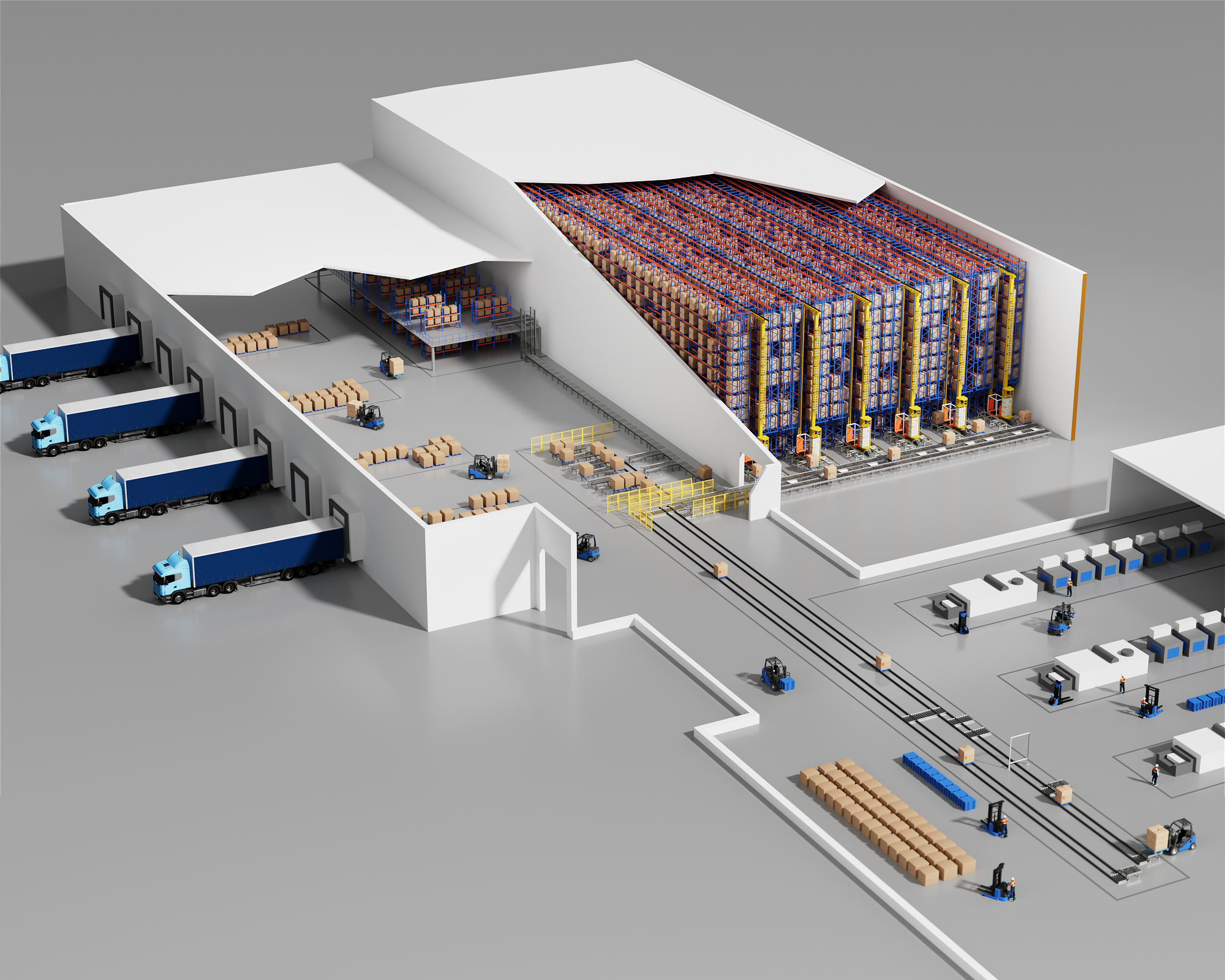
Rack-Clad Warehouse with Stacker Crane ASRS
A stacker crane ASRS is particularly suitable for high-bay rack-supported warehouses.
The stacker crane operates within a dedicated rack aisle and automatically performs pallet storage and retrieval.
The system can provide:
- High vertical storage
- Automated pallet handling
- Accurate storage location management
- Reduced forklift dependency
- Integration with WMS and WCS
Structural design must account for the requirements of the selected stacker crane, including rail installation, equipment loads, alignment, and foundation conditions.
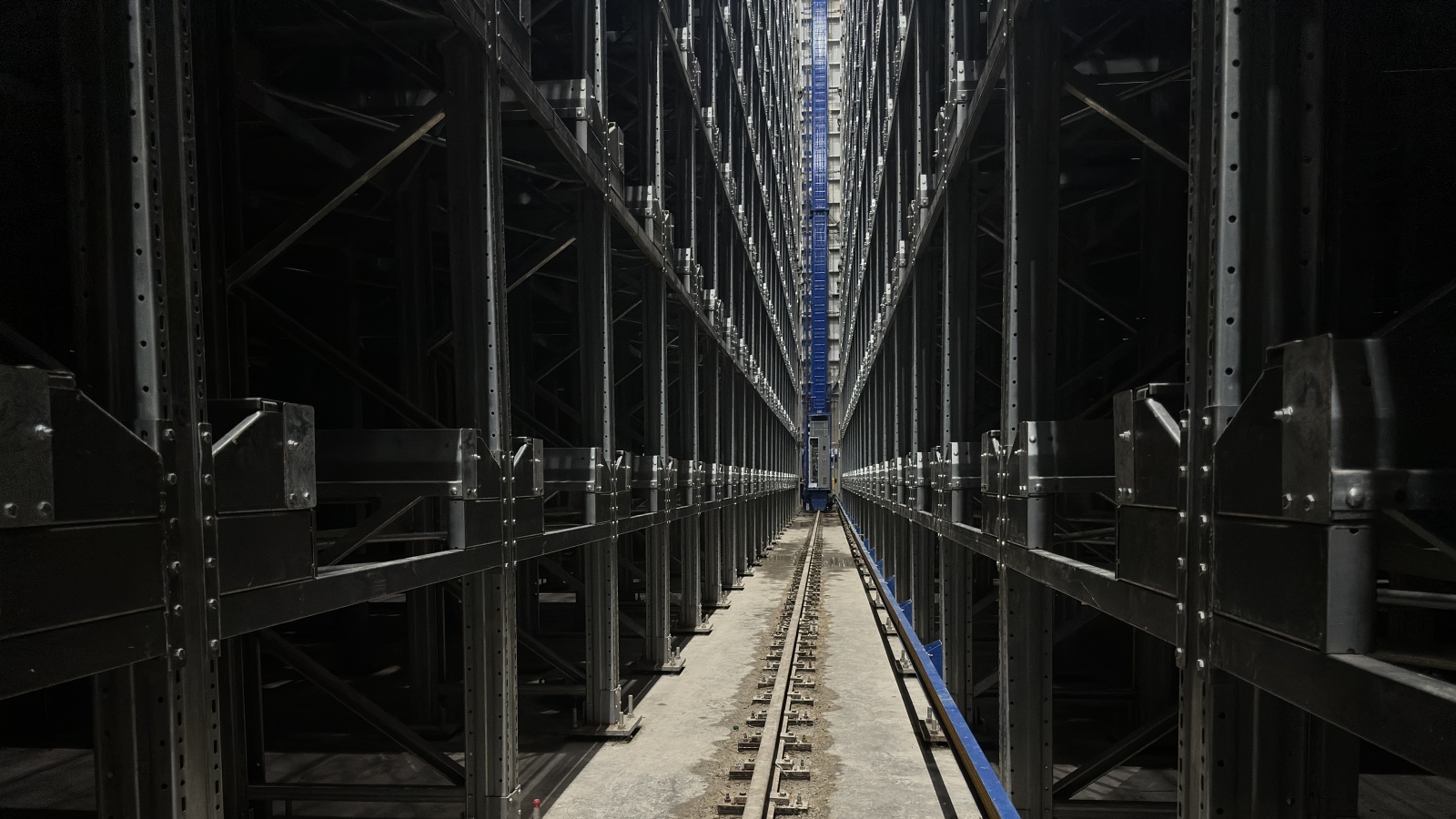
Rack-Clad Warehouse with Four-Way Shuttle
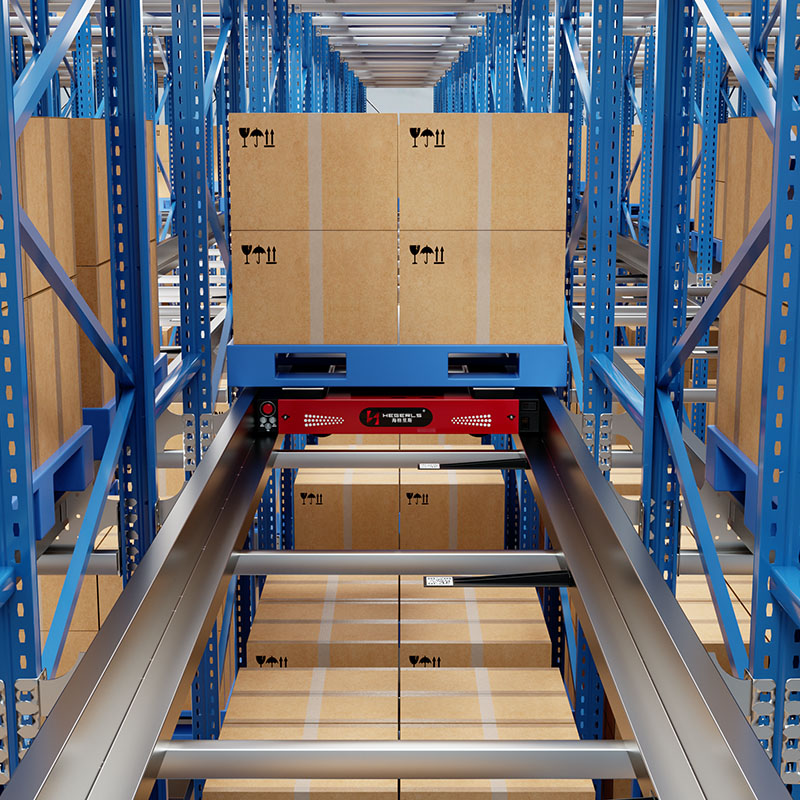
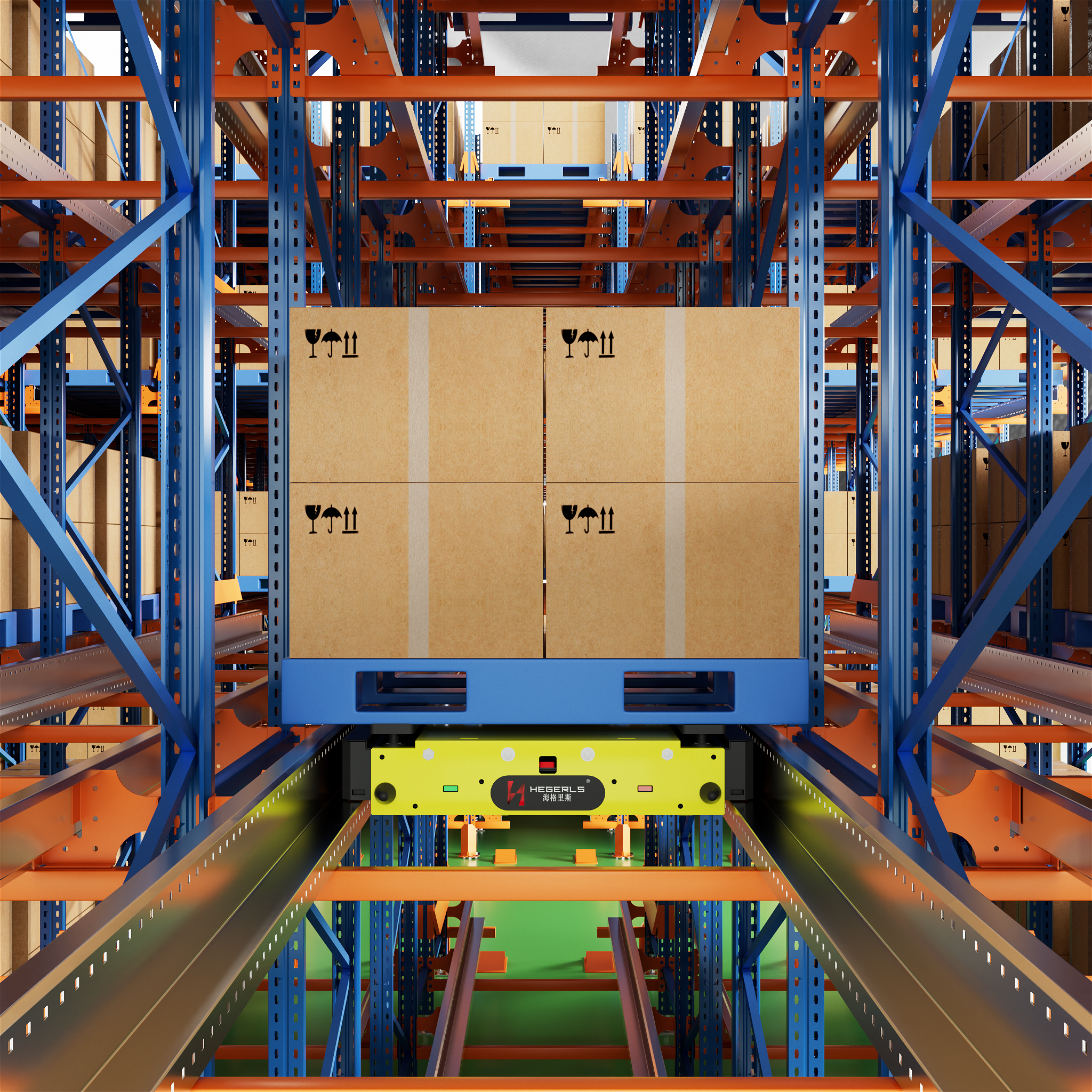
A four-way shuttle system can also be integrated with rack-supported structures.
The shuttle can move in multiple directions within the storage system, supporting deep-lane pallet storage and flexible automated material handling.
A typical system may combine:
- Four-way shuttle
- Shuttle lift
- Pallet conveyor
- High-density racking
- WMS
- WCS
This configuration is particularly suitable for warehouses where high storage density and flexible pallet movement are important.
Are Rack-Clad Warehouses Suitable for Cold Storage?
Yes.
Rack-clad construction can be particularly attractive for cold chain and frozen storage, where the cost of warehouse volume is high.
An automated cold storage warehouse can integrate:
- Rack-supported structure
- Insulated wall panels
- Refrigeration system
- ASRS
- Four-way shuttle
- Pallet conveyor
- WMS/WCS
By using vertical and deep storage, the system can maximize pallet capacity within a controlled-temperature environment.
What Industries Use Rack-Clad Warehouses?
Rack-clad and rack-supported warehouses can be used across many industries.
Food & BeverageHigh-density pallet storage for finished products and ingredients. |
Cold ChainFrozen and refrigerated distribution centers requiring high space utilization. |
ManufacturingRaw materials, components, work-in-process inventory, and finished goods. |
AutomotiveAutomotive parts and production materials. |
E-CommerceAutomated distribution and pallet buffer storage. |
3PL & LogisticsHigh-density storage for multiple customers and inventory profiles. |
Industrial MaterialsHeavy or palletized products requiring large storage capacities. |
Pharmaceuticals & HealthcareRack-clad warehouses can support high-density storage of pharmaceutical products, medical supplies, and temperature-sensitive goods. |
Real-world rack-supported warehouse case
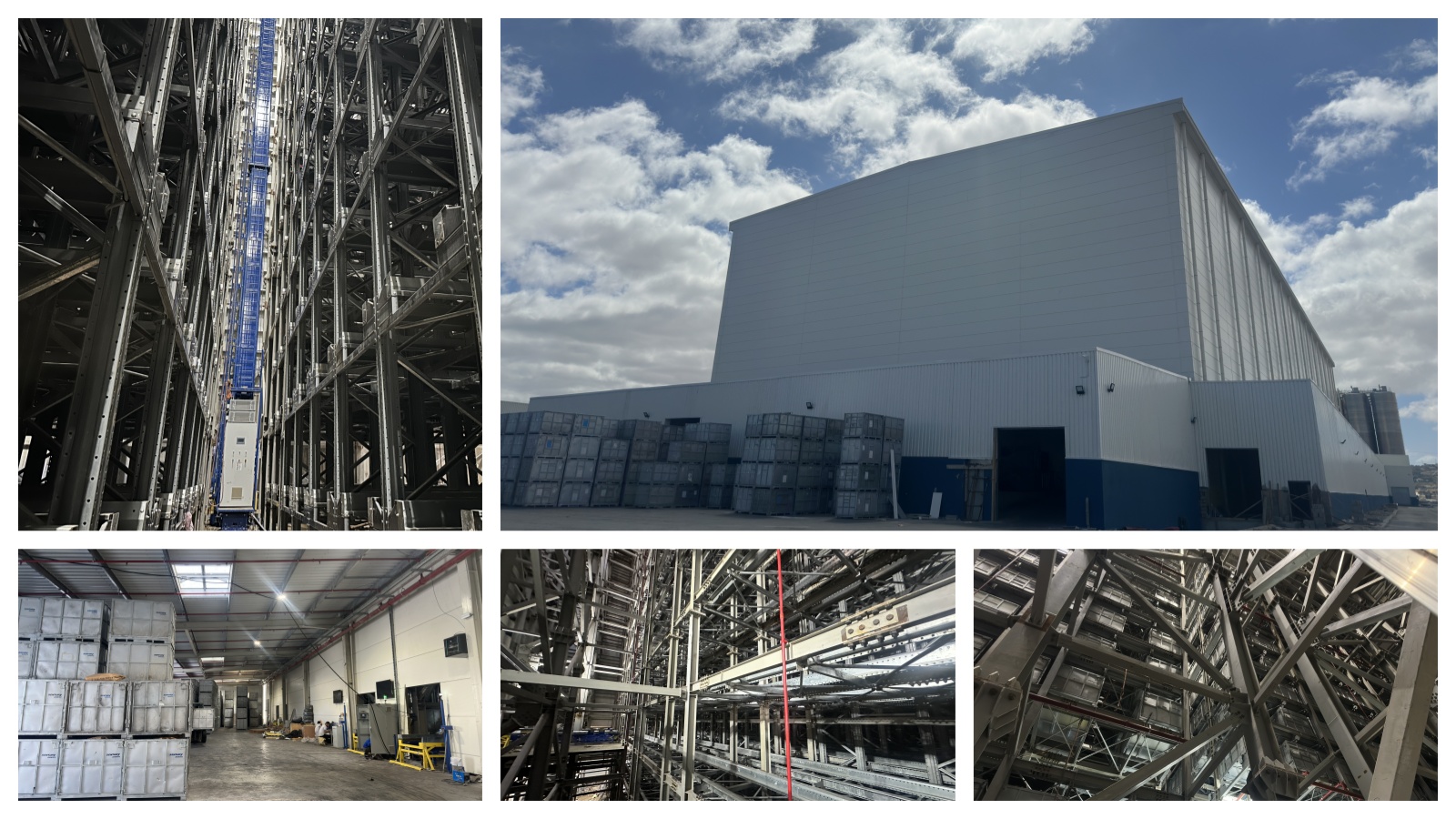
How Do You Choose Between a Conventional and Clad Rack Warehouse?
A rack-supported or rack-clad solution may be worth considering when:
- High storage capacity is required
- Available land is limited
- High-bay storage is planned
- ASRS or shuttle automation is required
- The warehouse is being newly constructed
- Vertical space can be maximized
- Long-term storage demand is relatively predictable
A conventional warehouse may be more suitable when:
- Frequent layout changes are expected
- Low or medium storage height is sufficient
- Direct pallet accessibility is a priority
- The building already exists
- Independent building and rack systems are preferred
What Should You Ask a Rack-Supported Warehouse Supplier?
Before selecting a supplier, consider asking:
- Who is responsible for structural design?
- How are storage and building loads calculated?
- How are rack-to-foundation connections designed?
- How are wind and seismic loads considered?
- How are automation equipment loads integrated?
- Which design standards are applied?
- How are construction tolerances controlled?
- Can WMS and WCS be integrated with the automation system?
- Can the supplier provide complete engineering and installation?
- Can the system be customized for future expansion?
These questions help distinguish a simple racking supplier from an integrated warehouse engineering and automation provider.
Rack-Clad Warehouse vs. Rack-Supported Warehouse: Which Is Better?
There is no universal answer.
In many cases, the two terms describe closely related integrated warehouse concepts rather than two competing technologies.
The right solution depends on:
- Warehouse dimensions
- Storage capacity
- Pallet specifications
- Building height
- Throughput
- SKU profile
- Automation requirements
- Climate
- Fire protection
- Wind and seismic conditions
- Foundation conditions
- Local building regulations
The objective should be to select the most appropriate integrated warehouse system, not simply the terminology that sounds more advanced.
Why Choose Zhuku for Rack-Clad or Rack-Supported Warehouse Solutions?
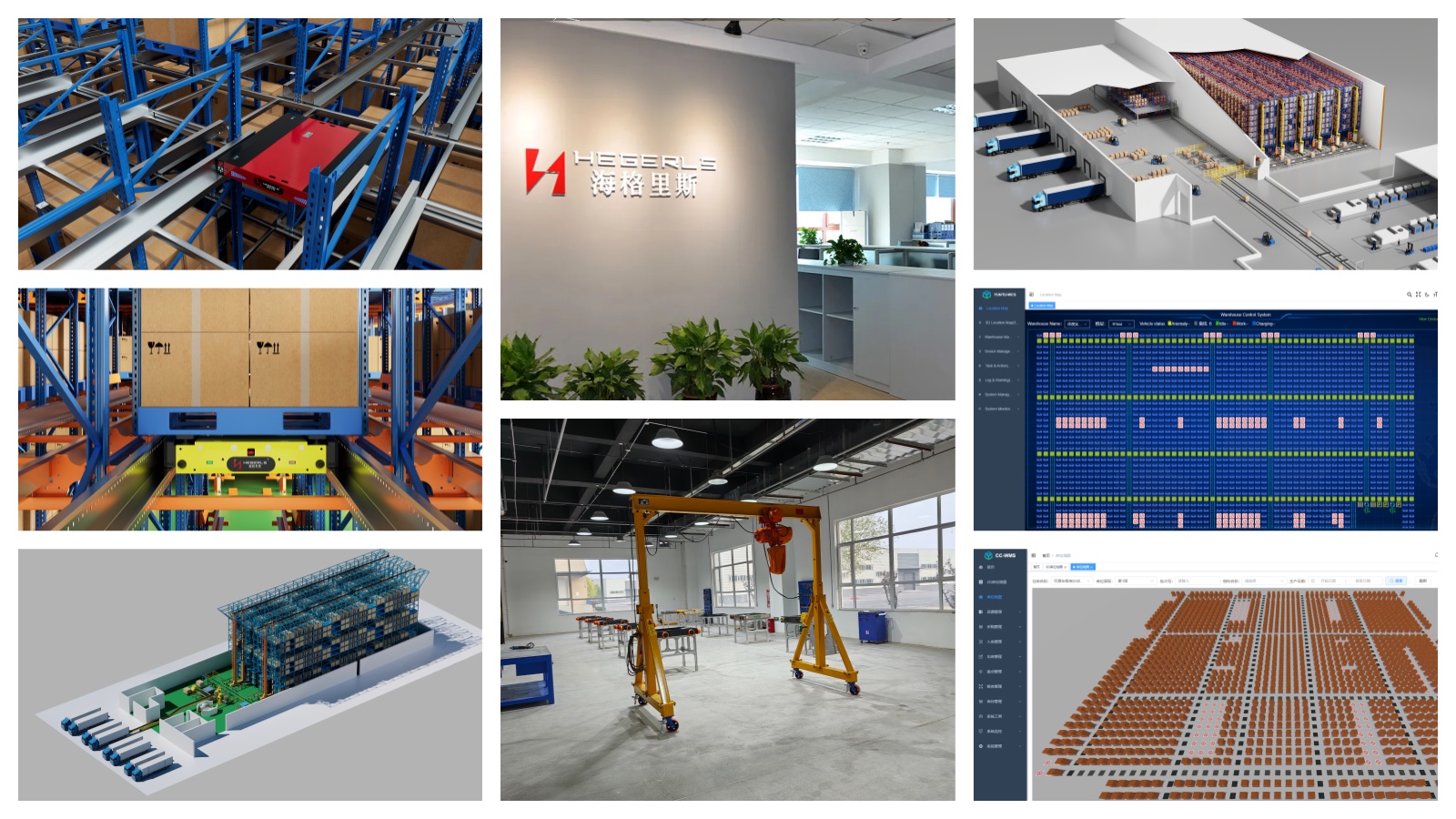
Zhuku provides integrated rack-supported warehouse, rack-clad warehouse, high-bay storage, and warehouse automation solutions.
Our capabilities include:
- Rack-supported warehouse
- Rack-clad warehouse
- High-bay racking
- ASRS
- Stacker crane
- Four-way shuttle
- Pallet shuttle
- Shuttle lift
- Automated conveyor
- CC-WMS
- YUNTU-WCS
By combining storage engineering, structural coordination, warehouse automation, and intelligent warehouse software, Zhuku can develop solutions based on each project's storage capacity, warehouse dimensions, throughput, pallet specifications, and automation requirements.
From initial planning and system design to equipment manufacturing, installation, software integration, and commissioning, the goal is to create a safe, high-density, automated, and operationally efficient warehouse.
Conclusion
The distinction between a rack-clad warehouse and a rack-supported warehouse is primarily one of terminology and engineering emphasis.
A rack-supported warehouse focuses on the rack's role as a major structural component, while a rack-clad warehouse highlights the integration of the rack structure with the roof and wall enclosure.
Both concepts can support high-bay storage, ASRS, four-way shuttle systems, pallet shuttle systems, and intelligent warehouse automation.
For a successful project, the most important consideration is not the terminology but the integration of:
Rack Structure + Building + Foundation + Automation + WMS/WCS + Safety
When these elements are designed as one system, a rack-supported or rack-clad warehouse can provide high storage density, efficient vertical space utilization, and a strong foundation for modern automated warehousing.
Planning a Rack-Clad or Rack-Supported Warehouse?
Zhuku can help you evaluate the right structure and automation configuration based on your warehouse dimensions, pallet specifications, storage capacity, throughput, and automation requirements.