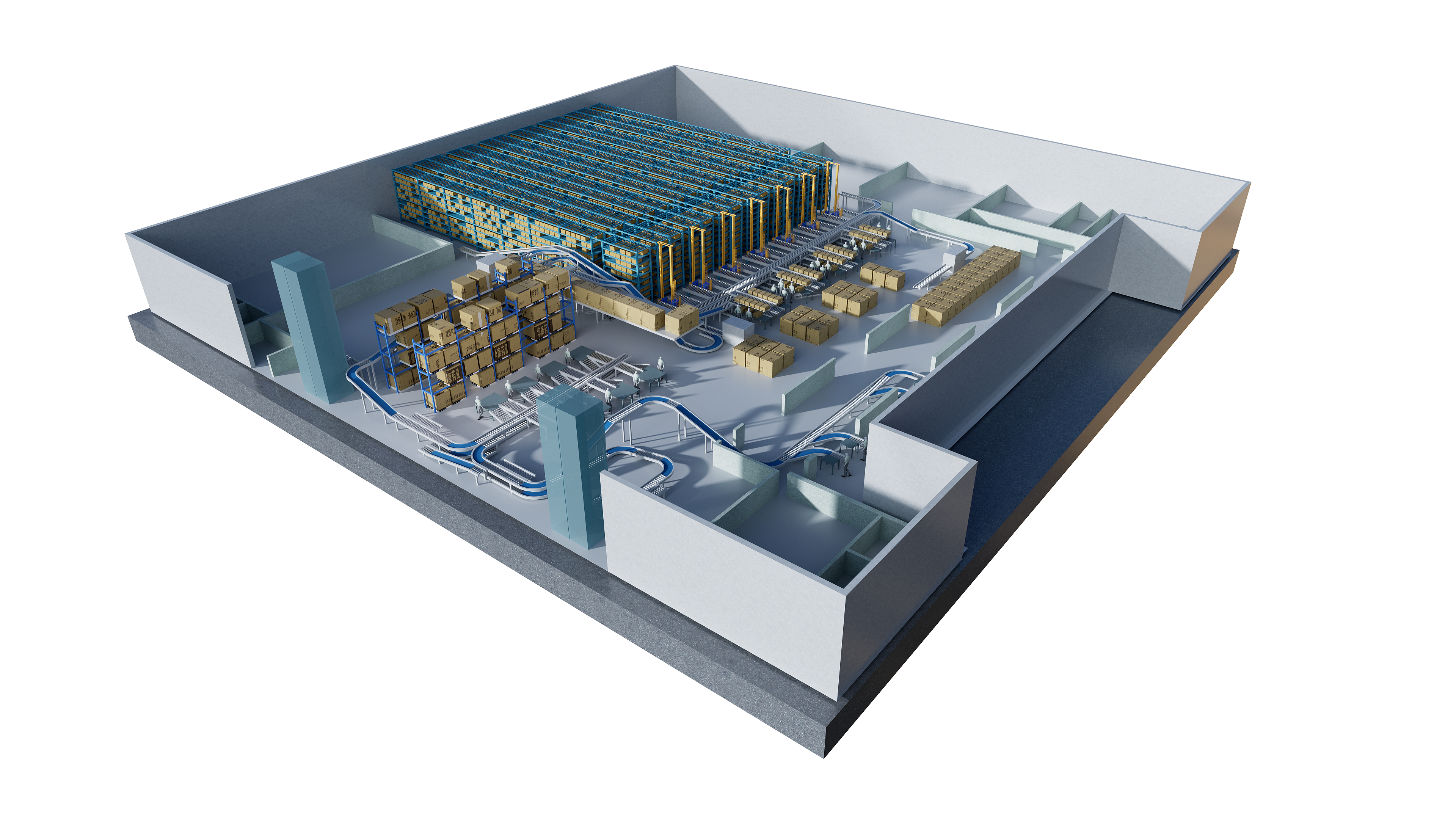
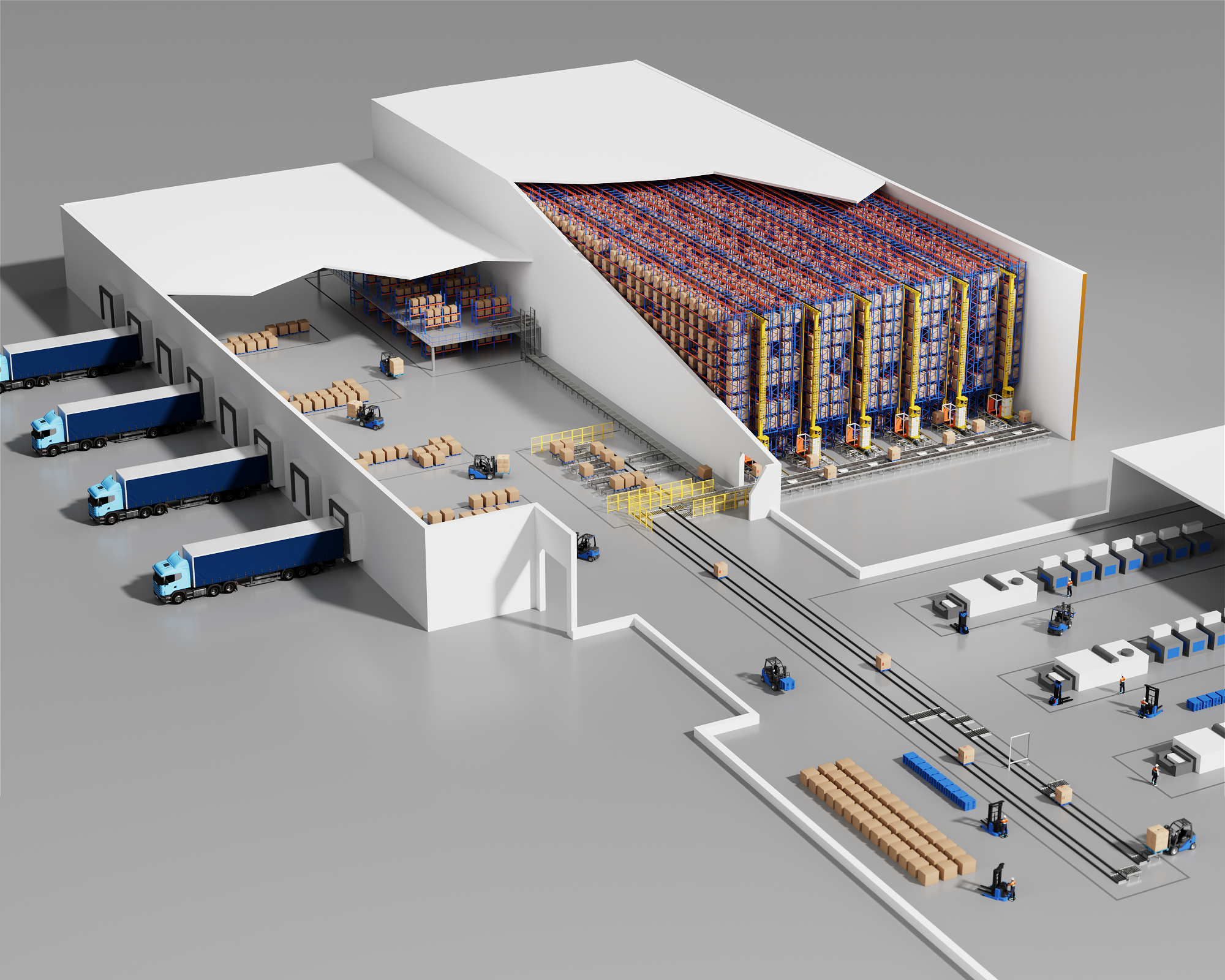
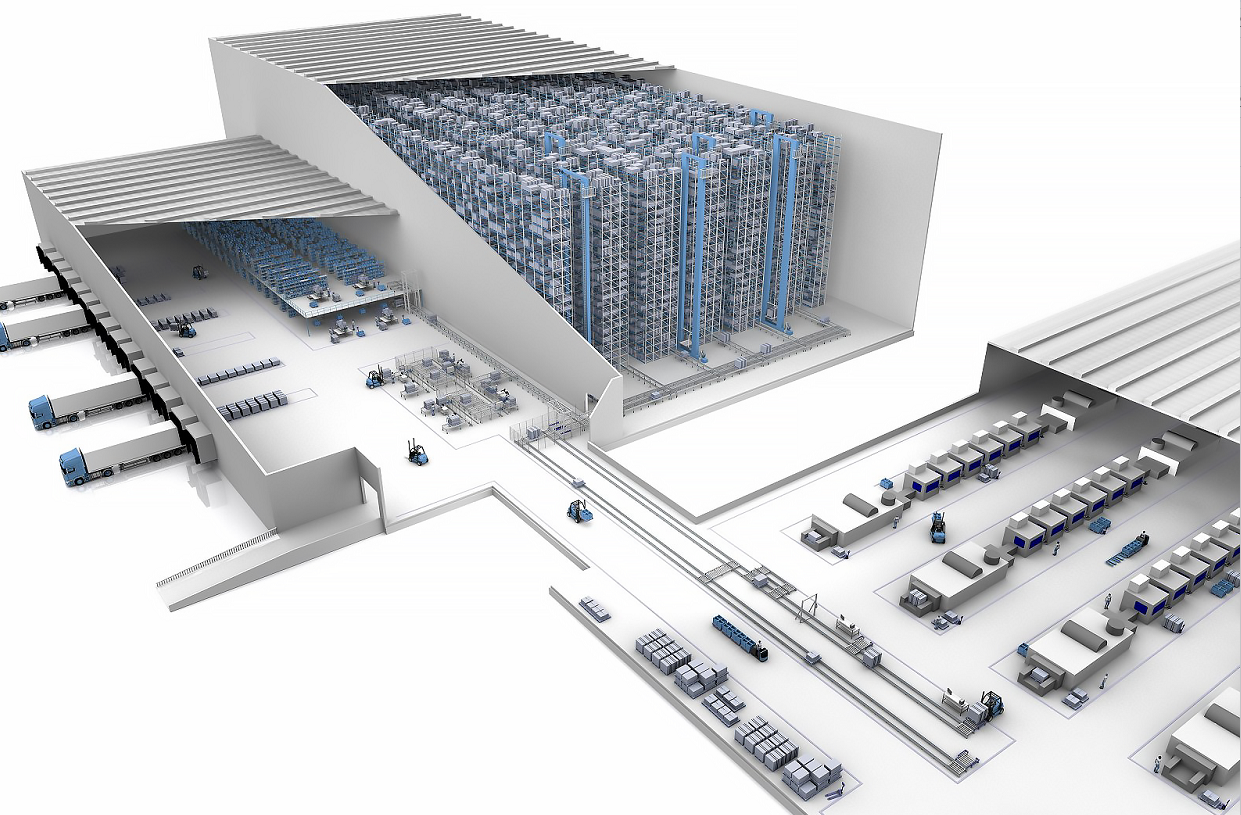
A high-bay warehouse is a warehouse designed with tall storage racks and a high clear height to maximize the use of vertical space. Compared with conventional warehouses, high-bay warehouses can store significantly more inventory within the same floor area by extending storage vertically.
Modern high-bay warehouses often combine high-bay racking, automated storage and retrieval systems (ASRS), stacker cranes, shuttle systems, conveyors, Warehouse Management Systems (WMS), and Warehouse Control Systems (WCS) to create high-density and highly automated storage environments.
High-bay storage is particularly suitable for manufacturing, distribution, e-commerce, food and beverage, cold chain, automotive, pharmaceutical, and third-party logistics (3PL) operations where storage capacity and throughput are important.
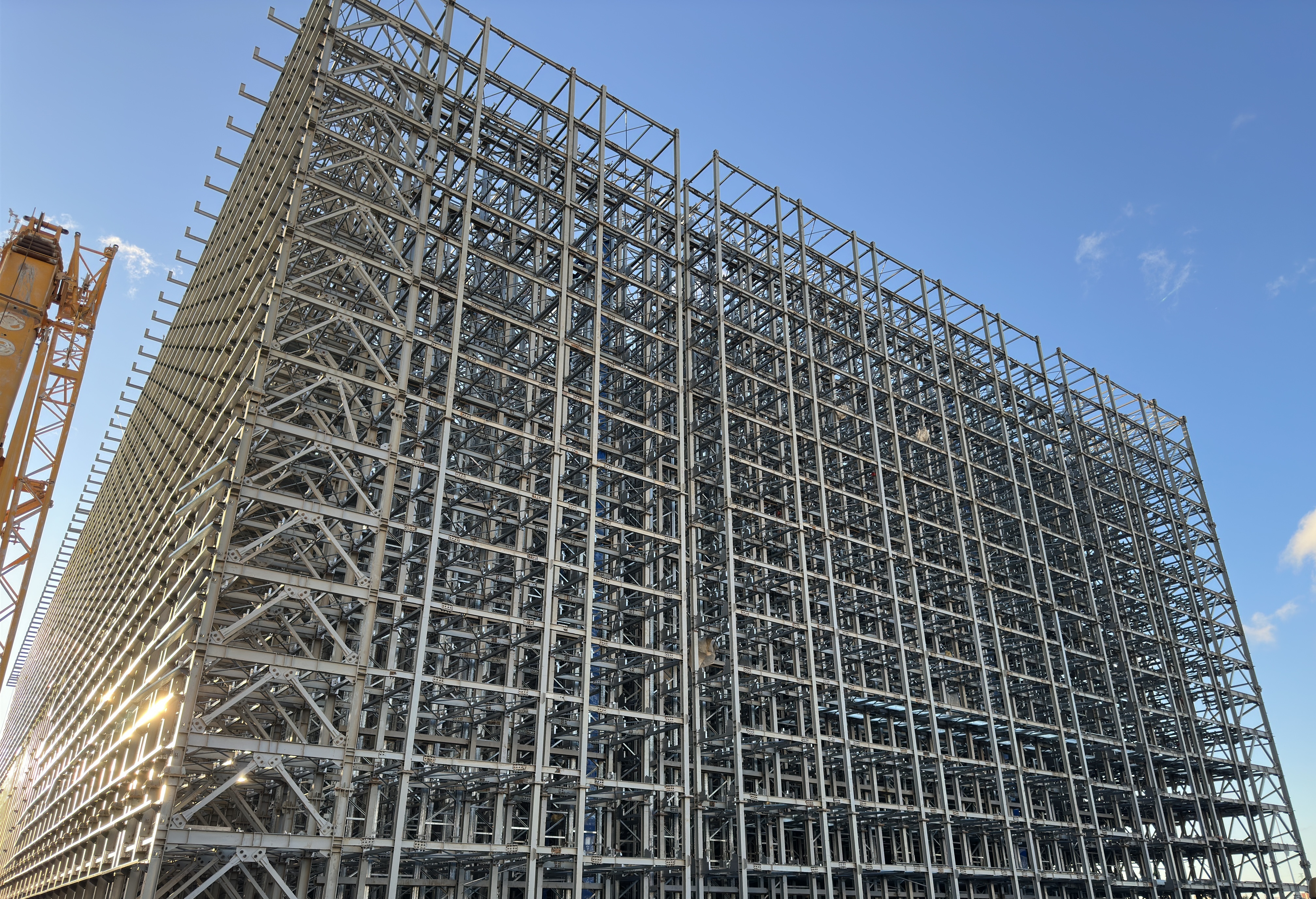
What Is a High-Bay Warehouse?
A high-bay warehouse is a storage facility that uses high-level racking systems to make greater use of the building's vertical space.
Unlike conventional warehouses where storage height may be limited by forklift reach and manual handling, high-bay warehouses are specifically designed around tall rack structures and appropriate material-handling equipment.
A high-bay warehouse may include:
- High-bay pallet racking
- Automated Storage and Retrieval Systems (ASRS)
- Stacker cranes
- Four-way shuttle systems
- Pallet shuttle systems
- Shuttle lifts
- Conveyors
- Automated guided vehicles (AGVs)
- Autonomous mobile robots (AMRs)
- WMS
- WCS
The exact configuration depends on warehouse height, pallet specifications, required storage capacity, throughput, and level of automation.
What Is Considered a High-Bay Warehouse?
There is no single global height threshold that defines a high-bay warehouse. In the industry, the term generally refers to warehouses where storage height is significantly greater than conventional pallet storage facilities.
In practice, high-bay warehouses commonly use rack structures reaching 15 m, 20 m, 30 m, 40 m, or even higher, depending on building design, fire protection, equipment technology, local regulations, and project requirements.
Therefore, “high-bay” should be understood as a warehouse design concept rather than a universally fixed height.
High-Bay vs. Conventional Warehouse
| Feature | High-Bay Warehouse | Conventional Warehouse |
| Storage height | High | Low to moderate |
| Vertical space utilization | Excellent | Moderate |
| Storage density | High | Moderate |
| Material handling | Forklift, crane, shuttle, ASRS | Mainly forklifts |
| Automation potential | High | Low to moderate |
| Floor-space efficiency | High | Moderate |
| Initial investment | Higher | Lower |
| Best suited for | High-volume/high-density storage | General storage |
How Does a High-Bay Warehouse Work?
The operating principle depends on whether the facility is manual, semi-automated, or fully automated.
A modern automated high-bay warehouse typically works through the following process:
1. InboundPallets arrive at the receiving area from production, suppliers, or external logistics operations. Barcode or RFID information can be captured and transferred to the warehouse management system. |
2. Inventory RegistrationThe Warehouse Management System (WMS) records product information, quantities, batch information, locations, and other inventory attributes. |
3. Storage Location AssignmentThe WMS determines where the pallet should be stored according to warehouse rules and inventory characteristics. Factors may include:
|
4. Automated TransportationThe WCS sends the required task to the appropriate automation equipment. Depending on the system, this may include:
|
5. High-Level StorageThe equipment transports the pallet to the assigned storage position and places it safely within the high-bay racking. |
6. Automated RetrievalWhen inventory is required, the WMS creates a retrieval task. The WCS coordinates the equipment to retrieve the pallet and deliver it to the designated outbound or picking station. This creates a closed-loop automated storage and retrieval process. |
What Equipment Does a High-Bay Warehouse Need?
A high-bay warehouse does not necessarily require complete automation. However, the greater the storage height, the more important appropriate material-handling equipment becomes.
1. High-Bay Pallet RackingHigh-bay racking forms the main storage structure. Depending on the application, it may use:
For automated systems, rack design must be coordinated with the selected equipment. | 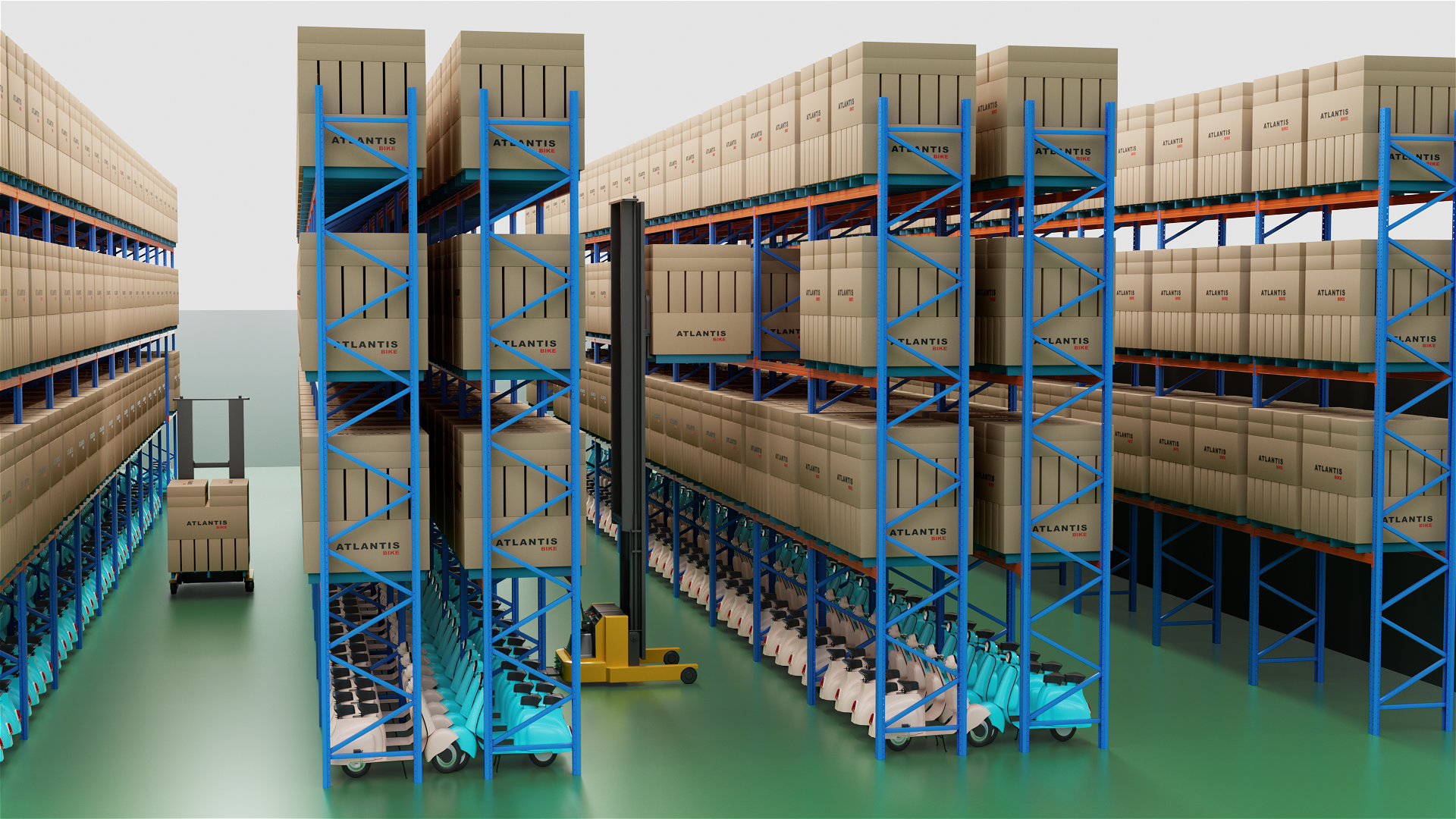 |
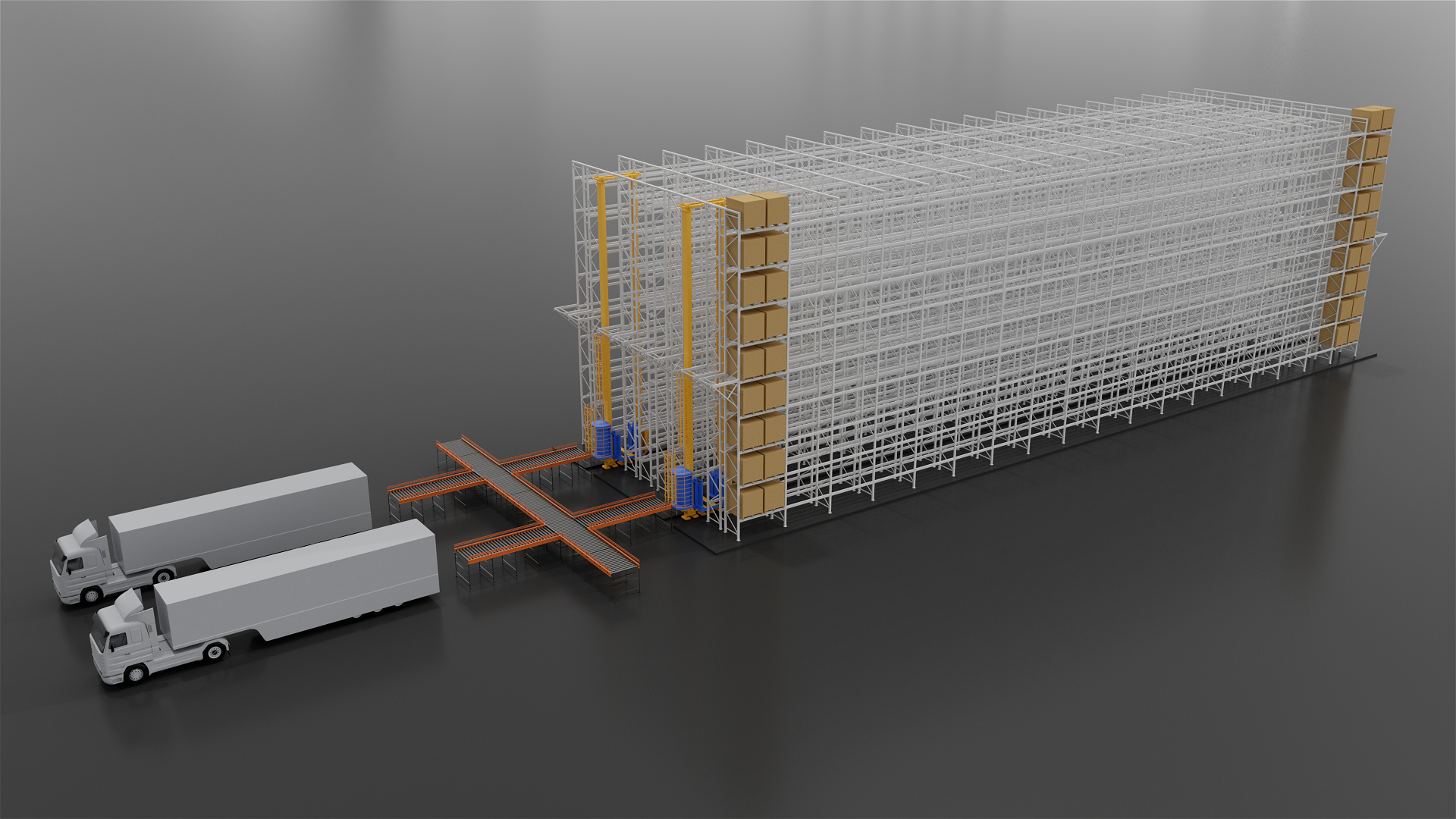 |
2. Stacker Crane ASRSA stacker crane is one of the most widely used technologies for automated high-bay warehouses. It can travel vertically and horizontally within a dedicated aisle to store and retrieve pallets. Modern stacker crane ASRS can support warehouses reaching approximately 40 m or more, depending on engineering design. Typical applications include:
|
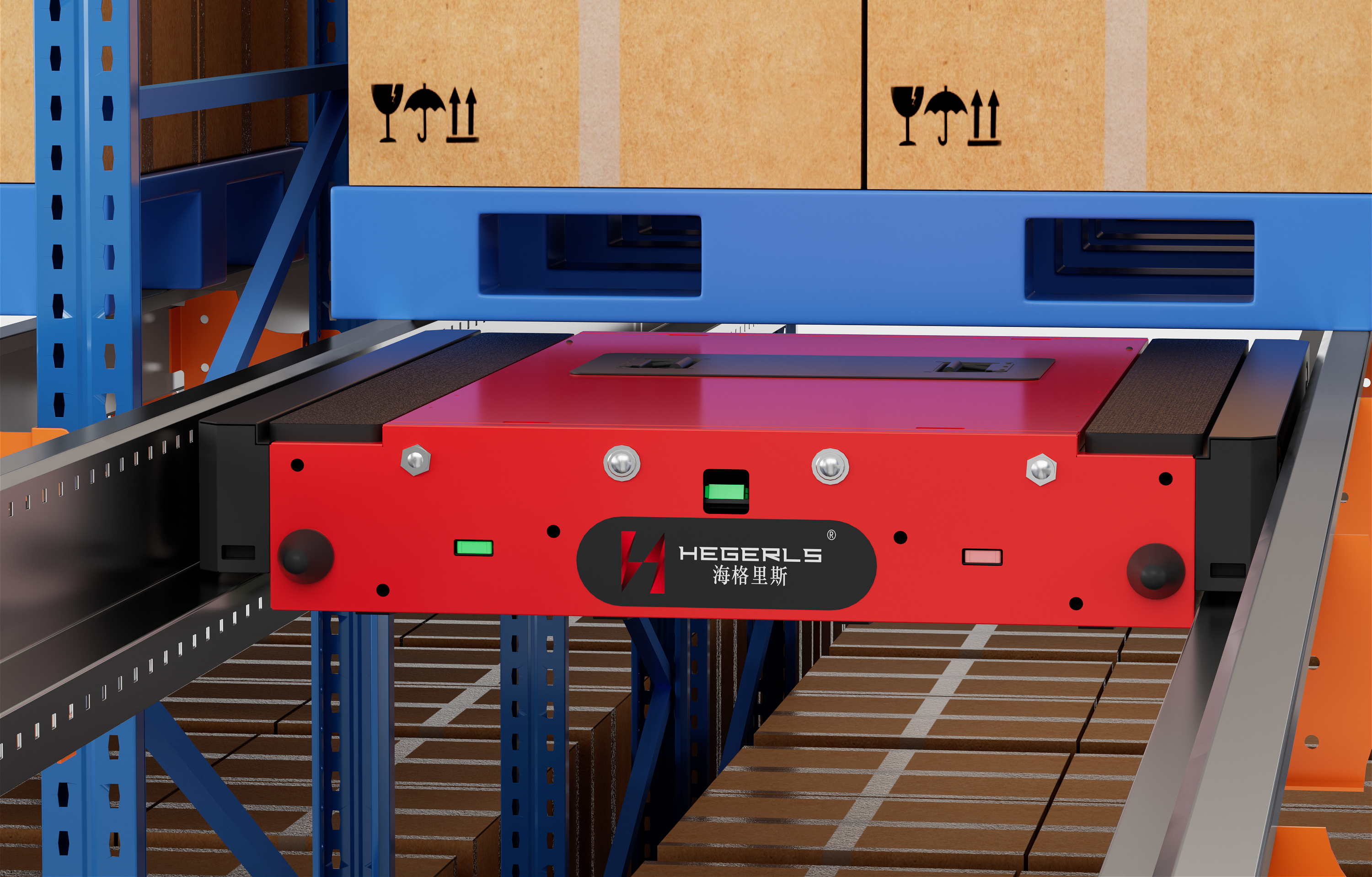
3. Four-Way Shuttle SystemA four-way shuttle system uses autonomous shuttle vehicles capable of moving in multiple directions inside high-density racking. Compared with fixed-path equipment, four-way shuttle technology offers greater flexibility in storage layout and equipment deployment. A typical four-way shuttle solution includes:
It is particularly suitable for warehouses requiring high-density pallet storage and flexible automated operations. | 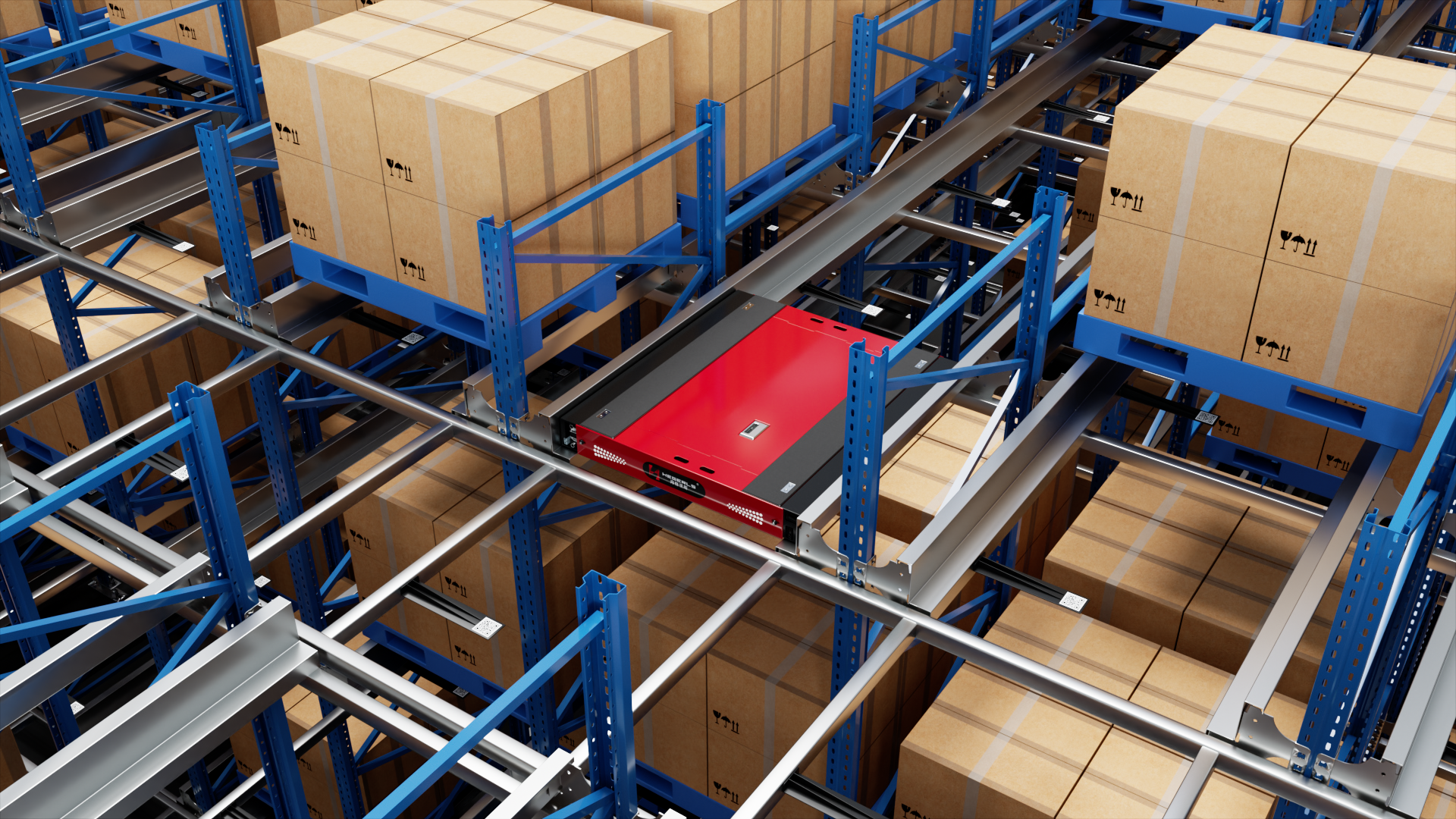 |
 |
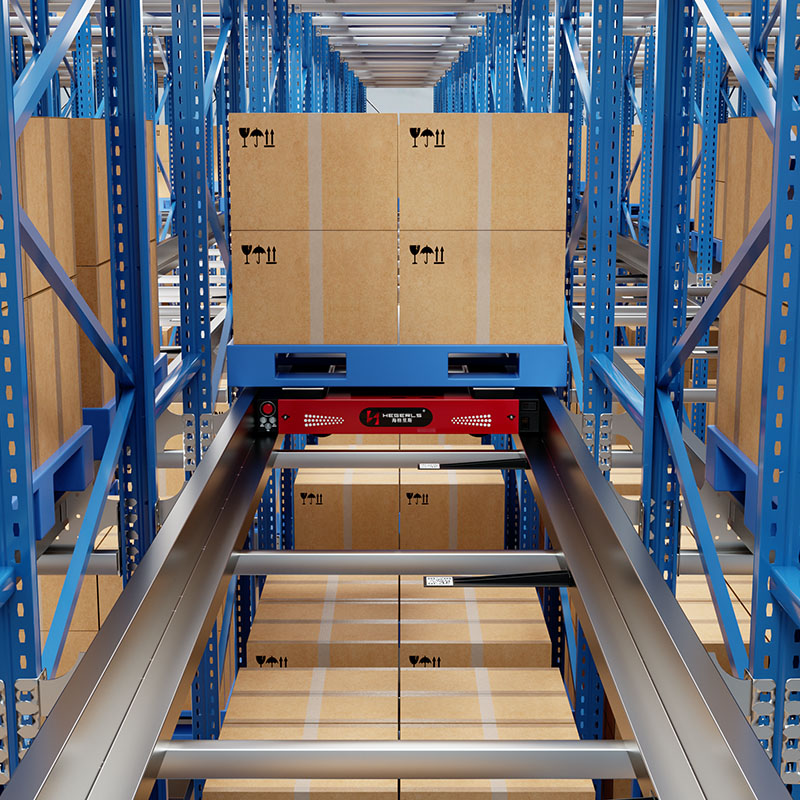
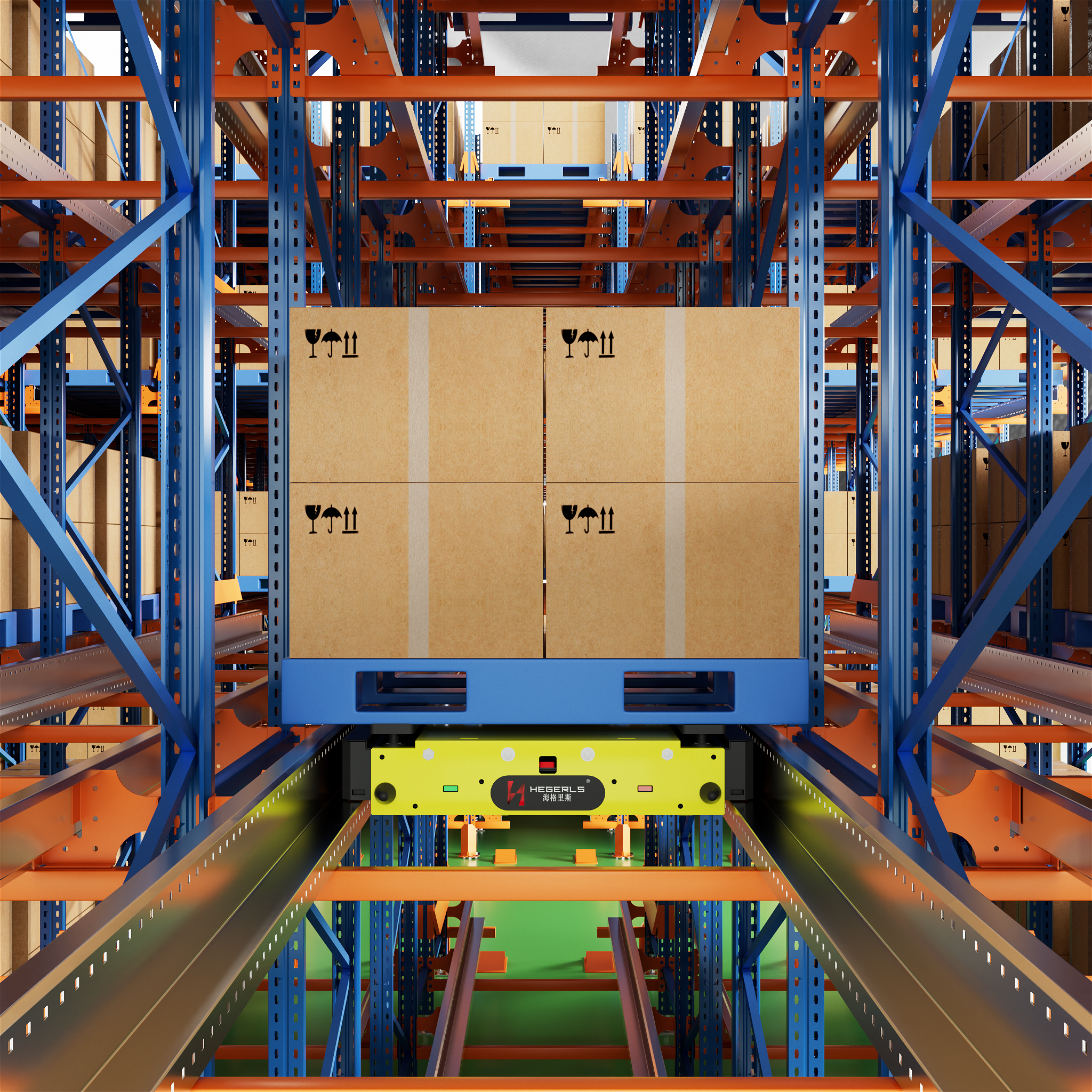
4. Pallet Shuttle SystemPallet shuttle systems use shuttle vehicles to transport pallets deep into storage lanes. They are particularly suitable for:
Compared with four-way shuttles, conventional pallet shuttles generally operate along dedicated storage lanes. |
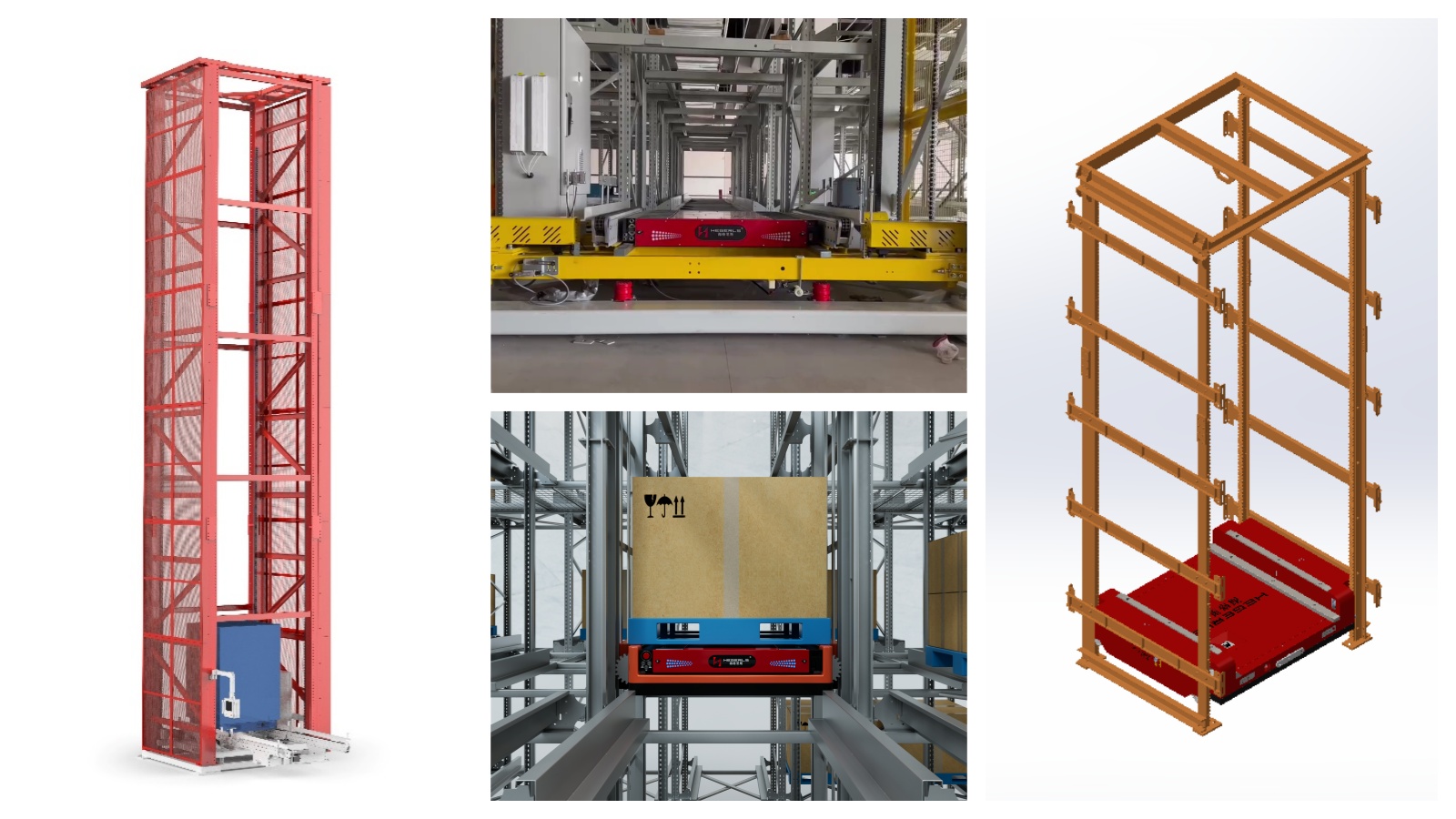
5. Shuttle LiftA shuttle lift connects different storage levels in a multi-level automated warehouse. It can transport pallets or shuttle vehicles vertically between floors or rack levels. Shuttle lifts are especially important in multi-level shuttle ASRS systems. |
|
|
|
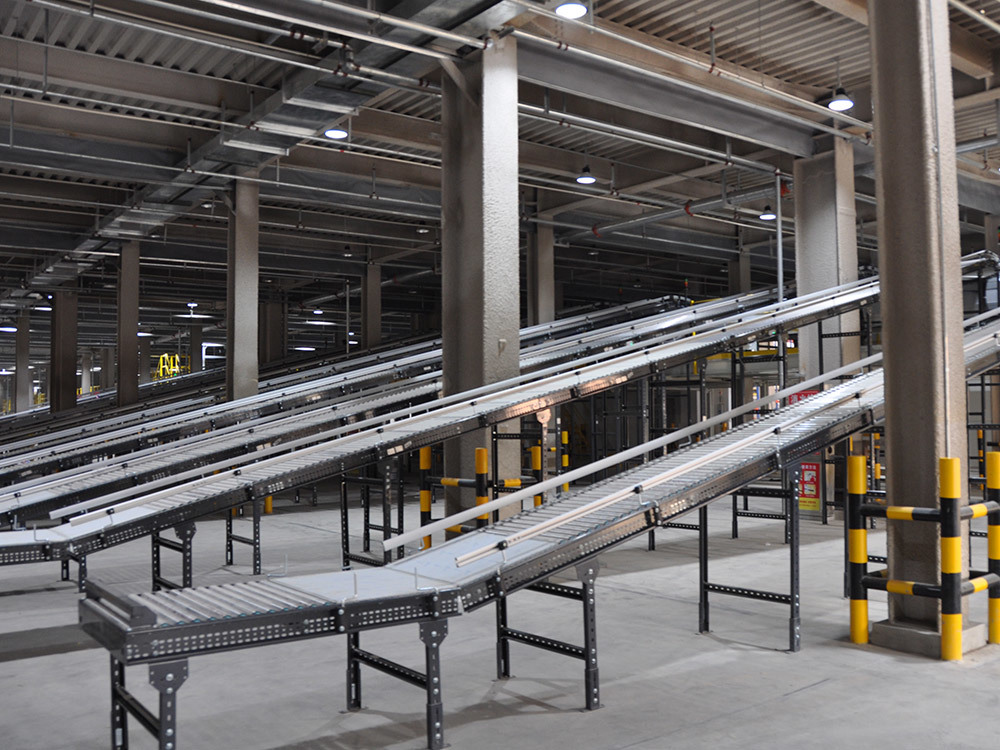
6. ConveyorsConveyors provide continuous material flow between:
Common conveyor types include roller conveyors and chain conveyors. |
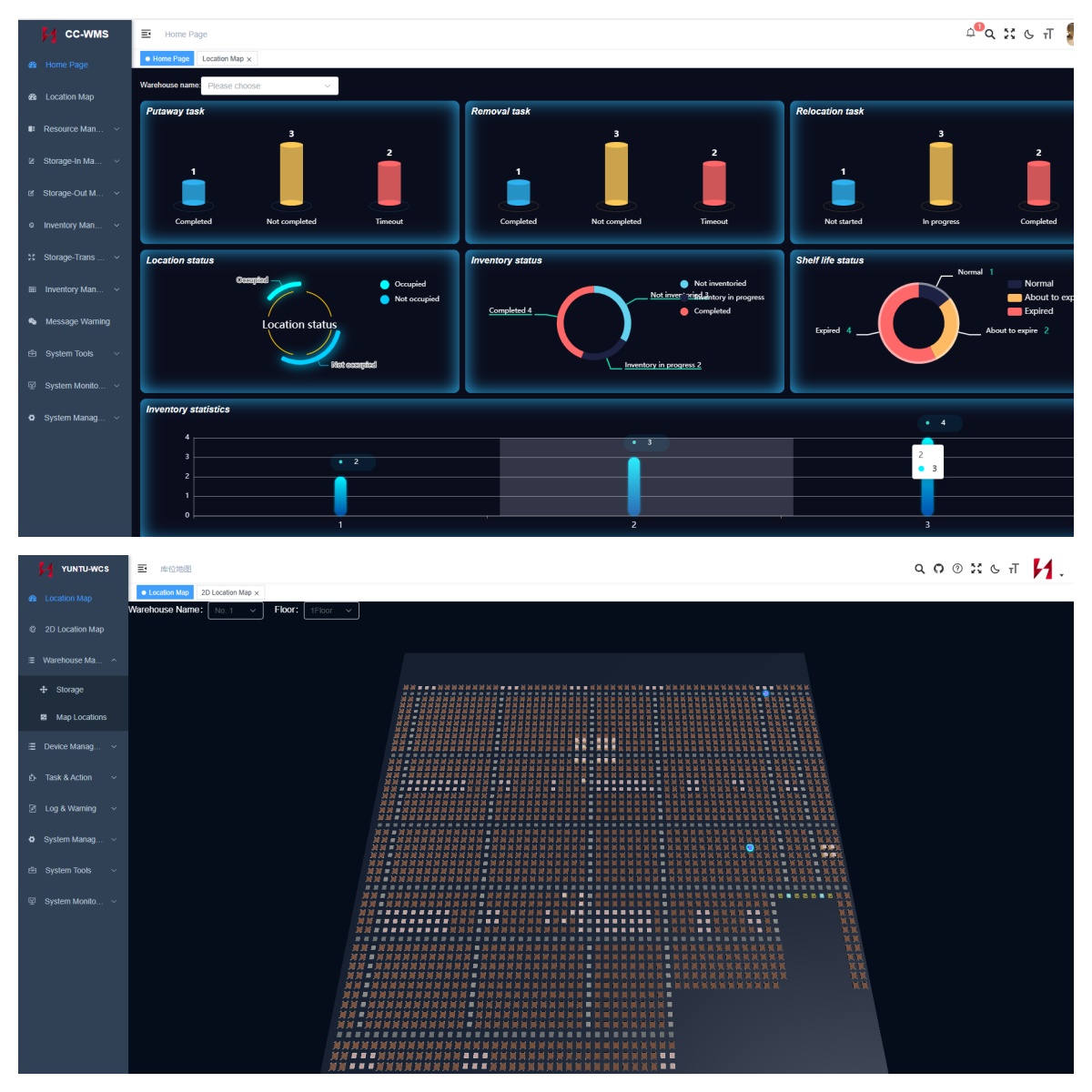
7. WMS and WCSSoftware is essential for modern automated high-bay warehouses. WMS manages inventory and warehouse processes. WCS controls and coordinates automation equipment. The typical architecture is: ERP / MES ↓ WMS ↓ WCS ↓ ASRS / Shuttle / Conveyor / Robot / AGV ↓ Warehouse Operations This integration connects business information with physical warehouse operations. |
|
What Are the Benefits of a High-Bay Warehouse?
1. Better Use of Vertical Space
The biggest advantage of high-bay storage is the ability to use vertical space.
Instead of expanding the warehouse horizontally, companies can increase storage capacity by increasing rack height.
This is particularly valuable when:
- Land is expensive
- Warehouse space is limited
- Expansion opportunities are restricted
- Inventory volumes are increasing
2. Higher Storage Density
High-bay warehouses can significantly increase the number of pallet positions available within a given footprint.
When combined with ASRS or shuttle technology, storage density can be increased further by optimizing:
- Rack height
- Storage depth
- Aisle width
- Pallet positioning
- Equipment movement
3. Reduced Floor-Space Requirements
A high-bay warehouse can store more inventory without requiring a proportionally larger building footprint.
This can help companies reduce the need for additional land or warehouse buildings.
4. Higher Automation Potential
High-bay warehouses are well suited to automation because the storage structure can be designed around automated equipment from the beginning.
Possible technologies include:
- ASRS
- Stacker cranes
- Four-way shuttles
- Pallet shuttles
- Robots
- Conveyors
- WMS
- WCS
5. Improved Inventory Accuracy
Automated high-bay systems can integrate physical storage operations with WMS software.
Every storage and retrieval task can be digitally recorded, helping companies achieve better inventory visibility and traceability.
6. Reduced Manual Handling
Automated equipment can perform repetitive pallet transportation and storage tasks.
This can reduce forklift movement and manual handling inside storage areas.
Employees can instead focus on:
- System monitoring
- Quality control
- Exception handling
- Maintenance
- Warehouse management
7. Improved Safety
High-bay automated warehouses can reduce the need for operators to work directly inside high-level storage aisles.
Automated equipment performs storage and retrieval tasks within controlled operating areas.
A properly designed system should also include:
- Safety sensors
- Emergency stops
- Access controls
- Safety barriers
- Equipment monitoring
- Fire protection systems
What Are the Disadvantages of a High-Bay Warehouse?
High-bay storage also introduces additional engineering and operational considerations.
Higher Initial InvestmentA high-bay automated warehouse may require significant investment in:
|
Greater Engineering ComplexityHigh rack structures require careful consideration of:
|
Equipment and Software DependencyAn automated high-bay warehouse depends on coordinated hardware and software. Equipment downtime or software problems can affect warehouse operations. This makes:
important parts of the project. |
High-Bay Warehouse vs. Low-Bay Warehouse
| Feature | High-Bay Warehouse | Low-Bay Warehouse |
| Building height | High | Lower |
| Rack height | High | Low/moderate |
| Storage density | High | Moderate |
| Vertical space utilization | Excellent | Limited |
| Automation potential | High | Moderate |
| Equipment | ASRS, crane, shuttle, forklift | Mainly forklifts |
| Construction complexity | Higher | Lower |
| Suitable for | Large-scale/high-density storage | General storage |
A high-bay warehouse is generally most valuable when storage density and vertical space utilization are major priorities.
High-Bay Warehouse vs. ASRS Warehouse
These terms are related but not identical.
A high-bay warehouse describes the physical design and storage height of a warehouse.
An ASRS warehouse describes the automated storage and retrieval technology used to operate the warehouse.
A facility can therefore be:
- High-bay but manually operated
- High-bay and semi-automated
- High-bay and fully automated ASRS
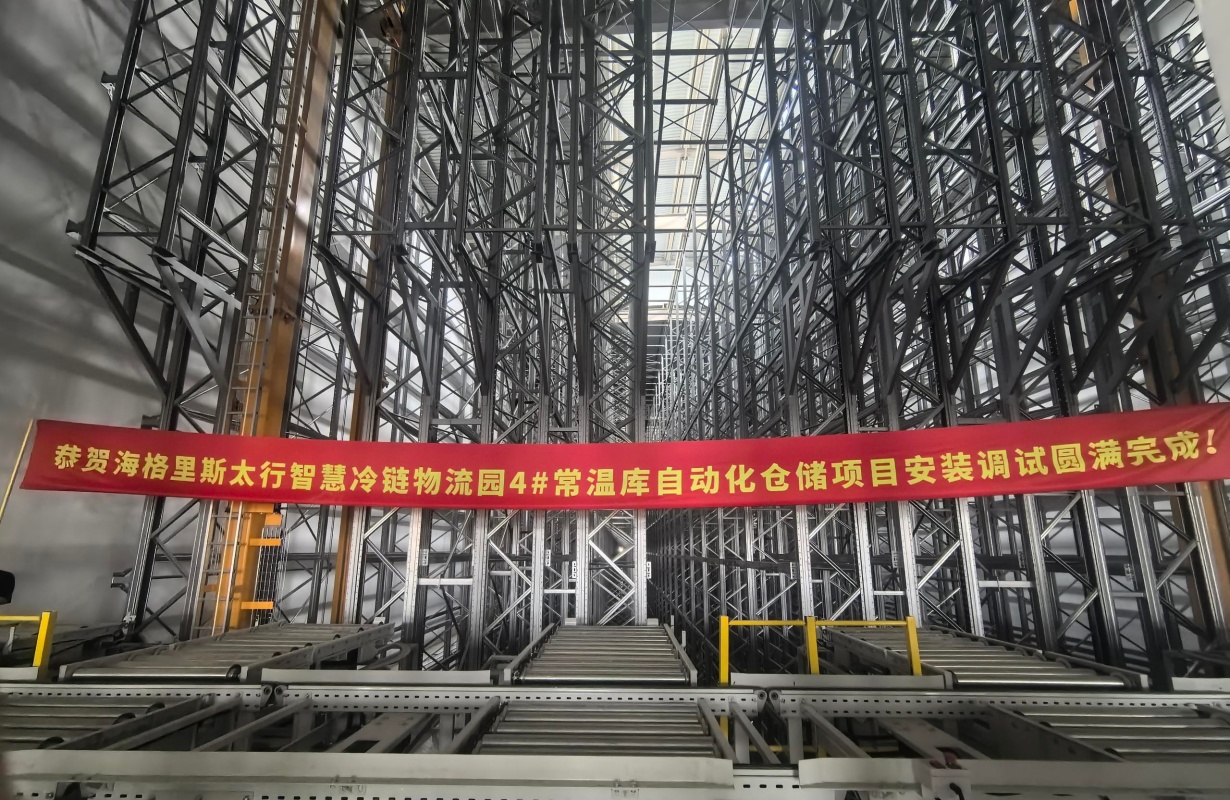
The combination of high-bay storage and ASRS is particularly powerful because the warehouse structure and automation equipment can be optimized together.
High-Bay Warehouse vs. Automated High-Bay Warehouse
A traditional high-bay warehouse may use forklifts to access high-level pallet positions.
An automated high-bay warehouse uses automation equipment such as stacker cranes, shuttles, conveyors, and warehouse robots.
| Feature | High-Bay Warehouse | Automated High-Bay Warehouse |
| Storage height | High | High |
| Forklift dependency | Higher | Lower |
| Automation | Optional | Core component |
| WMS/WCS | Optional | Typically integrated |
| Storage density | High | Very high potential |
| Inventory control | Manual/semi-automated | Software-driven |
| Throughput | Operator-dependent | System-controlled |
What Industries Use High-Bay Warehouses?
High-bay storage can be applied across many industries.
ManufacturingUsed for:
|
Food and BeverageSuitable for palletized food, beverages, ingredients, and packaged products. |
Cold ChainHigh-bay automated storage can maximize expensive refrigerated and frozen warehouse space. |
E-CommerceHigh-bay facilities can provide high-capacity inventory storage for distribution centers. |
AutomotiveUsed for components, spare parts, and finished vehicle-related products. |
PharmaceuticalsAutomated storage can provide controlled inventory management and traceability. |
3PL and DistributionHigh-density storage helps logistics providers manage large inventories for multiple customers. |
Retail & Consumer GoodsHigh-bay warehouses support centralized distribution for retailers and consumer goods companies, providing high-density storage for packaged products, seasonal inventory, and fast-moving consumer goods (FMCG). |
Building Materials & ConstructionHigh-bay warehouses provide high-density storage for heavy and palletized construction materials while maximizing vertical space. |
How High Can a High-Bay Warehouse Be?
There is no universal maximum height.
The achievable height depends on:
- Building structure
- Rack design
- Stacker crane specifications
- Shuttle technology
- Pallet dimensions
- Load weight
- Fire protection requirements
- Local building codes
- Wind and seismic conditions
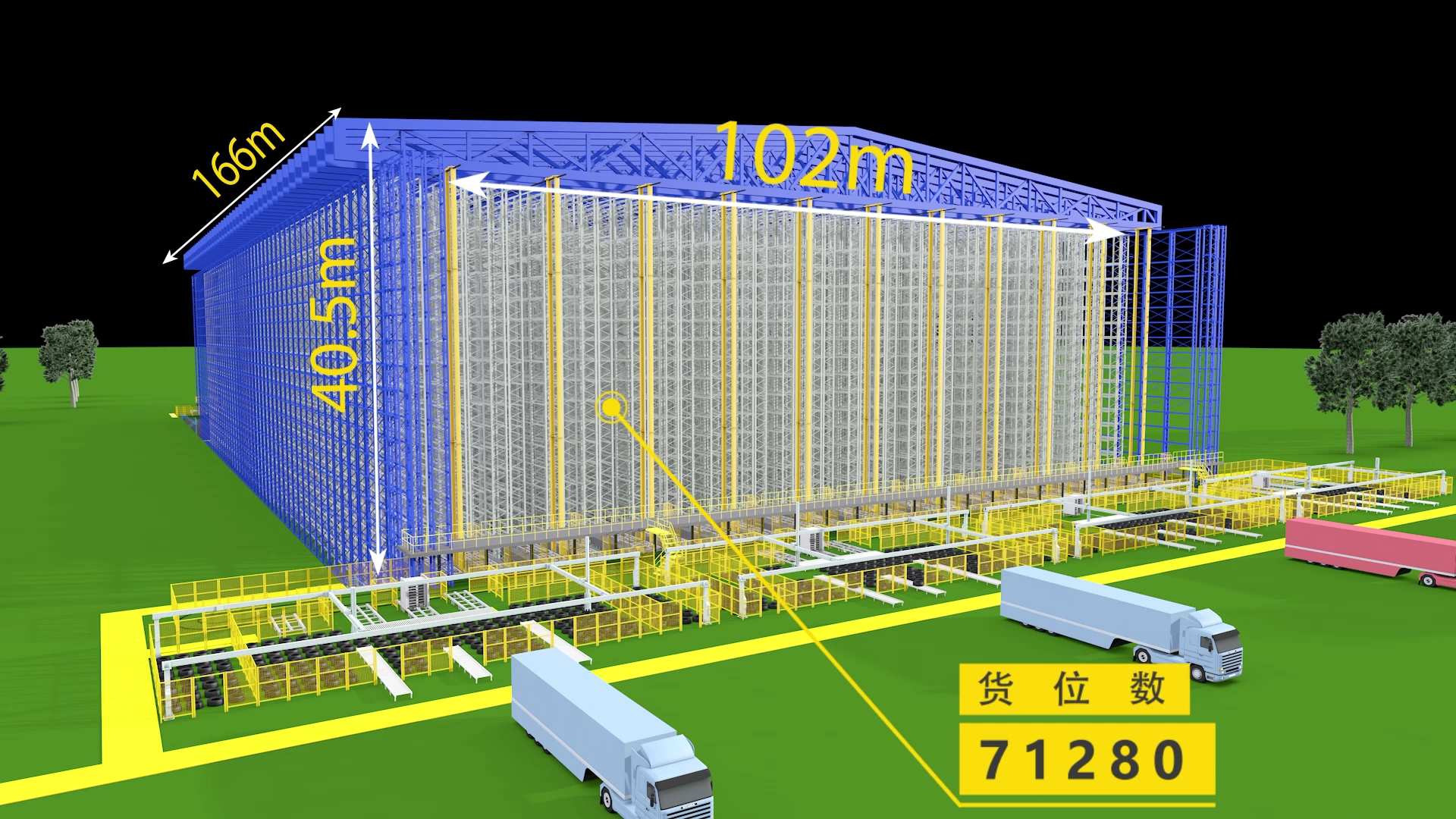
Modern automated high-bay warehouses can reach 30–40 m or more in appropriately designed projects. Zhuku completed a 40.5 m rack-supported high-bay asrs warehouse project.
The maximum height should therefore be determined through structural and automation engineering rather than a fixed industry number.
How to Design a High-Bay Warehouse
A successful high-bay warehouse starts with detailed requirements analysis.
Step 1: Analyze Inventory
Determine:
- Number of SKUs
- Number of pallets
- Pallet dimensions
- Pallet weight
- Turnover rate
- Batch requirements
- FIFO/LIFO requirements
Step 2: Determine Storage Capacity
Calculate the required number of storage positions and evaluate available building volume.
Step 3: Analyze Throughput
Determine:
- Inbound pallets per hour
- Outbound pallets per hour
- Peak throughput
- Required retrieval time
Step 4: Select Storage Technology
Potential technologies include:
- Stacker crane ASRS
- Four-way shuttle
- Pallet shuttle
- Traditional pallet racking
- Hybrid storage
Step 5: Design Material Flow
Connect:
Receiving → Inspection → Storage → Picking/Production → Shipping
with suitable conveyors, lifts, AGVs, robots, or manual handling equipment.
Step 6: Design WMS/WCS
The software system should manage:
- Inventory
- Storage locations
- Equipment tasks
- Retrieval priorities
- Equipment status
- Warehouse performance
Step 7: Simulate the System
Simulation can evaluate:
- Storage capacity
- Throughput
- Equipment utilization
- Bottlenecks
- Peak-period performance
This helps optimize the design before implementation.
How Much Does a High-Bay Warehouse Cost?
There is no universal price for a high-bay warehouse.
The total investment depends on:
- Warehouse size
- Building height
- Storage capacity
- Rack structure
- Number of pallet positions
- Automation equipment
- Number of shuttles or stacker cranes
- Conveyor requirements
- WMS/WCS integration
- Fire protection
- Installation
- Commissioning
For this reason, a project-specific quotation is more meaningful than a standard cost per square meter.
Companies should also evaluate total cost of ownership (TCO), including labor, energy, maintenance, software, and potential warehouse expansion costs.
How Does AI Improve High-Bay Warehouse Automation?
AI is increasingly being integrated into warehouse automation systems.
AI can analyze:
- Inventory movement
- Order patterns
- SKU turnover
- Storage utilization
- Equipment performance
- Warehouse traffic
Potential applications include:
Intelligent Slotting
AI can recommend optimal storage locations based on product movement and demand.
Demand Forecasting
AI can analyze historical data to predict future inventory requirements.
Equipment Optimization
AI can help optimize shuttle, crane, conveyor, and robot utilization.
Predictive Maintenance
Equipment data can be analyzed to identify potential failures before they cause major downtime.
Warehouse Performance Analysis
AI analytics can identify bottlenecks and opportunities for operational improvement.
The integration of AI + WMS + WCS + ASRS is helping high-bay warehouses move toward more intelligent and autonomous operations.
Why Choose Zhuku for High-Bay Warehouse Solutions?
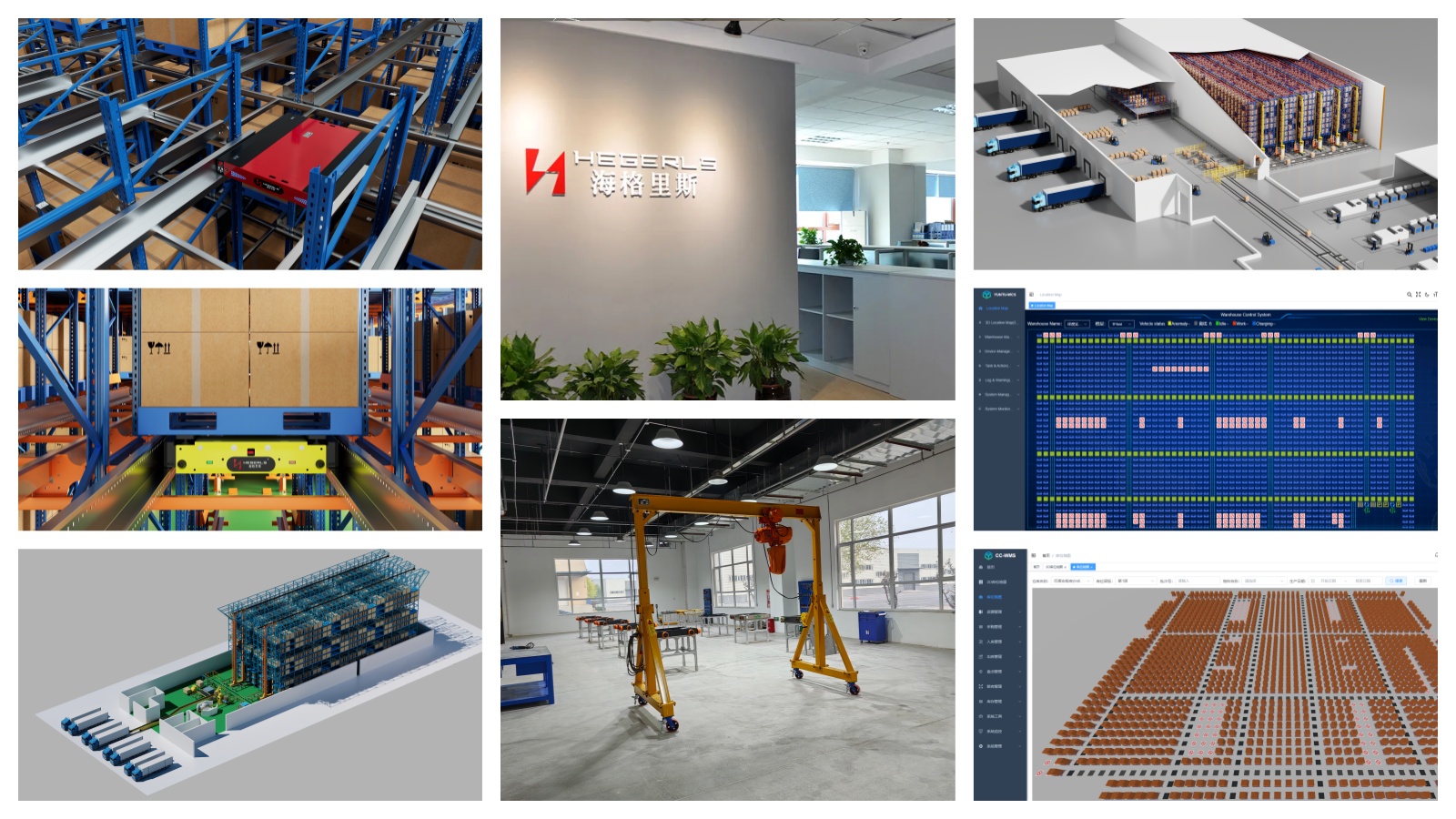
Zhuku provides integrated high-bay warehouse and warehouse automation solutions, combining storage equipment, automated handling technology, and intelligent warehouse software.
Our solutions can include:
- High-bay pallet racking
- Stacker crane ASRS
- Four-way shuttle systems
- Two-way shuttle systems
- Pallet shuttle systems
- Shuttle lifts
- Conveyors
- Warehouse robots
- CC-WMS
- YUNTU-WCS
Zhuku can support the complete project process, including:
Warehouse Planning → System Design → Equipment Manufacturing → Software Integration → Installation → Commissioning
Rather than selecting equipment independently, Zhuku evaluates the warehouse as an integrated system, considering storage capacity, throughput, pallet specifications, building conditions, automation requirements, and future expansion.
Conclusion
A high-bay warehouse is designed to maximize storage capacity by making efficient use of vertical space. When combined with ASRS, four-way shuttles, stacker cranes, conveyors, WMS, WCS, and warehouse robotics, high-bay storage can become a highly automated and intelligent warehouse solution.
For businesses facing limited floor space, increasing inventory volumes, high labor costs, or demanding throughput requirements, a high-bay automated warehouse can provide a scalable foundation for long-term warehouse growth.
However, the right solution depends on the complete operating environment—not simply warehouse height.
Storage capacity, throughput, pallet characteristics, building conditions, automation technology, software integration, and future expansion should all be considered when designing a high-bay warehouse.
Zhuku provides integrated high-bay warehouse and automation solutions designed around each customer's specific storage and operational requirements.