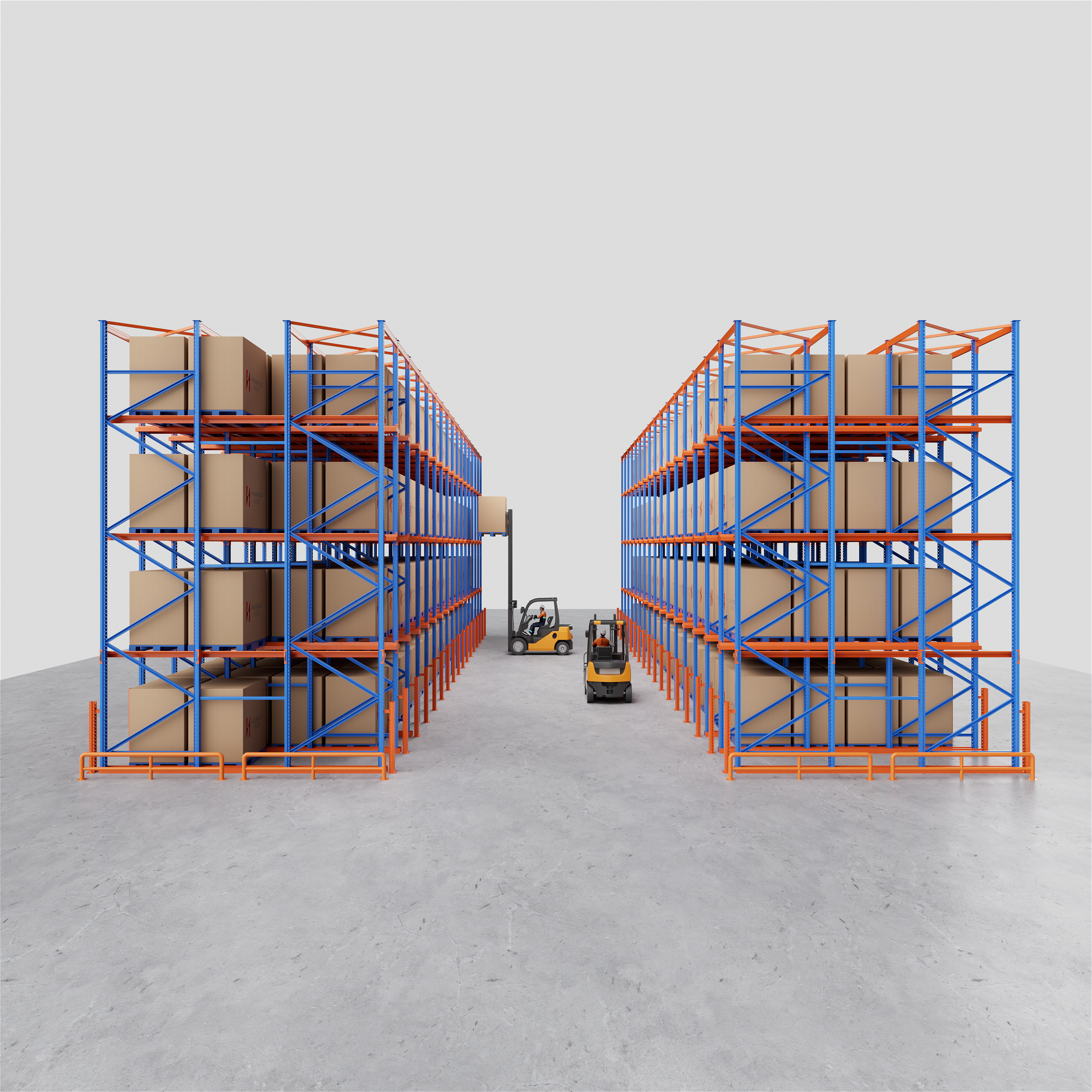
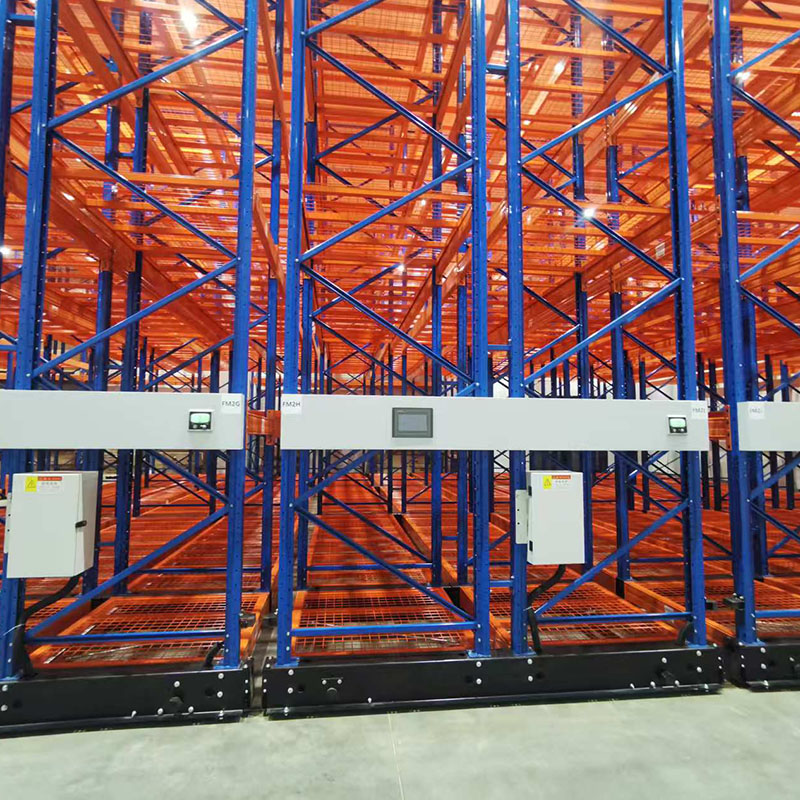
Warehouse space is expensive, but using every available square meter is not the only goal. A well-designed warehouse racking system must also support safe storage, efficient picking, accurate inventory management, and smooth material handling.
Warehouse racking provides a structured way to store goods vertically and organize inventory by location. Depending on the system, it can support individual pallet access, high-density bulk storage, fast-moving inventory, or integration with automated warehouse equipment.
The best warehouse racking system depends on your inventory profile, storage density requirements, stock rotation rules, handling equipment, and future automation plans. A system designed for a warehouse with thousands of different SKUs may not be suitable for a facility storing large quantities of a few products.
This guide explains the main types of warehouse racking, compares their advantages and limitations, and outlines how to select a system that fits your operation.
What Is Warehouse Racking?
Warehouse racking is a storage structure designed to hold palletized, boxed, or other unitized goods in organized storage positions. It uses vertical space to increase storage capacity while keeping inventory accessible for handling and retrieval.
A warehouse racking system may include upright frames, beams, load supports, safety accessories, and other components. Some systems operate with forklifts, while others integrate with shuttle robots, stacker cranes, conveyors, and warehouse control software.
Warehouse racking generally serves four purposes:
-
Increase storage capacity: Use available building height instead of relying only on floor storage.
-
Organize inventory: Assign products to defined storage locations.
-
Improve handling efficiency: Reduce unnecessary movement during put-away, replenishment, and picking.
-
Support automation: Provide a suitable storage structure for automated material handling equipment.
The right configuration depends on how goods move through the warehouse, not simply on how many pallets the building can accommodate.
What Are the Main Types of Warehouse Racking Systems?
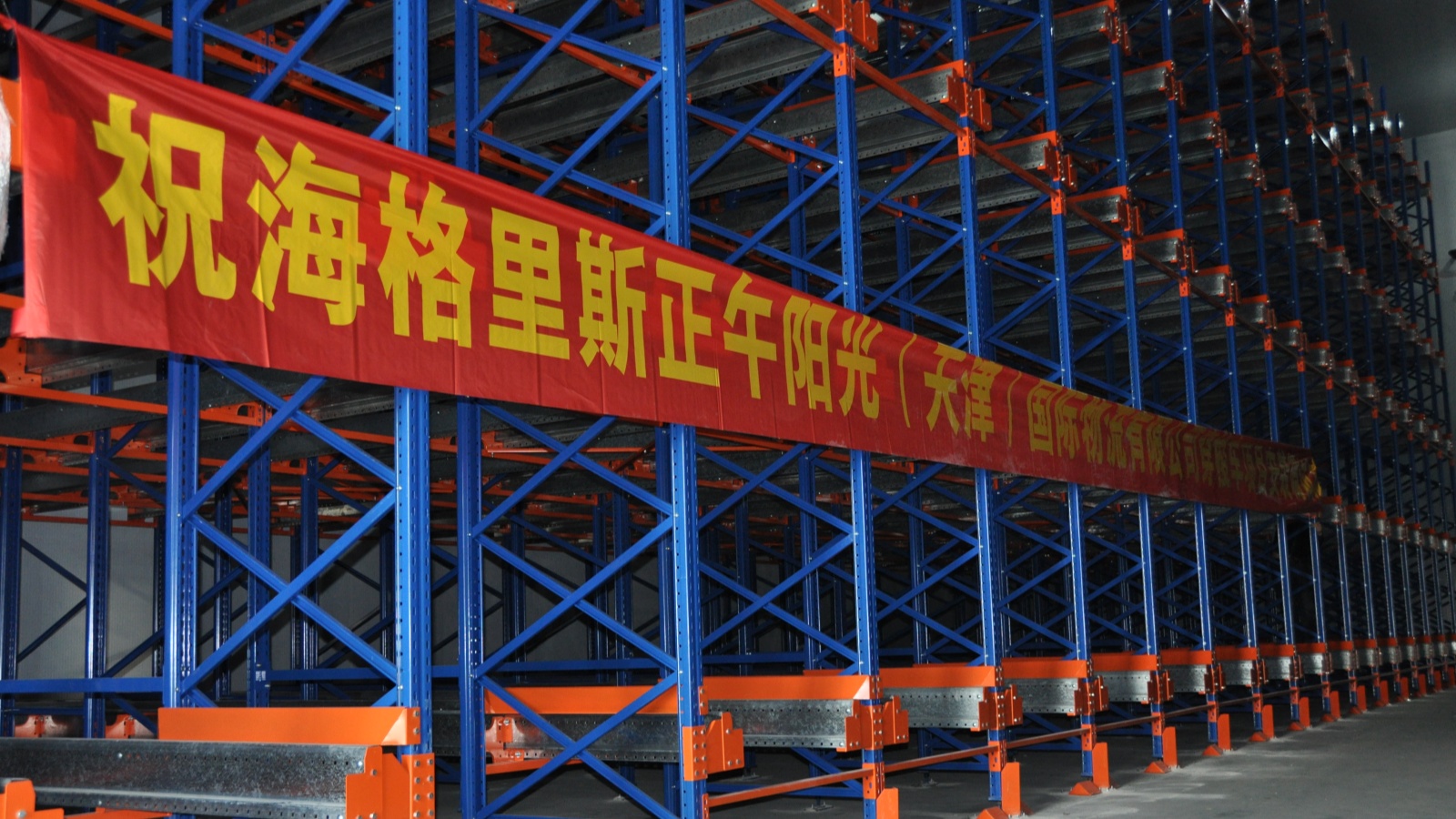
The main types of warehouse racking include selective pallet racking, double-deep racking, drive-in racking, drive-through racking, push-back racking, pallet flow racking, very narrow aisle racking, and shuttle racking.
Each system balances storage density, pallet accessibility, handling requirements, and operational flexibility differently.
| Racking type | Main advantage | Main limitation | Suitable application |
| Selective pallet racking | Direct access to each pallet | Requires more aisle space | Mixed SKUs and frequent picking |
| Double-deep racking | Reduces the number of aisles | Rear pallets are less accessible | Warehouses with multiple pallets per SKU |
| Drive-in racking | High-density storage | Restricted pallet access | Bulk storage with fewer SKUs |
| Drive-through racking | Dense storage with access from both ends | Requires careful flow planning | Operations needing FIFO |
| Push-back racking | High density with front-side handling | Typically follows LIFO | Multiple pallets per SKU |
| Pallet flow racking | Supports FIFO and high-throughput picking | Requires compatible pallets and maintenance | Food, beverage, and date-sensitive goods |
| Very narrow aisle (VNA) racking | Combines high selectivity with narrow aisles | Requires specialized handling equipment | Tall warehouses with limited floor space |
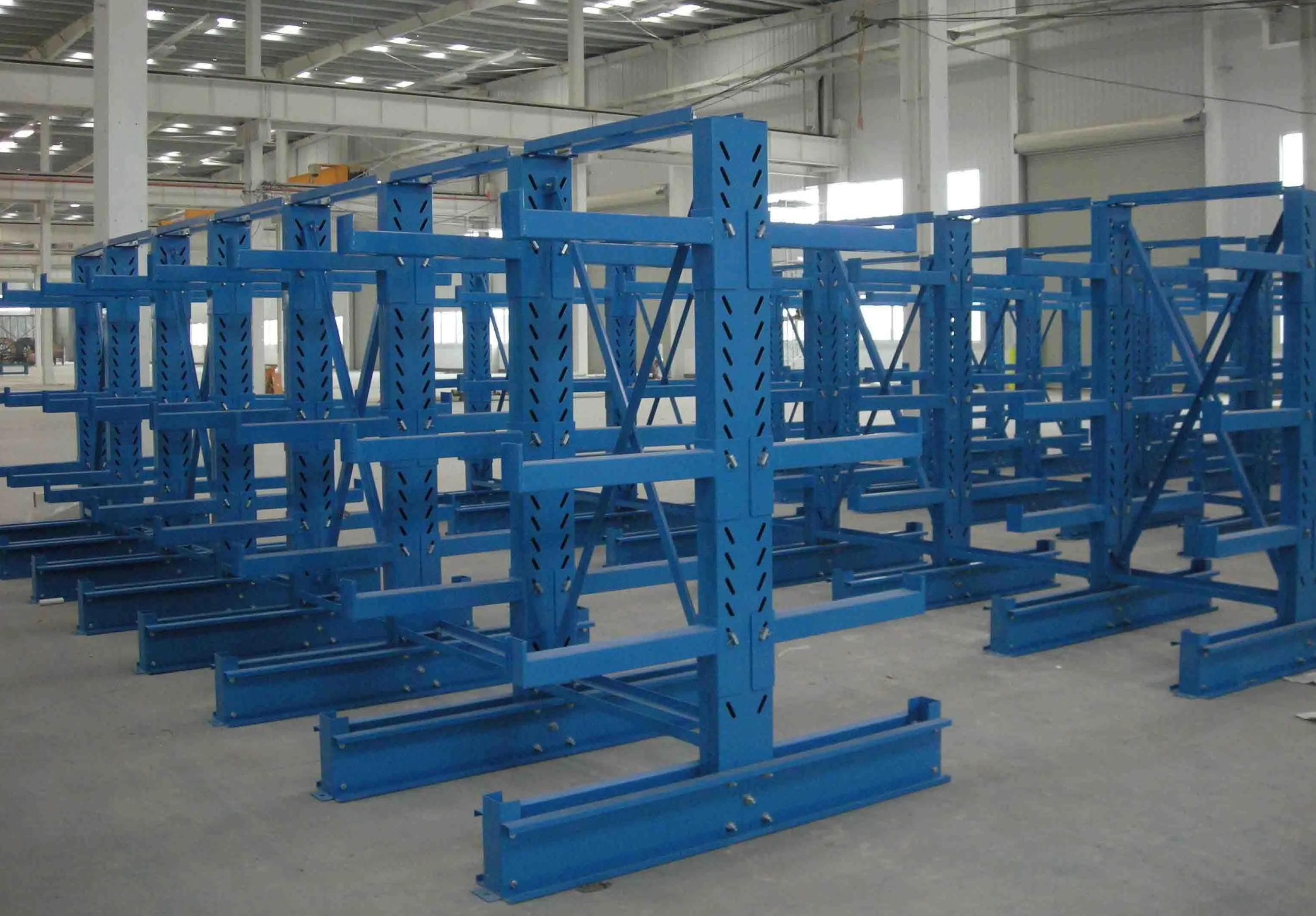
| Cantilever racking | Ideal for storing long, bulky, and irregularly shaped materials | Not suitable for standard palletized goods; load capacity depends on arm design and configuration | Pipes, timber, steel bars, metal profiles, and construction materials |
| Shuttle racking | High-density storage with automated or semi-automated handling | Requires system-level planning and investment | High-volume storage and automated warehouses |
The best choice depends on how goods enter, move through, and leave the warehouse. Storage capacity alone is not enough to determine which system will perform best.
1. Selective Pallet Racking
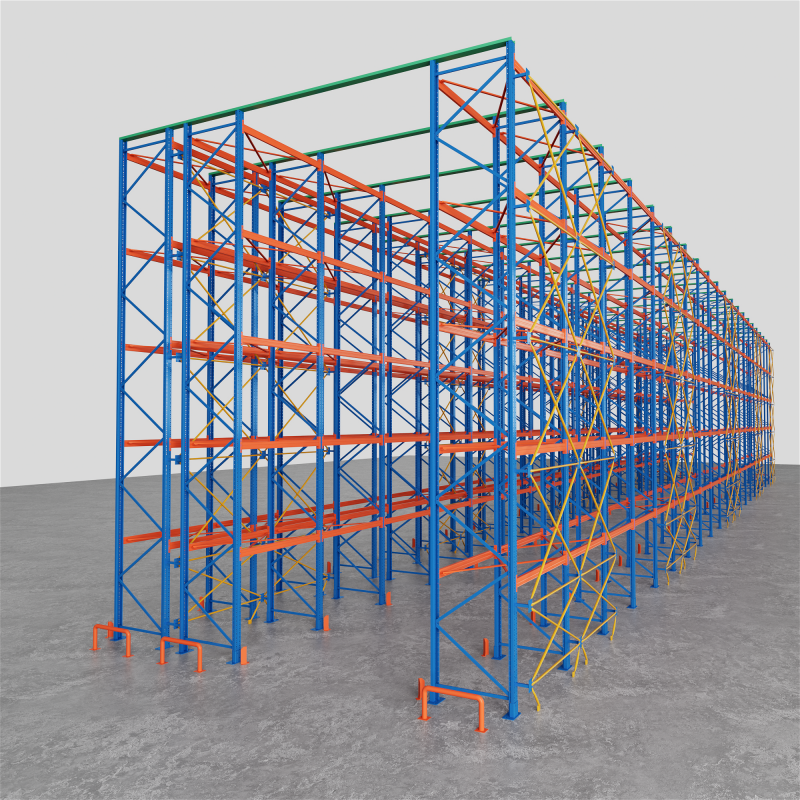
Selective pallet racking provides direct access to individual pallet positions. Pallets are stored on horizontal beams supported by upright frames, with aisles allowing forklifts to reach each storage position.
Its main advantage is flexibility. Operators can retrieve a specific pallet without moving other pallets in the same lane.
This makes selective racking suitable for warehouses with many SKUs, frequent picking, and changing inventory requirements. Warehouse pallet racking can also be expanded or reconfigured when operational needs change, subject to the structural design.
The main trade-off is space utilization. Separate access aisles consume floor area that could otherwise accommodate additional storage positions.
Best for: Distribution centers, spare-parts warehouses, and operations where direct pallet access is more important than maximum storage density.
2. Double-Deep Racking
Double-deep racking places two pallets deep on each storage side. This arrangement reduces the number of aisles compared with a conventional single-deep layout.
It can improve storage density when a warehouse holds several pallets of the same SKU. However, accessing the rear pallet requires suitable deep-reach handling equipment, and pallet selectivity is reduced.
Before choosing this system, check whether the inventory profile and handling equipment can support the arrangement.
Best for: Warehouses with moderate SKU diversity and multiple pallets per SKU.
3. Drive-In and Drive-Through Racking
Drive-in and drive-through racking store pallets several positions deep along dedicated lanes. Forklifts enter the rack structure to place or retrieve goods.
Drive-in racking typically uses a single access end and operates on a last-in, first-out (LIFO) basis. Drive-through racking allows access from both ends and can support first-in, first-out (FIFO) operations when loading and retrieval are organized accordingly.
Both systems reduce the need for separate access aisles between every rack row. However, they are generally more suitable for larger quantities of fewer SKUs than for highly fragmented inventory.
Best for: Bulk goods, selected cold-storage applications, and warehouses with predictable inventory flows.
4. Push-Back and Pallet Flow Racking
These systems improve storage density by using gravity-assisted mechanisms rather than relying entirely on conventional single-deep storage.
Push-back racking uses carts on inclined rails. Loading a new pallet pushes previously stored pallets backward. When the front pallet is removed, the next pallet moves forward. The arrangement typically follows LIFO.
Pallet flow racking uses inclined roller tracks to move pallets from the loading side to the picking side. It is designed to support FIFO, making it useful for products with expiry dates or strict stock-rotation requirements.
Both systems require suitable pallet dimensions, load characteristics, and mechanical design.
Best for: High-volume products, replenishment operations, and inventory requiring controlled stock rotation.
5. Very Narrow Aisle Racking
Very narrow aisle racking uses reduced aisle widths to accommodate more storage positions within a given floor area while maintaining direct access to individual pallets.
The system generally requires specialized trucks and carefully planned aisle guidance, clearances, and operating procedures.
Although narrower aisles can increase storage capacity, the final result depends on building height, rack configuration, equipment dimensions, and operational throughput.
Best for: Warehouses that need high selectivity and better space utilization without adopting a fully automated storage system.
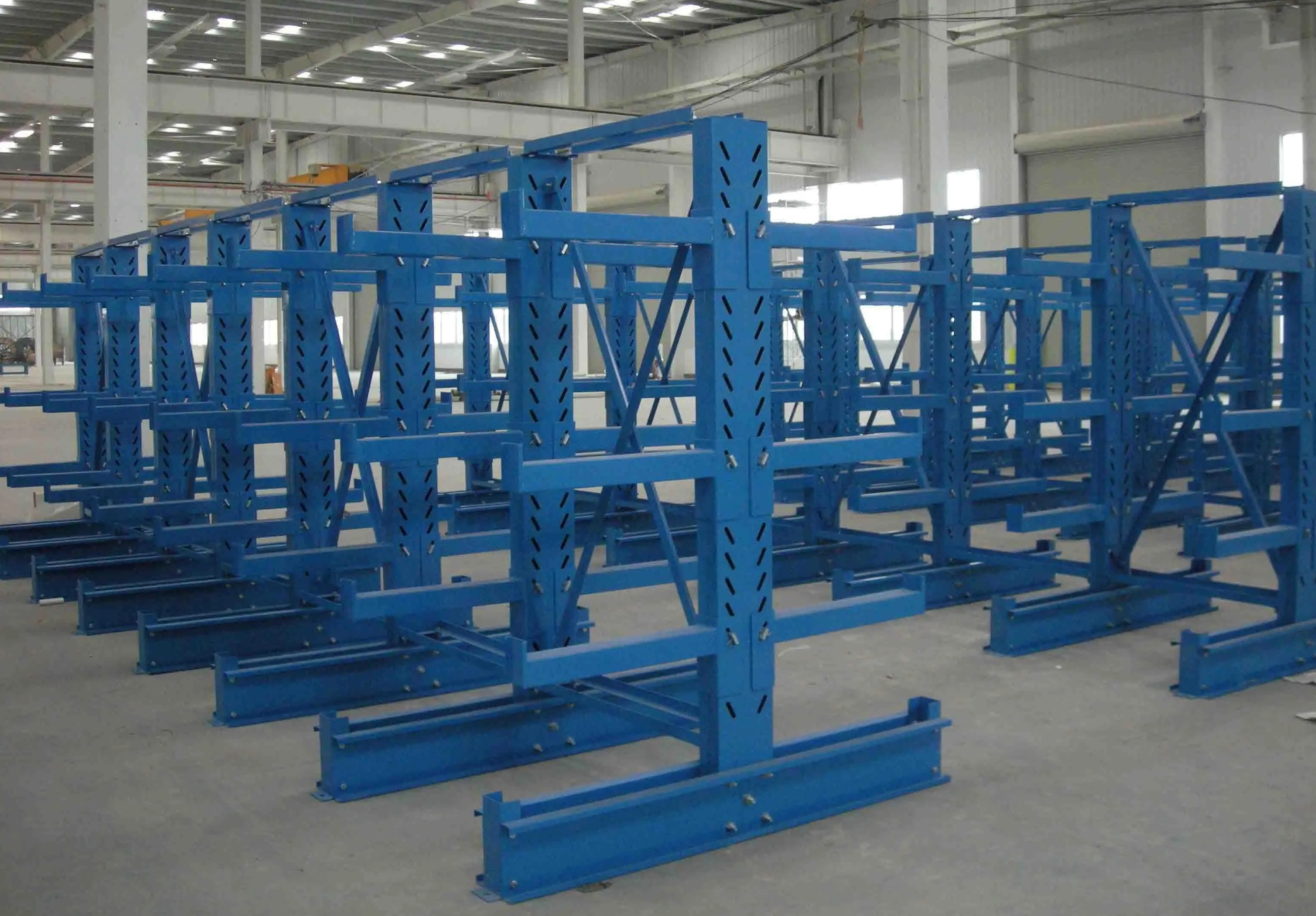
6. Cantilever Racking
Cantilever racking is designed for storing long, bulky, or irregularly shaped items that are difficult to accommodate on conventional pallet racks. It uses vertical columns with horizontal arms to support goods such as pipes, timber, steel bars, and metal profiles. Its open-front design allows convenient loading and retrieval, making it a practical storage solution for warehouses handling long materials.
7. Shuttle Racking and Automated Warehouse Racking System
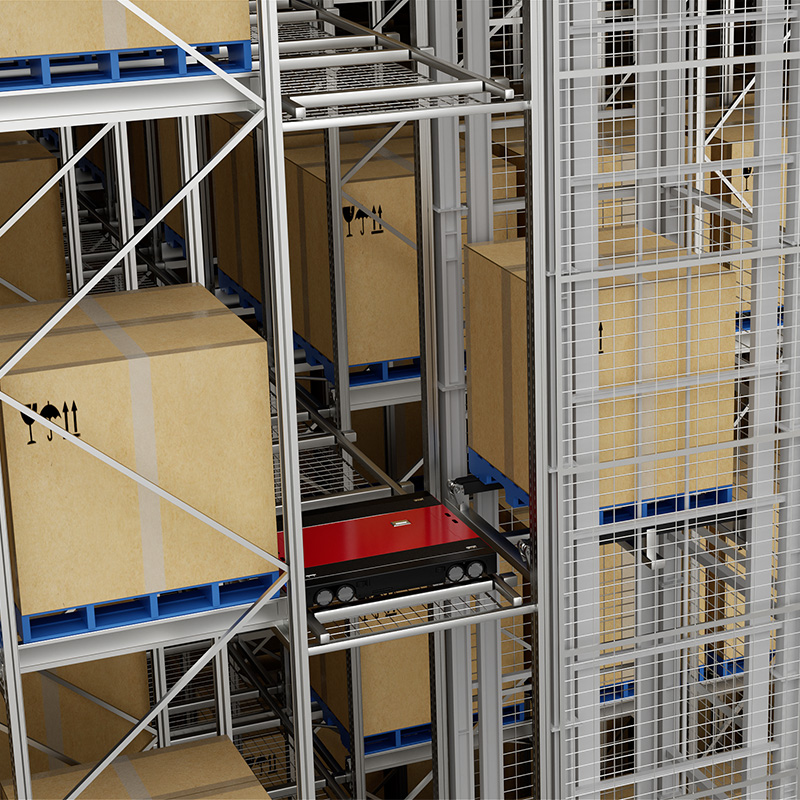
Shuttle racking uses powered shuttle vehicles to move pallets within dedicated storage lanes. Depending on the design, forklifts transfer pallets to the system while shuttle vehicles handle movement inside the rack.
Four-way shuttle systems can move horizontally in multiple directions and work with compatible lifts, conveyors, and other equipment to support automated storage and retrieval.
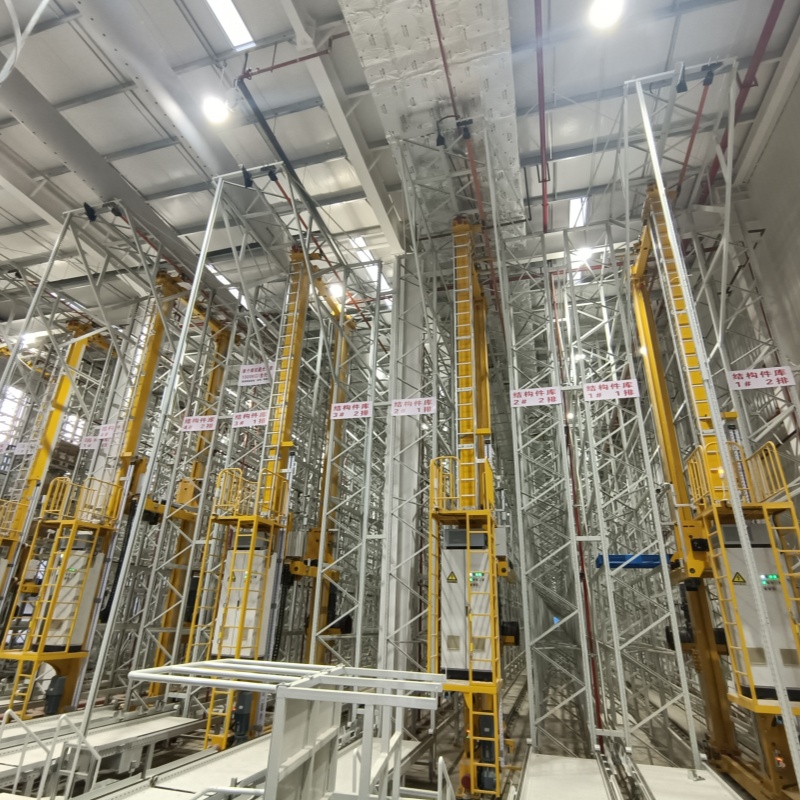
Automated storage and retrieval systems (AS/RS) may also use stacker cranes, lifts, conveyors, and control software to coordinate storage and retrieval tasks.
These systems can reduce manual travel and support high-density storage, but they require integrated planning. Rack geometry, pallet specifications, equipment interfaces, control logic, and maintenance access must all be considered.
Best for: Warehouses with high throughput requirements, limited space, repetitive pallet movements, or plans to automate storage operations.
Explore Zhuku's four-way shuttle system to understand how shuttle-based storage can support automated warehouse operations.
Warehouse Racking Classification by Load Capacity and Automation Level
In addition to structural design, warehouse racking systems can also be classified by load capacity and level of automation. These classifications help businesses identify suitable storage solutions based on product weight, handling requirements, and warehouse operations.
1. Classification by Load Capacity
-
Light-Duty Racking: Designed for lightweight goods, small parts, tools, and cartons. Commonly used in workshops, small warehouses, and picking areas.
-
Medium-Duty Racking: Suitable for cartons, components, and medium-weight materials. Often used in manufacturing facilities and general storage warehouses.
-
Heavy-Duty Racking: Designed for heavy palletized goods and industrial materials. Common applications include pallet warehouses, distribution centers, and manufacturing facilities.
2. Classification by Automation Level
-
Manual Racking: Goods are stored and retrieved manually or with forklifts. Selective pallet racking and conventional shelving are common examples.
-
Semi-Automated Racking: Uses equipment such as pallet shuttles to assist with goods movement, while forklifts or operators still handle certain loading and retrieval tasks.
-
Automated Racking: Integrates automated equipment such as four-way shuttles, stacker cranes, conveyors, and warehouse control software to coordinate storage and retrieval operations.
The right classification depends on product characteristics, load requirements, storage density, throughput, and investment budget. For warehouses with growing automation needs, racking systems can also be designed to support future equipment and software integration.
Which Warehouse Racking System Offers the Highest Storage Density?
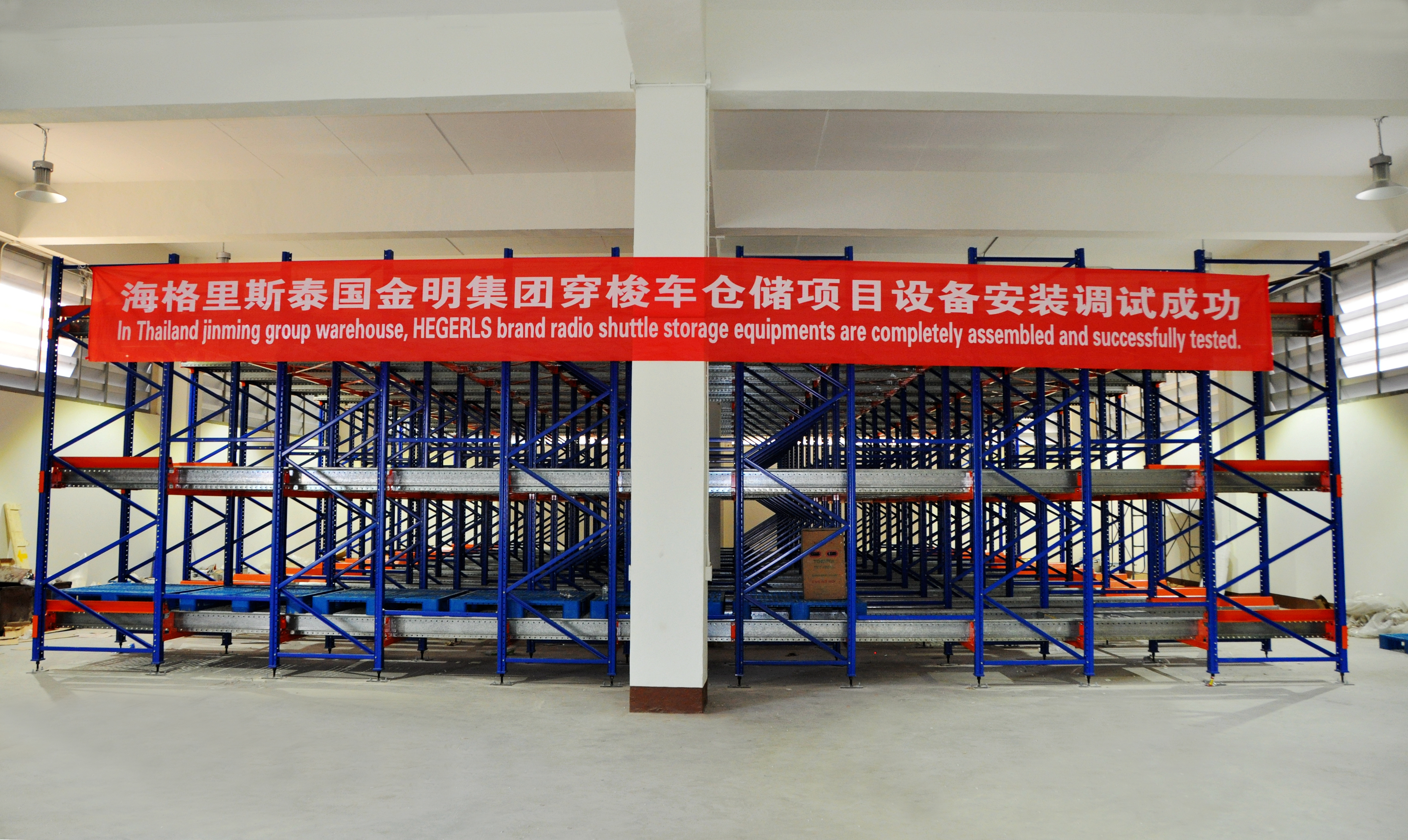
High-density systems such as drive-in racking, push-back racking, shuttle racking, and other appropriately designed AS/RS configurations can reduce aisle requirements and increase storage capacity.
However, no single system provides the highest practical capacity in every warehouse. The result depends on building dimensions, clear height, rack configuration, required access, pallet characteristics, and equipment clearances.
Consider these trade-offs:
-
Drive-in racking: Suitable for dense bulk storage with fewer SKUs.
-
Push-back racking: Provides multiple pallet positions in depth while maintaining access from the front.
-
Shuttle racking: Uses powered vehicles to move pallets within storage lanes.
-
AS/RS: Integrates storage structures with automated equipment to coordinate storage and retrieval.
For businesses considering automation, the objective should be to optimize usable capacity and operational performance together, rather than maximize pallet positions at the expense of access or throughput.
Warehouse Racking Shelves: Types and Applications
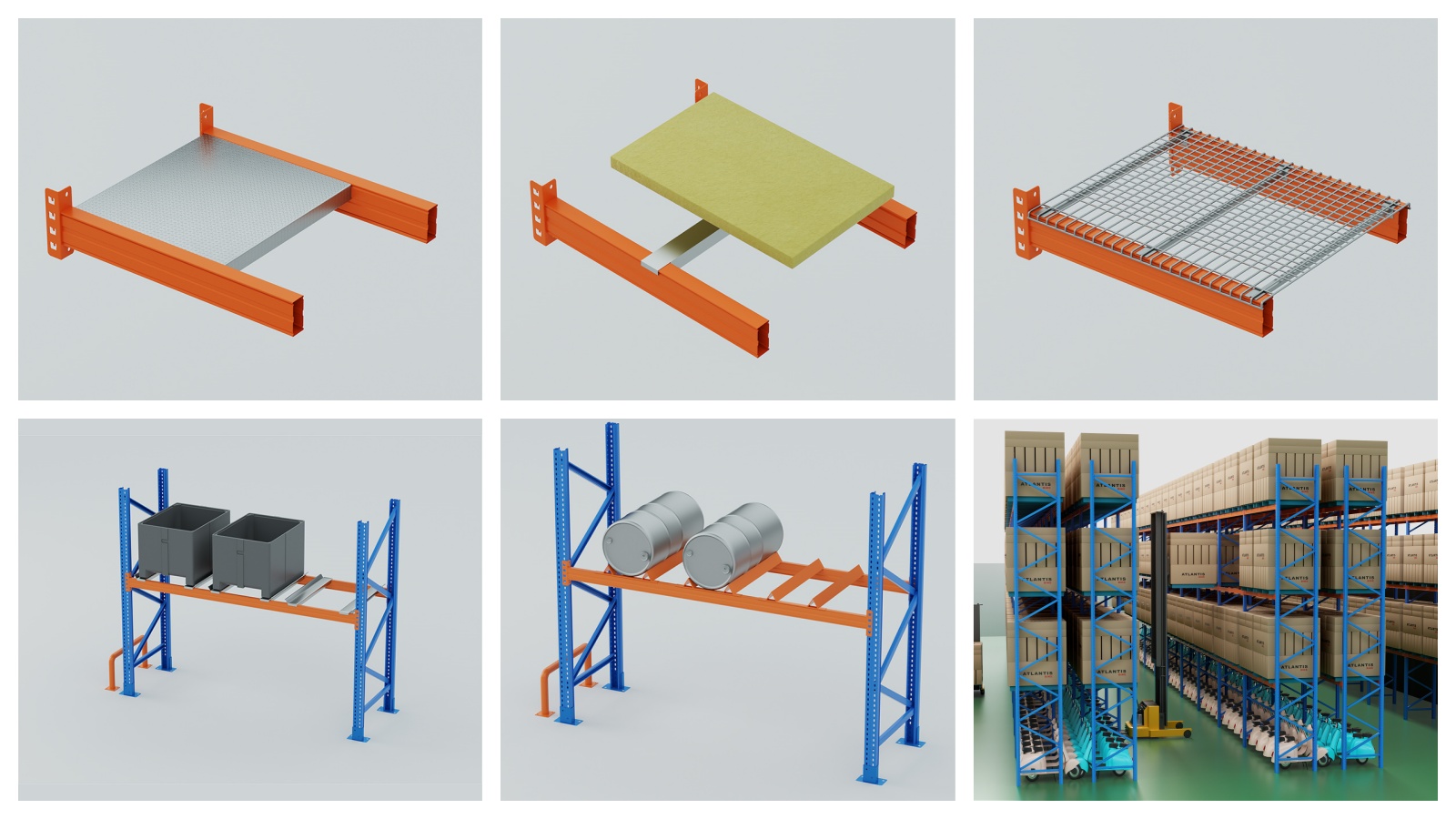
Warehouse racking shelves are the surfaces used to support goods within a storage rack. They can be made from steel, wire mesh, or wood, depending on the load requirements, stored products, and warehouse environment.
Common Types of Warehouse Racking Shelves
-
Steel Shelves: Strong and durable, suitable for industrial products, cartons, tools, and components.
-
Wire Mesh Decking: Allows airflow and better sprinkler water penetration, commonly used in pallet racking systems.
-
Wooden Shelves: Provide a solid storage surface for lightweight goods and general warehouse applications.
-
Solid Steel Panel Shelves: Suitable for smaller items or products requiring continuous support across the shelf surface.
How to Choose Warehouse Racking Shelves
When selecting warehouse racking shelves, consider:
-
Load Capacity: Match the shelf capacity to the weight and distribution of stored goods.
-
Dimensions: Choose suitable shelf width, depth, and spacing.
-
Material: Consider durability, corrosion resistance, and operating conditions.
-
Compatibility: Ensure the shelves are compatible with the rack structure and installed according to the manufacturer's specifications.
The right shelving components help improve storage organization, product accessibility, and warehouse space utilization.
Key Safety and Installation Considerations
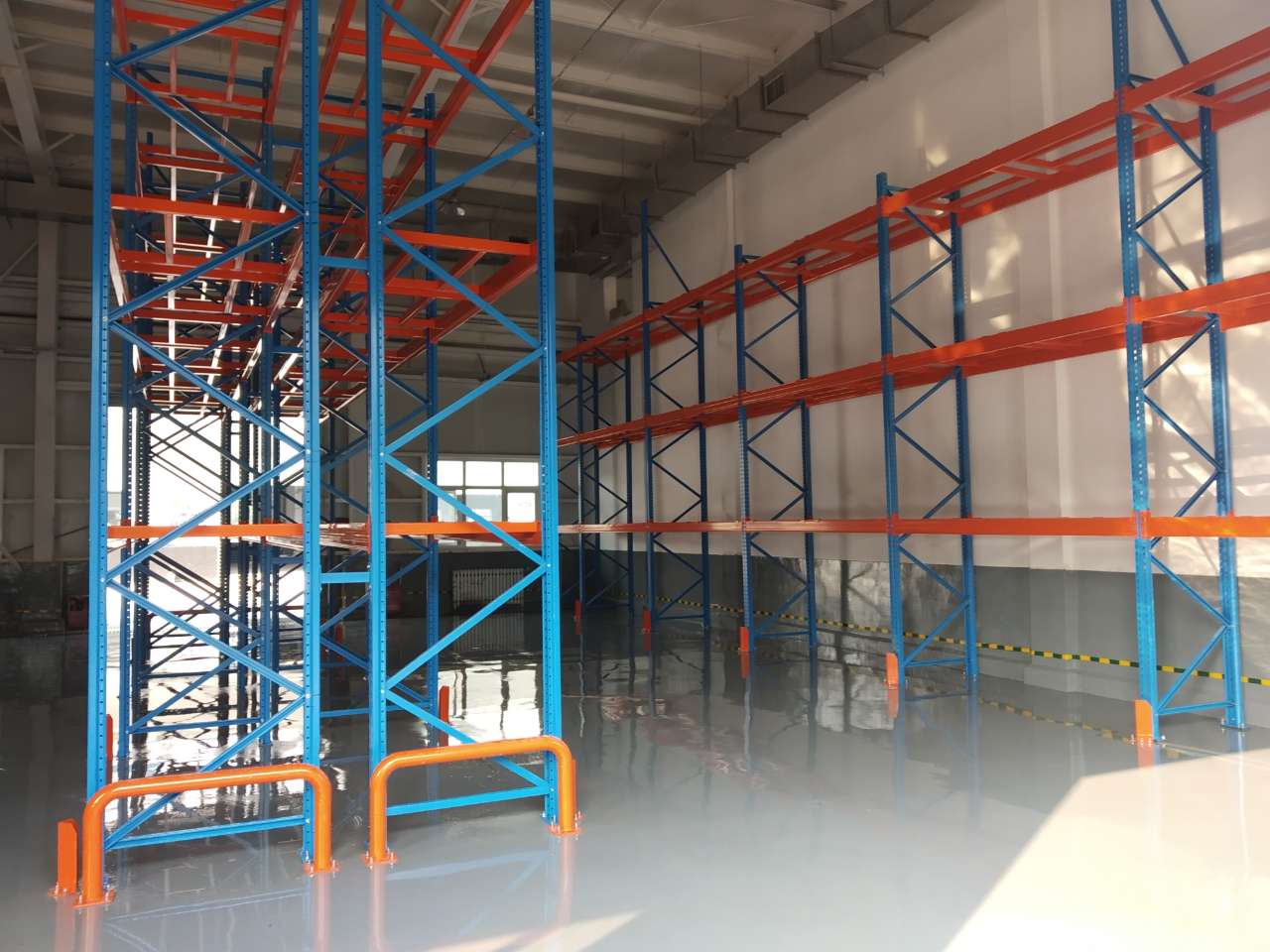
Proper installation and regular inspection are essential for maintaining warehouse racking safety and performance. Before installing a racking system, consider the following factors:
-
Floor and Foundation Conditions: Check floor flatness, concrete strength, and load-bearing capacity to ensure the floor can support the rack structure and stored goods.
-
Load Capacity: Confirm the rated capacity of uprights, beams, shelves, and complete rack bays. Display load notices clearly and never exceed the specified limits.
-
Warehouse Layout and Aisle Width: Plan aisle dimensions, forklift turning space, and access routes according to the handling equipment and warehouse workflow.
-
Rack Stability and Anchoring: Install racks according to engineering specifications, including required floor anchors, bracing, and structural connections.
-
Fire Protection and Emergency Access: Maintain appropriate sprinkler clearance, fire exits, and emergency access in accordance with local safety regulations.
-
Regular Inspection and Maintenance: Check for damaged uprights, bent beams, loose connections, overloaded shelves, and other signs of structural damage. Repair or replace damaged components promptly.
Professional planning, qualified installation, and routine inspections help extend racking service life while reducing warehouse safety risks. Always follow the manufacturer's installation instructions and applicable local regulations.
How to Choose the Right Warehouse Racking System
Selecting warehouse racking should begin with operational requirements rather than a preferred product type.
Step 1: Analyze Your Inventory
Identify the number of SKUs, pallets per SKU, product dimensions, load weights, turnover rates, and seasonal variations.
A warehouse with many SKUs and few pallets per SKU generally benefits from greater selectivity. A warehouse with a few high-volume SKUs may benefit more from deep-lane storage.
Step 2: Define Storage Density and Accessibility
Storage density measures how efficiently available space is used. Selectivity describes how easily an individual pallet can be accessed.
These objectives often involve a trade-off. Reducing the number of aisles may create more storage positions, but storing pallets several deep can make individual loads harder to reach.
Choose the balance that supports actual order-picking and replenishment requirements.
Step 3: Confirm FIFO or LIFO Requirements
FIFO means first in, first out. It is often important for products with expiry dates or strict batch rotation requirements.
LIFO means last in, first out. It may be acceptable for certain bulk-storage operations where product age and batch sequence are less restrictive.
The required stock rotation method should influence the racking design from the beginning.
Step 4: Check the Building and Equipment
Review clear height, floor conditions, column locations, fire protection, pallet dimensions, and material-handling equipment.
The design must also account for load capacity, rack stability, aisle clearances, and applicable local standards. Structural design and installation should be completed by qualified professionals.
Step 5: Consider Future Automation
If automation is a future objective, evaluate whether the proposed racking can accommodate shuttle vehicles, stacker cranes, conveyors, lifts, or other equipment.
For example, a four-way shuttle system needs rack geometry and transfer interfaces compatible with its movement and operating logic. A conventional rack layout should not automatically be assumed suitable for robotic operation.
Planning for automation early can reduce redesign and integration challenges later.
Step 6: Compare Total Operating Value
Do not compare systems using the purchase price alone. Consider storage capacity, labor requirements, handling equipment, maintenance, energy consumption where applicable, and the cost of operational disruption.
A higher initial investment may be justified when it delivers measurable improvements in capacity or throughput. However, the business case should be based on the actual warehouse profile rather than assumed productivity gains.
Warehouse Racking Cost: What Affects the Price?
Warehouse racking costs vary depending on the storage system, load capacity, rack dimensions, and project requirements. A standard selective pallet racking system generally requires a lower initial investment than high-density or automated storage systems. However, the total project cost should include more than the rack structure itself.
Key Factors Affecting Warehouse Racking Cost
-
Racking Type: Selective, drive-in, push-back, cantilever, and shuttle racking systems have different structural designs and component requirements.
-
Load Capacity: Higher pallet weights require stronger uprights, beams, and structural components.
-
Rack Height and Dimensions: Taller racks, longer spans, and additional storage levels affect material requirements and engineering costs.
-
Storage Capacity: The required number of pallet positions directly influences the overall project scale.
-
Materials and Accessories: Steel specifications, surface treatments, decking, safety guards, and other accessories add to the cost.
-
Installation and Transportation: Freight, site conditions, installation labor, floor anchoring, and engineering services should be included in the project budget.
-
Automation Requirements: Shuttle vehicles, stacker cranes, conveyors, and WMS/WCS software increase the initial investment but can improve storage density and operational efficiency.
How to Estimate Warehouse Racking Costs
For a preliminary estimate, consider the following calculation:
Total Project Cost = Racking Equipment + Accessories + Engineering + Transportation + Installation + Automation (if required)
You can also compare the cost per pallet position:
Cost per Pallet Position = Total Project Cost ÷ Number of Usable Pallet Positions
When comparing supplier quotations, make sure they cover the same storage capacity, specifications, equipment, and installation scope.
How to Get an Accurate Warehouse Racking Quote?
To prepare an accurate quotation, a warehouse racking supplier typically needs:
-
Warehouse length, width, and clear height
-
Pallet dimensions and maximum load weight
-
Required pallet storage capacity
-
Inventory turnover and access requirements
-
Forklift or other material handling equipment
-
Project location and operating environment
The right racking system should balance initial investment, storage capacity, operational efficiency, and long-term costs rather than simply choosing the lowest quotation.
How Does Warehouse Racks Work with WMS, WCS, and AS/RS?
Warehouse racking defines where goods are stored. Automation and software determine how goods move through those locations.
| Component | Primary role | Practical example |
| Warehouse racking | Provides physical storage positions | Holds pallets at defined locations |
| WMS (Warehouse Management System) | Manages inventory and warehouse tasks | Determines where a pallet should be stored |
| WCS (Warehouse Control System) | Coordinates automated equipment | Sends movement instructions to compatible equipment |
| AS/RS | Automates storage and retrieval | Uses shuttle vehicles or stacker cranes to move pallets |
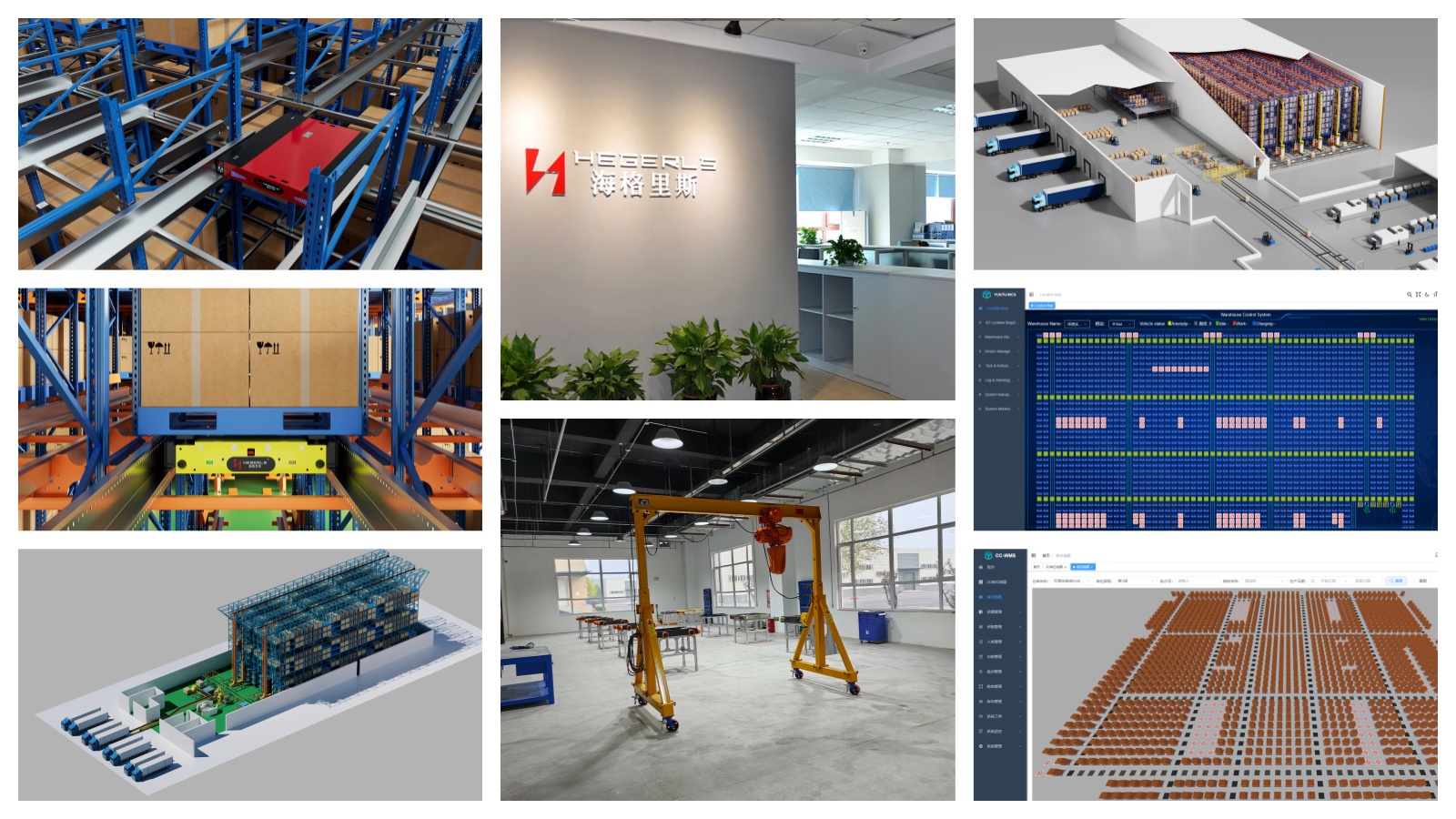
In an integrated warehouse, the WMS Warehouse Management System manages inventory records and task allocation. The WCS Warehouse Control System coordinates supported automation equipment, while the racking provides the physical infrastructure for storage.
For example, when a pallet arrives, the WMS may assign a storage location. The control system then coordinates the required equipment to move the pallet into that position. When an order is released, the systems coordinate retrieval according to the warehouse design.
The exact workflow depends on the software architecture, equipment interfaces, and project requirements.
Zhuku develops warehouse integration solutions that combine suitable storage structures, automation equipment, and control systems. The objective is to match the physical layout and equipment behavior with the warehouse's operational needs.
Why Choose Zhuku for Warehouse Racking and Automation?
Zhuku (Hebei) Automatic Storage Technology Co., Ltd. focuses on warehouse integration, helping businesses evaluate storage structures and automation requirements as part of a coordinated solution.
Rather than treating racking as an isolated purchase, Zhuku can assess how storage configuration relates to inventory characteristics, handling processes, and automation objectives.
Depending on the project, the solution may involve pallet racking, four-way shuttle systems, other automated storage and retrieval equipment, and warehouse software integration.
This integrated approach is particularly relevant when a warehouse needs to increase storage capacity while maintaining practical access, reliable material flow, and room for future development.
To evaluate a project, prepare your warehouse layout, pallet specifications, estimated storage positions, SKU profile, throughput requirements, and automation goals. These details help establish a more realistic design scope.
Conclusion
Warehouse racking affects storage capacity, inventory accessibility, handling efficiency, and the feasibility of future automation.
Selective racking offers flexibility, deep-lane systems prioritize density, and shuttle-based or other AS/RS solutions can support more automated storage operations. The right choice depends on the relationship between inventory, building constraints, material flow, and business objectives.
Zhuku helps businesses evaluate warehouse storage and automation as a coordinated system rather than a collection of separate products.
Planning a new warehouse or upgrading an existing facility? Send Zhuku your warehouse layout, pallet specifications, estimated storage capacity, and throughput requirements. The team can help assess suitable racking configurations and integrated warehouse automation options.