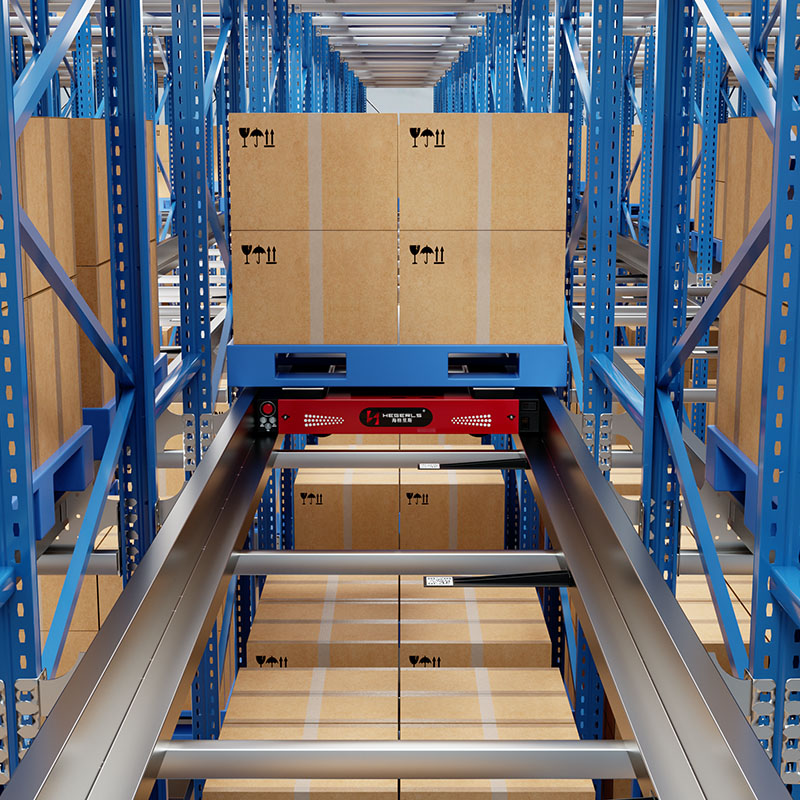
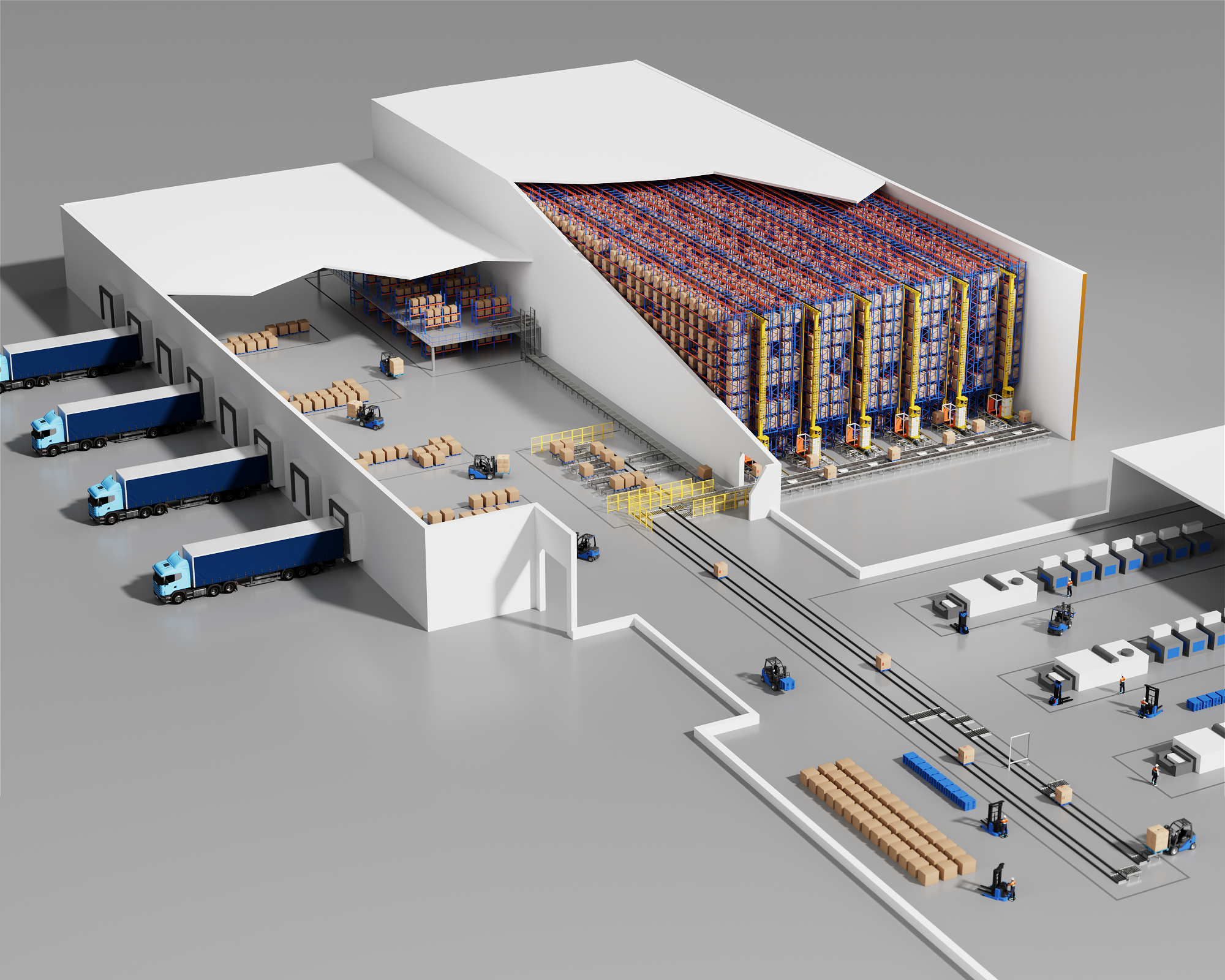
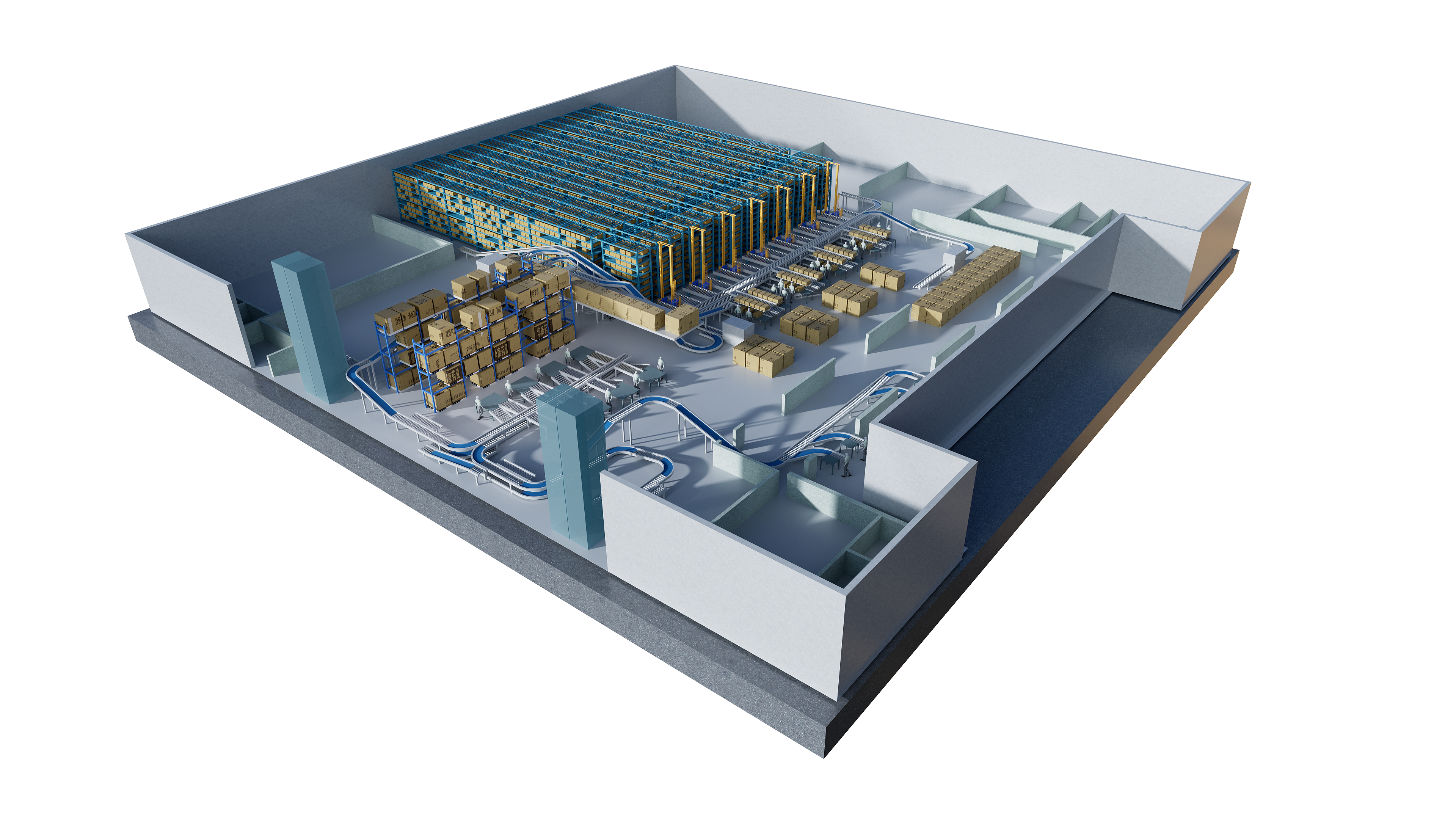
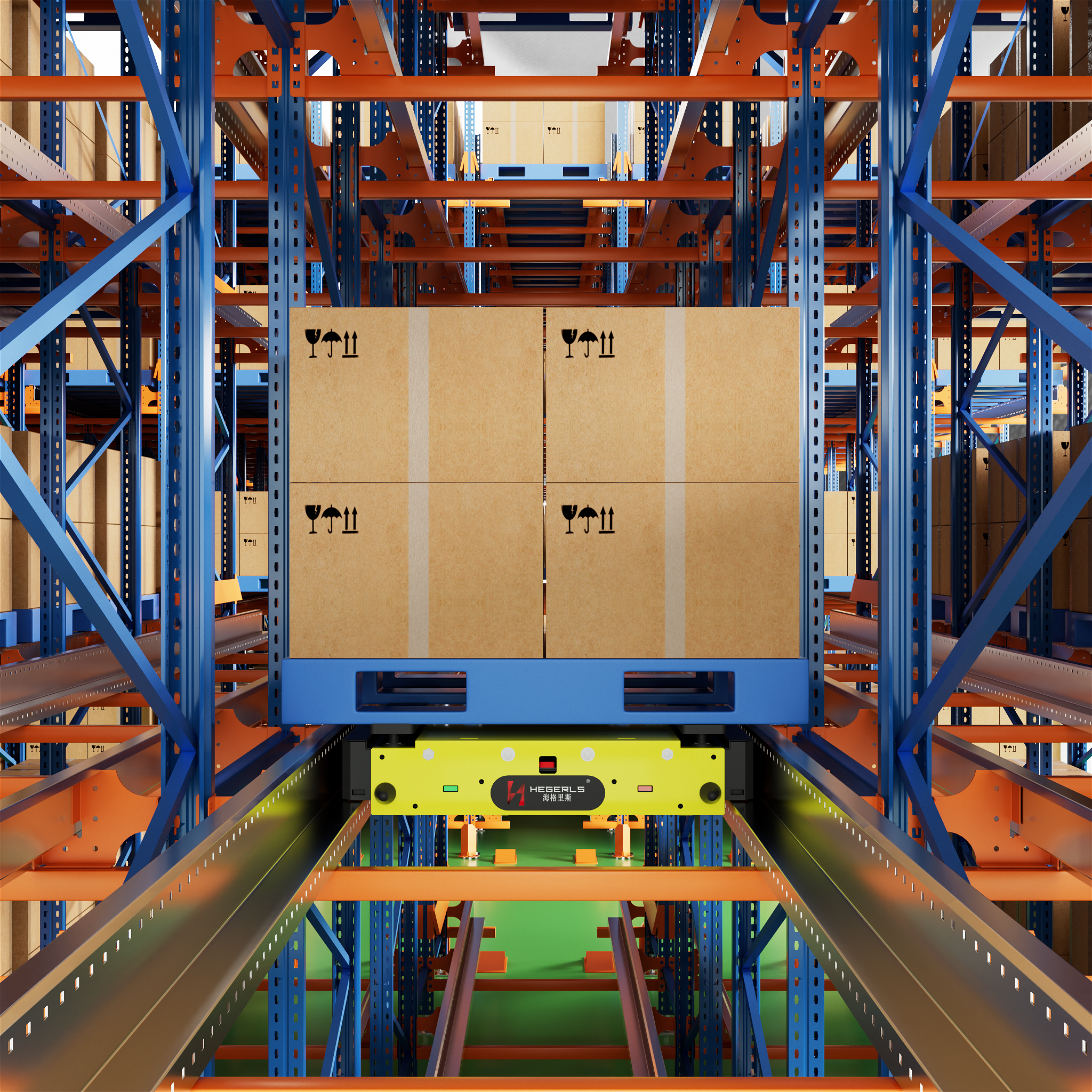
A rack-supported warehouse is a warehouse in which the storage rack structure also serves as the primary structural framework of the building. Instead of constructing a conventional warehouse first and installing racks afterward, the rack system is engineered to support the roof, wall cladding, stored goods, and other structural loads.
This integrated approach is also commonly referred to as a rack-supported building, rack-clad warehouse, or rack-supported warehouse system.
Rack-supported warehouses are particularly suitable for high-bay storage, ASRS warehouses, automated storage systems, cold storage, logistics centers, and large-scale distribution facilities where storage density, land utilization, construction efficiency, and automation are important.
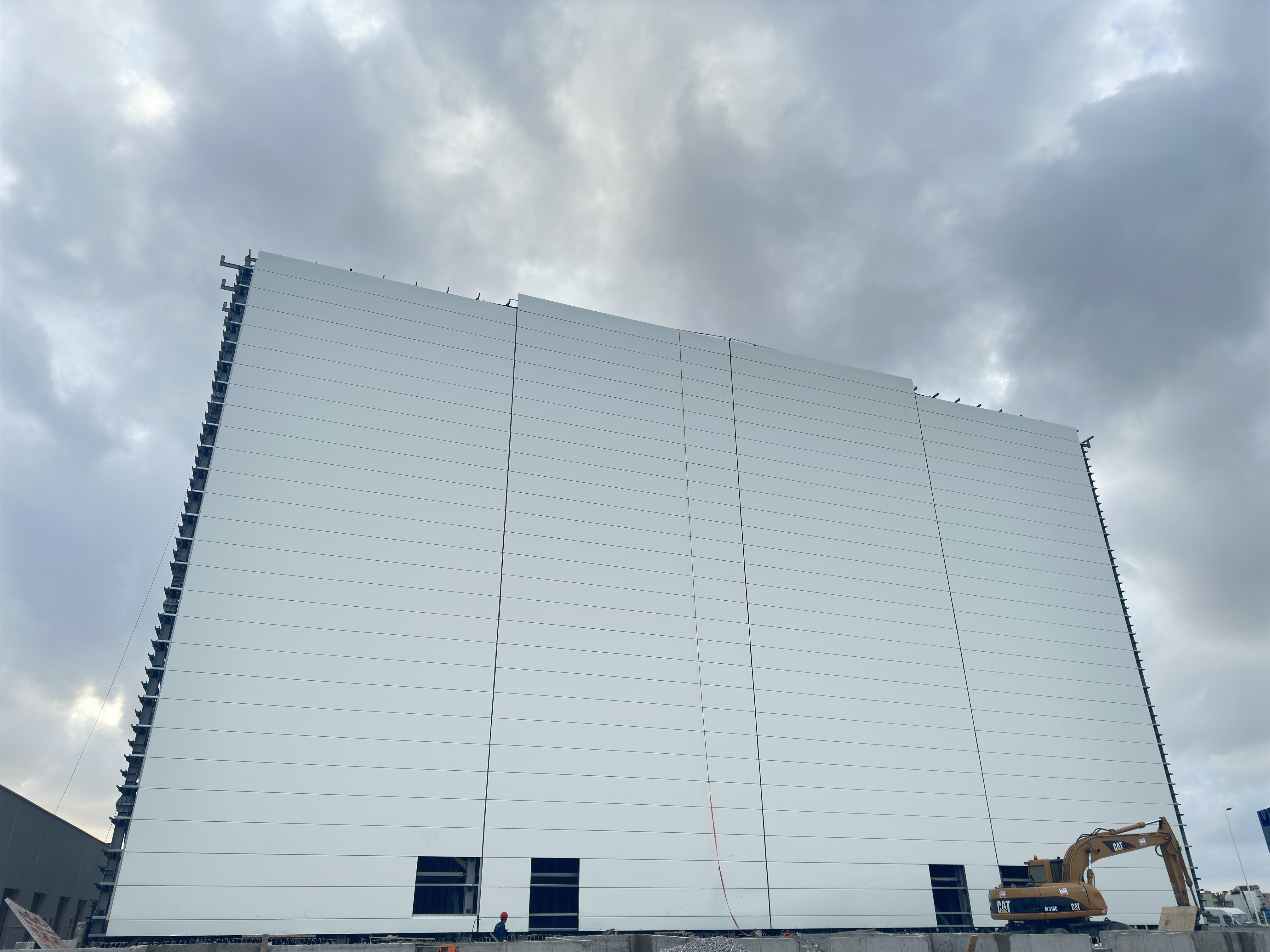
What Is the Difference Between a Conventional Warehouse and a Rack-Supported Warehouse?
The fundamental difference is how the building and storage rack are designed and constructed.
Conventional WarehouseThe traditional approach follows: Build the Warehouse → Install the Storage Racks The building structure and storage rack are independent systems. The warehouse first provides the structural framework, while the racking system is installed inside the completed building. |
Rack-Supported WarehouseThe integrated approach follows: Design the Rack + Building as One Structural System The storage rack itself becomes a major part of the building's structural framework, supporting the:
This creates a more integrated warehouse structure. |
Conventional Warehouse vs. Rack-Supported Warehouse
| Comparison | Conventional Warehouse | Rack-Supported Warehouse |
| Construction concept | Building first, racks installed afterward | Rack and building designed as one system |
| Building structure | Independent structure | Rack structure serves as major structural framework |
| Roof support | Building columns/structure | Rack structure |
| Wall support | Building structure | Rack structure or integrated structural system |
| Storage capacity | Depends on building and rack design | Optimized around rack structure |
| Land utilization | Moderate | High |
| Construction process | Two relatively independent systems | Integrated engineering and construction |
| Structural design | Building + rack separately | Building + rack + equipment together |
| Automation integration | Designed separately or integrated later | Can be considered from the beginning |
| Suitable applications | General warehouses | High-bay/high-density warehouses |
What Are the Advantages of a Rack-Supported Warehouse?
1. Faster Construction
Because the rack structure and building structure are integrated, the project can reduce duplicated construction processes.
Instead of:
Warehouse Construction → Rack Installation
the rack-supported approach coordinates the building and storage structure as one project.
This can potentially shorten the overall construction schedule, depending on project complexity and site conditions.
2. Potentially Lower Construction Costs
A conventional warehouse requires an independent building structure and a separate storage rack system.
A rack-supported warehouse combines these functions.
By reducing duplicated structural components, the overall project can potentially achieve cost savings in structural construction and building materials.
However, actual savings depend on:
- Warehouse height
- Storage capacity
- Structural loads
- Foundation conditions
- Local building codes
- Automation requirements
- Fire protection
- Cladding and insulation requirements
Therefore, cost should always be evaluated at the complete project level rather than comparing rack prices alone.
3. More Storage Positions
Because the building is designed around the storage system, the warehouse layout can be optimized for:
- Rack height
- Storage depth
- Aisle configuration
- Pallet positions
- Automation equipment
This allows companies to maximize the number of storage positions within a limited footprint.
For high-density applications, rack-supported construction can therefore provide a strong foundation for high-bay automated storage.
What Are the Common Types of Rack-Supported Warehouses?
Two common structural approaches can be used for the external structure.
Type 1: Double-Upright Perimeter StructureThe external structure uses double rack uprights around the warehouse perimeter. The rack uprights form an important part of the building's load-bearing system while also providing pallet storage positions. This configuration can provide an integrated structural solution for high-bay storage. |
Type 2: Steel Structural PerimeterThe warehouse perimeter uses a steel structural framework, while the internal rack system is integrated with the overall building design. This approach can provide additional flexibility for certain building configurations and project requirements. The appropriate structure should be determined through project-specific structural analysis rather than selecting a standard configuration in advance. |
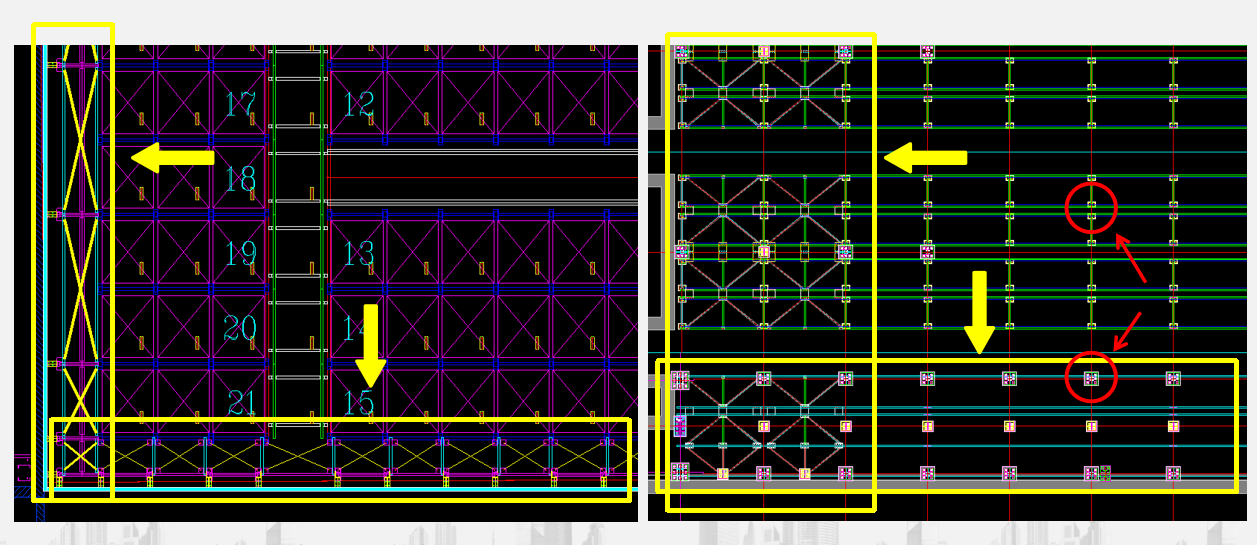
How Is Rack-Supported Warehouse Design Different?
Rack-supported warehouse design requires a different engineering approach from conventional pallet racking.
The key change is from component-level design to system-level design.
A conventional rack is primarily designed around stored goods and rack stability.
A rack-supported building must consider the interaction between:
Rack + Building + Storage Loads + Equipment + Environmental Loads
This creates significantly more complex engineering requirements.
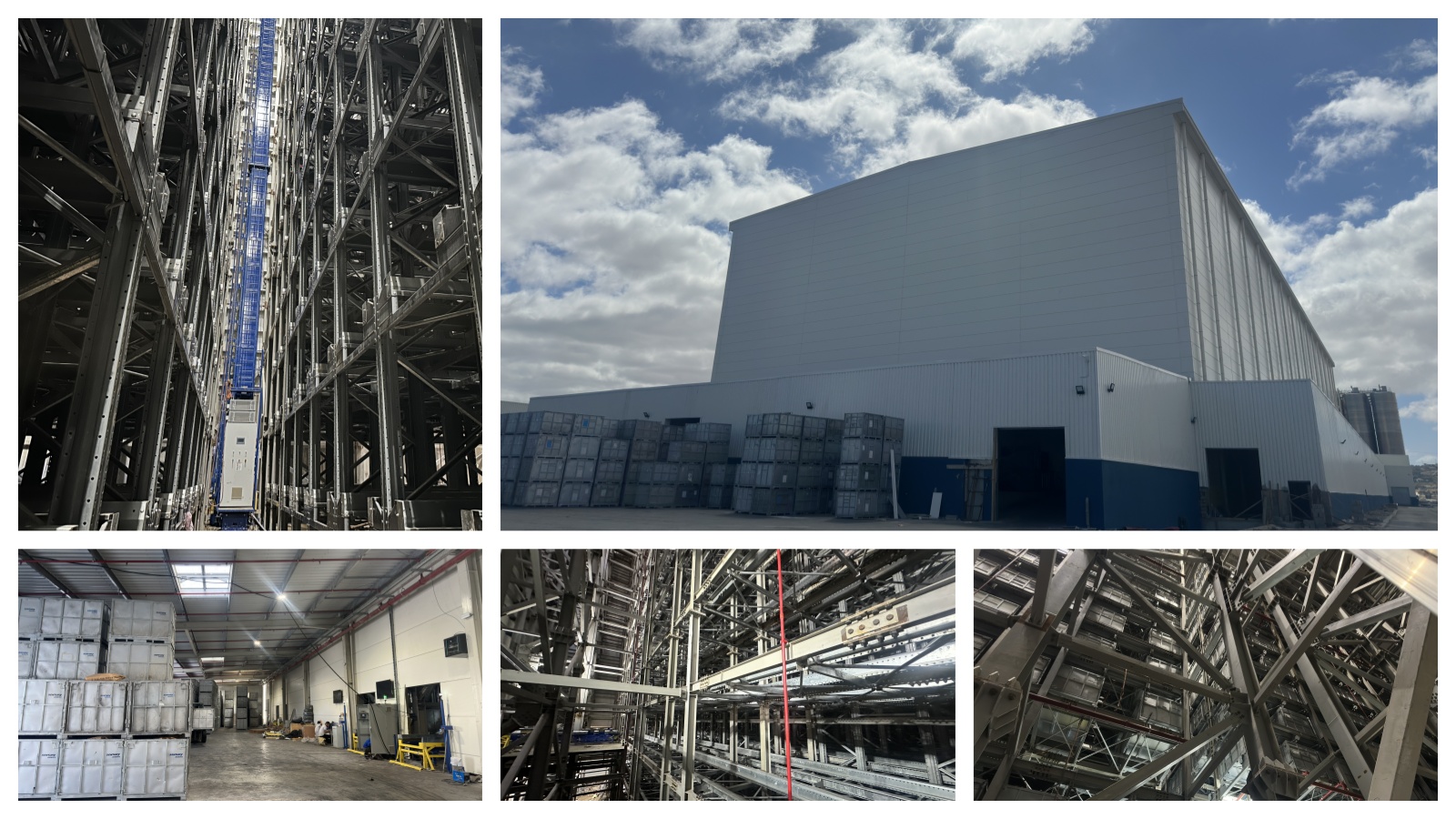
Rack-Supported Warehouse Structural Design Comparison
| Design Dimension | Conventional Racking | Rack-Supported Structure |
| Load combinations | Mainly storage loads | Storage + wind + snow + seismic + roof maintenance + equipment loads |
| Structural accuracy | Rack installation requirements | Rack, building and equipment precision must be coordinated |
| Stability | Rack bracing system | Rack + structural columns + roof bracing + column bracing |
| Design standards | Mainly racking standards | Racking + structural + loading + seismic requirements |
| Design approach | Component-oriented | System-oriented |
| Equipment requirements | Considered separately where applicable | Integrated into structural design |
| Foundation connection | Rack anchoring | Critical structural load-transfer connection |
| Engineering coordination | Mainly rack engineering | Structural, rack, equipment, architectural, electrical and fire protection coordination |
What Loads Must Be Considered?
One of the most important differences is the load combination.
A conventional storage rack primarily considers storage-related loads.
A rack-supported warehouse must consider a broader range of loads, including:
- Pallet storage loads
- Dead loads
- Wind loads
- Snow loads where applicable
- Seismic loads
- Roof maintenance loads
- Equipment dynamic loads
- Stacker crane loads
- Conveyor loads
- Other project-specific loads
For automated warehouses, equipment movement can introduce dynamic forces that must be considered during structural design.
Why Is Structural Precision Important?
Precision is particularly important when a rack-supported warehouse integrates stacker cranes or other automated equipment.
A conventional rack primarily needs to meet storage and structural requirements.
An automated high-bay warehouse must additionally provide the dimensional and alignment conditions required by equipment operation.
For example, stacker crane systems require accurately designed and installed:
- Rack uprights
- Rail beams
- Running rails
- Foundation interfaces
- Equipment connection points
The exact tolerances should be determined according to the selected equipment, structural system, applicable standards, and engineering calculations.
This is why rack engineering and automation equipment engineering must be coordinated from the beginning of the project.
Stability Design of a Rack-Supported Warehouse
A rack-supported warehouse cannot rely only on the conventional rack bracing system.
Depending on the project, additional structural systems may include:
- Perimeter strengthening columns
- Roof horizontal bracing
- Column bracing
- Rack bracing
- Structural connections
- Foundation anchoring systems
The objective is to establish a clear and reliable load-transfer path from the roof, racks, equipment, and environmental loads through the structural system and ultimately into the foundation.
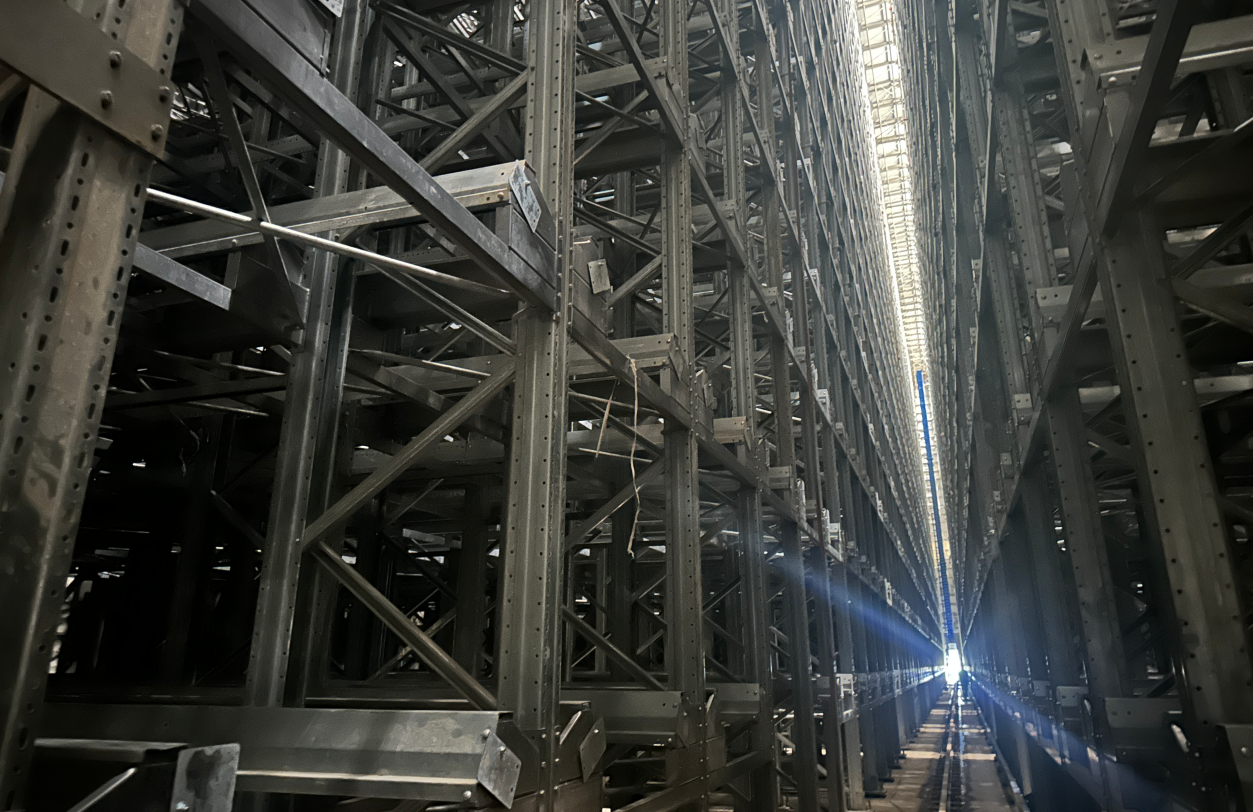
Rack-to-Foundation Connection
The connection between the rack structure and foundation is one of the most important parts of a rack-supported warehouse.
It is responsible for transferring structural forces into the foundation.
The connection design should consider:
- Vertical loads
- Horizontal loads
- Wind forces
- Seismic forces
- Equipment forces
- Rack stability
- Foundation conditions
Where required by the structural design, rigid or appropriately engineered structural connections can provide a reliable load-transfer path.
The exact connection type should always be determined through engineering calculations and applicable design standards.
Why Multidisciplinary Coordination Matters
A rack-supported warehouse is not simply a racking project.
It requires coordination between multiple disciplines, including:
- Rack engineering
- Structural engineering
- Architecture
- Warehouse automation
- Mechanical systems
- Electrical engineering
- Fire protection
- Foundation engineering
- Construction
Early coordination helps ensure that requirements are identified before construction begins.
Rack EngineeringStorage loads, rack geometry, deformation requirements, and structural connections should be coordinated. |
Equipment EngineeringStacker cranes, conveyors, forklifts, shuttles, and other equipment have specific operating and installation requirements. |
ConstructionDesign should consider construction tolerances, installation sequence, foundation conditions, and long-term settlement. |
Fire ProtectionFire protection requirements must be integrated into the building and storage design from the beginning. |
Three Core Principles of Rack-Supported Warehouse Design
1. Safety FirstStructural safety must always be the primary consideration. The warehouse should be designed to withstand all applicable loads and operating conditions. |
2. Compliance With Applicable StandardsRack-supported warehouses need to comply with the applicable:
The exact standards depend on the country, project location, building type, and engineering scope. |
3. Clear Load TransferEvery major structural load should have a clear and reliable transfer path: Roof / Rack / Equipment Loads ↓ Structural Members ↓ Connections ↓ Foundation A well-engineered system minimizes unnecessary load-transfer complexity and avoids weak or unclear structural connections. |
What Should Be Considered When Designing a Rack-Supported Warehouse?
Before starting the design, several factors should be defined.
Storage Requirements
|
Warehouse Requirements
|
Equipment Requirements
|
Operational Requirements
|
The earlier these requirements are defined, the more effectively the rack-supported warehouse can be optimized.
Is a Rack-Supported Warehouse Suitable for ASRS?
Yes. Rack-supported warehouses are particularly well suited to ASRS applications.
A typical automated rack-supported warehouse can integrate:
ERP / MES
↓
↓
↓
Stacker Crane / Four-Way Shuttle / Pallet Shuttle / Conveyor
↓
Automated Storage & Retrieval
This allows the building structure, storage system, automation equipment, and warehouse software to be planned as an integrated system.
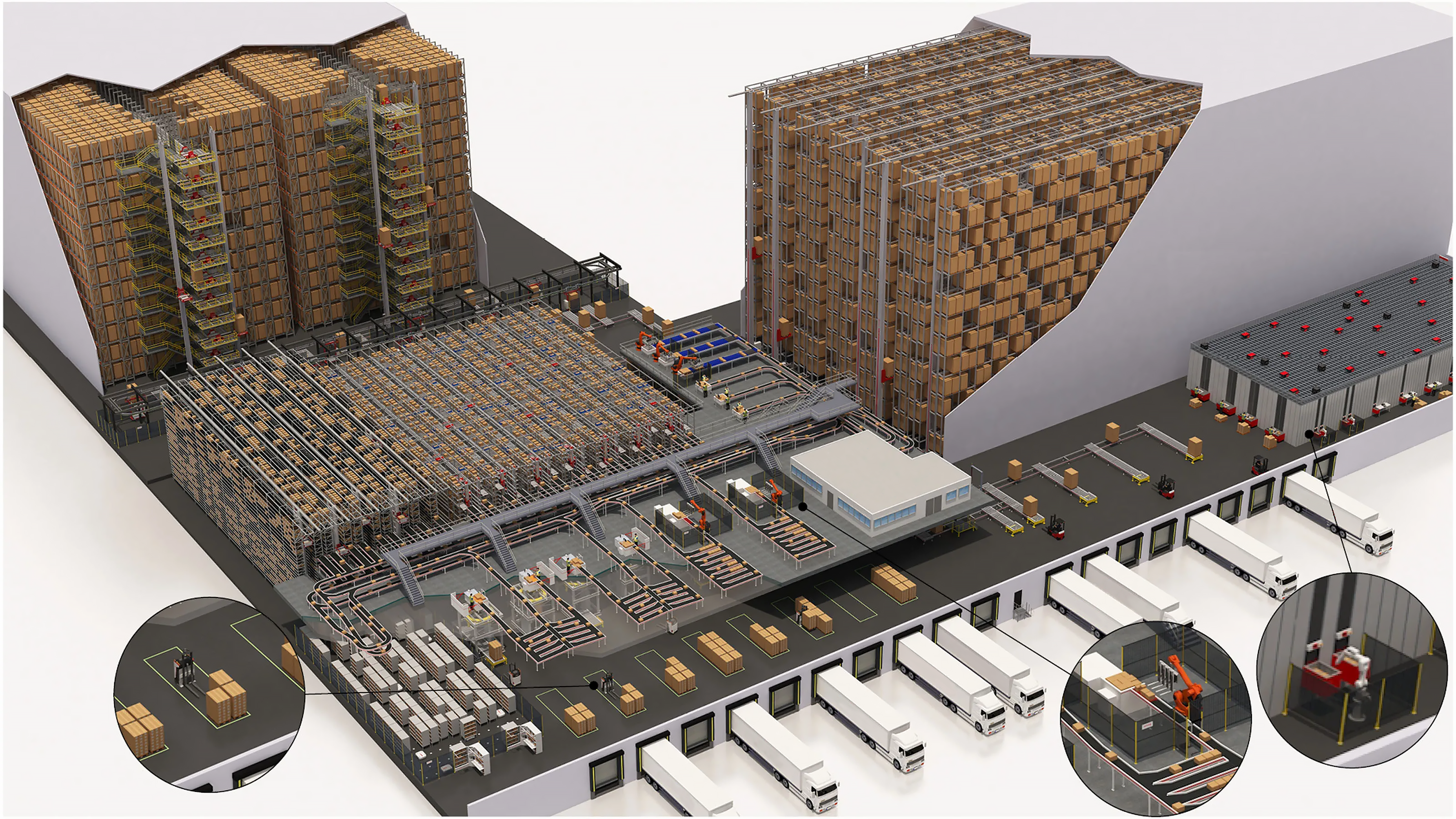
Rack-Supported Warehouse vs. Rack-Clad Warehouse
The terms rack-supported warehouse, rack-supported building, and rack-clad warehouse are often used similarly in the industry.
However, terminology and structural definitions can vary between markets and engineering standards.
For international projects, the important question is not simply what the structure is called, but:
Which structural elements carry the building loads, how are loads transferred, and how are the storage and automation systems integrated?
This distinction is particularly important when preparing engineering specifications and contracts.
When Should You Choose a Rack-Supported Warehouse?
A rack-supported warehouse is particularly worth considering when:
- Large storage capacity is required
- Land availability is limited
- High-bay storage is planned
- Vertical space needs to be maximized
- ASRS or shuttle automation is required
- Long-term storage demand is relatively predictable
- A new warehouse is being constructed
For warehouses requiring frequent structural changes or highly flexible layouts, a conventional building with independent racking may be more appropriate.
Why Choose Zhuku for Rack-Supported Warehouse Solutions?
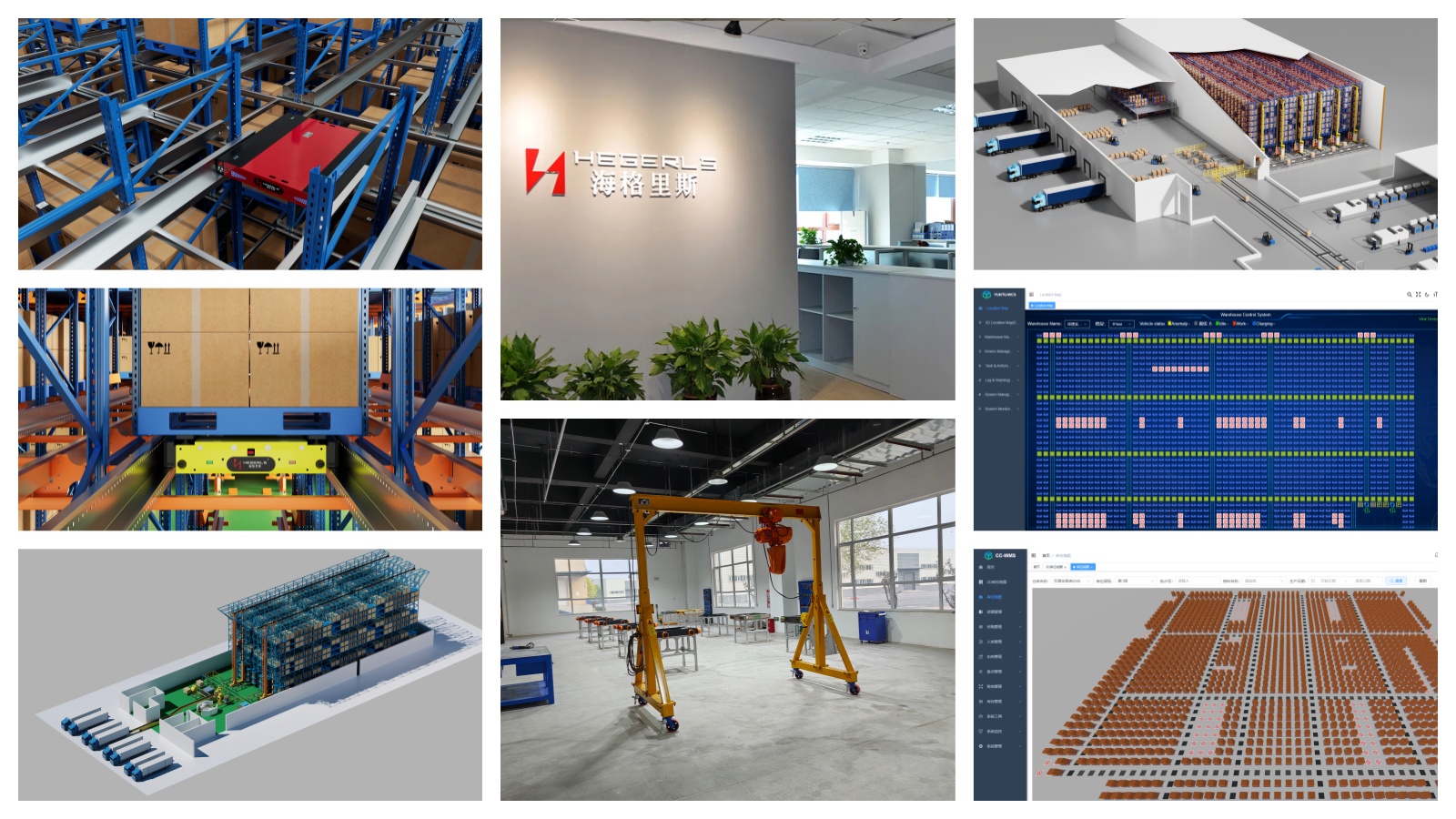
Zhuku provides integrated rack-supported warehouse, high-bay storage, and warehouse automation solutions.
Our capabilities can cover:
- Rack-supported warehouse design
- High-bay racking
- ASRS
- Stacker crane systems
- Four-way shuttle systems
- Pallet shuttle systems
- Shuttle lifts
- Conveyors
- CC-WMS
- YUNTU-WCS
Zhuku approaches rack-supported warehouses from a system engineering perspective, coordinating storage requirements, structural loads, automation equipment, software, construction conditions, and future operational needs.
From warehouse planning and structural design to equipment integration, software deployment, installation, and commissioning, the objective is to create a safe, efficient, high-density, and scalable warehouse system.
Conclusion
A rack-supported warehouse is more than a storage rack installed inside a building. It is an integrated structural system in which the rack itself forms a major part of the warehouse's load-bearing framework.
Compared with the traditional “build the warehouse first, install the racks later” approach, rack-supported construction integrates the building and storage system from the beginning. This can provide advantages in construction efficiency, land utilization, storage capacity, and warehouse automation.
However, these benefits depend on professional engineering.
The key is to move from “component thinking” to “system thinking”—designing the rack, building, foundation, automation equipment, software, fire protection, and construction process as one coordinated system.
For large-scale high-bay and automated warehouses, this integrated approach can provide a strong foundation for building safer, denser, and more efficient storage facilities.
Zhuku provides complete rack-supported warehouse solutions, combining rack engineering, high-density storage, ASRS, shuttle technology, and intelligent warehouse software to meet the specific requirements of modern logistics and manufacturing facilities.
Build a High-Density Rack-Supported Warehouse
Planning a rack-supported warehouse, high-bay ASRS, or automated storage facility?
Zhuku provides integrated solutions covering rack engineering, structural design, ASRS, shuttle systems, WMS, WCS, and warehouse automation.
Tell us your warehouse size, storage capacity, pallet specifications, and throughput requirements.