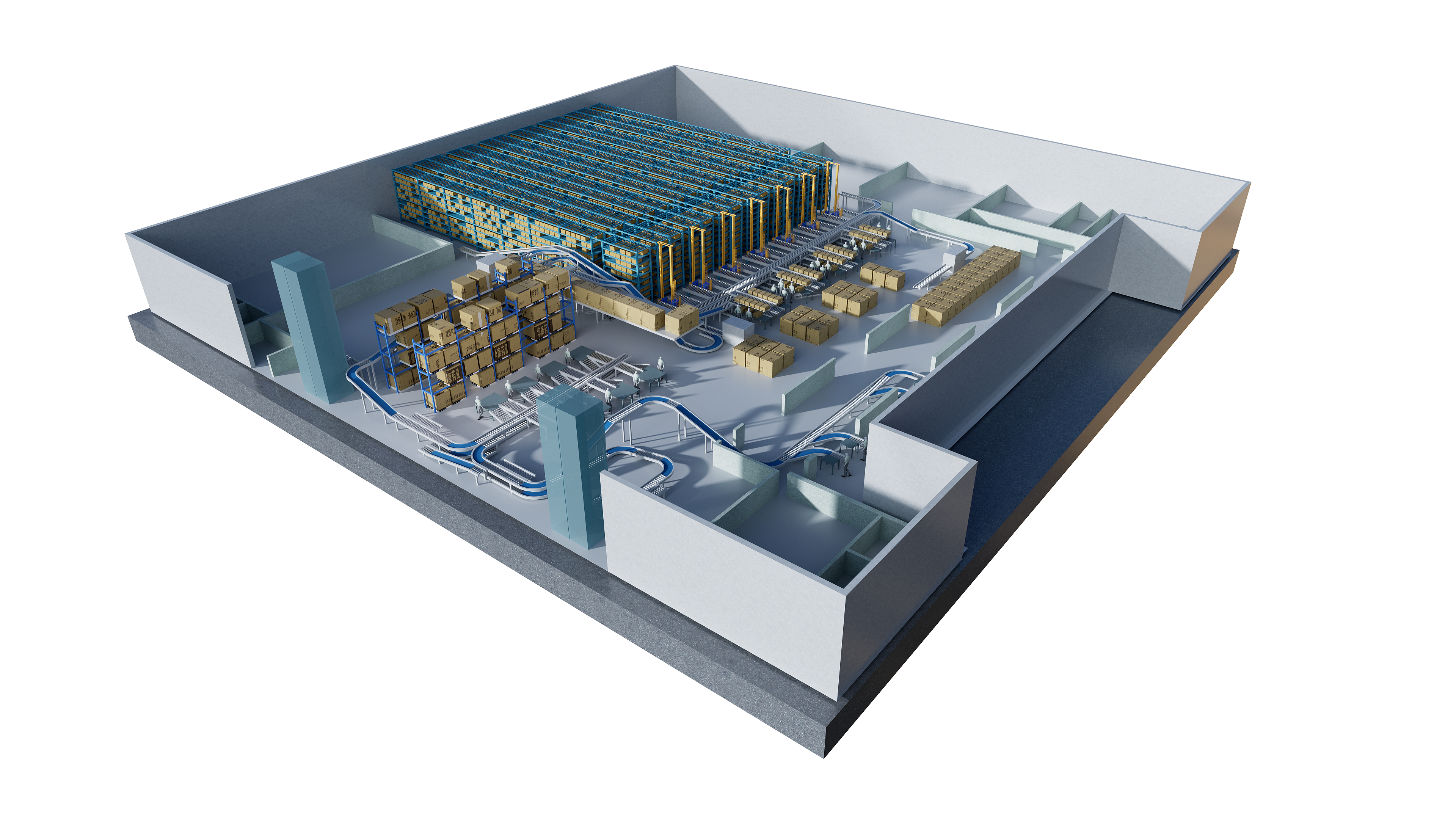
Warehouse automation is moving beyond the automation of individual machines. In 2026, modern warehouses are increasingly being designed as integrated systems in which warehouse management software, equipment control systems, artificial intelligence, and automated material-handling equipment work together.
At the management level, a Warehouse Management System (WMS) manages inventory, orders, receiving, putaway, picking, and warehouse processes. A Warehouse Control System (WCS) translates warehouse tasks into commands for automated equipment and coordinates the movement of machines in real time.
AI adds another layer of intelligence by analyzing warehouse data, predicting demand, optimizing storage locations, improving task allocation, and supporting equipment maintenance.
At the physical execution layer, technologies such as AS/RS, four-way shuttles, stacker cranes, robots, AGVs, AMRs, conveyors, and lifts perform the actual movement and storage of goods.
A typical intelligent warehouse therefore connects:
ERP / MES → CC-WMS → YUNTU-WCS → AS/RS / Shuttle / Robot / Conveyor → Warehouse Operations
This integrated architecture allows warehouse automation to move from isolated equipment automation toward intelligent, connected, and scalable warehouse operations.
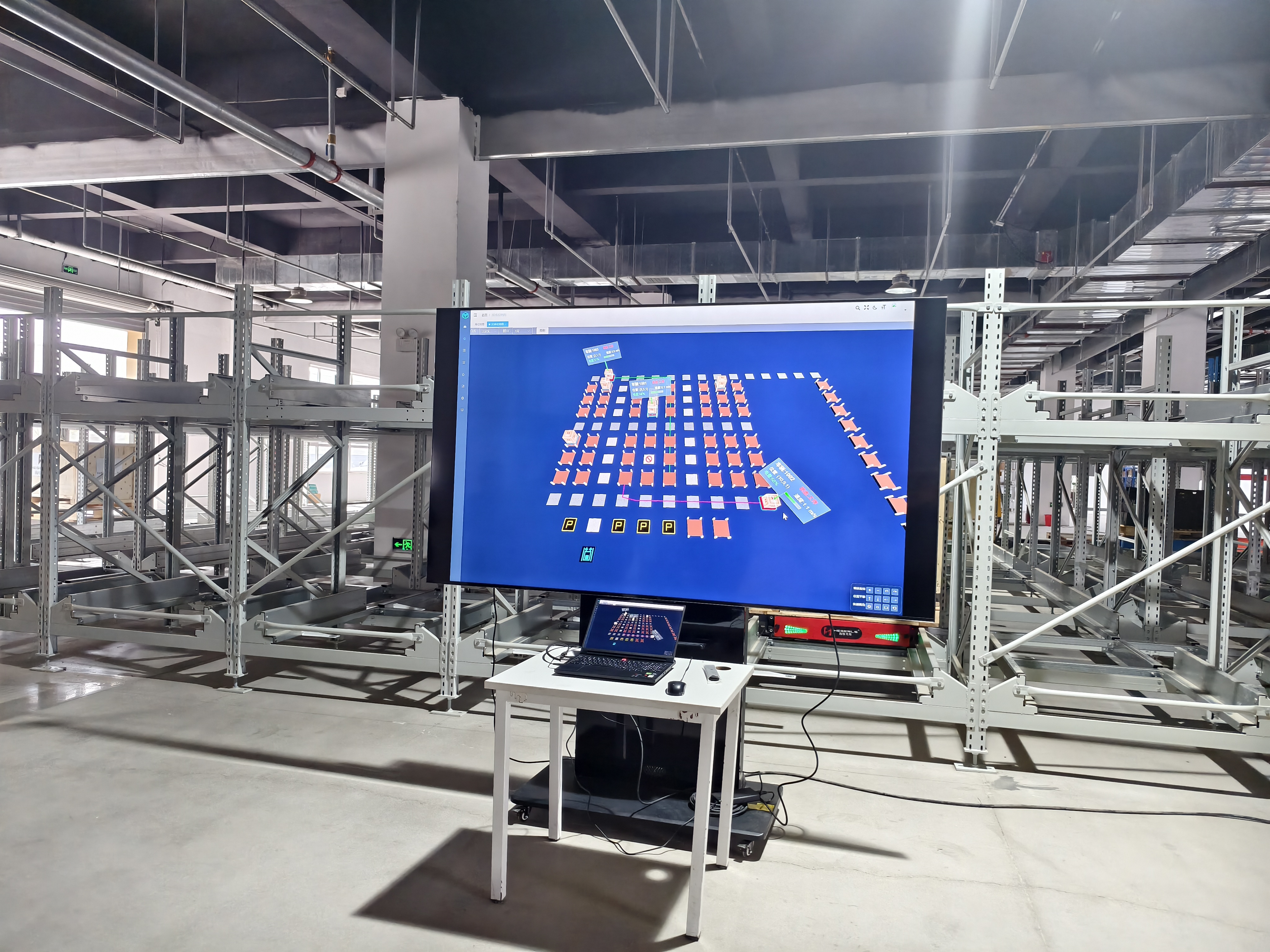
Why Are Warehouses Moving Toward Integrated Automation?
Several factors are accelerating the adoption of integrated warehouse automation.
Labor PressureWarehouses increasingly need to maintain stable operations while reducing dependence on repetitive manual handling. Automated storage, transportation, and picking equipment can take over repetitive tasks and allow employees to focus on higher-value activities. |
SKU GrowthMore product varieties make inventory management and storage-location allocation increasingly complex. An integrated WMS can manage large numbers of SKUs while automation equipment executes storage and retrieval tasks. |
Faster FulfillmentE-commerce, distribution, and manufacturing operations increasingly require faster order processing. WMS, WCS, conveyors, shuttles, robots, and AS/RS can work together to shorten material-handling cycles. |
Better Space UtilizationLand and warehouse construction costs make vertical and high-density storage increasingly important. Automated storage systems can combine deep-lane storage, high-bay racking, and intelligent location management to increase storage capacity. |
Inventory VisibilityManual inventory processes can make it difficult to maintain accurate, real-time inventory information. Integrated warehouse software provides greater visibility into inventory quantities, locations, orders, and equipment status. |
Scalable AutomationModern warehouses need to adapt as business requirements change. A modular architecture allows companies to add storage capacity, shuttles, robots, conveyors, or other equipment without redesigning the entire warehouse management system. |
What Role Does WMS Play in an Automated Warehouse?
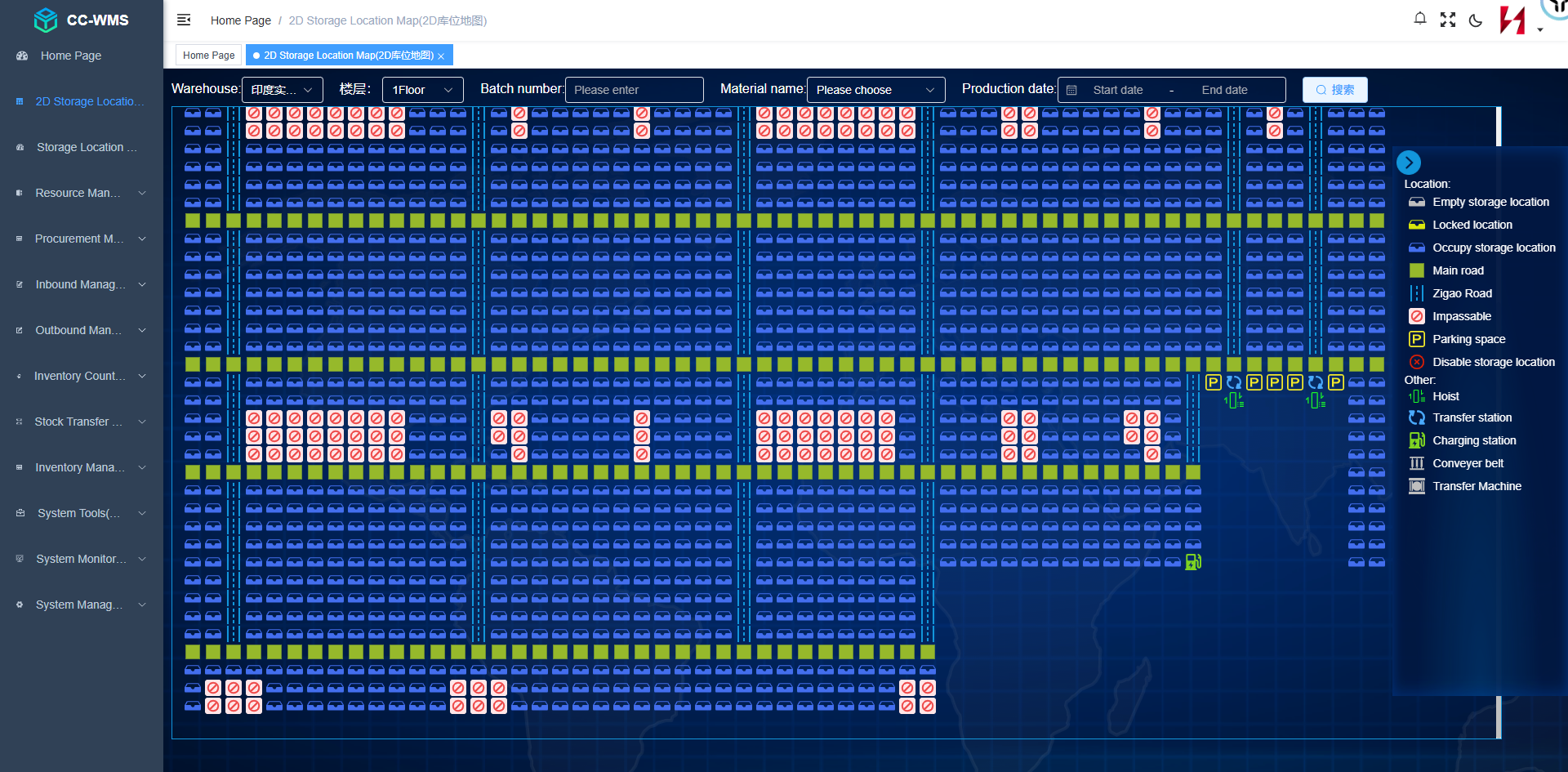
A Warehouse Management System (WMS) is responsible for managing warehouse business processes and inventory information.
For Zhuku, CC-WMS serves as the warehouse management layer connecting business requirements with warehouse execution.
CC-WMS can manage:
- Inventory
- Orders
- Receiving
- Putaway
- Picking
- Inventory strategies
- Storage locations
- Warehouse visualization
- Warehouse analytics
The WMS determines what needs to happen in the warehouse.
For example, when a pallet arrives, the WMS can determine where the pallet should be stored according to inventory rules, product characteristics, available locations, and operational requirements.
The task can then be passed to the WCS for equipment-level execution.
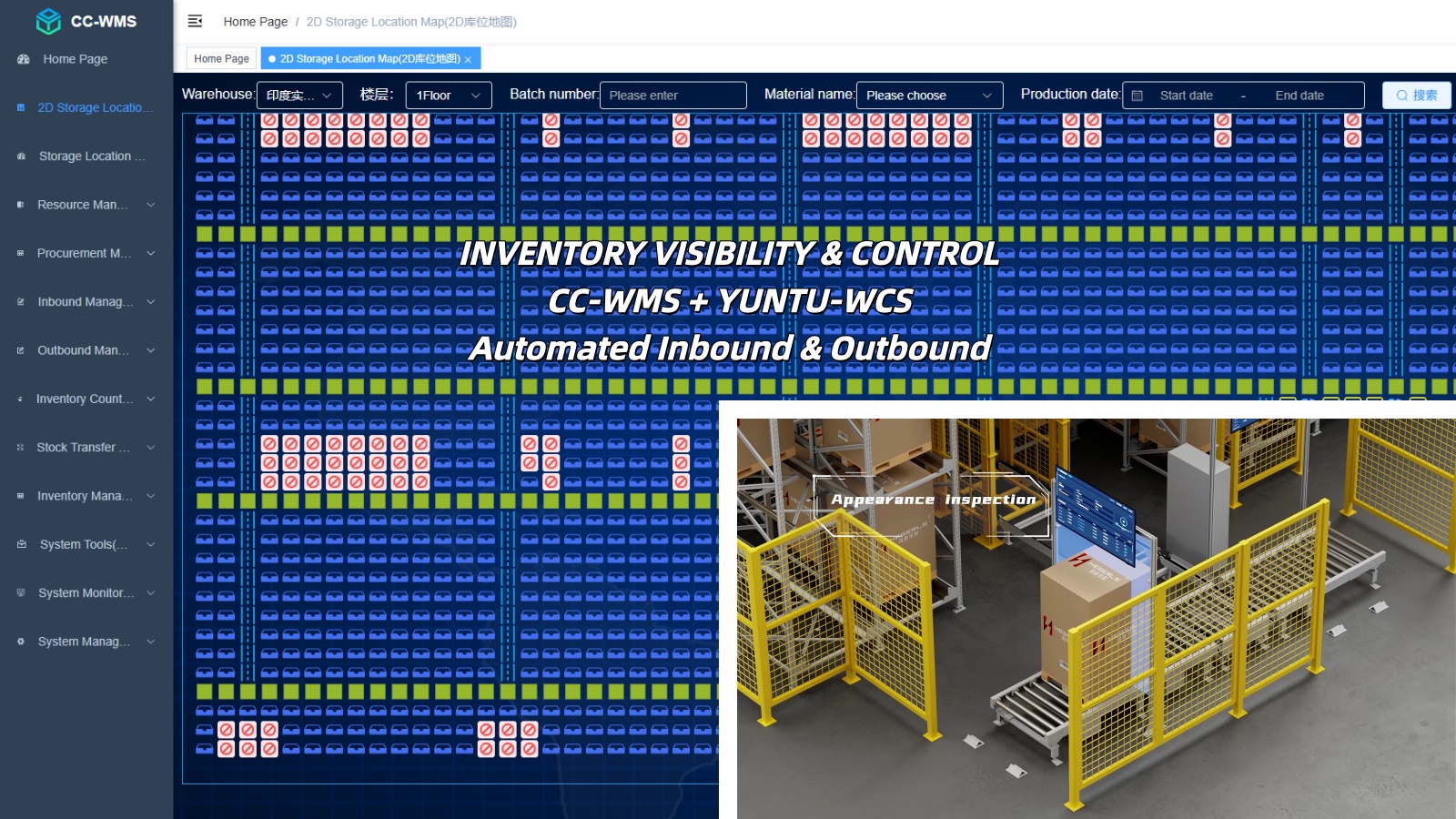
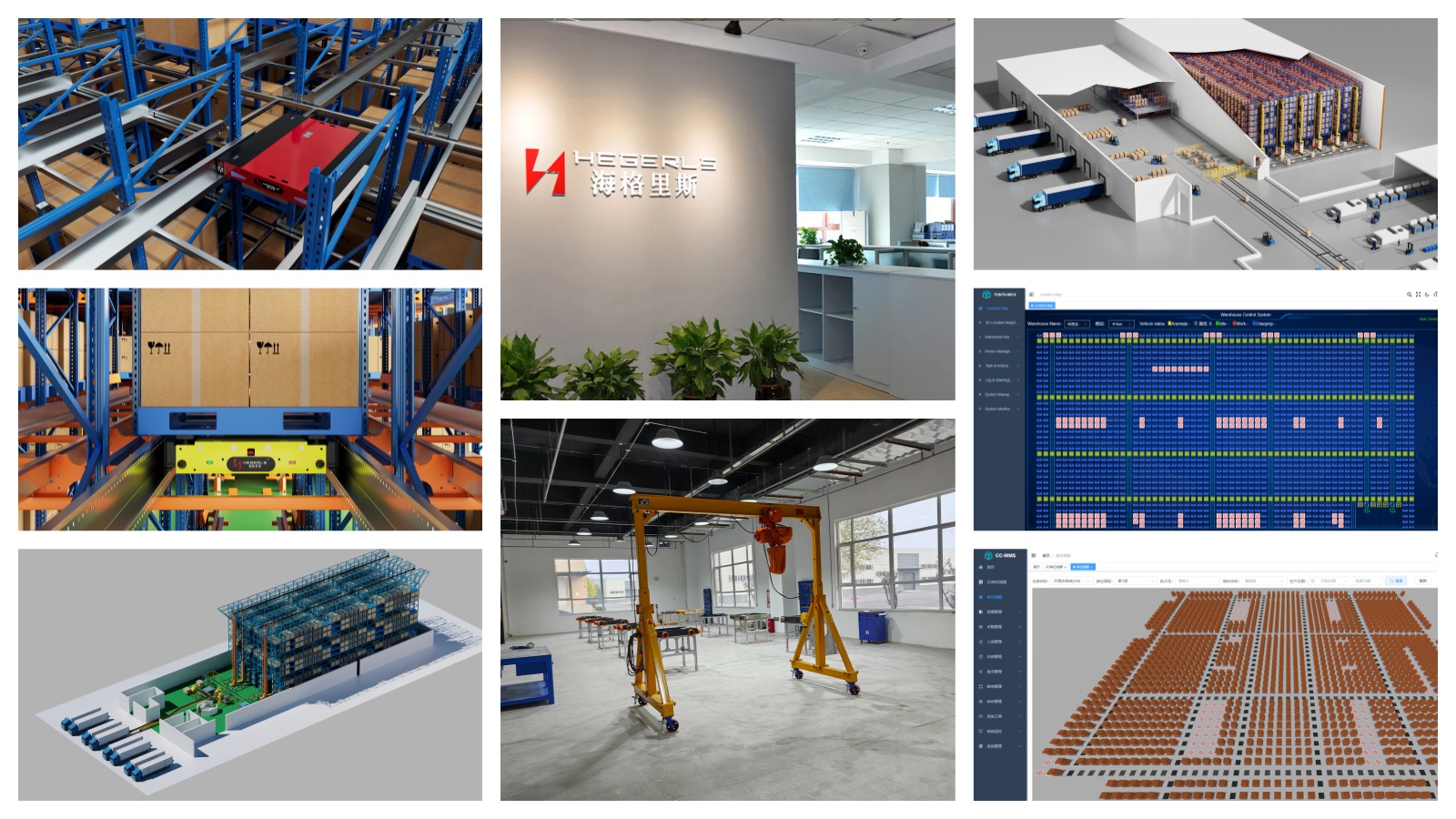
CC-WMS Warehouse Management System
CC-WMS can also provide a centralized view of warehouse operations, helping managers understand inventory status, storage utilization, order activity, and operational performance.
In simple terms:
WMS manages warehouse business processes and inventory.
What Role Does WCS Play in Warehouse Automation?
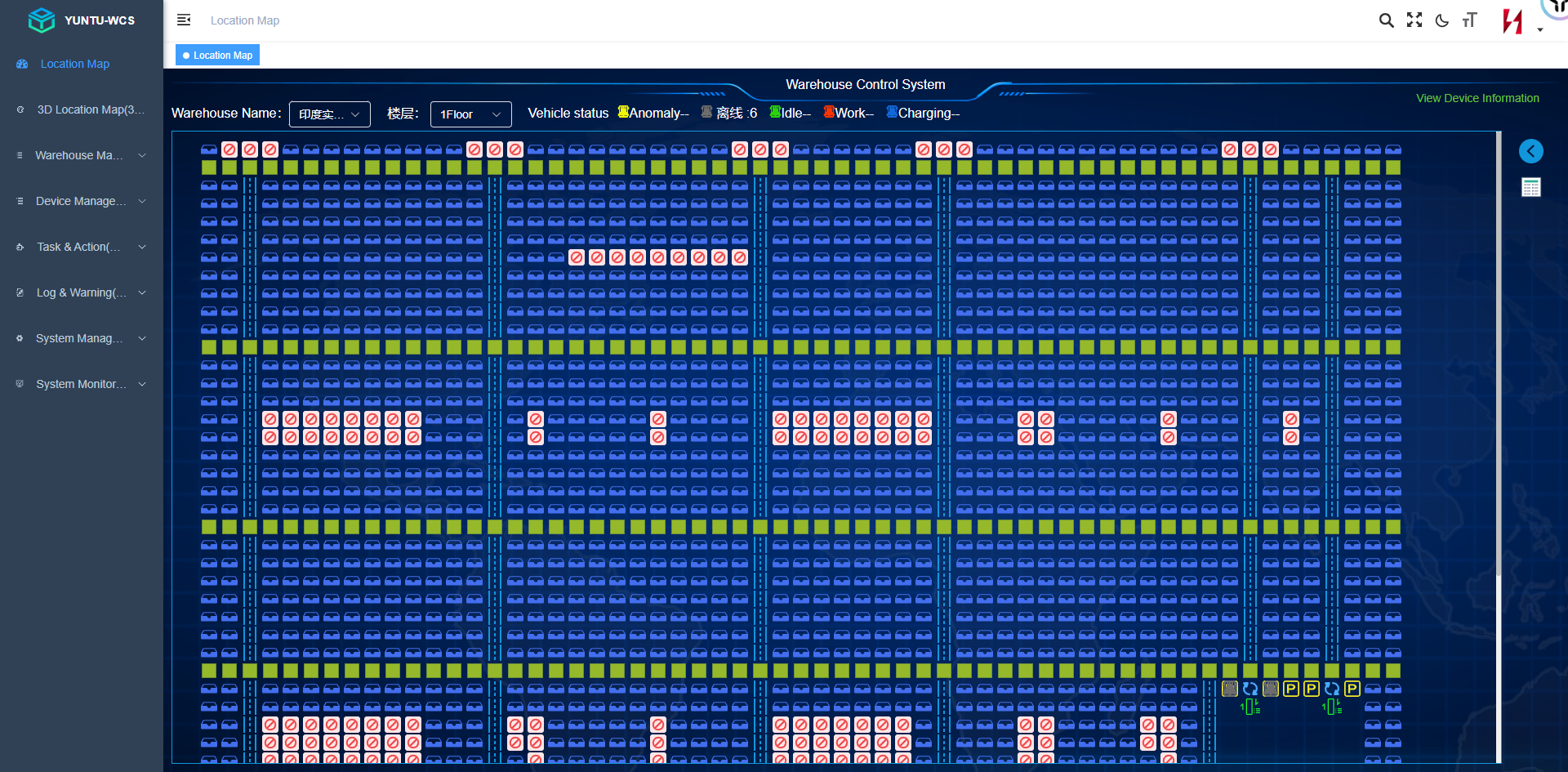
A Warehouse Control System (WCS) operates between the WMS and physical automation equipment.
For Zhuku, YUNTU-WCS serves as the warehouse execution and equipment-control layer.
YUNTU-WCS can coordinate:
- Equipment scheduling
- Task allocation
- Path planning
- Equipment communication
- Real-time monitoring
- Multi-equipment coordination
- Automated task execution
While WMS determines what warehouse tasks need to be completed, WCS determines how those tasks are executed by the equipment.
For example:
CC-WMS: Store pallet A in location B.
↓
YUNTU-WCS: Select the appropriate equipment and create the execution sequence.
↓
Automation Equipment: Shuttle, stacker crane, conveyor, lift, AGV, or robot performs the task.
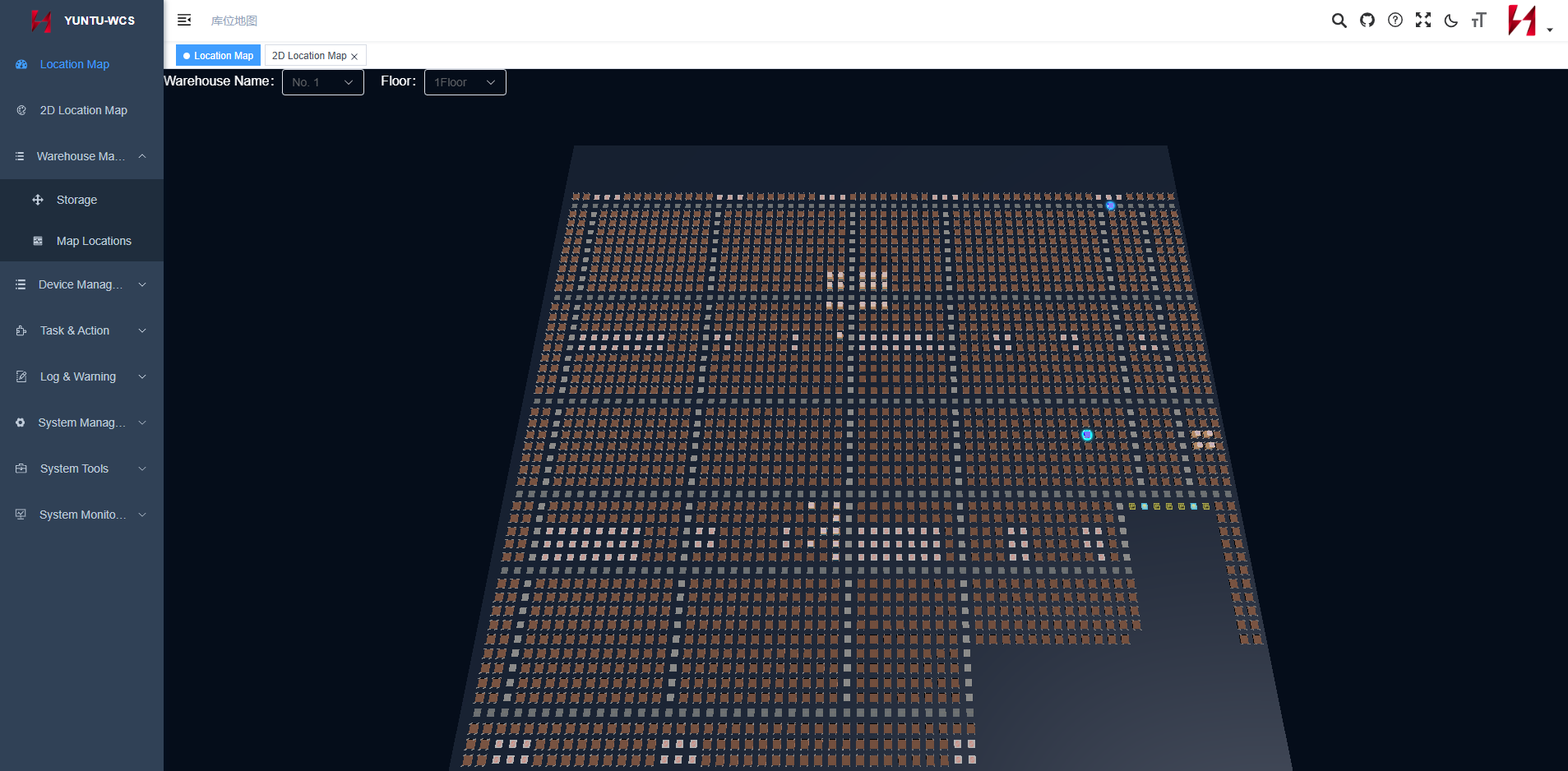
YUNTU-WCS Warehouse Control System
YUNTU-WCS can coordinate different types of warehouse automation equipment through a centralized execution layer.
In simple terms:
WCS connects warehouse management instructions with automated equipment execution.
What Does an Integrated WMS and WCS Architecture Look Like?
The relationship between business systems, warehouse software, and automation equipment can be represented as:
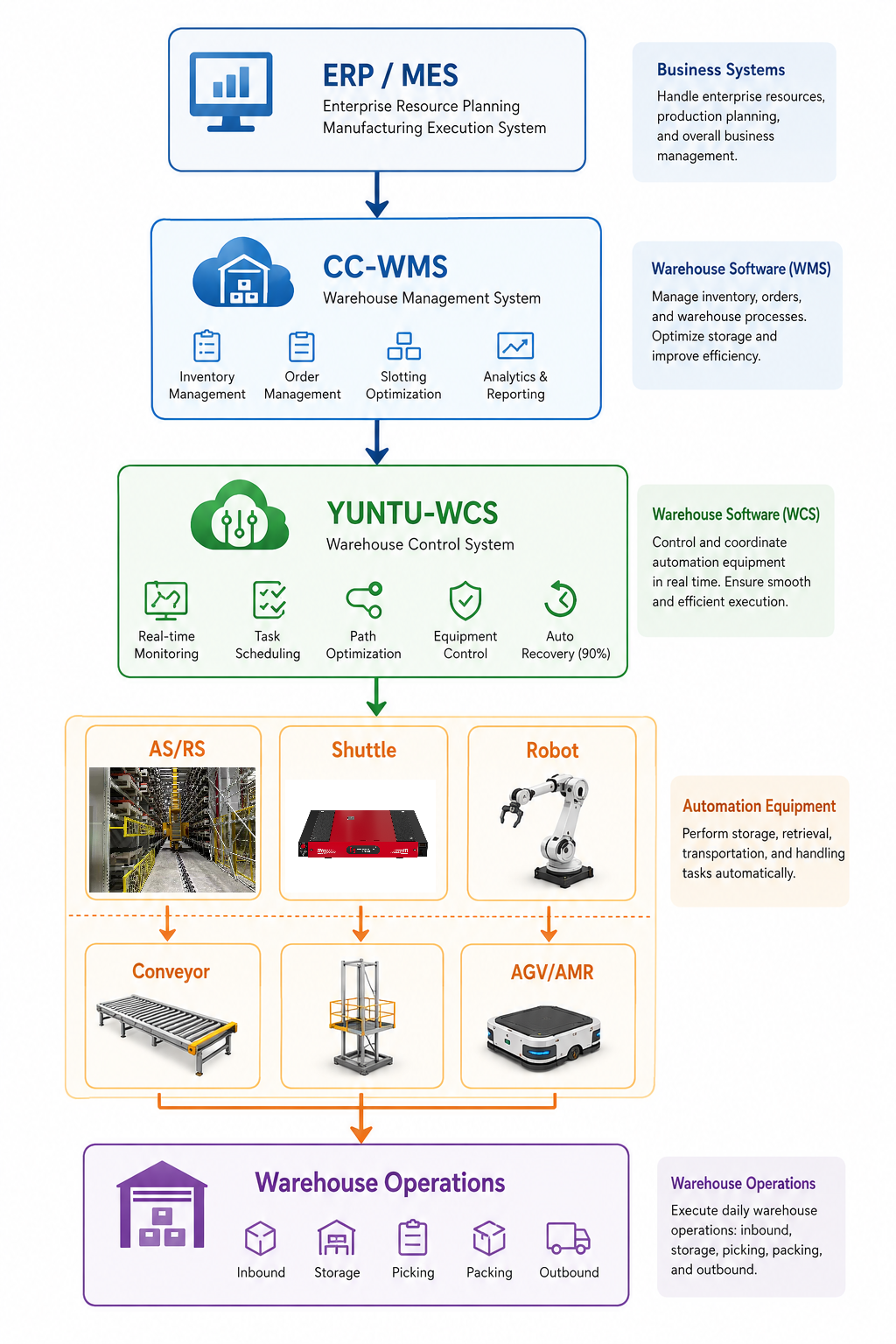
Each layer has a different responsibility.
| Layer | Main Function |
| ERP / MES | Business and production management |
| CC-WMS | Inventory and warehouse management |
| YUNTU-WCS | Equipment control and task execution |
| AS/RS | Automated storage and retrieval |
| Shuttle | High-density pallet storage |
| Robot | Flexible material handling |
| AGV / AMR | Automated transportation |
| Conveyor | Continuous material movement |
| Lift | Vertical material transportation |
This layered architecture allows different technologies to work as one integrated warehouse automation system.
How Is AI Changing Warehouse Management and Automation?
AI is becoming an increasingly important optimization layer within warehouse automation.
Rather than replacing WMS or WCS, AI can use warehouse data to improve decision-making and operational efficiency.
Key applications include:
Intelligent SlottingAI can analyze product characteristics, order frequency, inventory turnover, and warehouse locations to recommend more efficient storage positions. |
Demand PredictionHistorical inventory and order data can be analyzed to identify demand patterns and support inventory planning. |
Task OptimizationAI can help prioritize warehouse tasks according to order requirements, equipment availability, inventory status, and operational conditions. |
Equipment SchedulingAI-assisted optimization can help coordinate multiple automated machines and reduce unnecessary equipment movement. |
Predictive MaintenanceEquipment operating data can be analyzed to identify abnormal patterns and support proactive maintenance. |
Warehouse Performance AnalysisAI can analyze warehouse data to identify bottlenecks, inefficient processes, underutilized equipment, and opportunities for improvement. |
The direction is therefore changing from:
AI as an Analysis Tool
to:
AI as an Optimization Layer
This distinction is important. AI does not replace the operational foundation provided by WMS and WCS. Instead, it can make the overall warehouse automation system more intelligent.
How Do WMS and WCS Connect With Warehouse Automation Equipment?
The physical automation layer is responsible for executing warehouse tasks.
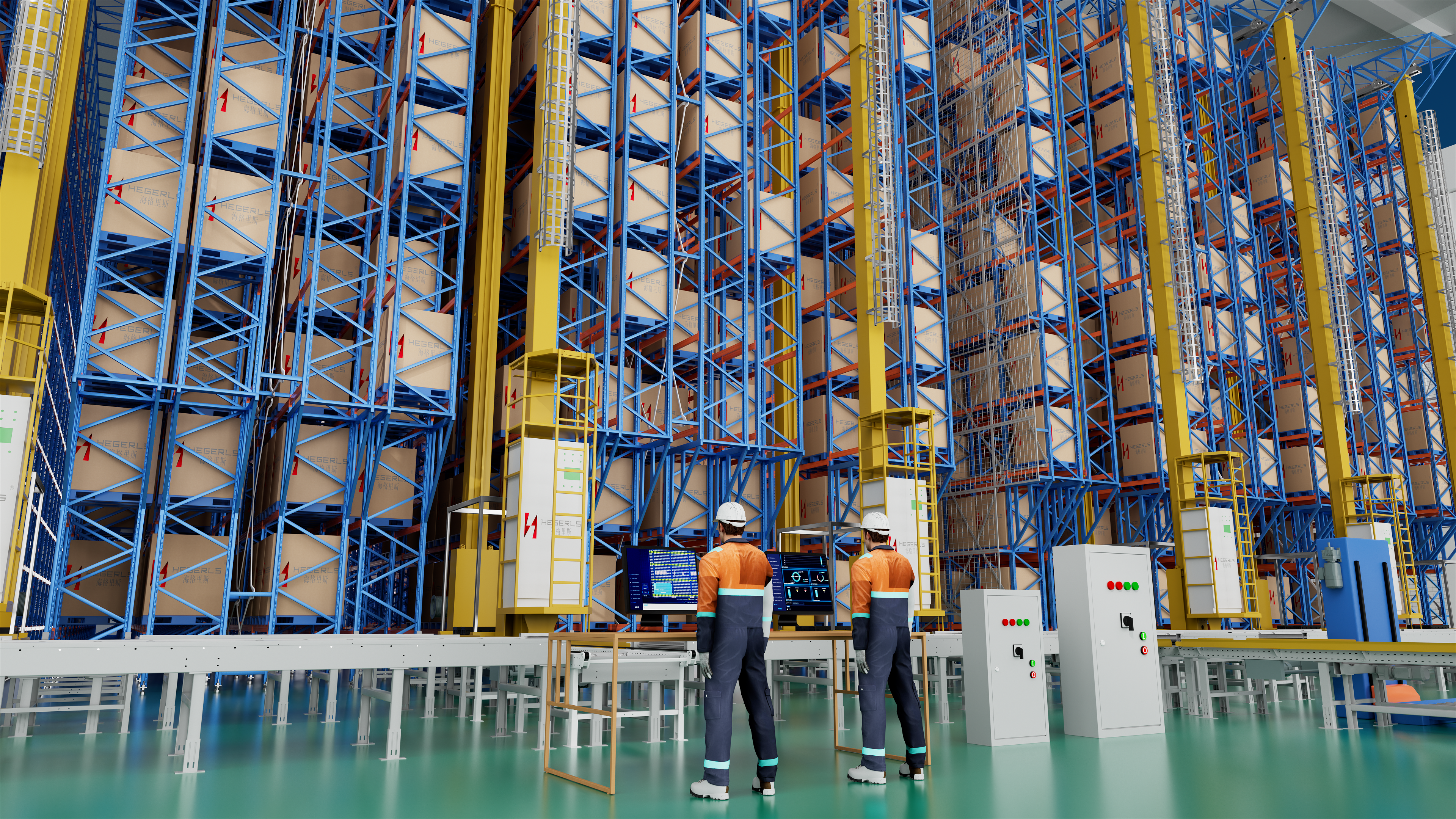
AS/RSAutomated Storage and Retrieval Systems (AS/RS) are designed for automated storage and retrieval, particularly in high-density and high-bay warehouses. AS/RS can provide:
|  |
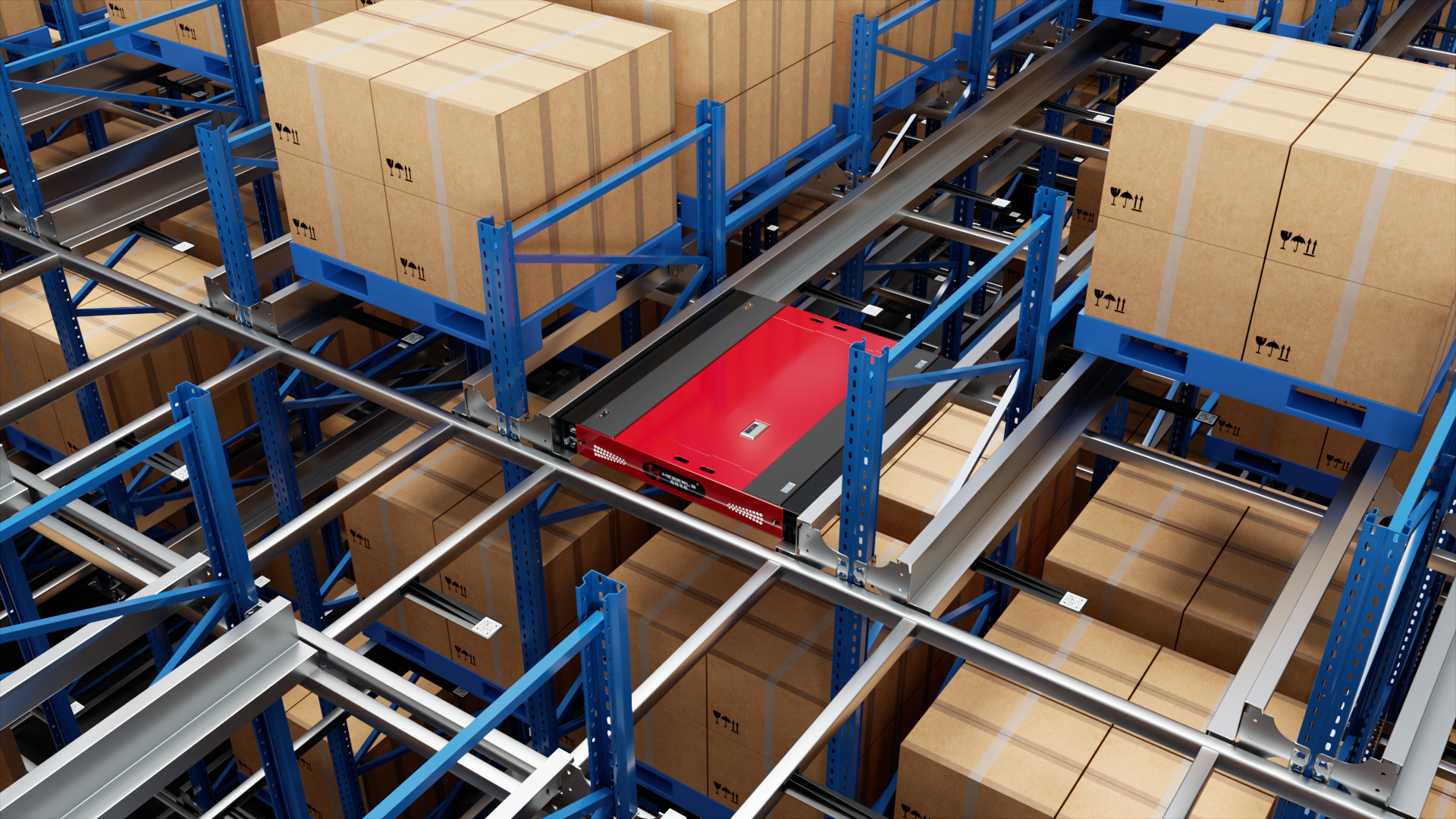 |
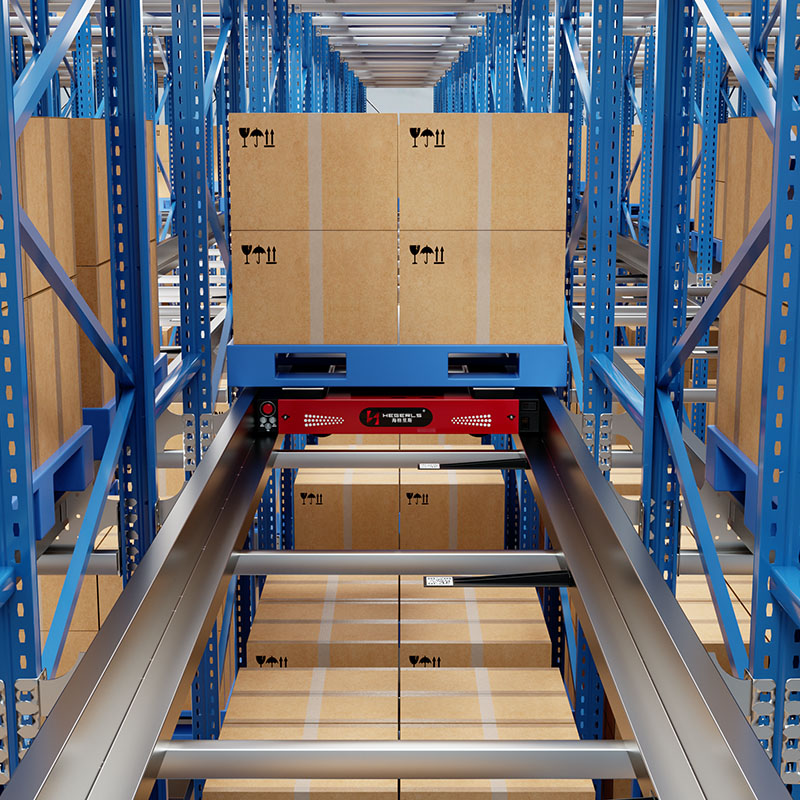
Four-Way ShuttleA four-way shuttle system is designed for flexible, high-density pallet storage. Its multi-directional movement allows the shuttle to move forward, backward, and laterally within the racking system. It is particularly suitable for:
|
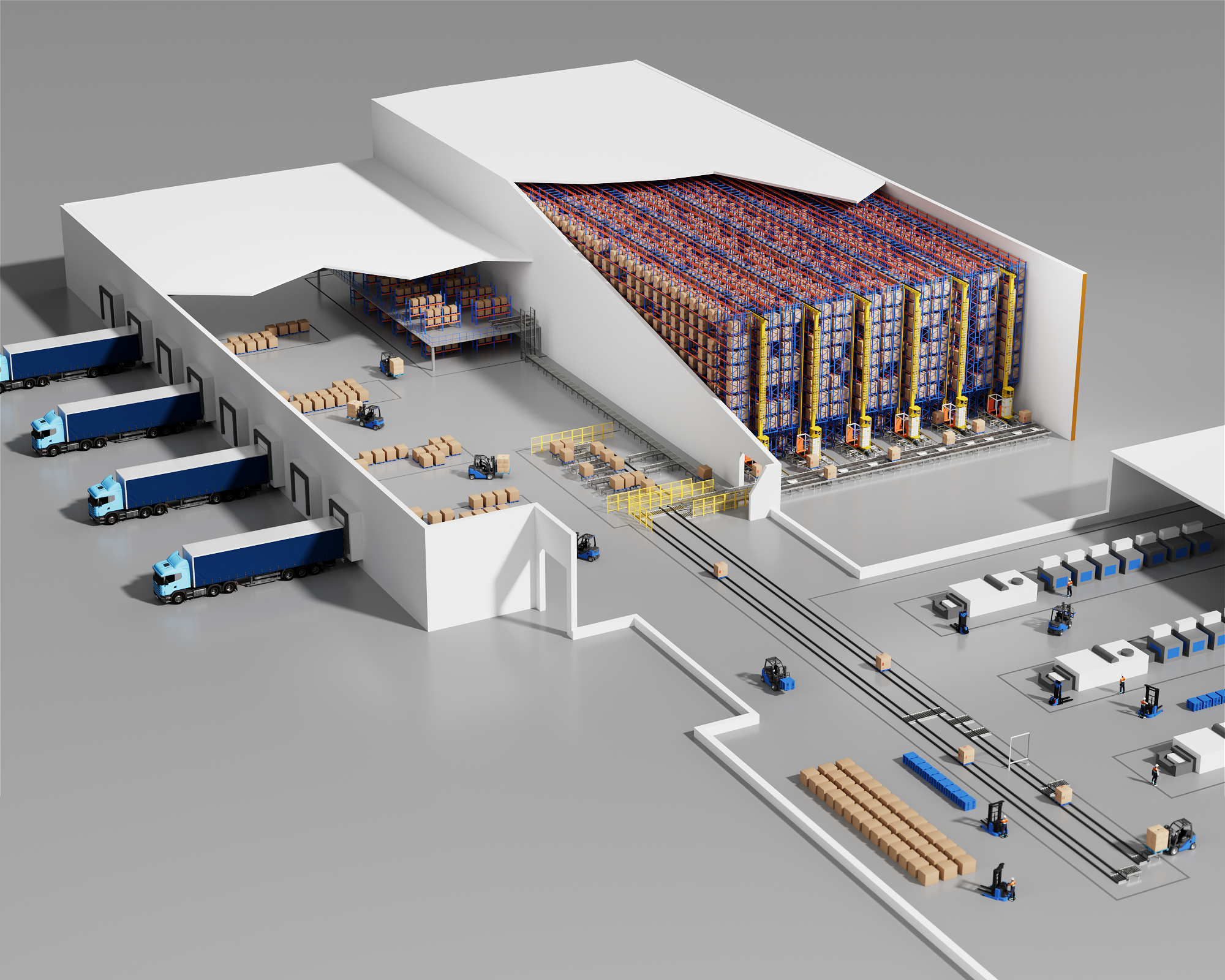
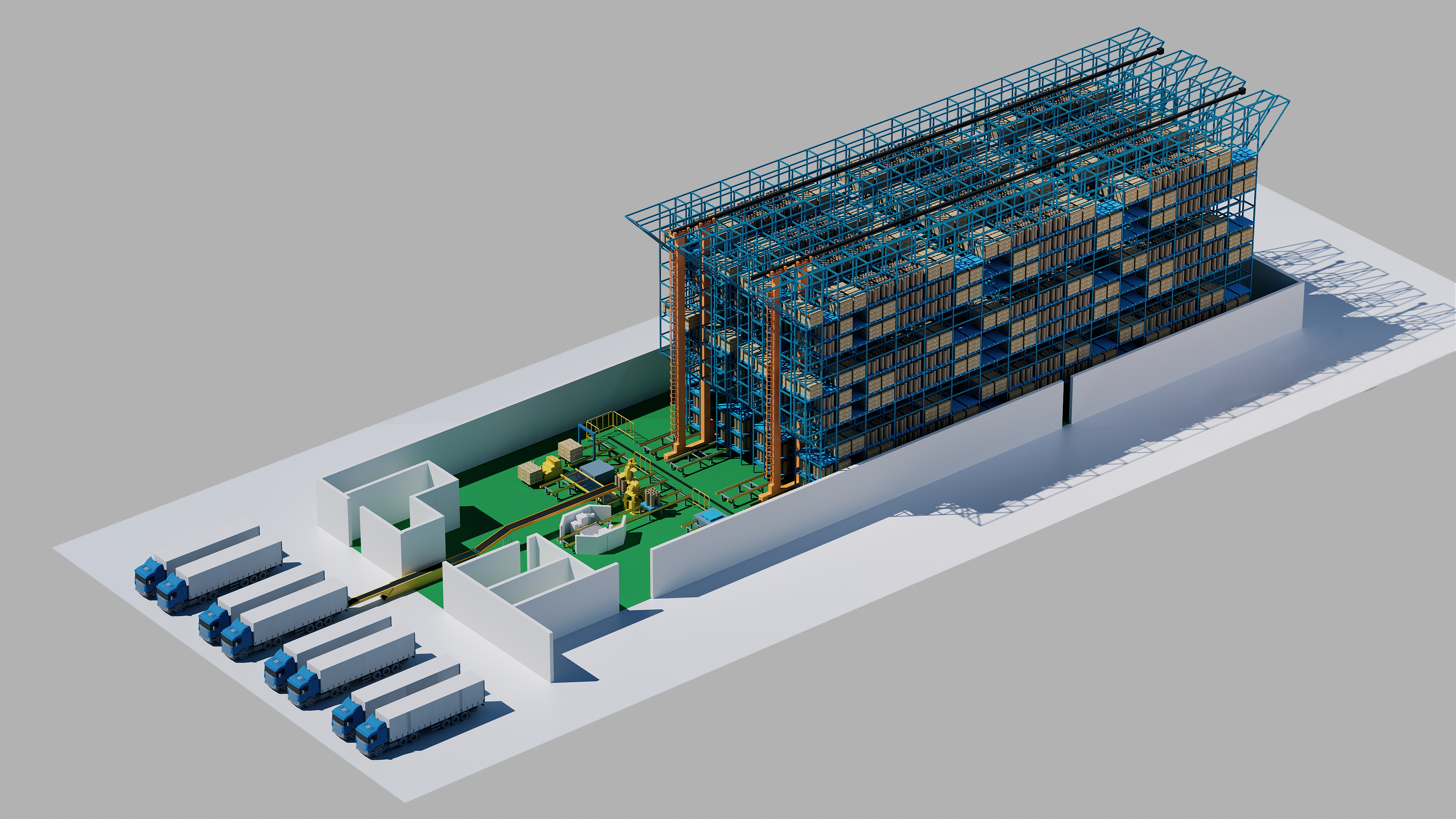
Stacker CraneA stacker crane is widely used in high-bay AS/RS warehouses. It combines horizontal and vertical movement to automatically store and retrieve pallets from designated storage locations. It is particularly suitable for:
|  |
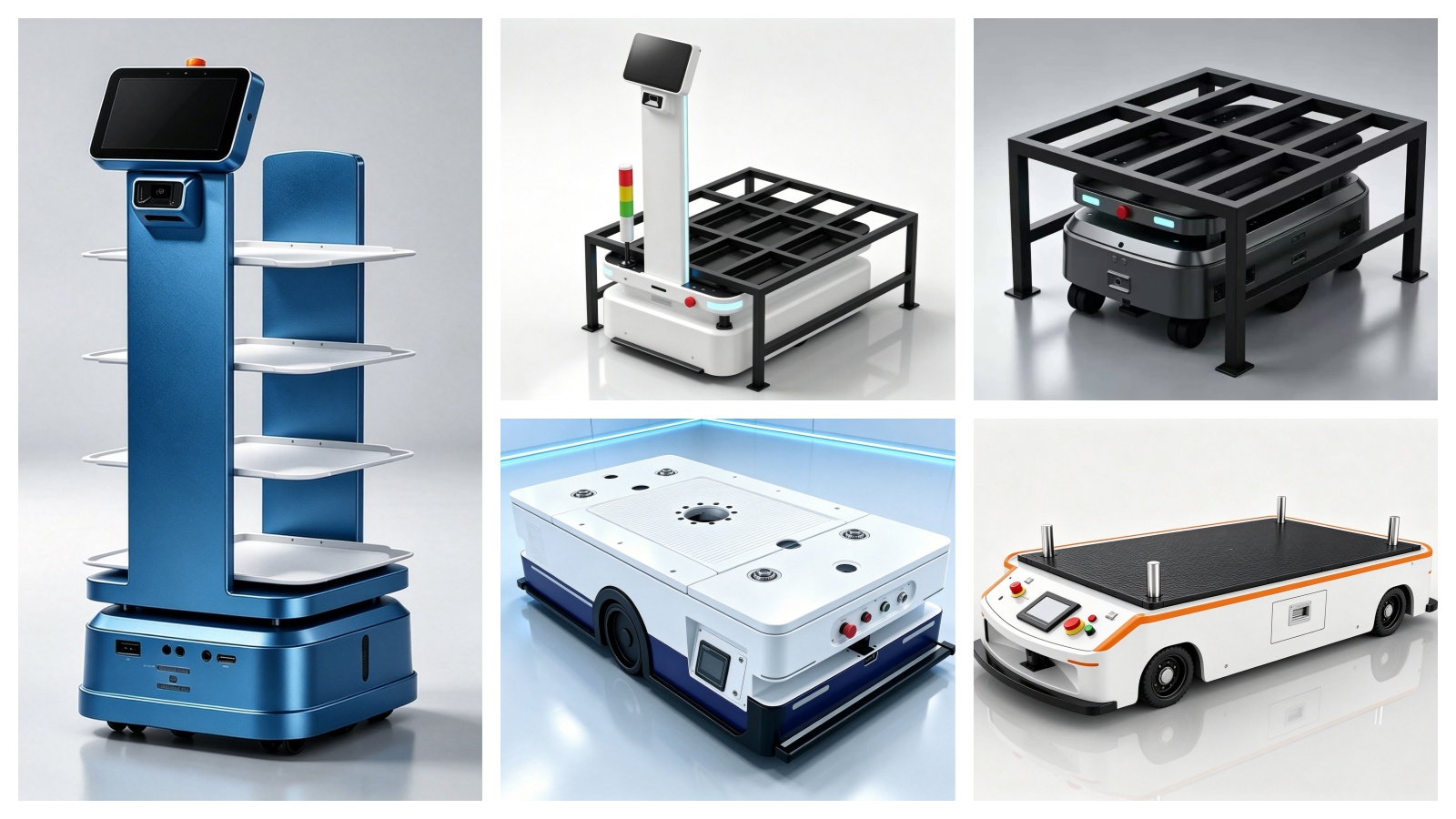 |
AMR / AGVAMRs and AGVs provide flexible automated transportation within warehouses and production facilities. They can transport:
Depending on the application, they can connect production areas, storage areas, picking stations, and shipping zones. |
ConveyorConveyors provide continuous material movement between different warehouse areas. They can connect: Receiving → Storage → Picking → Sorting → Shipping Conveyors are especially important in high-throughput automated warehouses. | 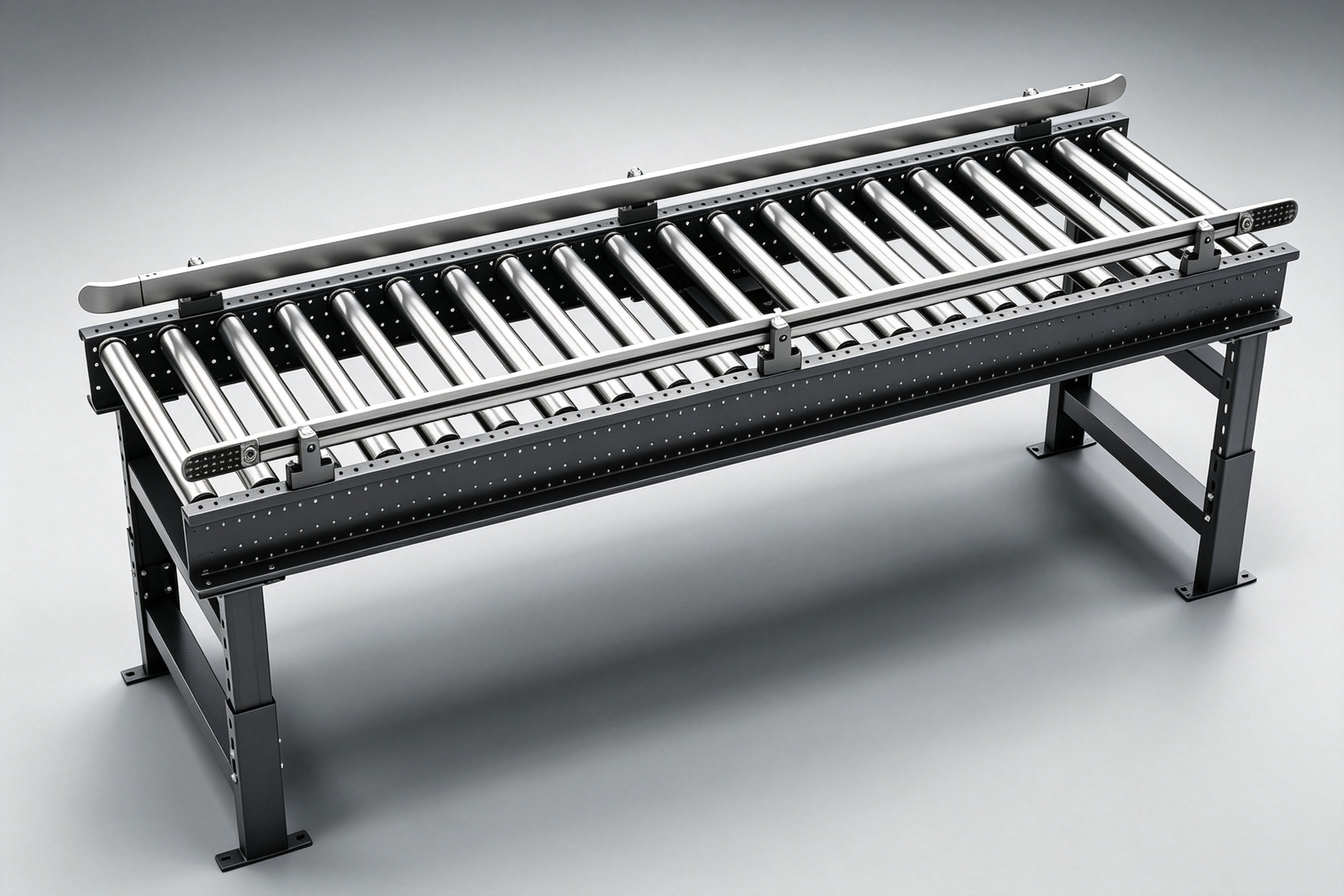 |
What Does an Integrated Smart Warehouse Architecture Look Like?
An intelligent warehouse can be viewed as several interconnected layers:
Business Management
ERP / MES
Business orders, production requirements, purchasing, sales, and other enterprise processes are managed at this level.
↓
Warehouse Management
CC-WMS
Inventory, orders, storage locations, receiving, putaway, picking, and warehouse strategies are managed here.
↓
Warehouse Execution
YUNTU-WCS
Warehouse tasks are converted into equipment instructions and coordinated in real time.
↓
Automation
AS/RS / Shuttle / Robot / Conveyor / AGV / AMR
Physical storage, transportation, retrieval, and handling are executed by automated equipment.
↓
Intelligent Optimization
AI / Analytics / IoT
Operational data can be analyzed to improve storage strategies, task scheduling, equipment utilization, and warehouse performance.
This architecture allows Zhuku to approach warehouse automation as a complete system rather than a collection of individual machines.
Which Industries Can Benefit From Integrated Warehouse Automation?
ManufacturingAutomated warehouses can connect raw-material storage, production lines, work-in-process inventory, and finished-goods storage. |
E-CommerceHigh order volumes and large SKU ranges make automated storage, picking, sorting, and transportation particularly valuable. |
Food & BeverageHigh-density pallet storage and automated handling can help improve storage capacity and inventory control. |
Cold ChainAutomated storage can reduce manual movement in refrigerated and frozen environments while making better use of expensive temperature-controlled space. |
AutomotiveAutomated systems can manage components, spare parts, production materials, and finished products. |
3PL / LogisticsThird-party logistics providers can benefit from flexible automated storage and software that supports multiple customers and inventory profiles. |
What Are the Benefits of Integrating WMS, WCS and AI?
Integrating warehouse software and automation can create benefits across the entire warehouse.
Better Inventory Visibility
WMS provides centralized inventory information and location tracking.
Higher Storage Efficiency
High-density storage systems can be coordinated with intelligent inventory strategies.
Faster Material Handling
WCS coordinates automated equipment and task execution.
Better Equipment Utilization
Multiple equipment types can be coordinated instead of operating independently.
Reduced Manual Handling
Automated storage, transportation, and retrieval reduce repetitive manual operations.
Improved Scalability
A modular architecture can support additional equipment and warehouse capacity as business requirements change.
Data-Driven Optimization
AI and analytics can use operational data to identify improvement opportunities.
What Is the Difference Between WMS, WCS and AI?
A simple way to understand the three technologies is:
| Technology | Main Question | Primary Responsibility |
| WMS | What should happen? | Warehouse management |
| WCS | How should equipment execute it? | Equipment control |
| AI | How can it be optimized? | Analysis and optimization |
For example:
WMS: A pallet needs to be stored.
WCS: Which shuttle, crane, conveyor, or lift should execute the task?
AI: What storage location, task sequence, or equipment strategy could improve overall performance?
This separation of responsibilities makes an integrated warehouse architecture easier to understand and implement.
Why Is System Integration More Important Than Individual Equipment?
A high-performance warehouse is not created simply by purchasing advanced equipment.
A four-way shuttle, stacker crane, conveyor, or robot can perform its own function, but the warehouse needs an intelligent system to coordinate the entire material flow.
For example:
Inventory Requirement
↓
CC-WMS
↓
YUNTU-WCS
↓
Four-Way Shuttle + Lift + Conveyor
↓
Storage Location
The same architecture can be applied to stacker cranes, AS/RS, AMRs, AGVs, and other automation equipment.
This is why system integration is becoming increasingly important in modern warehouse automation.
Why Choose Zhuku for Intelligent Warehouse Automation?
Zhuku focuses on integrated warehouse automation and intelligent storage solutions rather than individual equipment alone.
The solution portfolio can combine:
WMS + WCS + AS/RS + Four-Way Shuttle + Stacker Crane + Robotics + Conveyor
Zhuku's approach connects warehouse management, equipment control, automated storage, material handling, and intelligent analysis into a coordinated system.
Depending on the project requirements, solutions can be designed around:
- Warehouse dimensions
- Storage capacity
- SKU characteristics
- Pallet specifications
- Throughput
- Automation requirements
- Production integration
- Future expansion
This system-level approach allows customers to select the appropriate combination of software, storage equipment, and automation technologies instead of adopting a one-size-fits-all solution.
Conclusion
Warehouse automation in 2026 is moving toward system integration rather than isolated equipment automation.
WMS provides the warehouse management foundation. WCS connects warehouse tasks with physical automation equipment. AI adds an optimization layer that can analyze data and support better decisions.
Meanwhile, AS/RS, four-way shuttles, stacker cranes, robots, AGVs, AMRs, conveyors, and lifts provide the physical execution layer.
The result is a connected architecture:
ERP / MES → CC-WMS → YUNTU-WCS → Automation Equipment → Warehouse Operations
with:
AI / Analytics / IoT
supporting optimization across the system.
For companies planning a new automated warehouse or upgrading an existing facility, the key question is no longer simply “Which automation equipment should we buy?”
It is:
“How can we integrate software, automation equipment, data, and AI into one scalable warehouse system?”
Zhuku helps customers answer that question through integrated WMS, WCS, AS/RS, shuttle, robotics, conveyor, and intelligent warehouse solutions.
Ready to Build a Smarter Automated Warehouse?
Share your warehouse dimensions, storage requirements, SKU profile, pallet specifications, and required throughput with Zhuku. Our team can evaluate the appropriate combination of WMS, WCS, AI, AS/RS, four-way shuttle, stacker crane, robotics, and conveyor systems for your project.