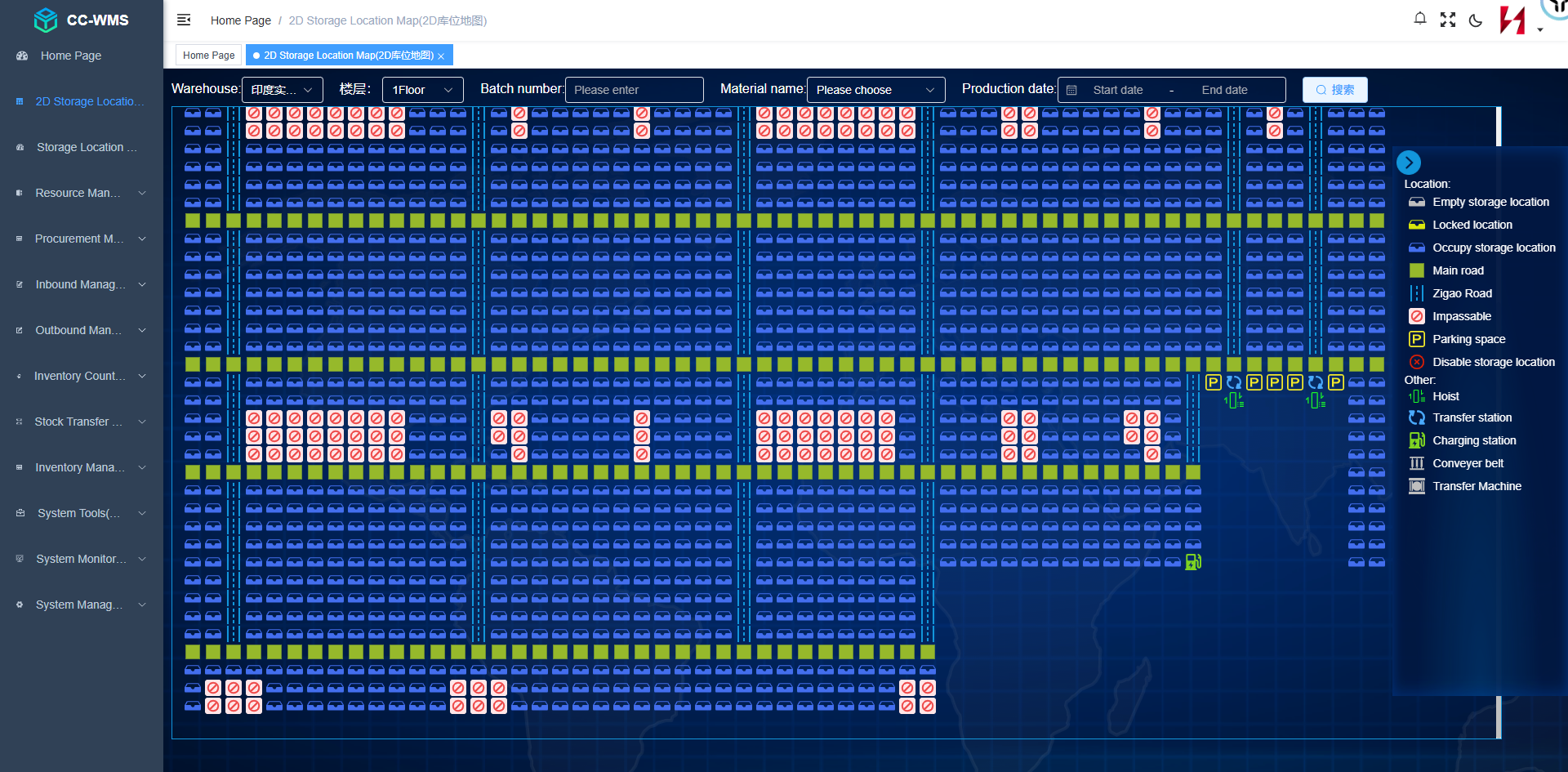
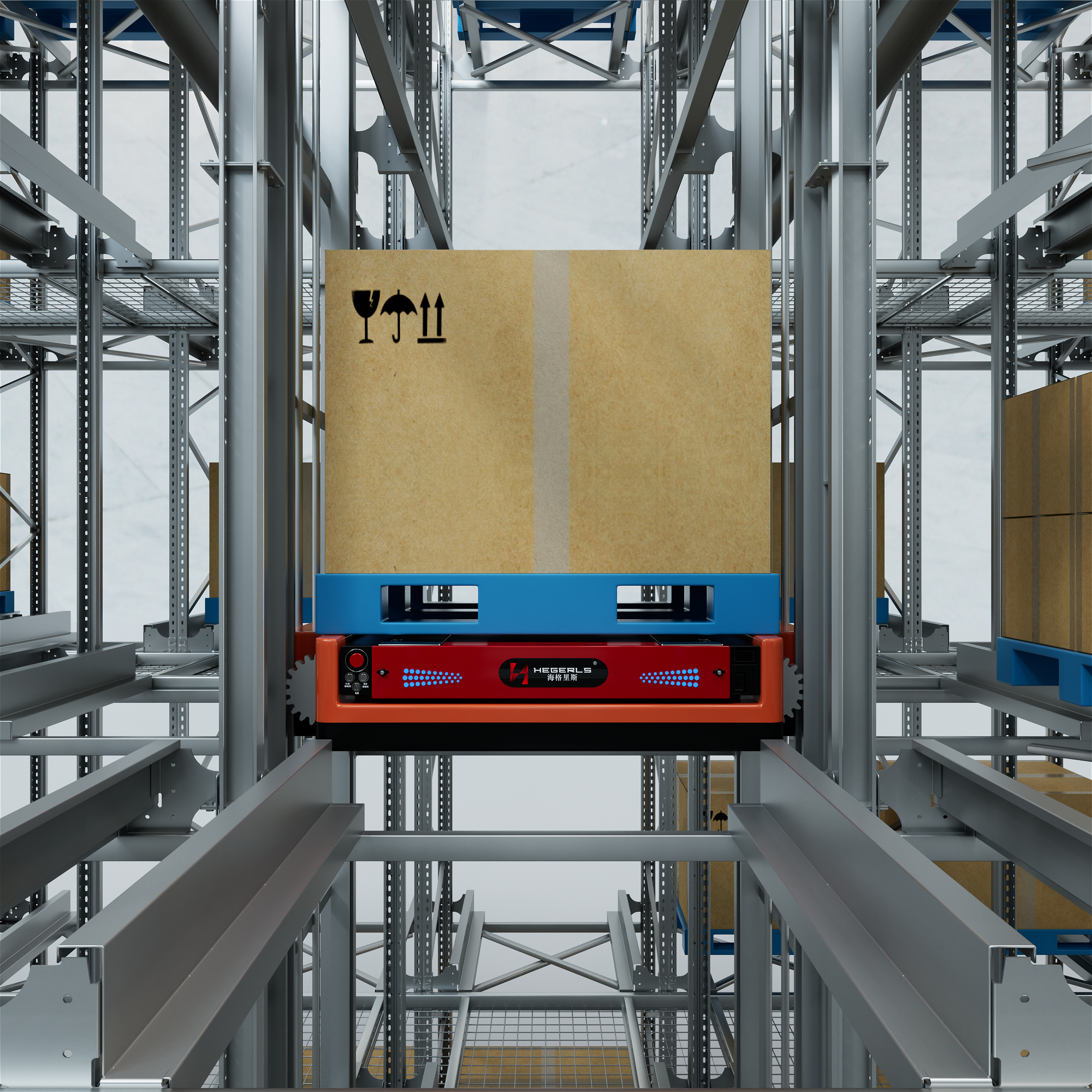
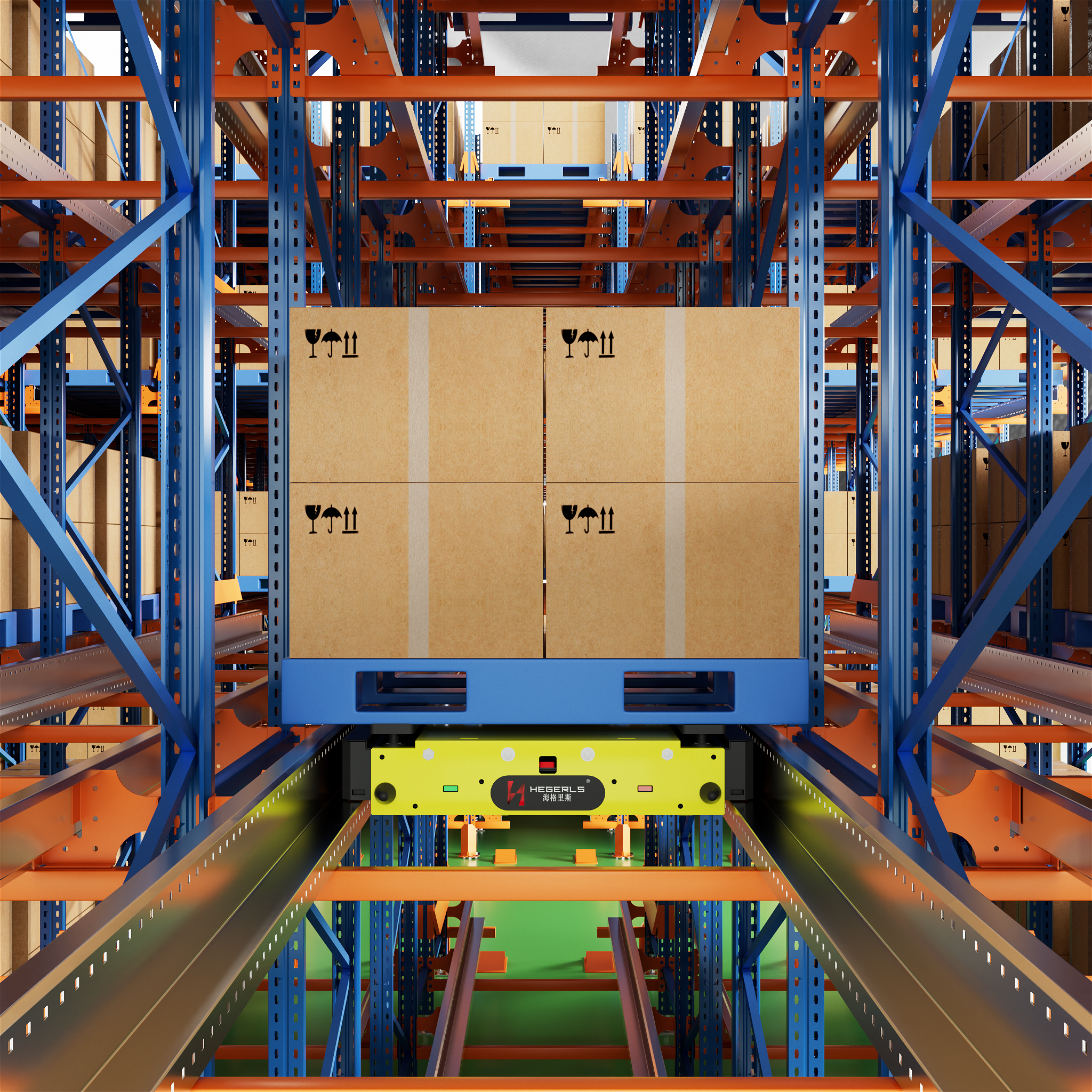
Warehouse automation is the use of automated equipment, software, robotics, and control systems to move, store, retrieve, identify, and manage goods with less manual intervention.
Modern warehouse automation can range from relatively simple conveyor systems and automated storage equipment to highly integrated facilities using shuttle systems, stacker cranes, AMRs, robotic picking systems, warehouse management software, and real-time warehouse control platforms.
The goal is not simply to replace workers with machines. A well-designed automated warehouse combines storage capacity, material handling, software, robotics, and operational processes to improve productivity, inventory accuracy, storage density, safety, and scalability.
For companies dealing with rising labor costs, limited warehouse space, increasing SKU numbers, faster order fulfillment requirements, or difficult operating environments, warehouse automation can provide a structured way to improve warehouse performance.
This guide explains what warehouse automation is, how an automated warehouse works, the main technologies involved, where automation is used, and what businesses should consider before investing in an automated warehouse system.
Quick Answer: What Is Warehouse Automation?
Warehouse automation is the use of automated equipment, robotics, software and control systems to automate the storage, movement, retrieval, picking and management of goods in a warehouse. It can include AS/RS, shuttle systems, conveyors, AGVs, AMRs, robots, WMS and WCS.
What Is Warehouse Automation?
Warehouse automation refers to the application of technology to automate warehouse operations that would otherwise require manual labor.
These operations can include:
-
Receiving and unloading goods
-
Pallet and carton transportation
-
Put-away and storage
-
Inventory tracking
-
Picking and order fulfillment
-
Sorting
-
Replenishment
-
Pallet handling
-
Internal material transportation
-
Shipping and dispatch
-
Inventory counting
-
Warehouse data management
Warehouse automation does not necessarily mean that a warehouse operates without people.
In many facilities, employees continue to perform tasks such as quality inspection, exception handling, loading, packaging, maintenance, and supervision. Automation instead focuses on repetitive, high-volume, physically demanding, or precision-dependent processes.
A complete automated warehouse therefore consists of more than individual machines. It is an integrated system in which mechanical equipment, software, sensors, control technologies, and warehouse processes work together.
Why Are Companies Investing in Warehouse Automation?
The growth of e-commerce, omnichannel distribution, manufacturing complexity, and supply-chain requirements has increased pressure on warehouse operators.
Traditional warehouses often depend heavily on forklifts, manual picking, paper-based processes, and operator experience. These methods can work effectively for certain operations, but they become increasingly difficult to scale when storage requirements and throughput increase.
Warehouse automation can address several common challenges.
Limited Warehouse Space
Land and warehouse construction costs can make horizontal expansion expensive.
Automation allows warehouses to make better use of vertical space and increase storage density. High-bay storage systems, shuttle technologies, and automated storage systems can reduce the amount of floor area required for a given inventory volume.
Rising Labor Requirements
Manual warehouse operations require workers for transportation, picking, put-away, inventory counting, and other repetitive activities.
Automation can reduce the amount of manual travel and repetitive handling required, allowing employees to focus on higher-value activities.
Increasing SKU Complexity
Warehouses serving e-commerce, retail, pharmaceuticals, electronics, and spare-parts operations may manage thousands or even millions of inventory units.
Automated systems combined with warehouse software can provide more structured inventory location management and improve visibility.
Higher Throughput Requirements
Modern distribution operations may need to process large numbers of orders within narrow delivery windows.
Automation can coordinate storage, transportation, picking, and sorting processes to increase throughput while reducing unnecessary movement.
Inventory Accuracy
Manual data entry and paper-based inventory processes can introduce errors.
Barcode scanners, RFID technologies, sensors, automated storage systems, and warehouse management software can create more accurate digital records of inventory movements.
How Does an Automated Warehouse Work?
An automated warehouse normally operates as a connected system rather than as isolated pieces of equipment.
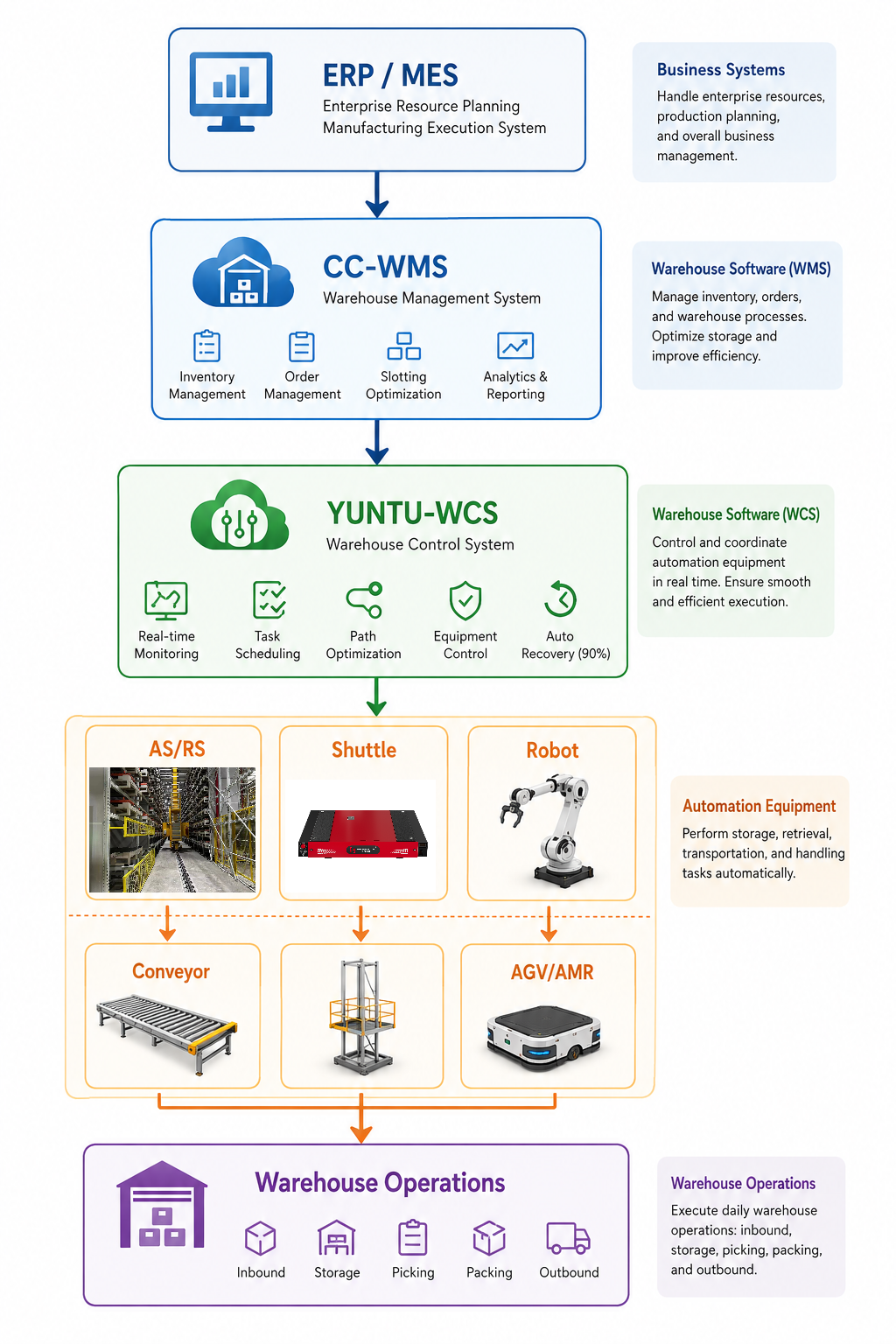
A simplified architecture can be represented as:
ERP / MES → WMS → WCS → Automation Equipment → Warehouse Operations
Each layer has a different responsibility.
ERP or MES
The enterprise resource planning system or manufacturing execution system provides business and production information.
For example, an ERP system may contain:
-
Sales orders
-
Purchase orders
-
Inventory information
-
Production requirements
-
Supplier information
-
Customer information
WMS
A Warehouse Management System manages warehouse-level operations and inventory logic.
A WMS can determine:
-
What goods have been received
-
Where inventory should be stored
-
Which inventory should be picked
-
How inventory should be replenished
-
What orders need to be fulfilled
-
Where inventory is located
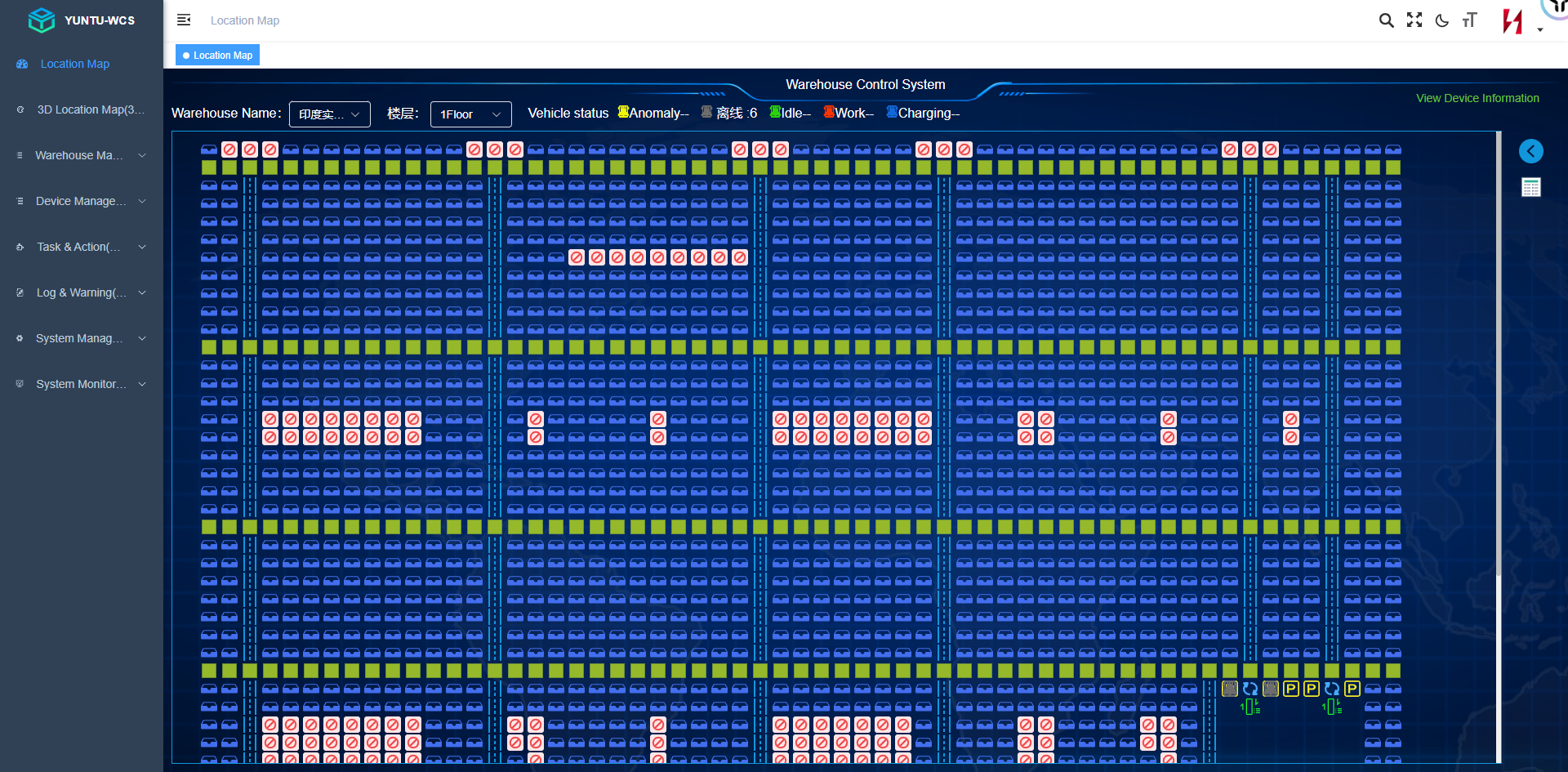
WCS
The Warehouse Control System connects warehouse management logic with physical automation equipment.
It can coordinate equipment such as:
-
Conveyors
-
Shuttle systems
-
Stacker cranes
-
Lifts
-
Sorters
-
Robots
-
AGVs
-
AMRs
The WCS translates warehouse tasks into equipment-level actions and helps coordinate equipment movement.
Automation Equipment
The physical equipment performs the actual material handling.
Depending on the application, this may include automated storage systems, shuttle vehicles, conveyors, robots, lifts, AGVs, and other technologies.
Warehouse Operations
The final layer is the physical warehouse process: receiving, storage, picking, replenishment, packing, and shipping.
The effectiveness of automation depends on how well all these layers work together.
What Are the Main Warehouse Automation Technologies?
Warehouse automation includes many different technologies. No single system is suitable for every warehouse.
The most appropriate technology depends on factors such as load type, SKU characteristics, throughput, storage density, building height, temperature, order profile, and available space.
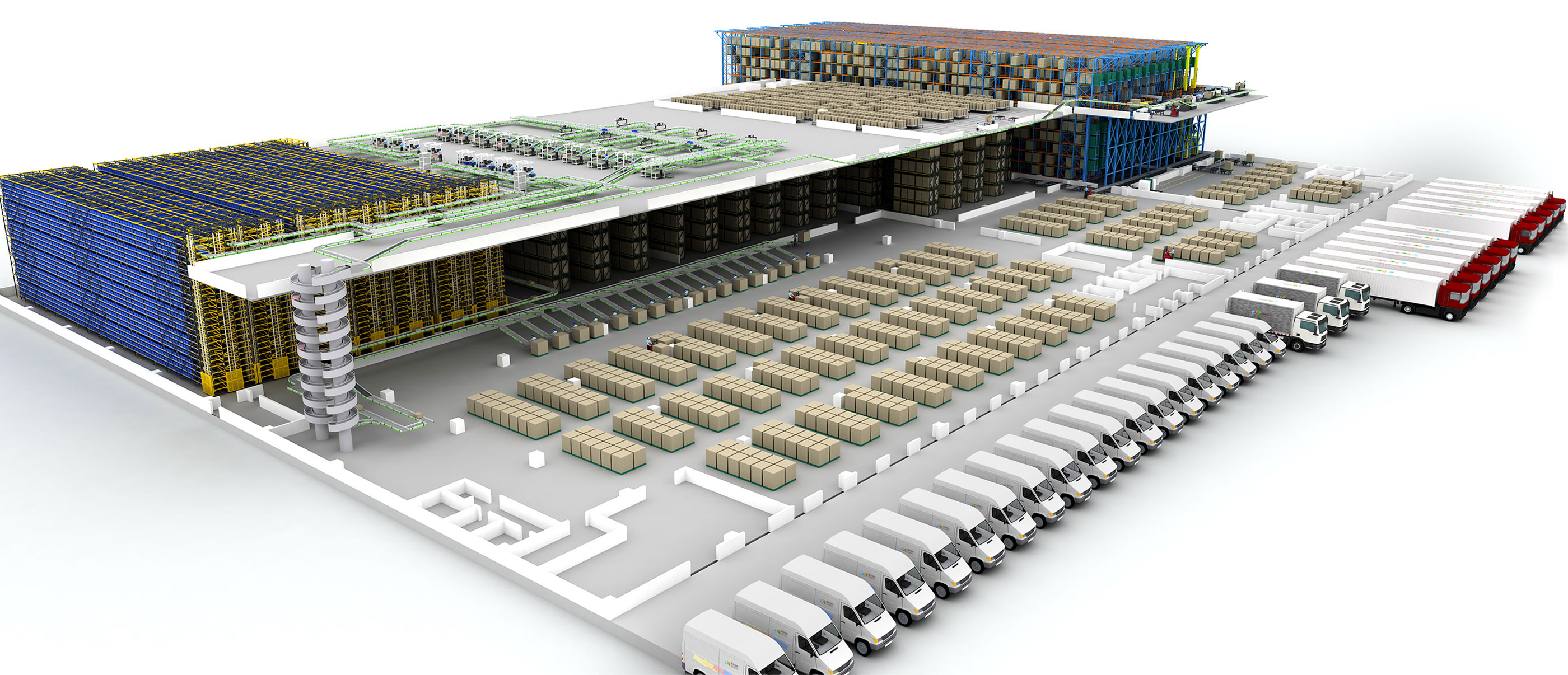
1. Automated Storage and Retrieval Systems
Automated Storage and Retrieval Systems, commonly called AS/RS, use automated machines to store and retrieve goods.
A typical AS/RS can include:
-
Storage racks
-
Stacker cranes or shuttle vehicles
-
Conveyors
-
Lifts
-
Sensors
-
Warehouse software
-
Warehouse control systems
AS/RS is particularly suitable for warehouses requiring structured storage, high throughput, high storage density, or significant vertical utilization.
Different AS/RS configurations are available for pallet, carton, tote, and other unit loads.
The main advantage is that storage and retrieval can be performed automatically according to system instructions rather than relying entirely on forklift operators.
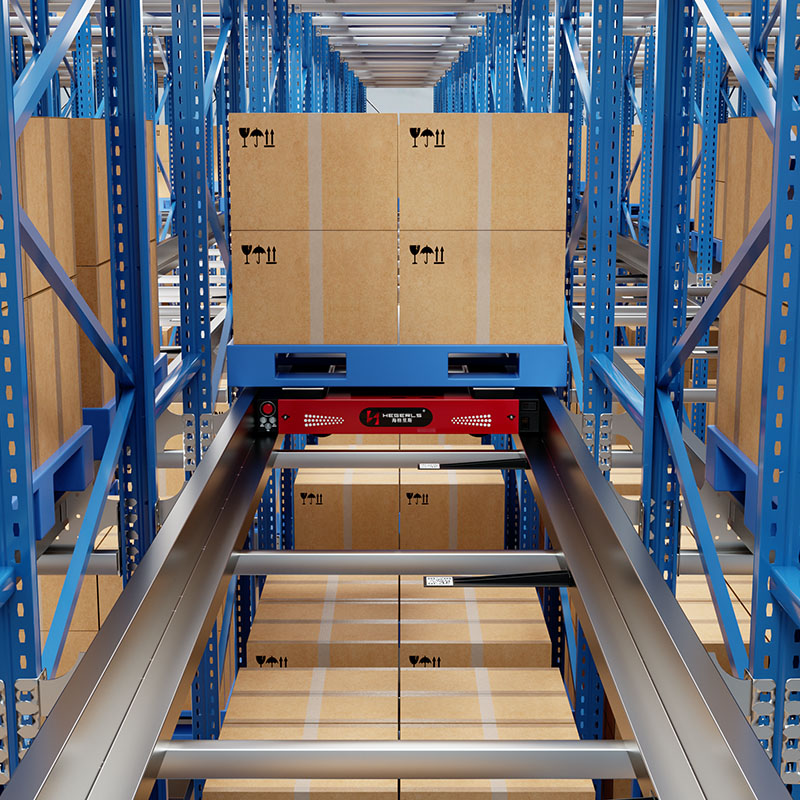
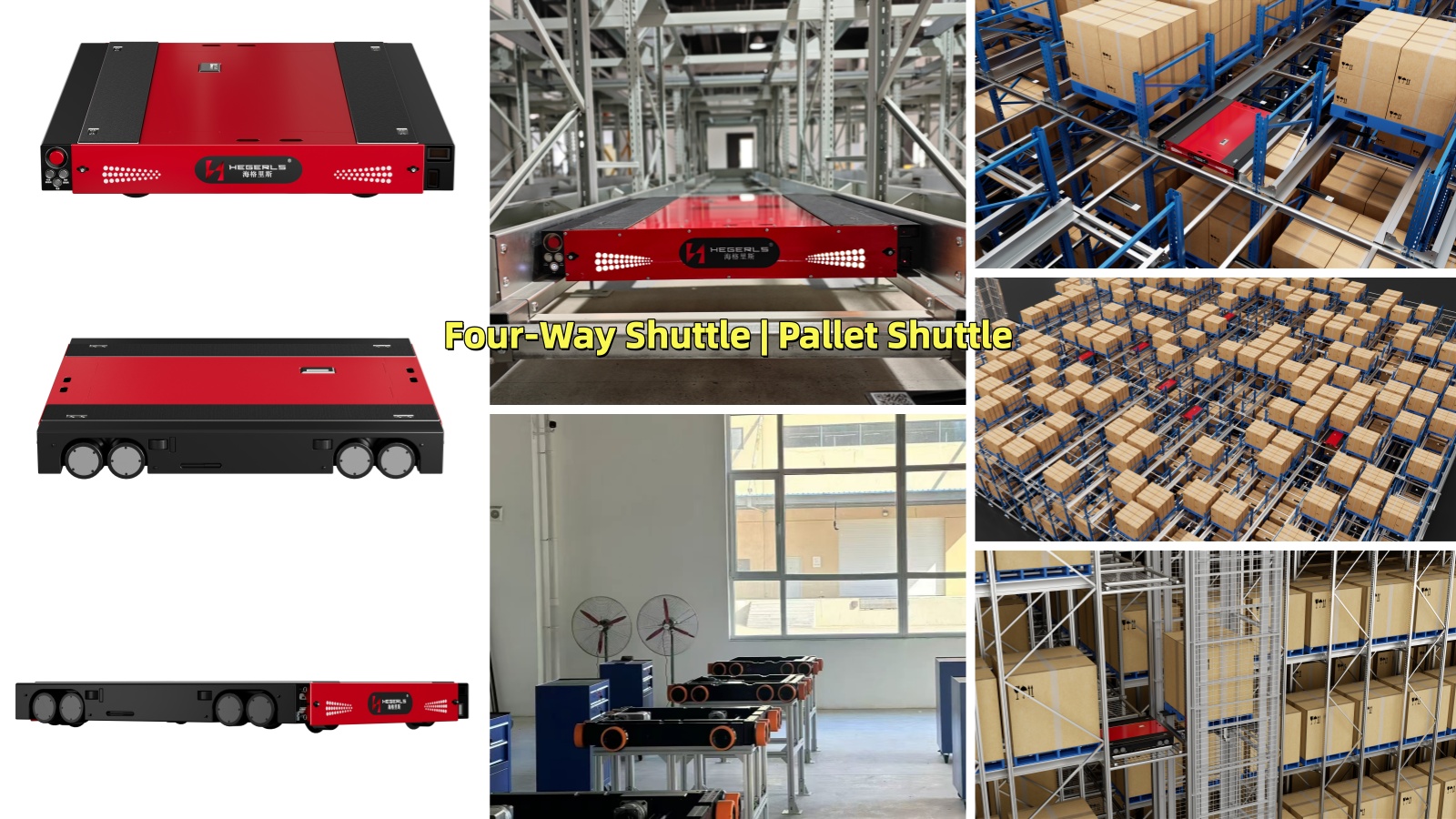
2. Four-Way Shuttle Systems
Four-way shuttle systems use autonomous shuttle vehicles capable of moving horizontally in multiple directions inside high-density storage racks.
Unlike conventional shuttle systems that are generally restricted to one direction along a storage lane, four-way shuttles can change direction and access different positions within the storage structure.
They are particularly useful when a warehouse needs:
-
High storage density
-
Flexible pallet movement
-
Deep-lane storage
-
Multiple storage zones
-
Automated pallet handling
-
Better use of irregular or constrained warehouse space
Four-way shuttle systems can also be integrated with lifts, conveyors, WMS, and WCS platforms.
The technology is especially relevant for industries such as food and beverage, cold chain, chemicals, manufacturing, and distribution.
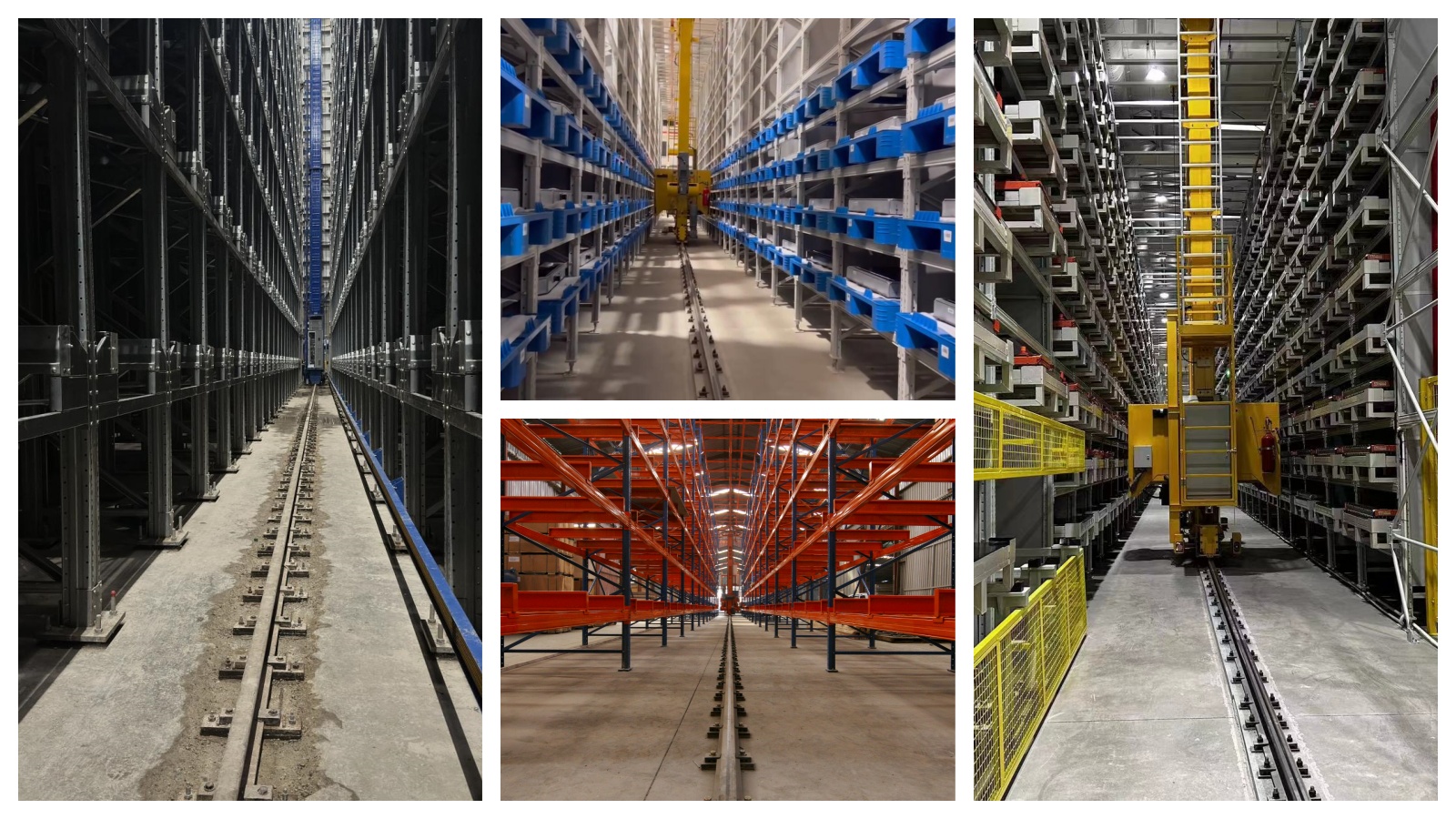
3. Stacker Crane Systems
Stacker cranes are automated cranes designed to move vertically and horizontally within rack aisles.
They are commonly used in high-bay warehouses where vertical space is an important part of the storage strategy.
A stacker crane can:
-
Receive a storage command.
-
Travel to the required aisle and position.
-
Lift the load to the designated storage level.
-
Deposit the load.
-
Return or receive the next task.
Stacker crane systems are suitable for high-throughput pallet warehouses and facilities where building height can be effectively utilized.
They can also be integrated with conveyors and automated loading or unloading areas.
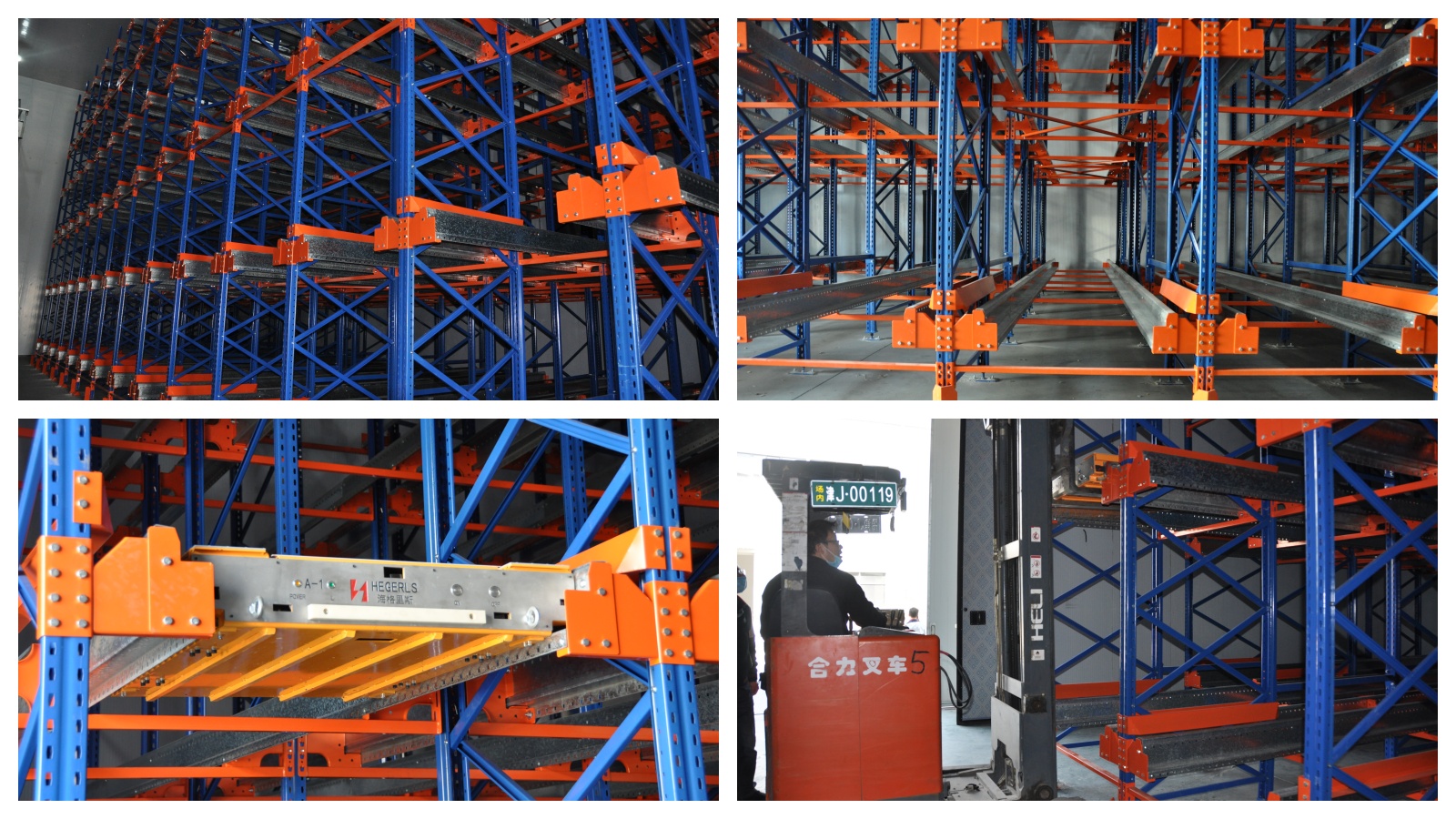
4. Shuttle Racking Systems
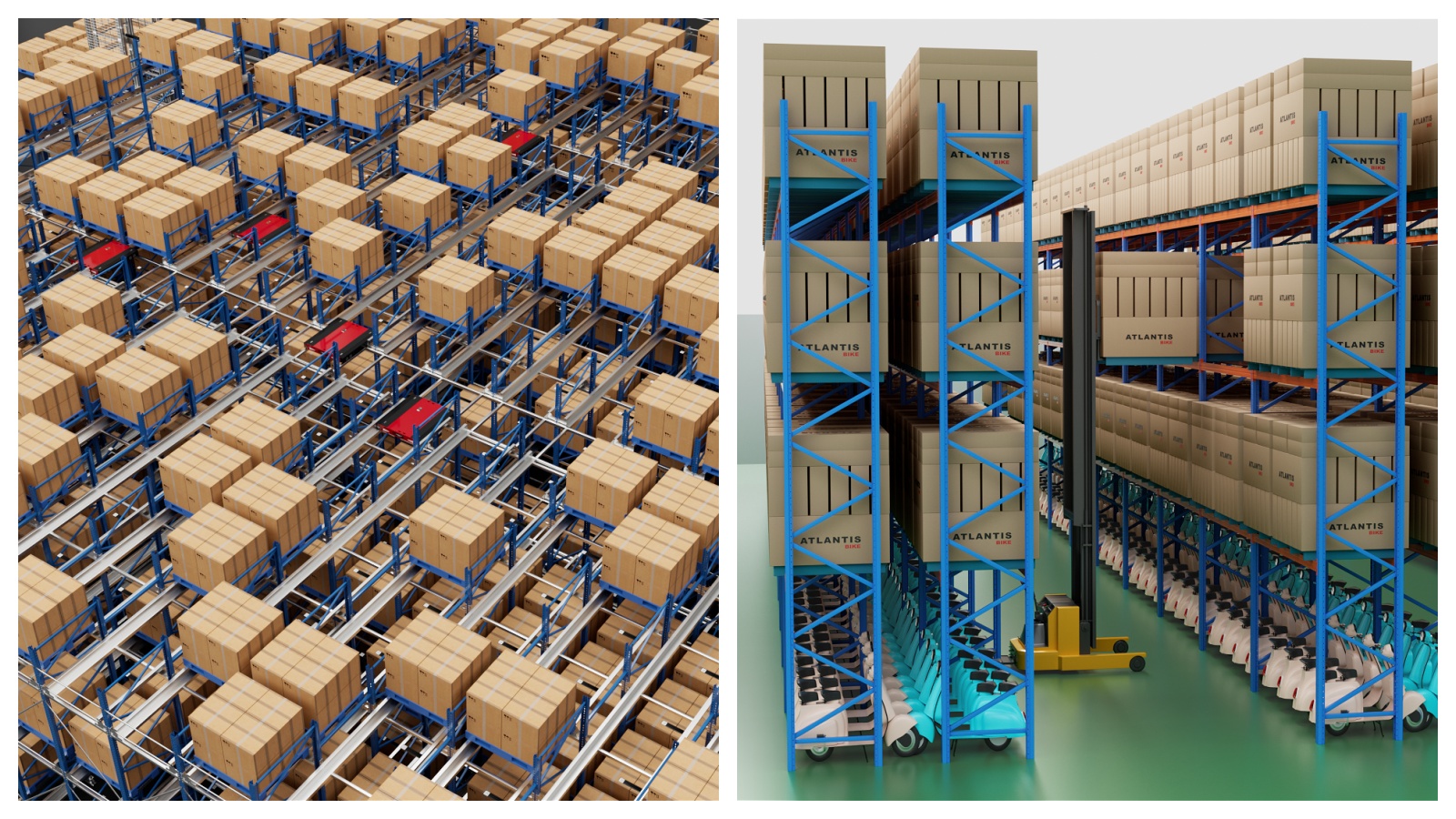
Shuttle racking combines storage racks with shuttle vehicles that transport pallets inside storage lanes.
This approach reduces the need for forklifts to enter deep storage lanes.
Shuttle-based storage can therefore provide high-density storage while maintaining relatively simple operational logic.
Different shuttle configurations are available depending on whether the warehouse prioritizes:
-
FIFO operations
-
LIFO operations
-
Storage density
-
Throughput
-
Flexibility
-
Temperature-controlled storage
For warehouses with large quantities of similar products, shuttle-based storage can be particularly effective.
5. Automated Guided Vehicles
Automated Guided Vehicles, or AGVs, are mobile vehicles designed to transport materials along predefined or controlled routes.
AGVs can transport:
-
Pallets
-
Raw materials
-
Finished products
-
Containers
-
Production materials
They can connect different areas of a facility, such as receiving, storage, production, picking, and shipping.
AGVs are often used in manufacturing environments where material transportation follows relatively predictable routes.
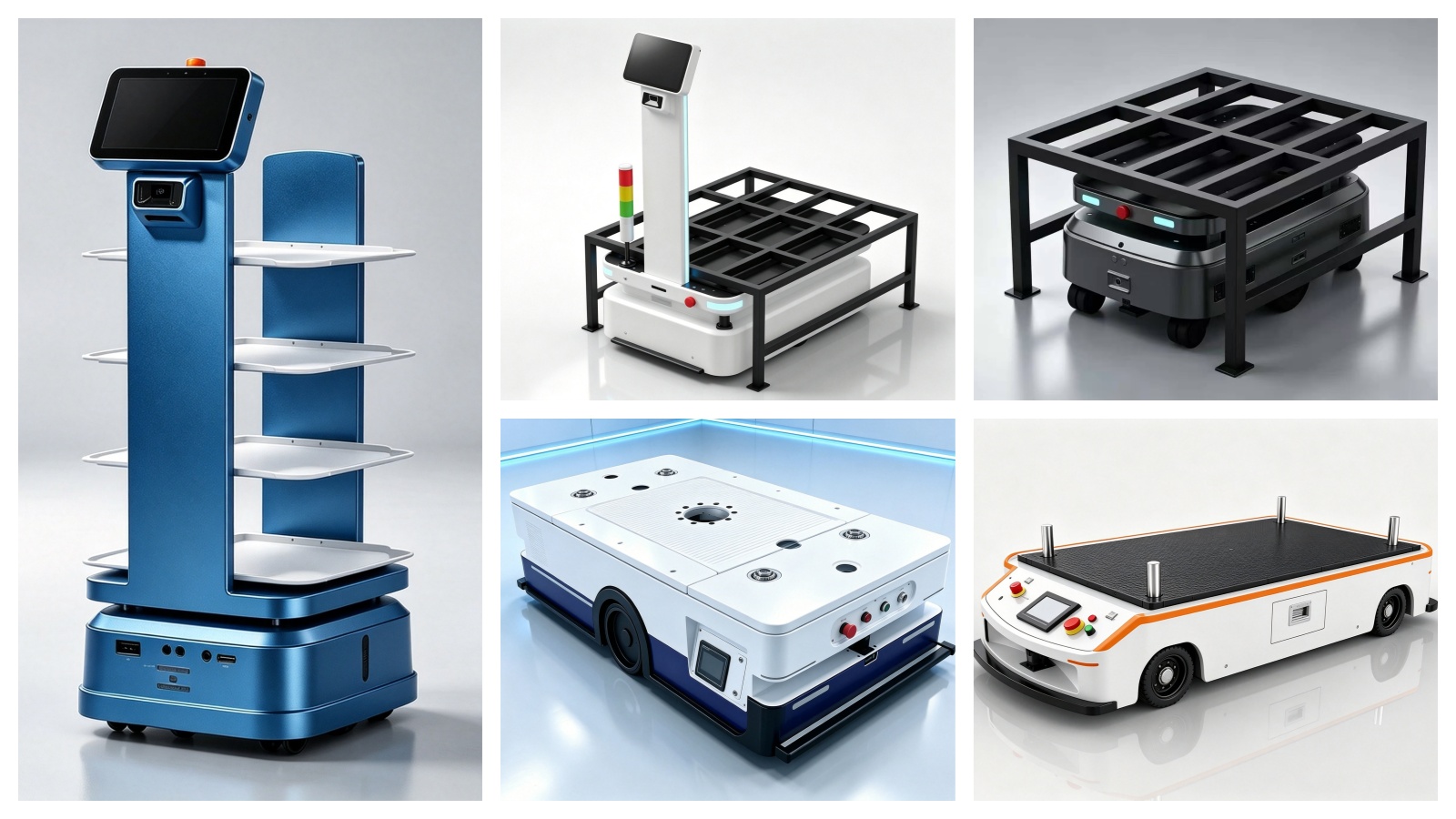
6. Autonomous Mobile Robots
Autonomous Mobile Robots, or AMRs, use sensors, navigation technologies, and software to move through warehouse environments with greater route flexibility.
Compared with traditional guided vehicles, AMRs can dynamically navigate around obstacles and adapt their routes according to operational conditions.
Typical applications include:
-
Goods transportation
-
Order picking
-
Tote movement
-
Replenishment
-
Goods-to-person workflows
-
Production material delivery
AMRs are particularly attractive where warehouse layouts change frequently or where flexible transportation is important.
7. Goods-to-Person Robots
Goods-to-person automation changes the traditional picking model.
Instead of workers walking through the warehouse to find products, robots transport inventory to designated picking stations.
This can reduce:
-
Walking distance
-
Search time
-
Repetitive movement
-
Picking errors
Goods-to-person systems are often used in e-commerce, spare parts, pharmaceuticals, electronics, cosmetics, and other high-SKU environments.
The concept is simple:
The goods move to the worker instead of the worker moving to the goods.
8. Conveyor Systems
Conveyors are one of the most common technologies in warehouse automation.
They transport goods between different operational areas, including:
-
Receiving
-
Storage
-
Picking
-
Packing
-
Sorting
-
Shipping
Common conveyor types include roller conveyors, belt conveyors, chain conveyors, flexible conveyors, and vertical conveyors.
Conveyors are often not the complete automation solution by themselves. Their greatest value comes from connecting different pieces of equipment into one material-flow system.
9. Automated Sorting Systems
Sorting systems automatically identify and route goods to their required destinations.
They are particularly important in distribution centers and e-commerce warehouses where a large number of packages must be directed to different:
-
Orders
-
Stores
-
Delivery routes
-
Shipping docks
-
Geographic regions
Automated sorting can significantly reduce manual sorting work and improve processing consistency.
10. Warehouse Management and Control Software
Software is the intelligence layer of warehouse automation.
A modern automated warehouse may use multiple software platforms, including:
-
ERP
-
MES
-
WMS
-
WCS
-
Equipment control systems
-
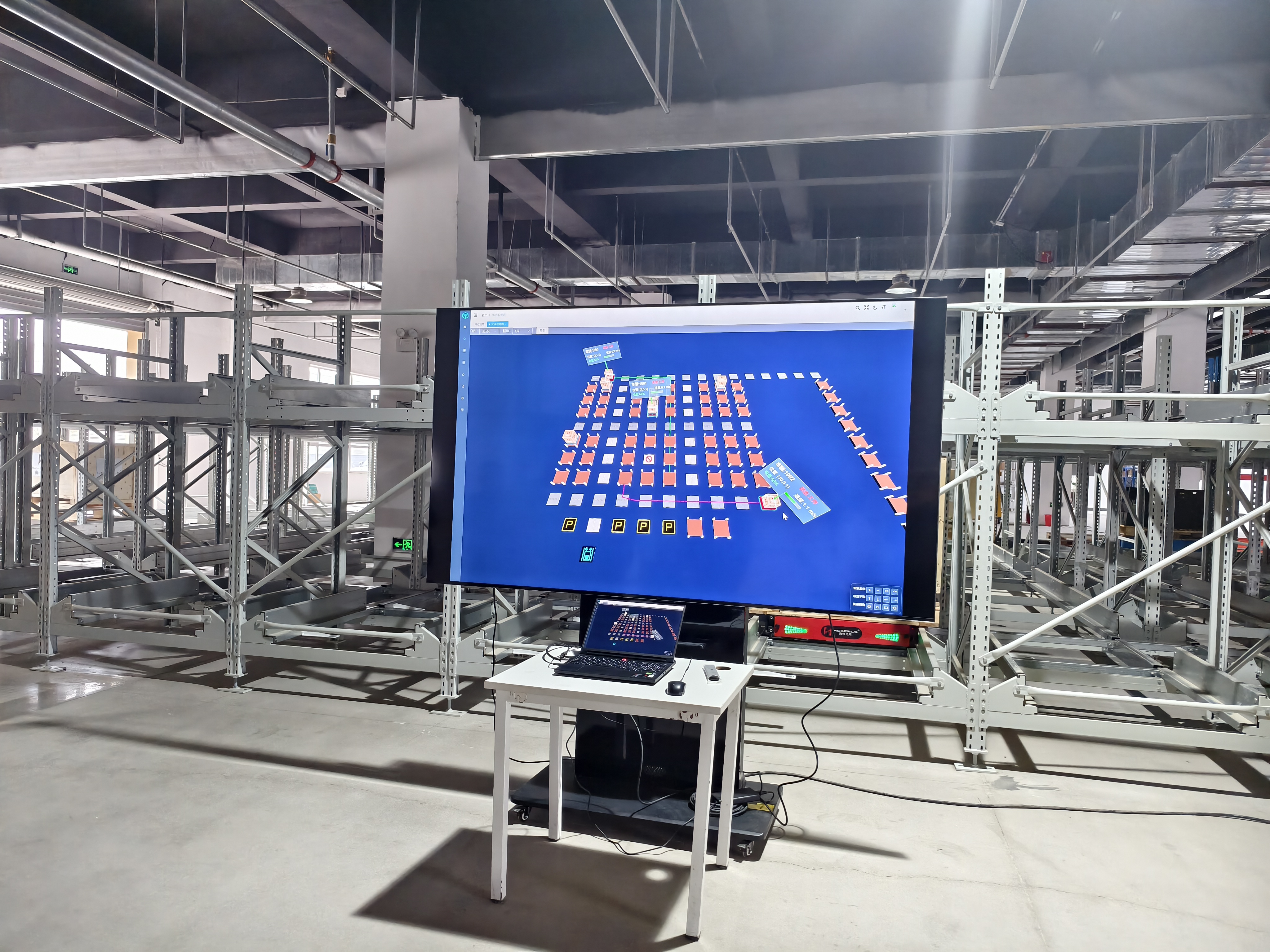
Warehouse visualization platforms
-
Data analytics platforms
The WMS manages inventory and warehouse processes, while the WCS coordinates physical equipment.
More advanced platforms may also use AI for:
-
Slotting optimization
-
Demand analysis
-
Inventory analysis
-
Task prioritization
-
Warehouse performance monitoring
-
Route optimization
This means that warehouse automation is increasingly becoming a combination of mechanical automation and digital intelligence.
Warehouse Automation Technologies Comparison
| Warehouse Automation Technology | Main Function | Typical Application | Key Advantage |
| AS/RS | Automated storage and retrieval | High-bay pallet and unit-load warehouses | High storage density and automation |
| Four-Way Shuttle | Automated pallet storage and movement | High-density pallet storage | Flexible movement and space utilization |
| Stacker Crane | Vertical and horizontal pallet handling | High-bay warehouses | Efficient use of vertical space |
| Shuttle Racking | Deep-lane pallet storage | Food, beverage and cold storage | High-density storage |
| AGV | Automated material transportation | Manufacturing and production logistics | Reliable repetitive transport |
| AMR | Flexible autonomous transportation | E-commerce and flexible warehouses | Dynamic navigation and flexibility |
| Goods-to-Person Robots | Bring inventory to operators | E-commerce and high-SKU warehouses | Reduced walking and picking time |
| Conveyor Systems | Continuous material transportation | Receiving, storage, picking and shipping | Efficient material flow |
| Sorting Systems | Automatic item routing | Distribution and e-commerce | High-volume sorting |
| WMS | Warehouse management and inventory control | All types of automated warehouses | Inventory visibility and process management |
| WCS | Equipment coordination and control | Integrated automated warehouses | Real-time automation control |
| AI Analytics | Data analysis and optimization | Intelligent warehouse operations | Better decisions and resource utilization |
What Are the Different Levels of Warehouse Automation?
Not every warehouse needs full automation.
Warehouse automation can generally be implemented at different levels.
Level 1: Manual Warehouse
Most processes are performed manually.
Typical equipment includes:
-
Forklifts
-
Pallet trucks
-
Shelving
-
Conventional racks
-
Manual picking stations
Level 2: Mechanized Warehouse
Mechanical equipment reduces physical labor.
Examples include:
-
Forklifts
-
Conveyors
-
Electric pallet trucks
-
Lift equipment
Level 3: Semi-Automated Warehouse
Automation is introduced into selected processes.
For example:
-
Shuttle storage
-
Conveyor transportation
-
Automated picking assistance
-
Automated sorting
Human workers continue to perform significant operational tasks.
Level 4: Highly Automated Warehouse
Multiple automated technologies are integrated.
A facility may use:
-
AS/RS
-
Shuttle systems
-
Conveyors
-
Robots
-
AGVs or AMRs
-
WMS
-
WCS
-
Automated picking
-
Automated sorting
Level 5: Intelligent Automated Warehouse
The warehouse becomes a data-driven operating environment.
In addition to physical automation, advanced systems may provide:
-
Real-time inventory visibility
-
AI-based analysis
-
Dynamic task allocation
-
Intelligent path planning
-
Predictive maintenance
-
Automated exception management
-
Digital visualization
-
Performance optimization
The appropriate level depends on business requirements rather than technology availability.
Which Industries Use Warehouse Automation?
Warehouse automation is used across a wide range of industries.
Food and Beverage
Food and beverage warehouses often handle large volumes of palletized products.
Automation can help improve:
-
Storage density
-
FIFO management
-
Pallet transportation
-
Inventory visibility
-
Temperature-controlled operations
Four-way shuttles, pallet AS/RS, conveyors, and WMS/WCS integration are common approaches.
Cold Chain and Frozen Storage
Cold storage presents additional challenges because low temperatures affect working conditions, equipment selection, and operating costs.
Automation can reduce the amount of manual activity required inside temperature-controlled areas.
High-density storage systems are also valuable because maximizing storage volume can improve the economic efficiency of expensive refrigerated space.
Manufacturing
Manufacturers often need warehouses for raw materials, work-in-progress products, spare parts, and finished goods.
Automation can connect warehouse operations with production processes.
AGVs, conveyors, AS/RS, shuttle systems, and WMS integration can support automated material flow between storage and production.
E-Commerce
E-commerce warehouses typically have high SKU counts and rapidly changing order profiles.
Typical technologies include:
-
Goods-to-person robots
-
AMRs
-
Shuttle systems
-
Bin storage
-
Conveyors
-
Sortation systems
-
Automated picking
The primary objective is often fast and flexible order fulfillment rather than simply maximizing pallet storage density.
Pharmaceuticals
Pharmaceutical warehouses require high inventory accuracy, traceability, and controlled operating conditions.
Automation can reduce manual handling and provide more systematic inventory management.
Chemicals
Chemical warehouses may require specialized storage, safety procedures, environmental controls, and strict inventory management.
Automation can reduce unnecessary personnel movement within storage areas while improving inventory traceability.
Automotive and Machinery
Heavy components and spare parts often require specialized material handling equipment.
Heavy-duty racks, conveyors, AGVs, cranes, and automated storage systems can support the movement of large or heavy loads.
What Are the Benefits of Warehouse Automation?
The business case for automation usually involves several benefits rather than one single metric.
Higher Storage Density
Automated systems can make better use of vertical and deep storage space.
This can increase the number of storage positions available within the same building footprint.
Higher Throughput
Automation can increase the number of storage, retrieval, picking, and transportation tasks processed within a given period.
Improved Inventory Accuracy
Automated identification and software-based inventory management reduce dependence on manual recording.
Reduced Travel Distance
Goods-to-person systems, conveyors, shuttles, and robots can significantly reduce unnecessary walking and forklift travel.
Better Workplace Safety
Automation can reduce repetitive manual handling and reduce human exposure to certain high-risk warehouse activities.
Better Traceability
Every automated movement can potentially be recorded in the warehouse software.
This provides a digital history of:
-
Where goods entered
-
Where they were stored
-
When they moved
-
Where they were picked
-
Where they were shipped
Scalability
Modular automation systems can sometimes be expanded as inventory volume and throughput increase.
This is especially important for businesses experiencing rapid growth.
| Benefit | How Automation Helps |
| Higher storage density | Uses vertical and high-density storage more effectively |
| Higher throughput | Automates repetitive storage and material-handling tasks |
| Lower manual travel | Moves goods using conveyors, shuttles and robots |
| Better inventory accuracy | Connects physical movements with digital inventory records |
| Improved safety | Reduces repetitive and potentially hazardous manual handling |
| Better traceability | Records inventory movements digitally |
| Scalability | Allows automation capacity to expand with business requirements |
What Should You Consider Before Automating a Warehouse?
Choosing warehouse automation should begin with operational requirements rather than equipment.
1. What Products Are Stored?
Consider:
-
Pallet dimensions
-
Product weight
-
Product packaging
-
Fragility
-
SKU characteristics
-
Expiration dates
-
Temperature requirements
2. How Many SKUs Are Managed?
A warehouse with 50 high-volume SKUs requires a different solution from one managing 50,000 low-volume SKUs.
3. What Is the Required Throughput?
Determine:
-
Pallets received per hour
-
Pallets shipped per hour
-
Orders per hour
-
Picks per hour
-
Peak-period demand
Automation should be designed around peak operational requirements rather than average volume alone.
4. How Much Storage Capacity Is Required?
Calculate:
-
Current inventory
-
Peak inventory
-
Required pallet positions
-
Required bin positions
-
Future inventory growth
5. What Is the Available Building Space?
Building height, column positions, floor loading, aisle width, fire protection, temperature, and existing infrastructure can all influence the system design.
6. What Is the Required Operating Environment?
Cold storage, food processing, chemicals, pharmaceuticals, dust-sensitive environments, and other specialized applications may require specific equipment configurations.
7. What Is the Desired Automation Level?
Businesses should determine whether they need:
-
Manual storage
-
Mechanized handling
-
Semi-automation
-
High automation
-
Full system integration
The most technologically advanced solution is not always the most economically appropriate one.
How Is Warehouse Automation Different from Traditional Warehousing?
The fundamental difference is the way information and physical movement are managed.
In a traditional warehouse, an operator may receive an instruction, drive a forklift to a storage location, identify the correct position, place the pallet, and manually update the system.
In an automated warehouse, the process can be digitally coordinated.
For example:
Inbound → Identification → WMS Storage Decision → WCS Task → Conveyor/Lift → Automated Storage → Inventory Update
When an order is received, the reverse process can be triggered:
Order → WMS Allocation → WCS Task → Automated Retrieval → Conveyor → Picking/Dispatch
The result is a warehouse in which physical movement and digital information are closely connected.
What Is the Role of AI in Warehouse Automation?
Artificial intelligence is becoming an additional layer of warehouse optimization.
Traditional automation focuses on executing predefined tasks.
AI can help systems make better decisions based on data.
Potential applications include:
Intelligent Slotting
AI can analyze product demand, order frequency, product relationships, and warehouse locations to recommend better storage positions.
Demand Forecasting
Historical order and inventory data can be analyzed to predict future demand.
Dynamic Task Allocation
Warehouse tasks can potentially be prioritized according to workload, urgency, equipment availability, and operational conditions.
Route Optimization
AI-based algorithms can analyze warehouse traffic and equipment movement to improve transportation efficiency.
Predictive Maintenance
Equipment data can be analyzed to identify abnormal conditions before failures occur.
Warehouse Analytics
AI can help identify bottlenecks, inefficient processes, underutilized equipment, and capacity constraints.
AI therefore does not replace the basic automation architecture. Instead, it can make the existing system more adaptive and data-driven.
How Do WMS and WCS Support Warehouse Automation?
WMS and WCS perform different but complementary functions.
WMS answers:
What should happen in the warehouse?
It manages inventory, orders, locations, and warehouse processes.
WCS answers:
How should the equipment execute the task?
It coordinates conveyors, shuttles, lifts, robots, cranes, and other automated equipment.
For example, when a customer order requires a specific pallet, the WMS can determine which inventory should be retrieved.
The WCS then coordinates the equipment required to retrieve that pallet.
This separation allows the warehouse management layer and equipment control layer to work together without treating every machine as an independent system.
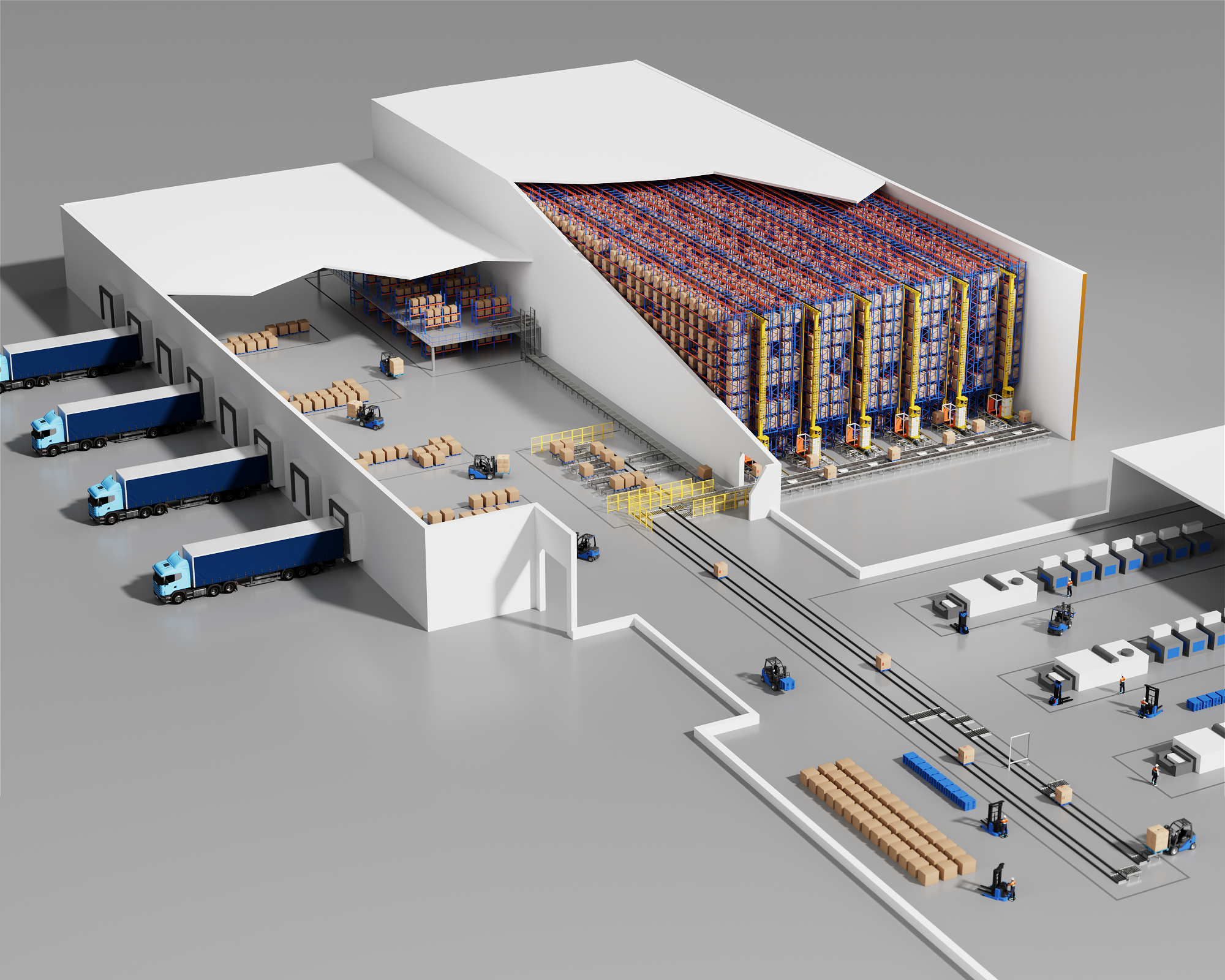
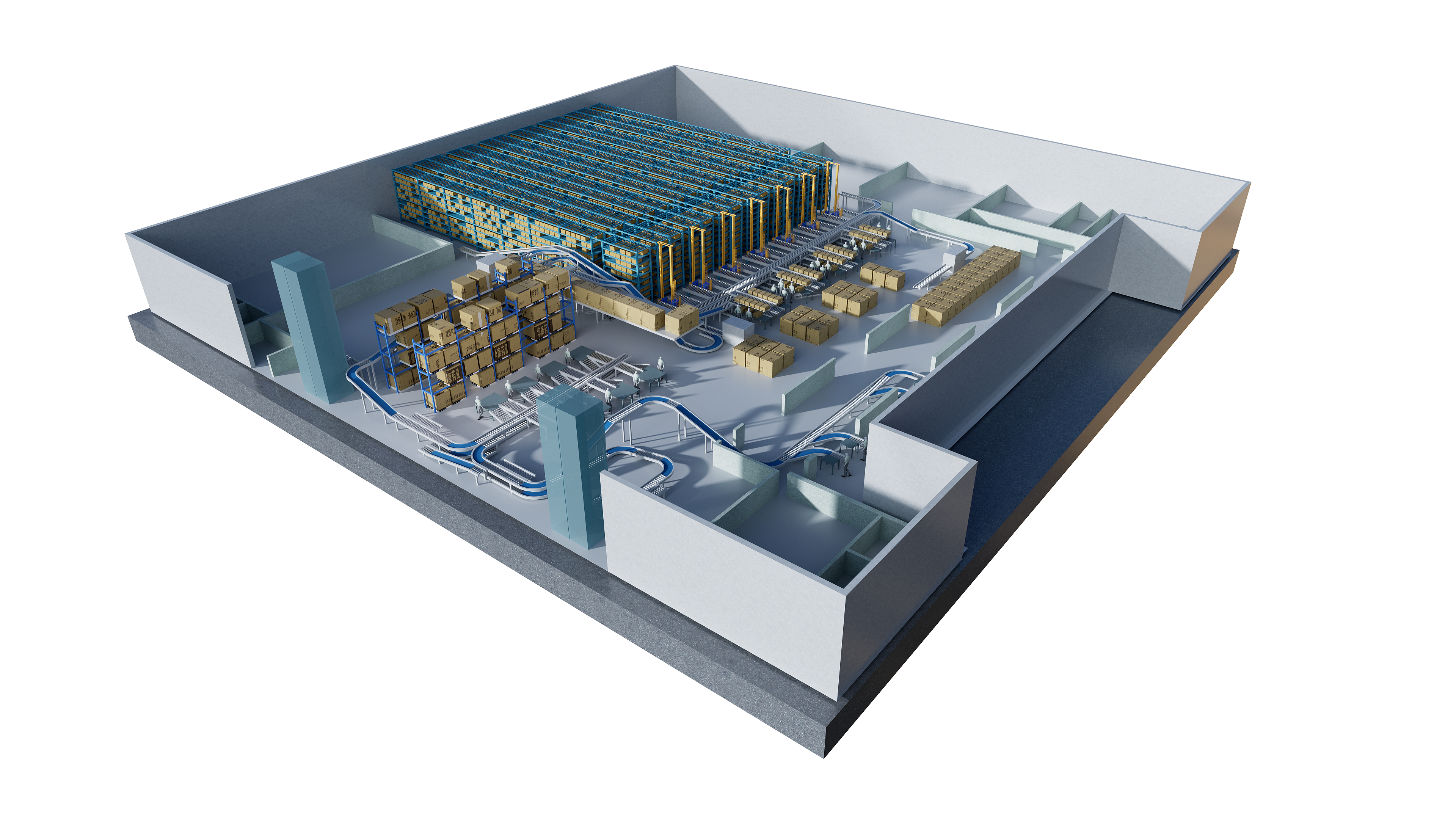
What Does an Integrated Warehouse Automation System Look Like?
A highly integrated warehouse can combine multiple technologies.
For example:
ERP / MES
↓
WMS
↓
WCS
↓
Storage + Transportation + Robotics
↓
Warehouse Operations
The physical layer may contain:
-
Pallet racks
-
Shuttle systems
-
Stacker cranes
-
Conveyors
-
Lifts
-
AMRs
-
AGVs
-
Picking robots
-
Sorting systems
The software layer coordinates inventory and equipment.
The result is a warehouse automation ecosystem rather than a single machine.
This approach is particularly valuable when a warehouse has multiple operational zones that need to work together.
What Is Warehouse Automation in Simple Terms?
Warehouse automation means using technology to perform warehouse tasks with less manual labor. Automated systems can move, store, retrieve, pick, sort and track goods while warehouse software coordinates inventory and equipment.
What Does Warehouse Automation Include?
- Storage automation — AS/RS, shuttle systems and automated racks
- Material handling automation — conveyors, lifts, AGVs and AMRs
- Picking automation — goods-to-person robots and robotic picking systems
- Sorting automation — automated sorters and routing systems
- Software automation — WMS and WCS
- Data intelligence — AI analytics, optimization and warehouse visibility
Is Warehouse Automation Suitable for Every Warehouse?
No.
Automation should be evaluated according to the warehouse's operational profile and business case.
A small warehouse with low inventory volume, low throughput, and stable labor availability may not require a complex automated system.
Automation becomes increasingly attractive when a warehouse has one or more of the following characteristics:
-
High labor requirements
-
High throughput
-
Large inventory volumes
-
Limited floor space
-
High land costs
-
High SKU complexity
-
High storage density requirements
-
Strict inventory accuracy requirements
-
Difficult working environments
-
Long operating hours
-
Rapid business growth
The right question is therefore not:
“Should we automate everything?”
A better question is:
“Which warehouse processes should be automated, and to what level?”
What Is the Future of Warehouse Automation?
The future of warehouse automation is moving toward greater integration between physical equipment, software, robotics, data, and artificial intelligence.
Several trends are likely to remain important.
More Flexible Robotics
Robots will increasingly perform transportation, picking, sorting, and replenishment tasks in environments where warehouse layouts and order profiles change frequently.
Higher Storage Density
As warehouse space becomes more expensive, businesses will continue looking for ways to increase storage capacity within existing buildings.
Greater Software Integration
WMS, WCS, ERP, MES, robotics, and warehouse equipment will become increasingly interconnected.
AI-Driven Optimization
AI will increasingly be used to analyze warehouse data and optimize inventory, task allocation, routes, and equipment utilization.
Modular Automation
Rather than building an inflexible system for a single business scenario, companies will increasingly seek scalable automation that can be expanded or reconfigured as requirements change.
Human-Machine Collaboration
Automation will not necessarily eliminate warehouse jobs. Instead, workers are likely to move toward roles involving supervision, exception handling, maintenance, quality control, system management, and decision-making.
How Can Businesses Start a Warehouse Automation Project?
A successful warehouse automation project should start with data collection.
The first step is to understand the existing operation.
Important information includes:
-
Warehouse dimensions
-
Building height
-
Floor plan
-
Storage capacity
-
SKU information
-
Pallet dimensions
-
Product weight
-
Inventory levels
-
Inbound volume
-
Outbound volume
-
Peak throughput
-
Order profile
-
Current labor requirements
-
Existing equipment
-
Future growth expectations
The next step is to identify the main bottlenecks.
For example, a company may discover that the primary problem is not storage capacity but picking efficiency. Another company may have sufficient picking capacity but insufficient pallet storage.
These two warehouses require completely different automation strategies.
After the operational analysis, an automation provider can evaluate different combinations of storage equipment, material handling equipment, robotics, and software.
The final solution should balance:
Capacity + Throughput + Flexibility + Accuracy + Space Utilization + Investment + Future Scalability
Why Choose Zhuku for Warehouse Automation Solutions?
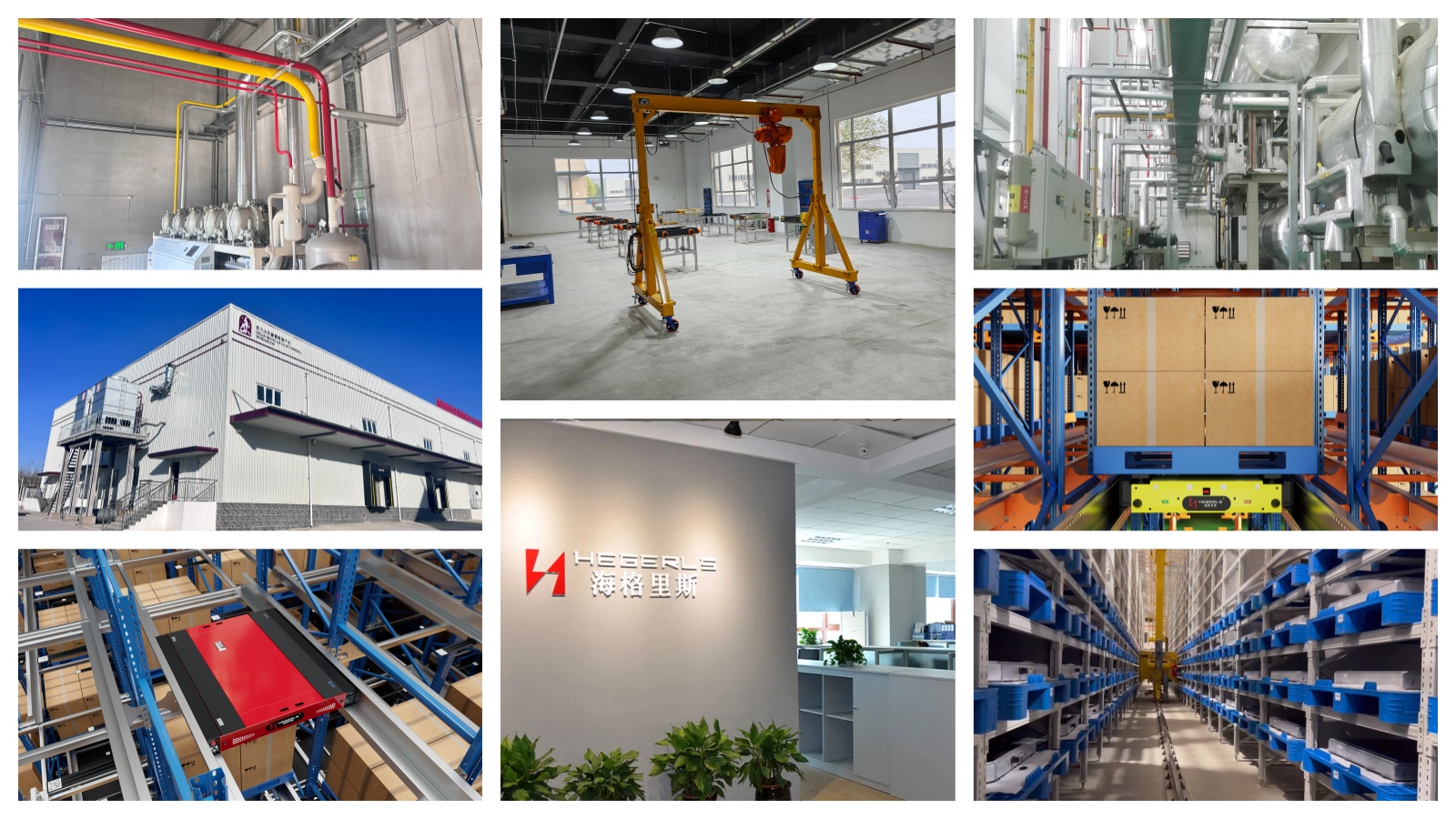
Zhuku (Hebei) Automatic Storage Technology Co., Ltd. provides warehouse automation and system integration solutions for different storage and material-handling requirements.
Rather than focusing on a single type of automation equipment, Zhuku can combine storage systems, automated material handling, robotics, and warehouse software according to the application.
Its solution portfolio includes:
-
Automated storage and retrieval systems
-
Four-way shuttle systems
-
Two-way shuttle systems
-
Multi-level shuttle systems
-
Stacker crane systems
-
Pallet racking
-
Conveyors
-
AGV and AMR solutions
-
Warehouse management systems
-
Warehouse control systems
The key principle is solution matching.
A food and beverage pallet warehouse, an e-commerce fulfillment center, a cold-storage facility, and an automotive parts warehouse should not automatically receive the same automation architecture.
By evaluating warehouse dimensions, product characteristics, inventory requirements, throughput, storage density, and future expansion plans, the automation system can be designed around the actual operating requirements.
Conclusion: Warehouse Automation Is More Than Automated Equipment
Warehouse automation is the integration of equipment, software, data, and warehouse processes to make storage and material handling more efficient, accurate, and scalable.
The technology can include AS/RS, four-way shuttles, stacker cranes, shuttle systems, conveyors, AGVs, AMRs, robots, sorting systems, WMS, WCS, and AI-based optimization.
However, successful automation does not depend on choosing the most advanced technology.
It depends on choosing the right combination of technologies for the right warehouse application.
A high-density pallet warehouse may benefit from automated storage and shuttle technologies. An e-commerce operation may require goods-to-person robotics and automated sorting. A manufacturing facility may prioritize AGVs and automated material flow. A cold-storage warehouse may focus on storage density and minimizing manual activity in low-temperature environments.
The best warehouse automation strategy therefore starts with the warehouse itself.
By analyzing storage requirements, SKU characteristics, throughput, building conditions, operating environment, labor requirements, and future growth, businesses can develop an automation system that improves today's operations while providing a foundation for tomorrow's supply chain.
For companies planning a new automated warehouse or upgrading an existing facility, the next step is to evaluate the warehouse data and identify which processes offer the greatest opportunity for automation.
Need the Right Warehouse Automation Strategy?
Don't choose automation equipment before understanding your warehouse requirements.
Send us your warehouse drawing (CAD / PDF / hand sketch) and tell us your:
-
Warehouse dimensions
-
Product and pallet specifications
-
Required storage capacity
-
Inbound and outbound volume
-
Peak throughput
-
Operating environment
Our engineering team can analyze your requirements and develop a warehouse automation concept tailored to your operation, including storage, material handling, robotics, and WMS/WCS integration.
Send Your Warehouse Drawing → Get Your Automation Recommendation